






World War II was not just a battle of soldiers, tanks, and aircraft. Behind the front lines, nations were racing to develop revolutionary technologies that could give them an advantage over their enemies.
Some of these weapons were so advanced that they seemed decades ahead of their time. While many remained hidden from public view during the war, they later changed the future of military technology forever.
Here are seven of the most fascinating secret weapons used during World War II.
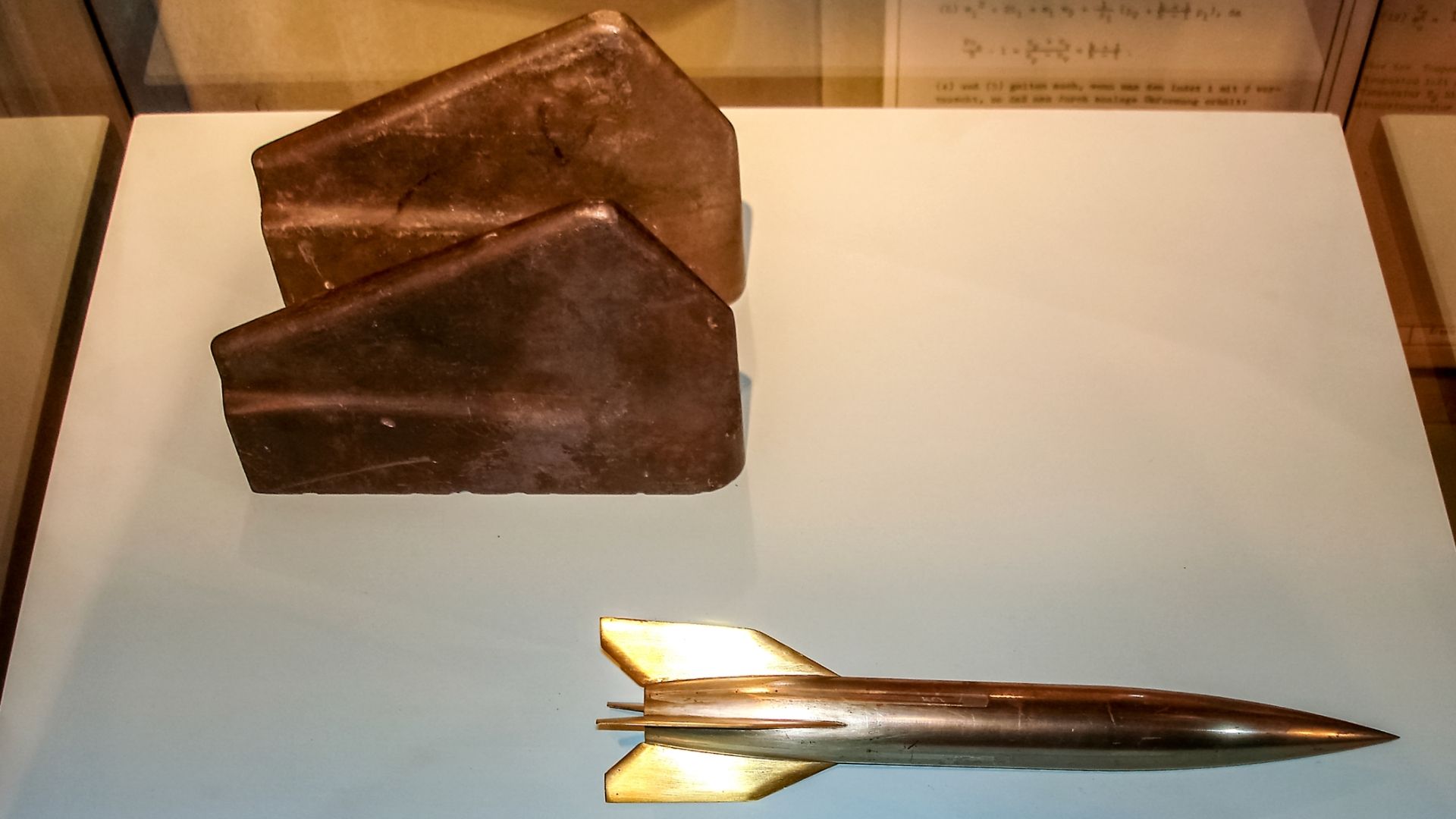
When Germany launched the V-2 rocket, the world witnessed something entirely new. It was the first long-range guided ballistic missile ever used in combat.
Unlike traditional bombs dropped from aircraft, the V-2 traveled at supersonic speeds and struck its target before anyone could hear it approaching. Once launched, there was virtually no way to stop it.
The technology behind the V-2 became the foundation for future space programs. Many of the scientists who worked on the rocket later helped develop the rockets that sent humans to the Moon.
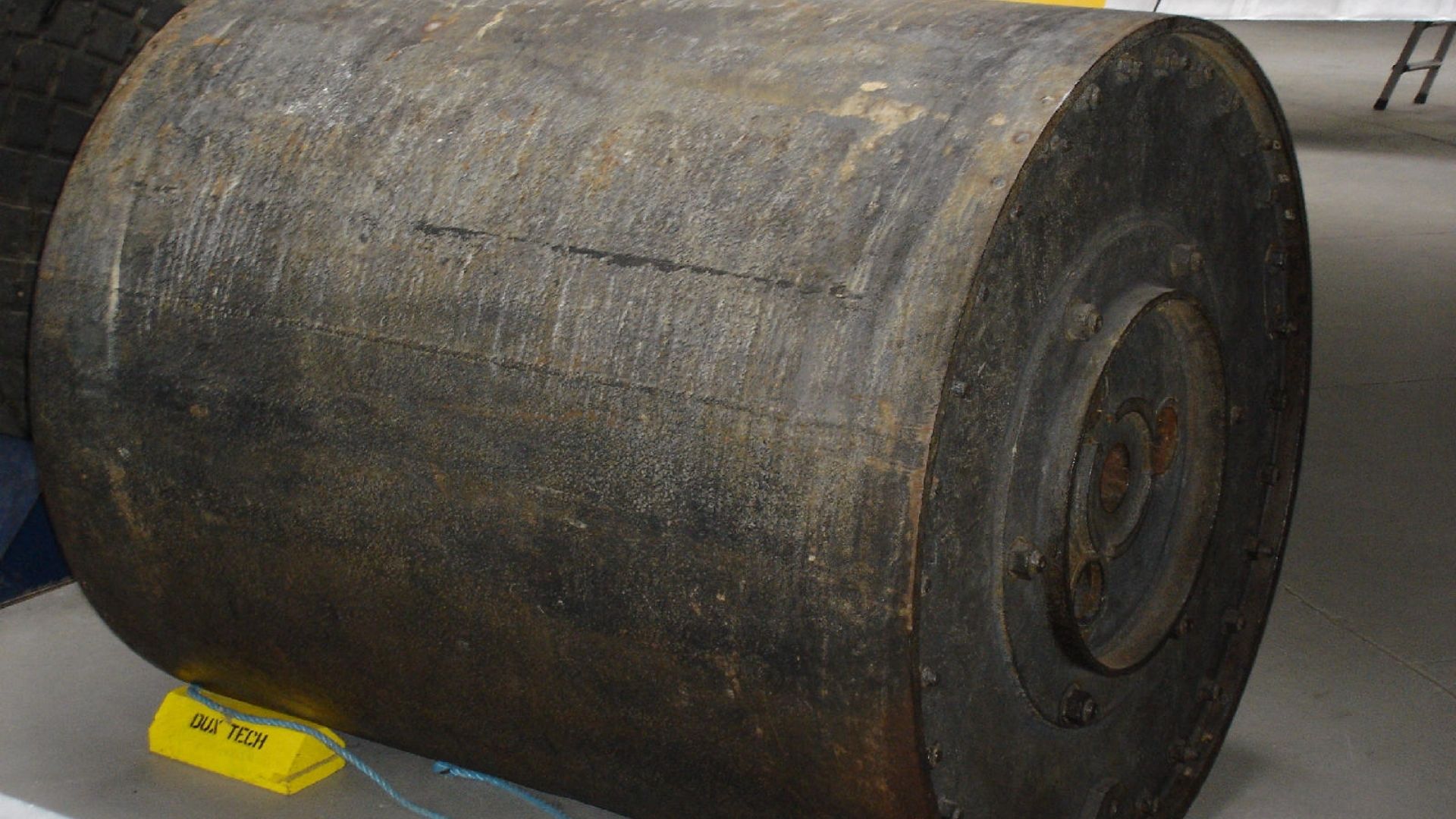
One of the most unusual weapons of the war looked more like something from a science-fiction movie than a military arsenal.
Developed by British engineer Barnes Wallis, the bouncing bomb was designed to skip across water just like a stone thrown across a lake. This allowed it to avoid underwater defenses protecting German dams.
The weapon was famously used during the 1943 Dambusters Raid, where British bombers attacked key dams in Germany. The mission demonstrated how creative engineering could solve seemingly impossible military challenges.
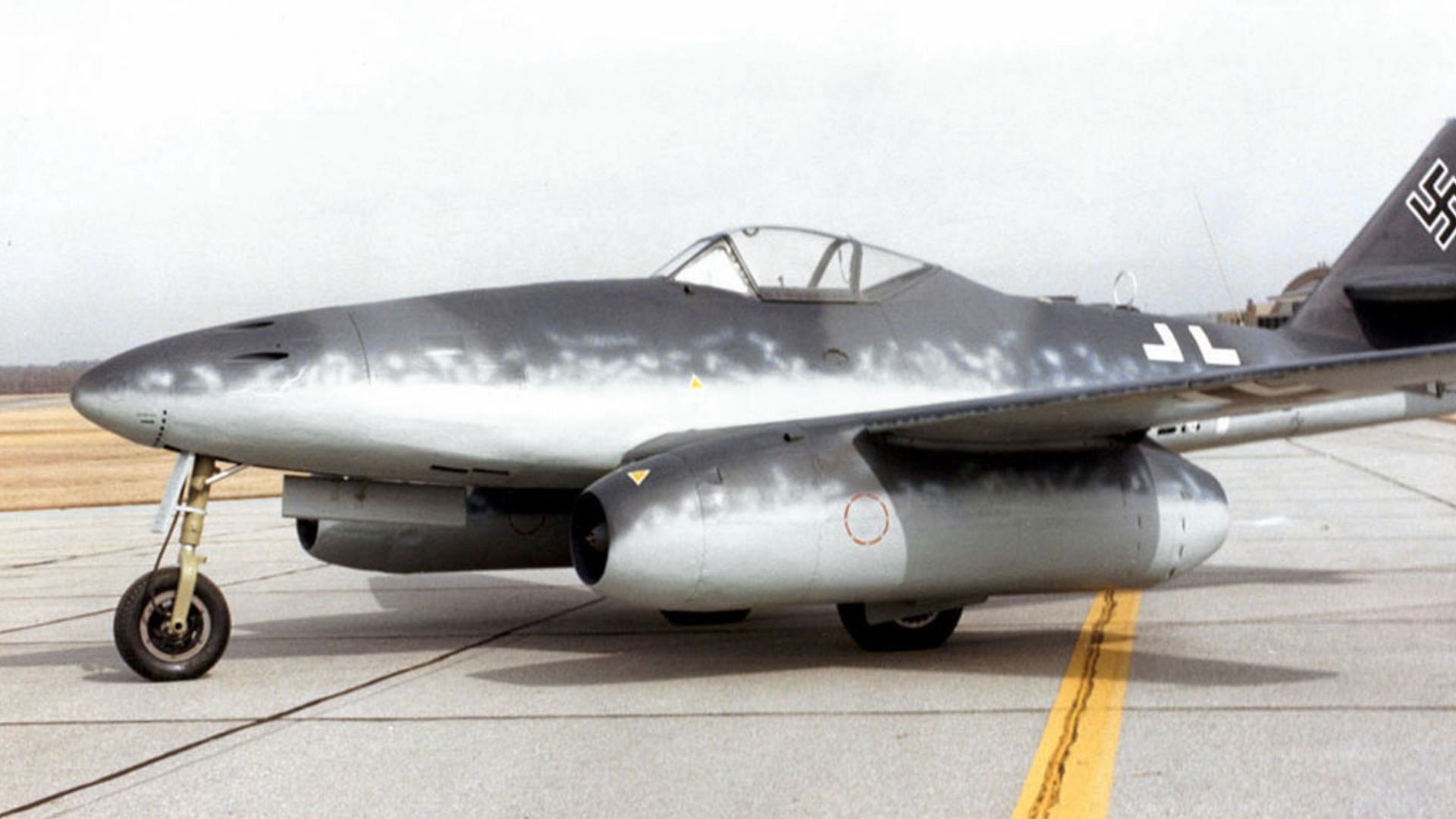
Long before jet travel became common, Germany introduced the Me 262, the world’s first operational jet-powered fighter aircraft.
The aircraft could fly significantly faster than Allied fighters, making it extremely difficult to intercept. Pilots often described it as feeling like a glimpse into the future.
Although it arrived too late and in too few numbers to change the outcome of the war, the Me 262 influenced the development of nearly every modern jet fighter that followed.
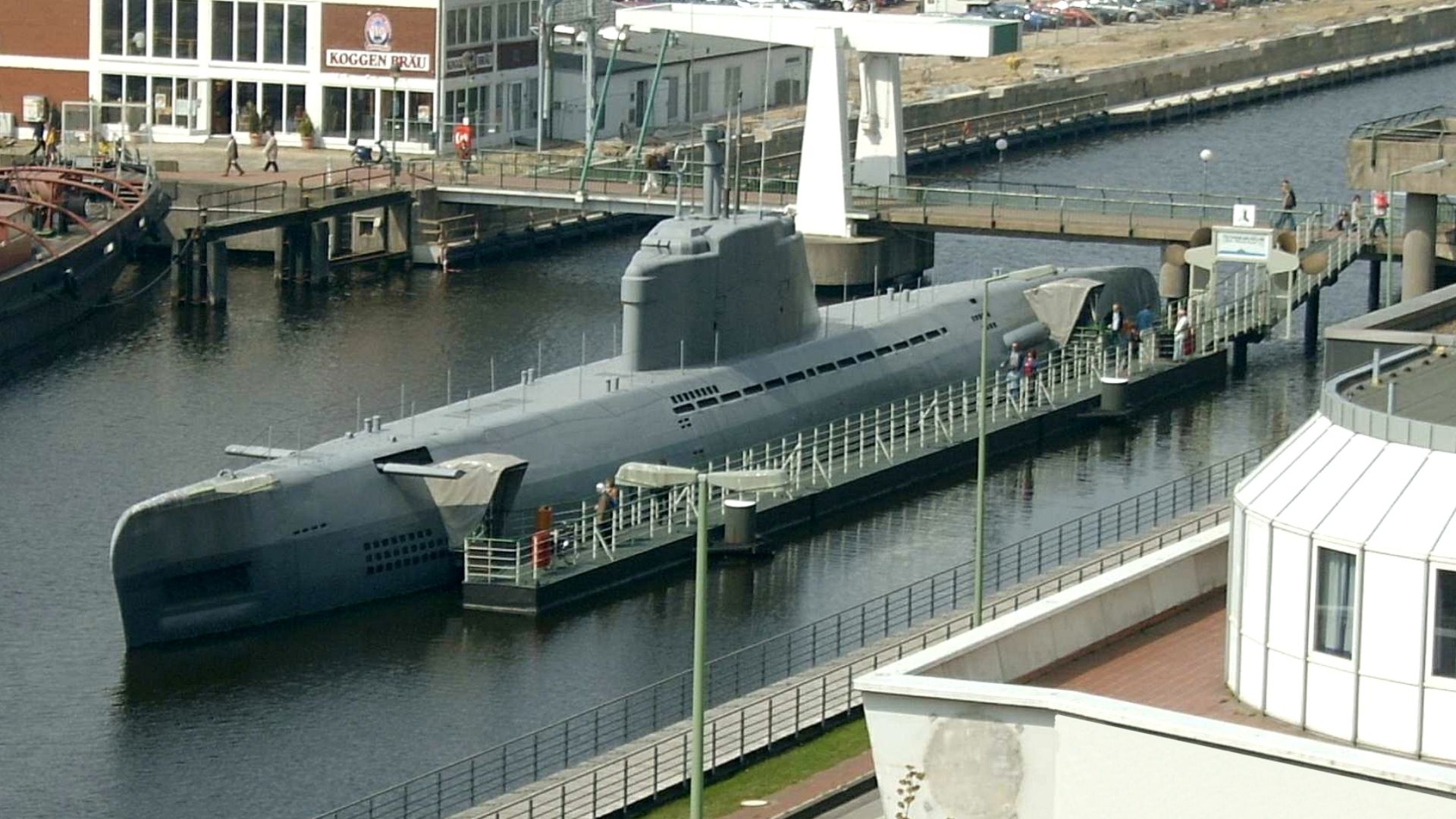
Submarines were already a major threat during World War II, but Germany’s Type XXI U-boat represented a massive leap forward.
Unlike earlier submarines that spent much of their time on the surface, the Type XXI was designed to operate primarily underwater. Improved batteries allowed it to remain submerged for much longer periods, making it harder to detect.
Many experts consider it the first truly modern submarine, and its design influenced naval forces around the world after the war.
Precision-guided weapons are common today, but their origins can be traced back to World War II.
The United States developed the Bat, a radar-guided bomb capable of tracking targets on its own after launch. Once released, it required no further assistance from the aircraft carrying it.
This breakthrough marked one of the earliest examples of “smart” weapon technology, paving the way for the precision-guided munitions used in modern conflicts.
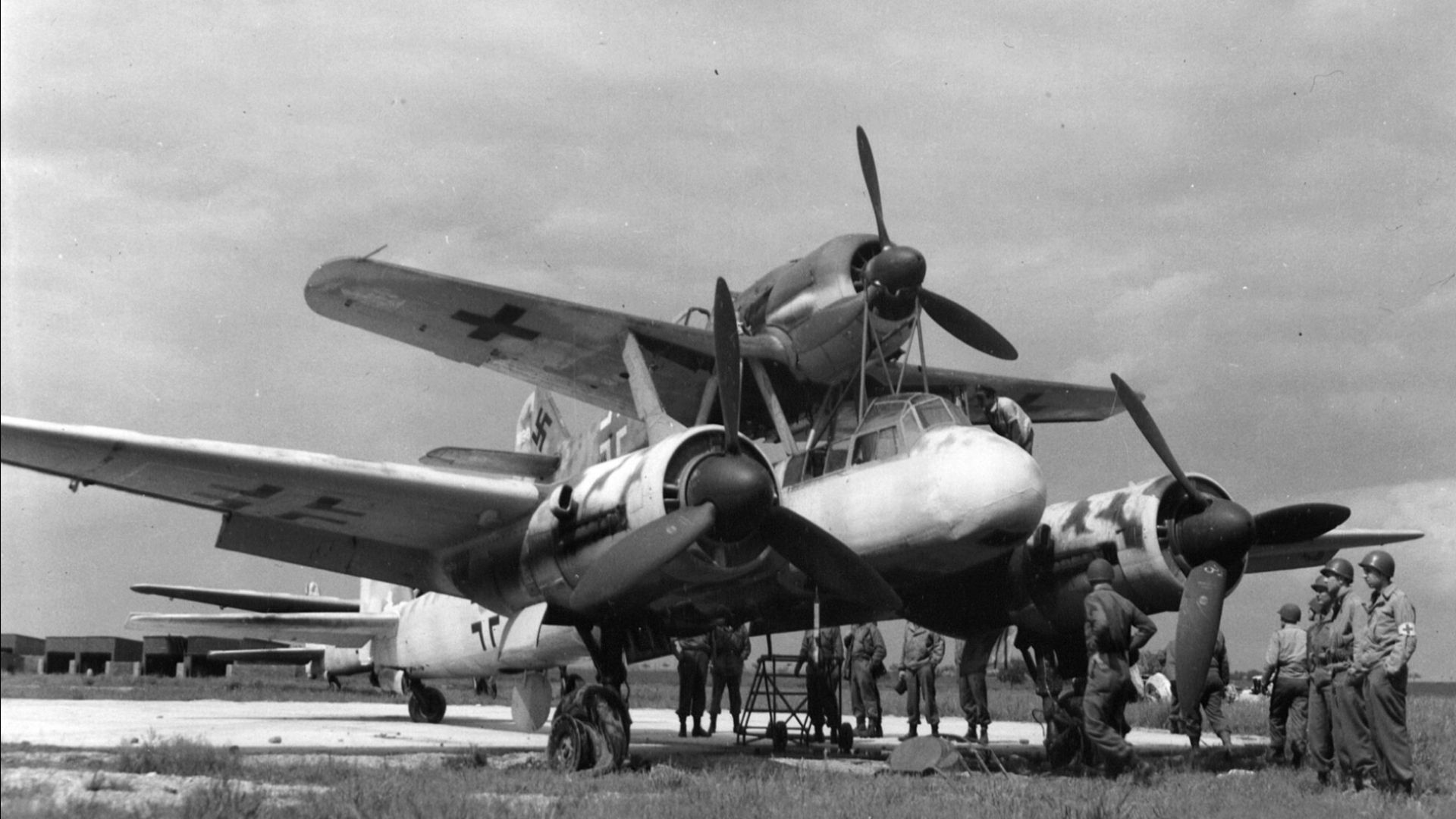
Among the strangest weapons developed during the war was Germany’s Mistel project.
The system combined a fighter aircraft mounted on top of an unmanned bomber packed with explosives. The pilot guided the combined aircraft toward the target, released the bomber section, and then flew away.
The explosive-filled aircraft would continue toward its objective like a giant guided missile. While the concept saw limited success, it was an early attempt at precision strike warfare.
No secret weapon had a greater impact on history than the atomic bomb.
Developed under the highly classified Manhattan Project, the weapon harnessed nuclear energy to create unprecedented destructive power. The project involved more than 130,000 people working in complete secrecy.
In August 1945, atomic bombs were dropped on Hiroshima and Nagasaki, bringing World War II to an end and ushering in the nuclear age. The world would never be the same again.
World War II accelerated technological innovation at an extraordinary pace. From jet aircraft and guided bombs to ballistic missiles and nuclear weapons, many of the technologies developed in secrecy during the conflict shaped the modern world.
While some of these weapons never reached their full potential during the war, their influence can still be seen in military and aerospace technologies today.
Atharva is a full-time content writer with a post-graduate degree in media & amp; entertainment and a graduate degree in electronics & telecommunications. He has written in the sports and technology domains respectively. In his leisure time, Atharva loves learning about digital marketing and watching soccer matches. His main goal behind joining Interesting Engineering is to learn more about how the recent technological advancements are helping human beings on both societal and individual levels in their daily lives.
此内容由惯性聚合(RSS阅读器)自动聚合整理,仅供阅读参考。 原文来自 — 版权归原作者所有。