





The U.S. Coast Guard will deploy autonomous surface drones across the Great Lakes from May through October to strengthen maritime surveillance and emergency response operations. The deployment marks one of the service’s latest steps toward integrating unmanned systems into everyday missions.
The wind- and solar-powered vessels, built by Saildrone, will patrol more than 90,000 square miles of interconnected waterways and international shipping routes. The drones will support maritime domain awareness, collect weather data, detect illegal activity, and assist with border security operations.
The deployment follows a Coast Guard contract focused on expanding maritime domain awareness capabilities in the Great Lakes region. Officials said the autonomous systems will supplement existing Coast Guard crews rather than replace them.
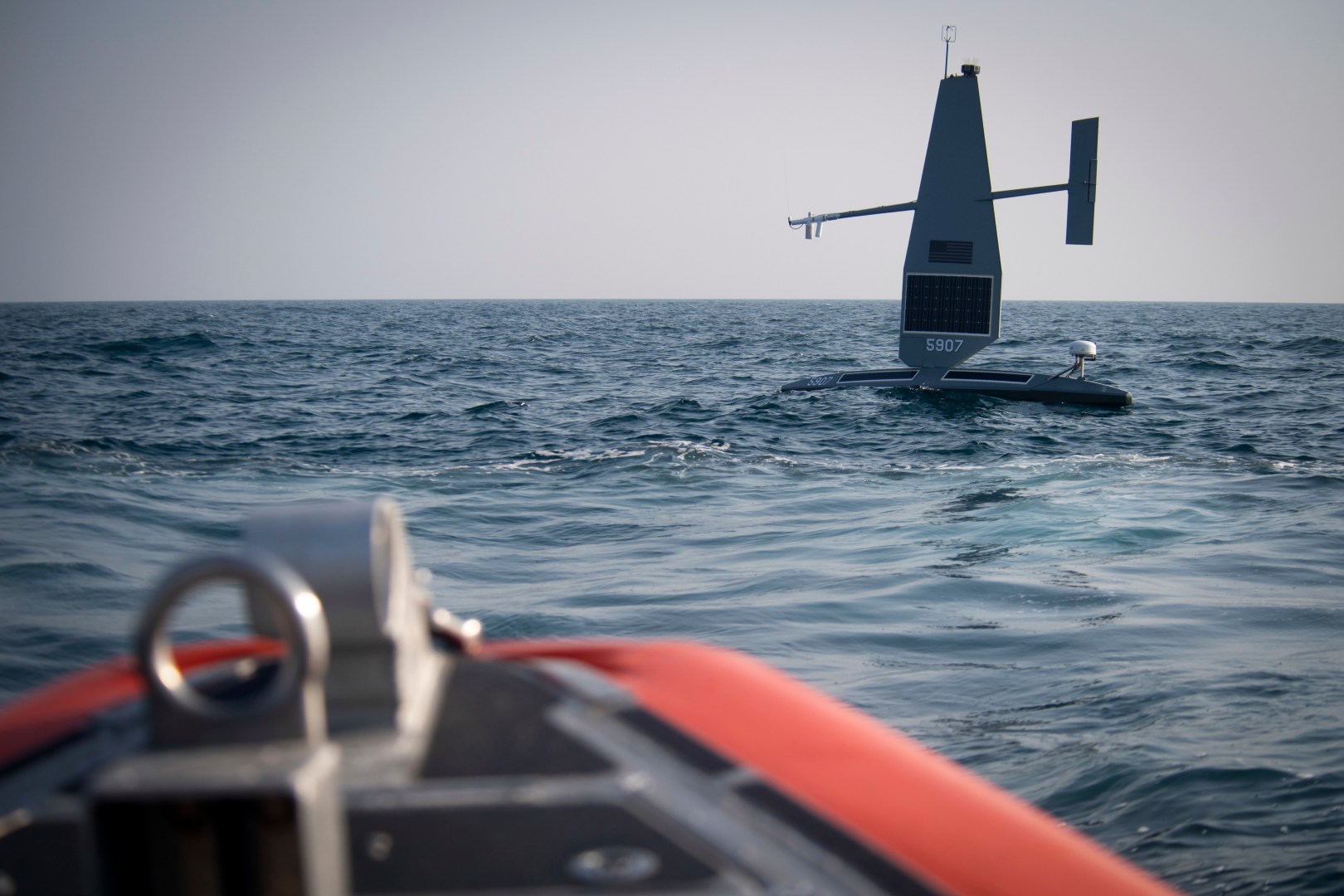
According to the official Coast Guard release, “The drones are wind- and solar-powered vessels the Coast Guard will use to monitor the Great Lakes, gather critical weather data for emergency response planning, track illicit activity and keep maritime borders safe.”
The unmanned surface vessels, or USVs, operate for extended periods using a hybrid-electric propulsion system. Saildrone combines wind propulsion through its proprietary Saildrone Wing with solar-powered battery systems. The setup allows the vessels to remain at sea for months while collecting real-time operational data.
Each drone carries radar systems, optical cameras, and collision-avoidance artificial intelligence. Human operators continuously monitor the systems and can assume manual control when necessary.
The Coast Guard said the systems focus entirely on maritime awareness missions. The drones monitor vessel movements and help crews identify unusual or dangerous activity across the lakes. “Sail drones are equipped with sensors focused solely on maritime domain awareness, providing critical information on vessel activities, including vessels in distress or engaged in illegal operations,” the release stated.
The Great Lakes region presents unique operational challenges because of its size and heavy commercial traffic. The waterways connect directly to international shipping corridors between the United States and Canada.
Coast Guard officials expect the autonomous systems to improve surveillance coverage without increasing crew demands. The vessels will also gather weather and environmental data that could support emergency response planning during storms or maritime accidents.
The deployment reflects a broader Coast Guard strategy to expand the use of robotics and autonomous technology across the service. The Coast Guard established its Robotics and Autonomous Systems Program Executive Office, known as RAS PEO, during the summer of 2025. The initiative aims to accelerate the adoption of unmanned systems across multiple mission areas.
Officials view the Saildrone deployment as an early operational example of that effort. The program moves autonomous technology beyond limited demonstrations and into routine Coast Guard operations. “In short, these autonomous systems augment the essential needs of qualified Coast Guard crews operating on the Great Lakes,” the Coast Guard release stated.
The deployment could also shape how the service uses autonomous systems in other coastal and maritime regions in the coming years.

Get the latest in engineering, tech, space & science - delivered daily to your inbox.
Aamir is a seasoned tech journalist with experience at Exhibit Magazine, Republic World, and PR Newswire. With a deep love for all things tech and science, he has spent years decoding the latest innovations and exploring how they shape industries, lifestyles, and the future of humanity.
此内容由惯性聚合(RSS阅读器)自动聚合整理,仅供阅读参考。 原文来自 — 版权归原作者所有。