








Rather than leaving abandoned buildings to rot, Italian researchers are turning the remains into the core materials for new construction.
Researchers from the University of Cagliari and Politecnico di Milano have successfully developed a sustainable alternative to existing construction materials through the Steel And Recycled Concrete Slab (SARCOS) project.
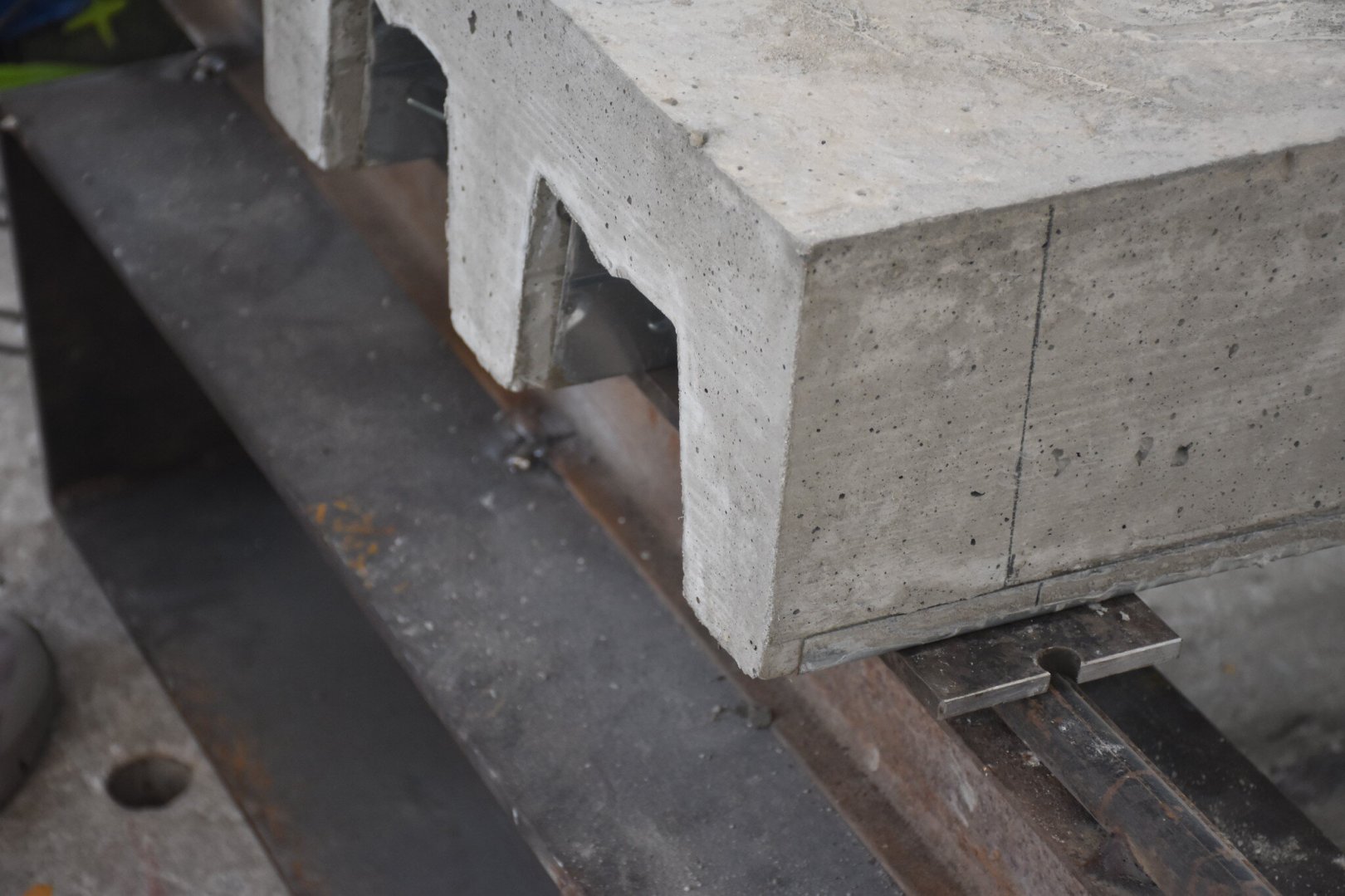
The goal is simple: take the debris from demolished, eyesore buildings and turn it into high-quality floor slabs that are just as strong as standard ones. It combines this recycled concrete with high-strength profiled steel sheeting to create composite slabs.
Full-scale testing demonstrated that structural performance remained consistent even as recycled concrete content was increased from 30 percent to 100 percent.
“Concrete obtained from recycled material may offer lower performance than conventional concrete, also depending on how it is produced,” said Flavio Stochino, professor at the Department of Civil, Environmental and Architectural Engineering of the University of Cagliari.
“With our project, however, we demonstrated, through full-scale tests, that in composite slabs the performance remains unchanged or, in some cases, it actually increases,” Stochino added.
Most of the time, the construction industry uses a specific type of sand that cannot be found in deserts; desert sand is too smooth and wind-blown to bind concrete effectively. Rather, builders depend on the sharp, angular grains found in riverbeds and alluvial deposits.
However, this constant demand has fueled a global sand crisis, leading to the dredging of waterways that destabilize riverbanks and destroy vital aquatic ecosystems. This way, the industry has created a massive environmental footprint by depleting these resources, and the researchers are racing to erase it.
“Few people realize it, but the sand used in construction doesn’t come from the desert, but from river or alluvial quarries. Therefore, in this way, it would be possible to avoid further excavation, helping to preserve the original natural environments,” said Marco Simoncelli, researcher at the Department of Architecture, Built Environment and Construction Engineering (DABC) and coordinator for the Politecnico di Milano within the project.
There is a long-standing myth in engineering: recycled concrete is weak concrete. The SARCOS team just debunked it.
The project applies a circular-economy model to the foundations of the cities by replacing natural aggregates with recycled rubble.
While recycled concrete is already used globally, this project introduces a new approach to combining it with high-strength profiled steel sheeting to create a strong composite slab.
Interestingly, this design prioritizes a circular lifecycle, ensuring the entire product remains fully recyclable at the end of its use.
As the steel can be melted down and repurposed alongside the recycled concrete, the system provides a sustainable loop for future construction projects.
“With our solution, it would therefore be possible to replace sand in construction, and to instead use rubble deriving from the demolition of ‘ecomostri,’ that is, environmentally damaging buildings,” said Simoncelli.
Also, reusing local rubble reduces the carbon emissions from transporting heavy sand and gravel across long distances.
The findings offer a viable path for the construction industry to reduce its reliance on dwindling natural resources while maintaining structural integrity.
The study was published in the journal Materials and Structures.

Get the latest in engineering, tech, space & science - delivered daily to your inbox.
Mrigakshi is a science journalist who enjoys writing about space exploration, biology, and technological innovations. Her work has been featured in well-known publications including Nature India, Supercluster, The Weather Channel and Astronomy magazine. If you have pitches in mind, please do not hesitate to email her.
此内容由惯性聚合(RSS阅读器)自动聚合整理,仅供阅读参考。 原文来自 — 版权归原作者所有。