





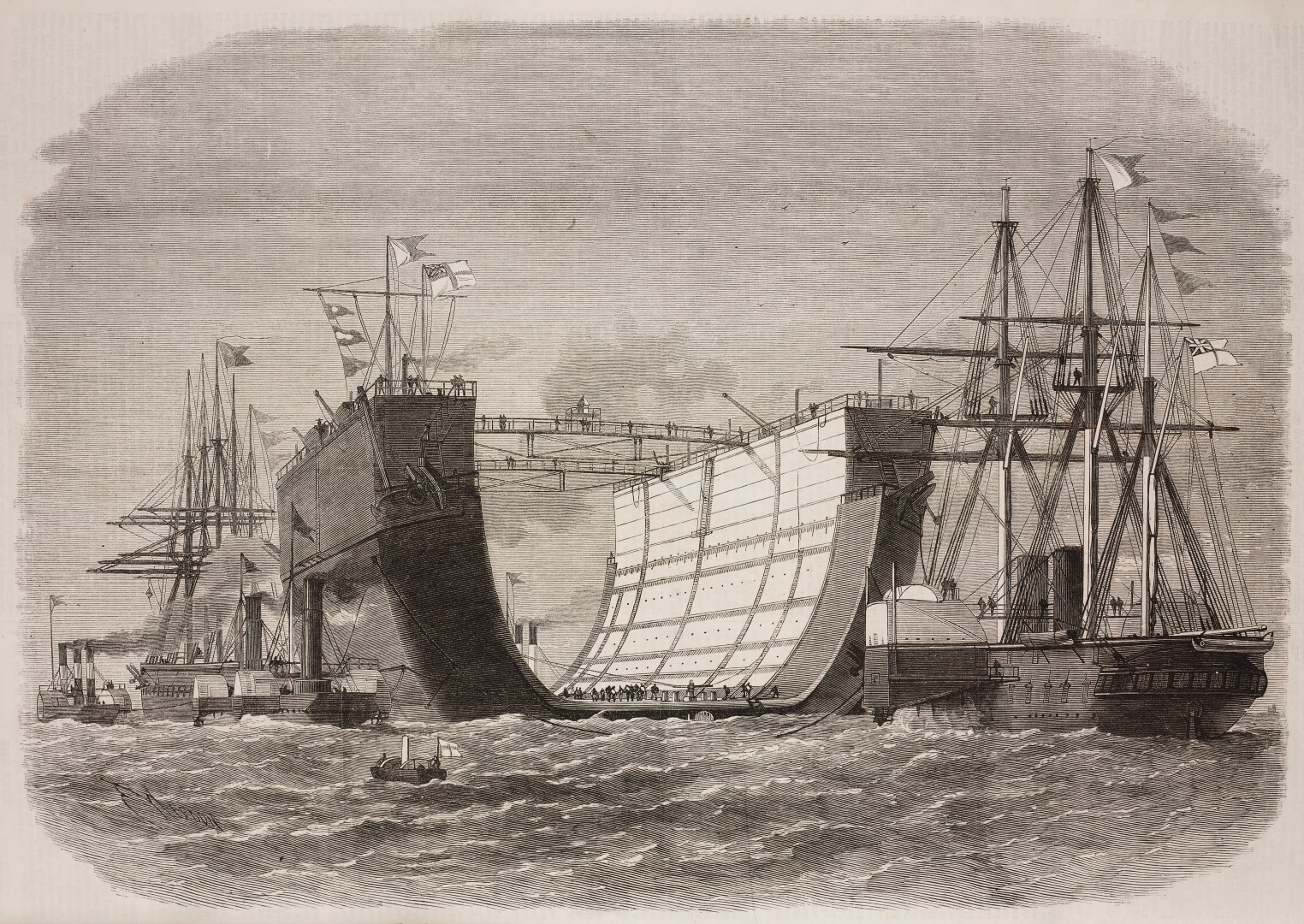
Back in the 1860s, the British engineers built what should be known as an engineering marvel. Since they couldn’t build a traditional dry dock in Bermuda (a British overseas territory), engineers decided to build a giant floating one and tow it there instead.
Called the HM Floating Dock Bermuda (HM Bermuda), it weighed close to 8 thousand tons, and measured 381 feet long (116 meters)
74 feet tall (22 meters). This gigantic “half pipe” was one of the most interesting engineering projects of the age. But have you ever heard of it?
If you haven’t, you are in for a real treat. Let’s find out more.
Bermuda (of the triangle fame) is an archipelago located in the Western Atlantic Ocean. Famed today as a popular tourist destination, the islands were first populated by British settlers in the 1600s.
By the mid-1800s, the island had become a major Royal Navy hub in the region and had proved critical during the American Revolutionary Wars and the later American Civil War.
The loss of American naval dockyards after the Revolutionary Wars obviously compounded the problem. Given its importance, the island had its own dedicated fleet, which required servicing and repairs.
Without one, Royal Navy ships would have to sail back to the closest “friendly” dockyards. That would add weeks, perhaps months, to them being out of service beyond what was already required.
While docks existed, what was actually needed was a dedicated dry dock. However, as we alluded to above, Bermuda, at the time, was not an ideal location to build such a structure. Its remote location aside, the geology of the island made it nearly impossible to achieve.
It turns out the limestone shores of Bermuda are incredibly porous, meaning any water pumped out of a structure built in it will flood again. For a facility intended to remain dry when ships are under repair, that is obviously not ideal.
So, in the typical British problem-solving style of the time, engineering decided to just build a floating one and ship it across the North Atlantic instead.
A tall order indeed.
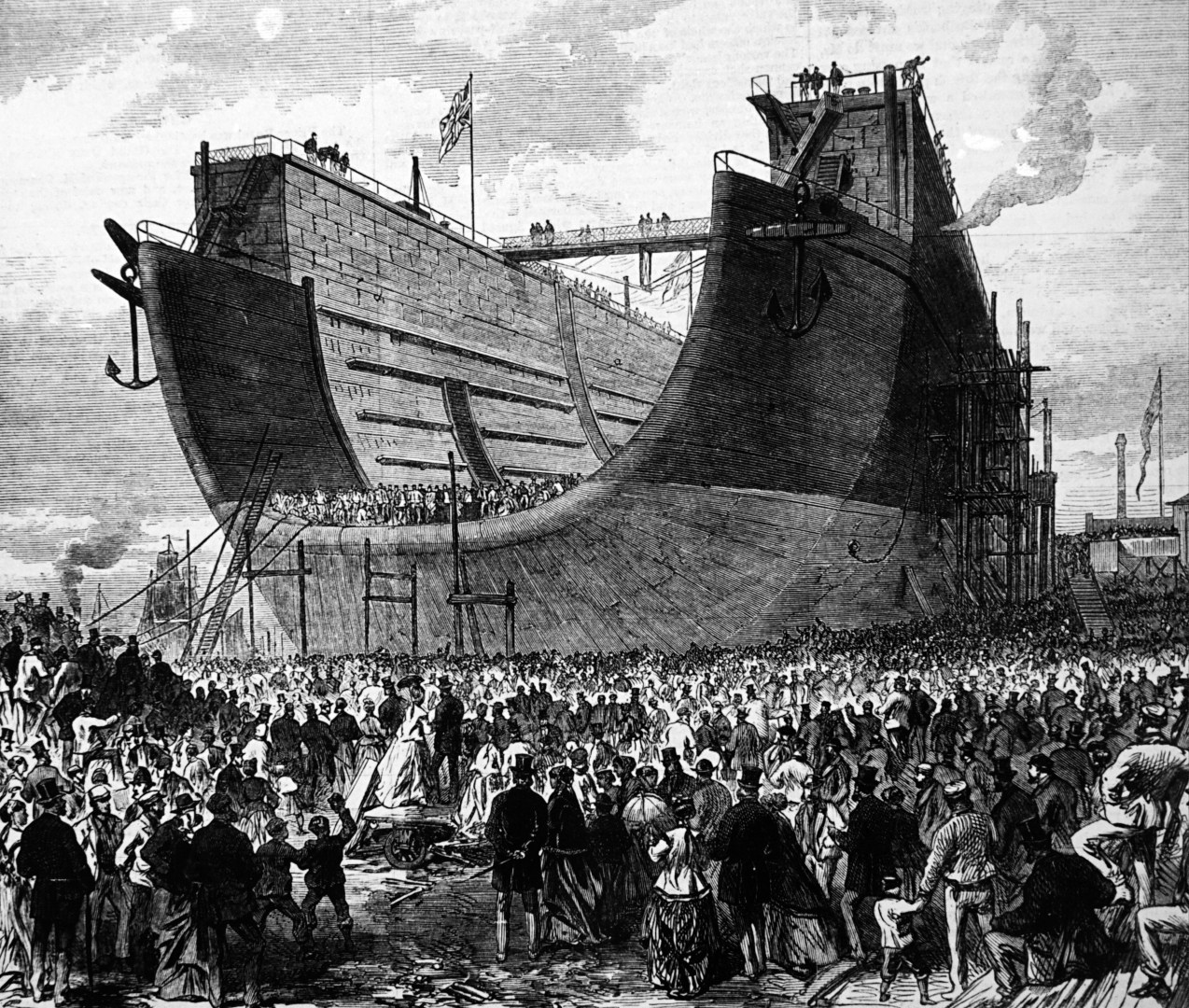
Work began on the floating dock at the Campbell & Johnstone yard on the River Thames, London. A work crew of around 1,400 men riveted the steel plates of her structure together, with her hulk being launched in September 1868.
While she was ready, bad weather delayed her transit to the Bermudas until the following year. At that time, no purpose-built tugs existed that were capable of towing such an immense structure, so two British warships were requisitioned for the task.
So, in the summer of 1869, ironclads HMS Agincourt and HMS Northumberland pulled the dock to Madeira in the Atlantic. From there, other warships, HMS Warrior and HMS Black Prince, picked up the baton for the trip to Bermuda, with HMS Terrible lashed behind to help steer.
By all accounts, the trip over was uneventful, with some sailcloth stretched across the HM Bermuda’s “walls” to act like a giant sail. Yet, despite this, the convoy was only able to achieve an average of just under 5 knots (5.7 mph/9.26 kph).
By July 28, 1869, the epic journey was completed, with the dock arriving safely in Bermuda. As you can appreciate, the event was met with a lot of local interest, with residents flocking nearby to watch the spectacle.
Interestingly, however, its arrival at the islands was one of the trickiest parts of the operation. Narrow channels, sudden squalls, and other mishaps saw her eventually anchored and flooded to keep her safe at the bottom of Grassy Bay.
Once the weather improved, the HM Bermuda was put in her final location and put to work. She would serve for a total of 30 years until she was finally replaced in 1902.
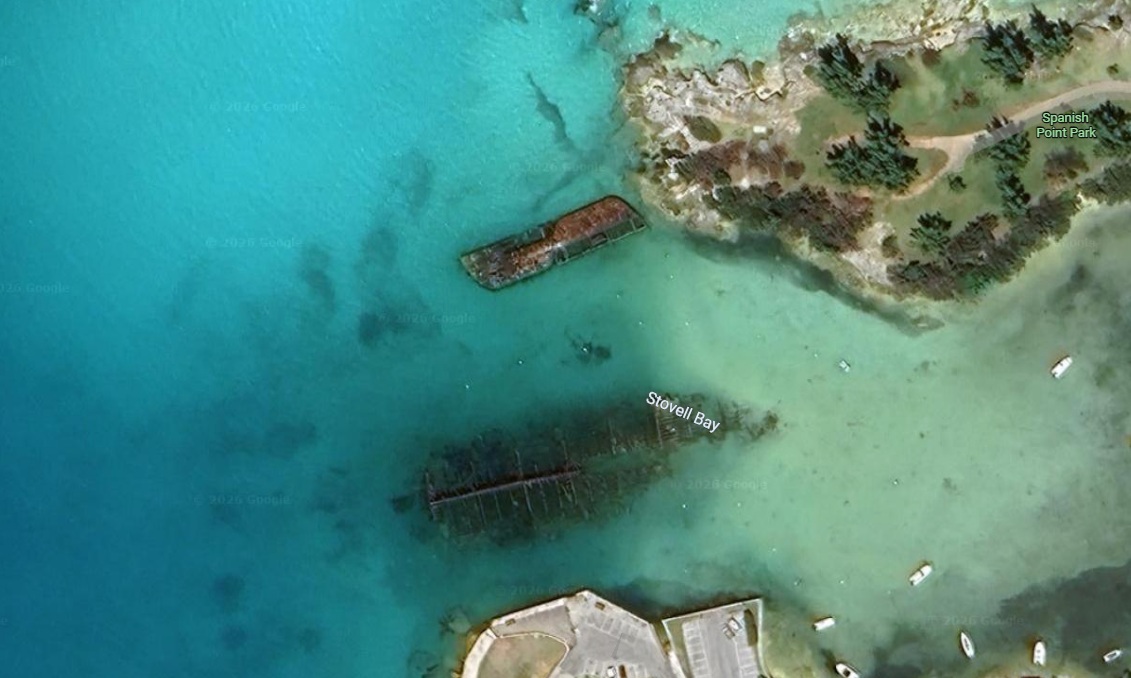
She was later sold for scrap, but broke loose during towing and ran aground on a reef. Parts of her can still be seen today, sticking out of the water in Stovell Bay, Bermuda.
But how did the thing actually work? Well, firstly, the floating dock had a series of ballast tanks that could be filled or emptied on demand.
This would allow the dock to sink below sea level, allowing water to enter the “half-pipe” and provide access for ships. Once in place and moored, engineers would then close valves to the tanks and pump the water out.
The buoyancy of the structure would then allow it to rise out of the water, carrying the ship with it. Designed to handle anything up to a Bellerophon-class ironclad, the structure was able to lift ships with a maximum displacement of 8,300 tons.
With its own weight included, that would have been a total displacement of 16,300 tons!
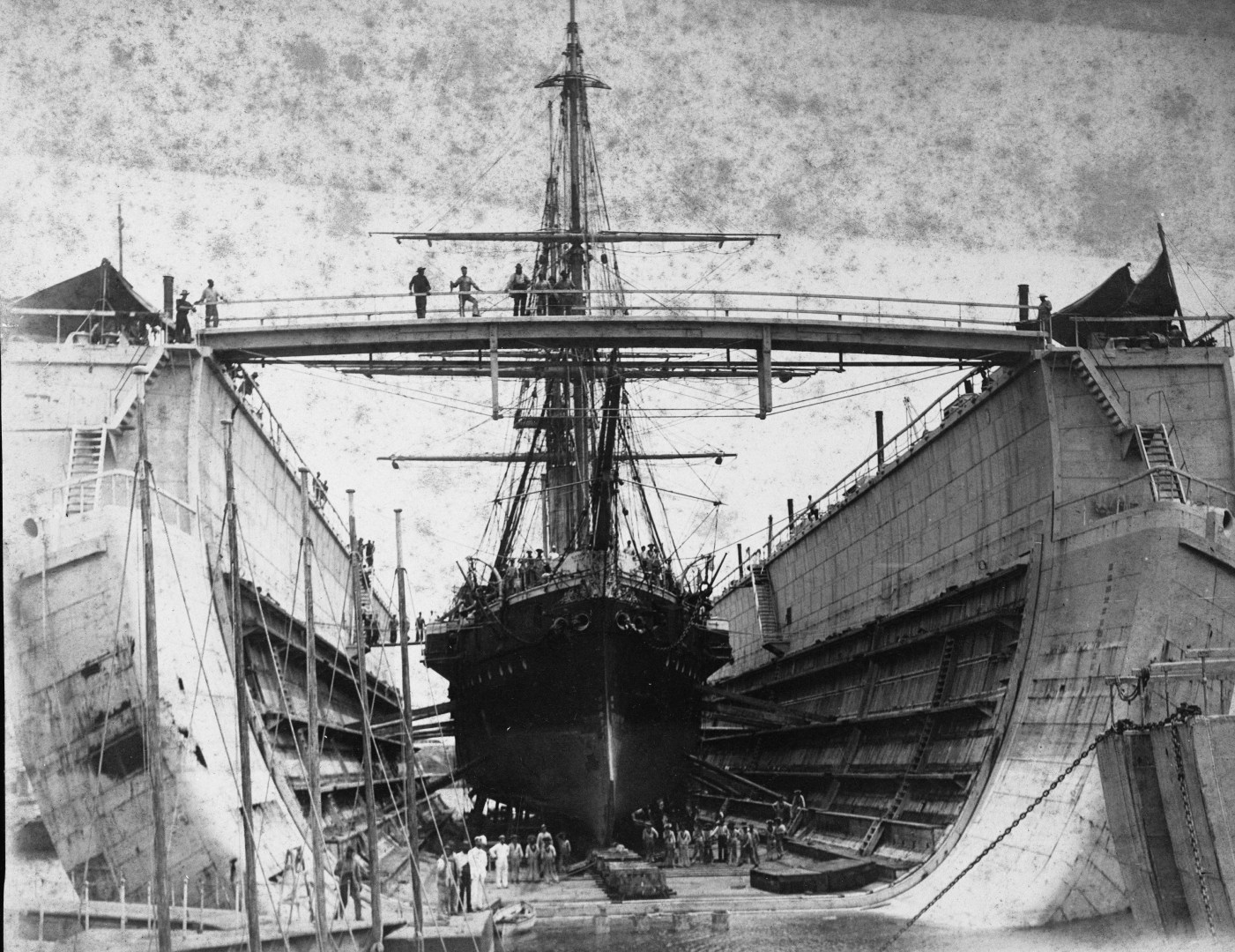
With the ship safely out of the water, engineers and workers could then be brought in to repair the hull, remove barnacles, fix propellers, and patch leaks.
But wait, it gets even more impressive. The dock was designed in such a way that it could also tip over (self-careen). This enabled workers, when required, to clean the dock itself, repair the dock hull, and remove marine growth.
Pretty impressive all around, we think you’ll agree.
And that’s your lot for today.
For more than three decades, this strange, U-pipe-shaped giant quietly kept Britain’s Atlantic fleet in fighting condition, far from home.
Today, the rusting remains of the HM Bermuda still poke above the waves, a fading reminder of a time when, faced with an impossible problem, Victorian engineers simply built a solution big enough to float across an ocean.
此内容由惯性聚合(RSS阅读器)自动聚合整理,仅供阅读参考。 原文来自 — 版权归原作者所有。