







The upgraded SNS can now analyze crystals once considered too small to study.
Scientists in the US have upgraded the Spallation Neutron Source (SNS), the most powerful neutron source in the world, and it can now run faster experiments, test smaller samples, and collect sharper data.
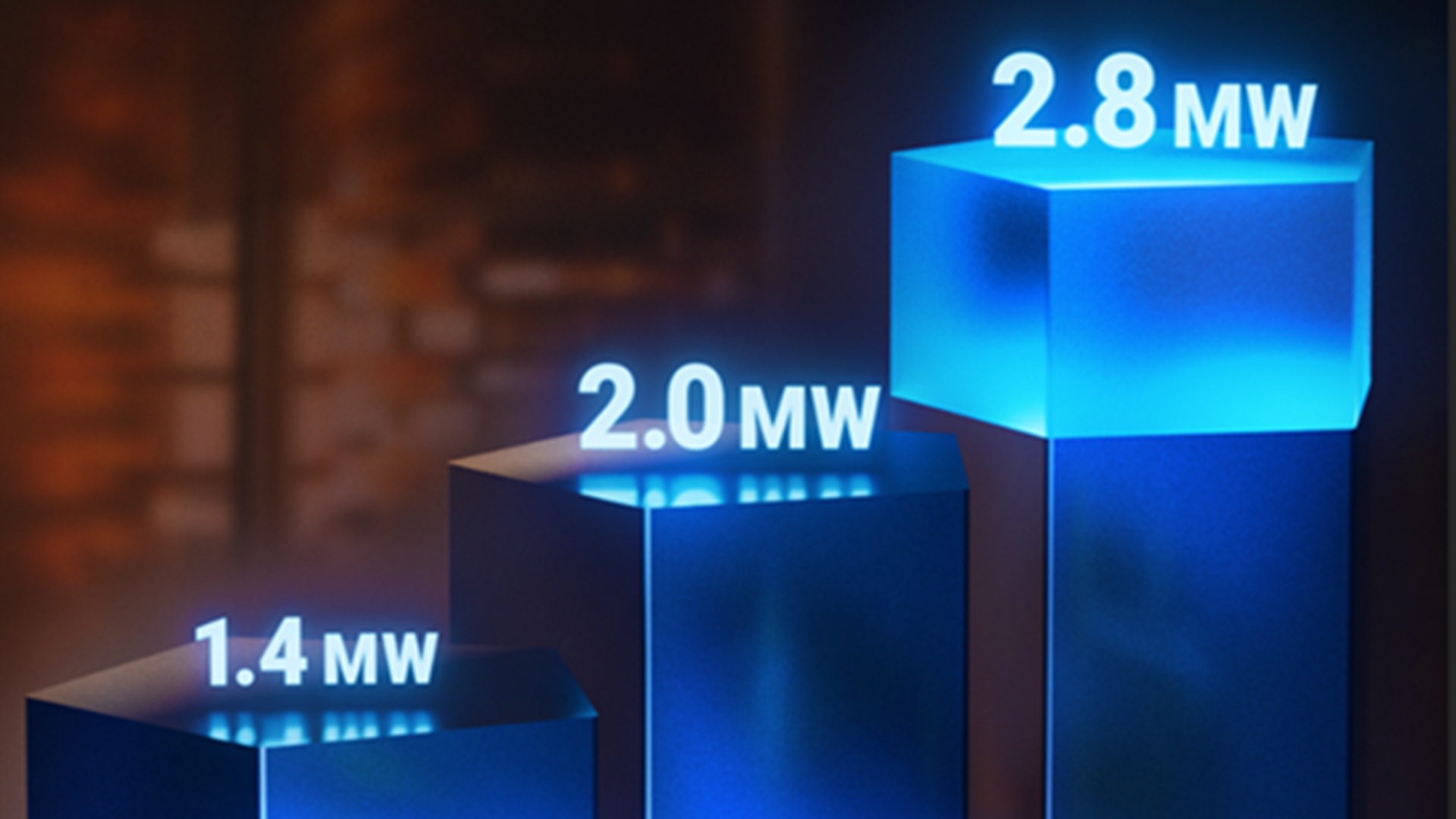
The SNS, an accelerator-based neutron source facility at the Oak Ridge National Laboratory (ORNL) in Tennessee, provides the most intense pulse neutron beams in the world. The SNS linear accelerator (linac), the world’s most powerful pulsed proton accelerator, is now well on its way to run at 2.8 megawatts (MW), twice the proton power level it originally had.
Its power boost comes from the Proton Power Upgrade project, which is also tied to the development of the Second Target Station (STS). The upgrade is already speeding up research at the First Target Station (FTS).
The ORNL team noted that the stronger neutron beams allow neutron scattering experiments to be completed faster and with much greater precision. They also improve data collection from smaller samples.
New scientific discoveries
Neutron scattering is a powerful method used to study the structure and behavior of materials at the atomic and nanoscale levels using neutron beams. It is crucial for advanced batteries, quantum materials, superconductors, and pharmaceuticals.
Unlike X-rays, neutrons are especially useful for detecting hydrogen atoms and measuring their quantities with high accuracy. This opens new opportunities for studying complex materials and chemical processes.
Jon Taylor, associate laboratory director at ORNL’s Neutron Sciences Directorate, emphasized the significance of the SNS. “The completed proton power upgrade ensures SNS will remain the world’s most powerful proton accelerator to support future discoveries in materials and the life sciences,” Taylor added.
Following the upgrade, certain experiments that previously required days or even weeks of beam time can now be completed within just one to 12 hours. This will help the ORNL team better process and analyze experimental results.
What’s more, the stronger neutron beam will also improve data quality, because the team can now rotate samples during experiments rather than relying on static snapshots of materials.
This will create detailed slow-motion “movies” that capture atomic and molecular changes in real time. According to the team, this also includes phase transitions between different states of matter.
Faster neutron research
Meanwhile, the researchers can now carry out experiments under more extreme conditions, such as magnetic fields, extreme temperatures, and intense pressure environments. “We are now able to study samples of new and exciting materials that were previously too small to use in our experiments,” Christina Hoffmann, PhD, an instrument scientist at ORNL, said.
Hoffmann pointed out that previous neutron experiments relied on large crystals that could take weeks or months to grow. The upgraded SNS can study samples as small as those used in X-ray diffraction experiments, measuring roughly 100 by 200 microns. This is close to what the human eye can see.
In addition, the upgrade is expanding the facility’s “mail-in” experiment program. “We’ve already been able to expand our mail-in capabilities to nine instruments here at SNS,” Matthew Stone, PhD, a scientist leading the SEQUOIA instrument, said in a press release.
“The increased proton power has really made a big difference in our ability to respond to scientific proposals in general,” Stone concluded. The linac will power the Second Target Station, which is designed to provide the world’s brightest cold neutrons for studying increasingly complex materials.

Get the latest in engineering, tech, space & science - delivered daily to your inbox.
Based in Skopje, North Macedonia. Her work has appeared in Daily Mail, Mirror, Daily Star, Yahoo, NationalWorld, Newsweek, Press Gazette and others. She covers stories on batteries, wind energy, sustainable shipping and new discoveries. When she's not chasing the next big science story, she's traveling, exploring new cultures, or enjoying good food with even better wine.