


Listen on the go! A daily podcast of Wall Street Breakfast will be available by 8:00 a.m. on Seeking Alpha, iTunes, Spotify.
Getty Images
Up for a challenge? Test your knowledge on the biggest events in the investing world over the past week. Take the latest Seeking Alpha News Quiz and see how you stack up against the competition.
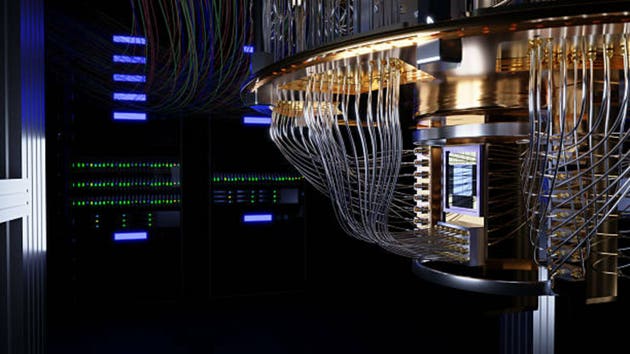
The cryptocurrency industry is bracing for Q-Day, when quantum computers will be able to break standard public-key encryption, posing major risks to Bitcoin (BTC-USD) and digital finance. Google (GOOGL) recently urged vulnerable crypto communities to join the migration to post-quantum cryptography, setting an internal deadline for 2029.
Crypto threat: Wallets that store cryptos have two keys: a public key that works like an address to send or receive funds and a private key that is like a password for users to access and manage their funds. Advanced quantum computers could one day decrypt private keys, allowing hackers to access crypto wallets. Crypto research firm Glassnode estimated that around 30% of Bitcoin's supply may be exposed to the quantum risk. A recent Quantum AI research found that future quantum computers may be capable of breaking the cryptography underpinning Bitcoin and other cryptos with fewer resources than previously estimated.
Dig deeper: Ayo Akinyele, head of engineering at RippleX (XRP-USD), pointed to Google's research, saying "the findings show that the cryptography most blockchains rely on today can be broken by sufficiently advanced quantum computers, including the algorithms that secure wallets, sign transactions, and protect digital assets." Akinyele said this doesn't mean assets are at risk now, "but the threat has moved from theoretical to credible, and preparation timelines now matter." RippleX is preparing a roadmap for a full transition of the XRPL network to post-quantum cryptography, targeting to complete the shift no later than 2028. The Ethereum Foundation, responsible for one of the biggest blockchains, and stablecoin issuer Circle (CRCL) are working on their own post-quantum plans.
Bigger picture: The quantum risk also threatens traditional financial firms that have increasingly invested in blockchain-based payment systems, stablecoins and tokenized assets. According to a Citi Institute analysis from January, a single-day quantum attack on a top-five U.S. bank's access to Fedwire could potentially cost the economy $2T-$3.3T in indirect impacts. Meanwhile, the U.S. government is betting big on quantum computing, awarding $2B in grants to nine firms including IBM (IBM), GlobalFoundries (GFS) and others.
Here's the latest Seeking Alpha analysis
What else is happening...
Today's Markets
In Asia, Japan +2.7%. Hong Kong +0.9%. China +0.9%. India +0.3%.
In Europe, at midday, London +0.4%. Paris +0.4%. Frankfurt +0.5%.
Futures at 6:30, Dow +0.2%. S&P +0.1%. Nasdaq flat. Crude +2.2% to $98.50. Gold -0.4% to $4,525.80. Bitcoin flat at $77,251.
Ten-year Treasury Yield -1 bp to 4.56%.
On The Calendar
此内容由惯性聚合(RSS阅读器)自动聚合整理,仅供阅读参考。 原文来自 — 版权归原作者所有。