



Listen on the go! A daily podcast of Wall Street Breakfast will be available by 8:00 a.m. on Seeking Alpha, iTunes, Spotify.
Getty Images
SpaceX's (SPCX) S-1 filing gives the clearest look yet at a company tied to satellite internet, military and government contracts, AI infrastructure and Elon Musk's ambition to build a multi-planetary economy. The sprawling business' self-assessed total addressable market of $28.5T, if realized, would approach the entire output of the U.S. economy.
Orbital AI: SpaceX's Connectivity segment, driven by Starlink (STRLK), is its financial engine with $4.4B operating profit in 2025. By contrast, SpaceX's newly acquired AI segment is burning cash at a remarkable pace, with operating loss of $6.4B in 2025. SpaceX appears to be pitching itself not simply as a space transportation company, but as a future platform for orbital computing and AI infrastructure. It ultimately plans to deploy massive solar-powered AI compute capacity in orbit, part of Musk's argument that space-based infrastructure could help solve terrestrial energy and cooling constraints tied to AI growth. At the same time, the filing includes blunt warnings that many of these concepts remain commercially unproven. SpaceX acknowledges that orbital AI data centers, lunar industry and Martian settlements may never become economically viable businesses.
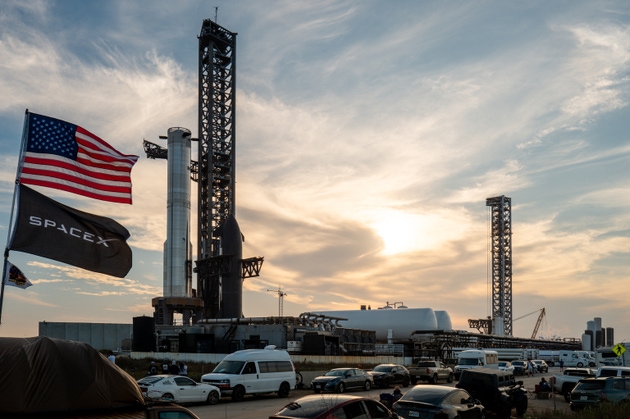
Bigger picture: The filing underscores how heavily SpaceX continues to invest in Starship, its massive next-generation launch vehicle. Its Space segment posted $657M operating loss in 2025 and spent over $3B on research and development tied to Starship that year. Starship is designed to improve payload capacity, reusability and launch frequency. To note, SpaceX is preparing to launch the 12th uncrewed test flight of its Starship rocket this week, as early as Thursday. Success could strengthen confidence in future revenue streams tied to Starlink satellite expansion, lunar missions and Musk’s longer-term ambitions for Mars travel and space-based infrastructure. Another high-profile setback, however, could revive concerns about the timeline and cost of the program.
Retaining control: The filing makes clear that SpaceX's IPO will do little to dilute Musk's grip on the company. He will continue to serve as CEO, CTO and board chairman while maintaining majority voting control through a dual-class share structure. SpaceX's Class B shares will carry 10 votes per share, while Class A shares sold to public investors will have one vote each. Musk owns 12.3% of Class A shares and 93.6% of Class B shares, giving him roughly 85.1% of overall voting power. Class B shareholders will have the right to elect 51% of the board's directors, giving Musk and other insiders effective control. The filing states that the structure will "limit or preclude" the ability of Class A shareholders to influence corporate matters or director elections.
Here's the latest Seeking Alpha analysis
What else is happening...
Today's Markets
In Asia, Japan +3.1%. Hong Kong -1%. China -2%. India -0.2%.
In Europe, at midday, London -0.5%. Paris -0.3%. Frankfurt -0.3%.
Futures at 6:30, Dow -0.1%. S&P -0.2%. Nasdaq -0.3%. Crude +1.7% to $99.90. Gold -0.4% to $4,518,70. Bitcoin -0.4% to $77,244.
Ten-year Treasury Yield +2 bps to 4.61%.
On The Calendar
此内容由惯性聚合(RSS阅读器)自动聚合整理,仅供阅读参考。 原文来自 — 版权归原作者所有。