





Listen on the go! A daily podcast of Wall Street Breakfast will be available by 8:00 a.m. on Seeking Alpha, iTunes, Spotify.
Getty Images
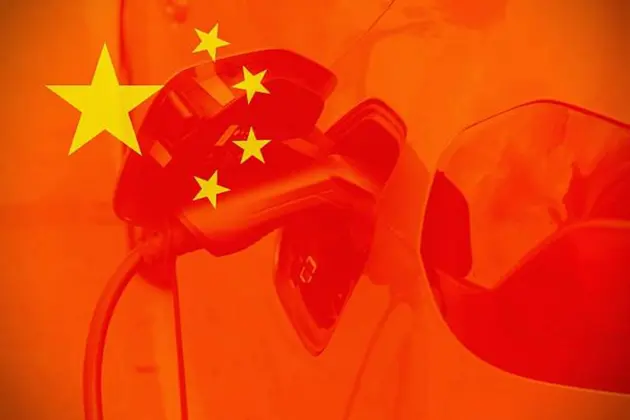
Investors and consumers are still debating whether protectionism and containment are a strategic auto shield or a costly delay. Should the American government welcome Chinese cars into the U.S.?• Definitely (benefits of free market competition)
• No way (will eventually wipe out U.S. industry)
• Conditional (only allowed with local factories)
• Verification (ban the software, not the cars)Click here to take the poll and don't forget to share your thoughts in the WSB comments section.
Welcome back from the weekend! Here's the latest in trending:
ID'd: The White House dinner shooting suspect has been identified as a Caltech graduate and 'teacher of the month.'
Everything app: More than three years after buying Twitter, Elon Musk is preparing to roll out X Money.
IPO anticipation: What would the S&P (SP500) look like with SpaceX, OpenAI and Anthropic?
The American car industry is ruled by U.S. automakers, and notable ones from Japan, Europe, and Korea, but one region is being purposely excluded, and it's starting to make waves. Across the globe, consumers are enjoying a plethora of high-quality Chinese cars—ranging from BYD (BYDDY) and XPeng (XPEV) to Nio (NIO) and even Xiaomi (XIACY). In the U.S., these vehicles are nowhere to be found, frustrating the price-conscious consumer in an era of sticker shock, elevated costs at the pump, and high interest rates.
Backdrop: In the early years, the Chinese government forced Western automakers to form joint ventures with state-owned companies, effectively trading their engineering prowess for a seat at the table. Over time, the Chinese Communist Party identified a niche where they could leapfrog the globe, setting a national goal to develop electric vehicle technology, or what would be called "new energy vehicles." These cars eventually became software on wheels, with megacastings that replaced hundreds of individual parts and utilizing the battery pack as the floor of the vehicle.
In 2024, the United States introduced a 100% tariff on Chinese EV imports under President Biden, and in early 2025, a new executive order was finalized that essentially banned the sale and import of vehicles containing technology linked to China. These two policies have made it prohibitive to start any meaningful Chinese vehicle supplier networks, or adapt the cars to national regulation standards specified by the NHTSA.
Will the U.S. shift gears? Chinese cars and EVs are growing exponentially in most other big car markets, becoming dominant in Europe, Southeast Asia, the Middle East, and Latin America. It's a big deal as Americans are being increasingly exposed to these realities over social media, like the YouTube and TikTok reviews set to go viral this week from the Beijing Auto Show. Their entry into the U.S. threatens the future of traditional automakers, with the name of the game no longer the "big eating the small," but rather the "fast who are eating the slow." Take the WSB survey.
Here's the latest Seeking Alpha analysis
What else is happening...
Today's Markets
In Asia, Japan +1.4%. Hong Kong -0.2%. China +0.2%. India +0.8%.
In Europe, at midday, London +0.1%. Paris +0.4%. Frankfurt +0.6%.
Futures at 6:30, Dow -0.2%. S&P -0.1%. Nasdaq +0.1%. Crude +1.9% to $96.20. Gold -0.5% to $4,719.10. Bitcoin -0.3% to $77,804.
Ten-year Treasury Yield unchanged at 4.31%.
On The Calendar
此内容由惯性聚合(RSS阅读器)自动聚合整理,仅供阅读参考。 原文来自 — 版权归原作者所有。