









SlavkoSereda/iStock via Getty Images
The layout has been adjusted to lead with tickers and charts. Why? Because I think it allows the article to flow more naturally. Like it or hate it? Let me know in the comments.
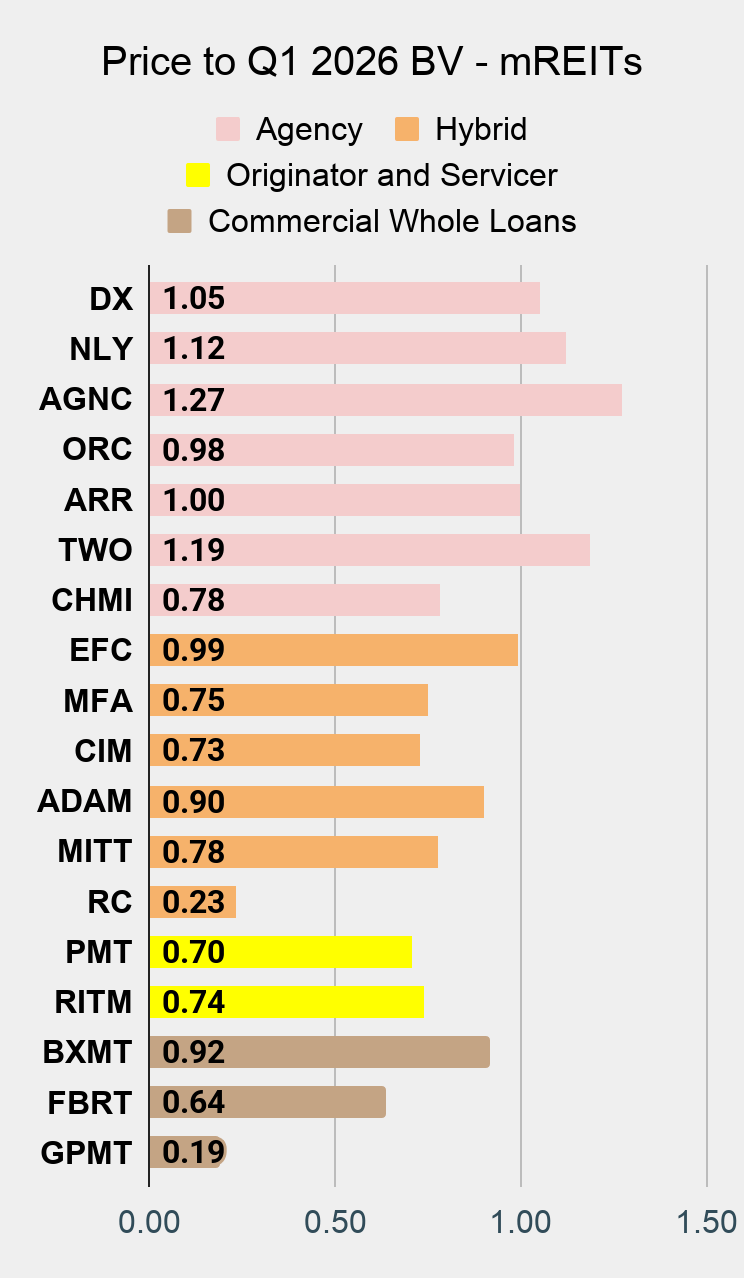
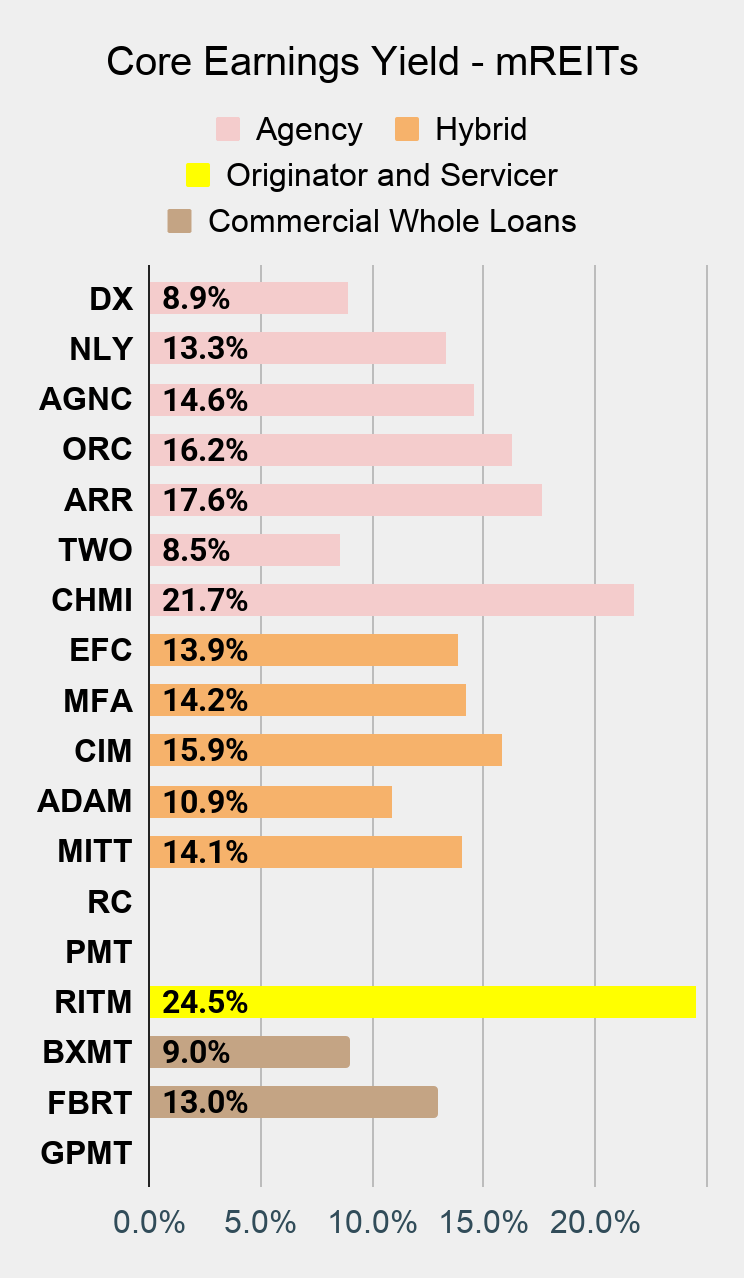
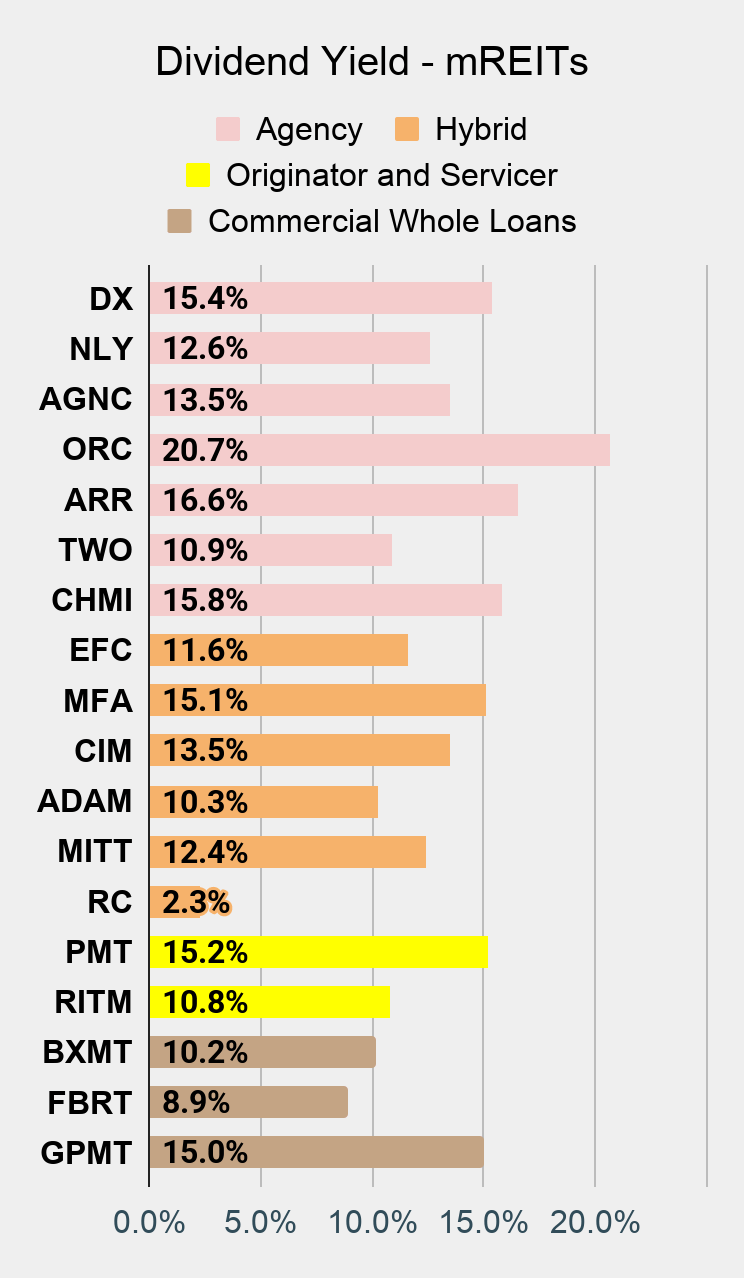
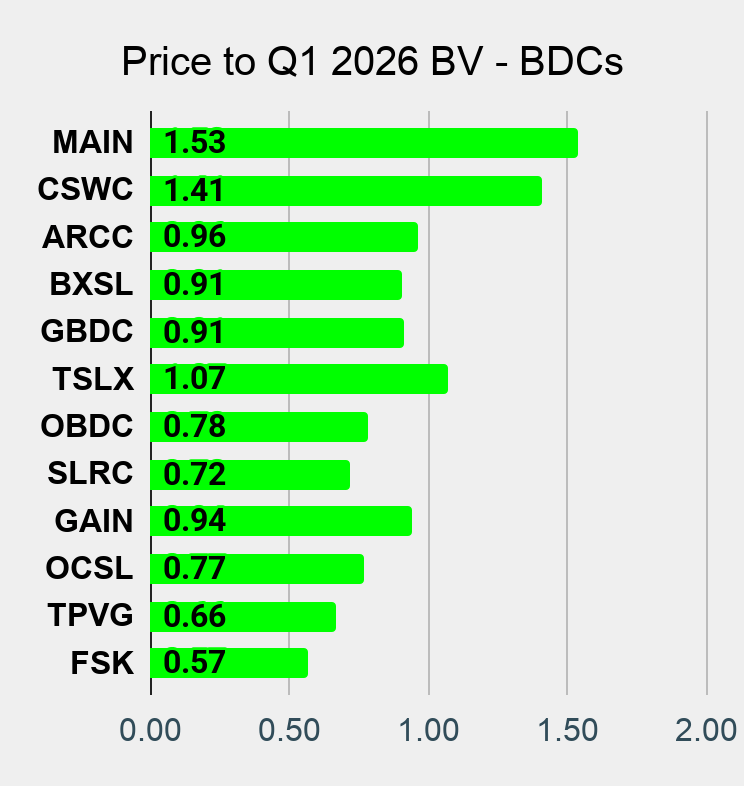
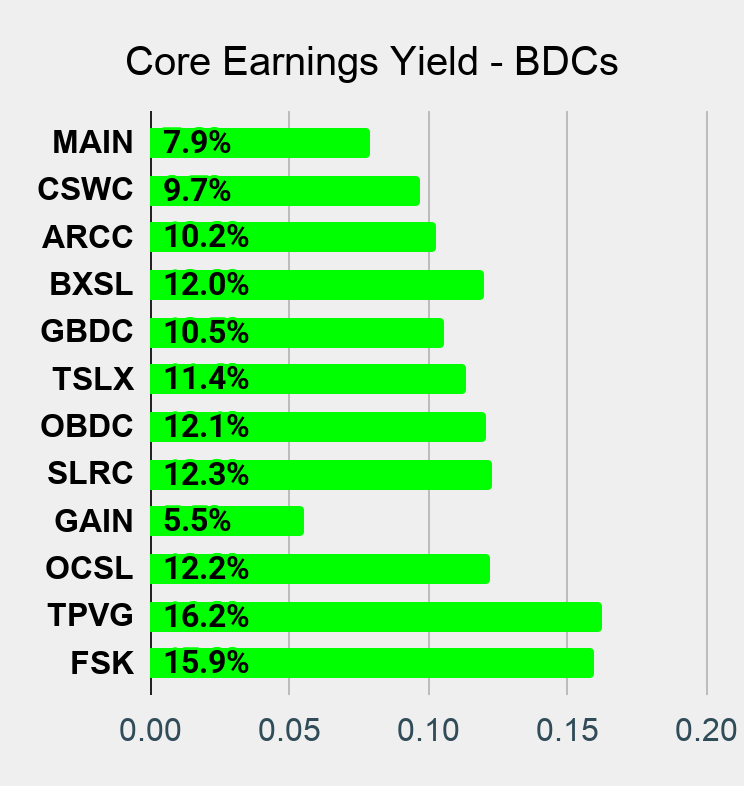
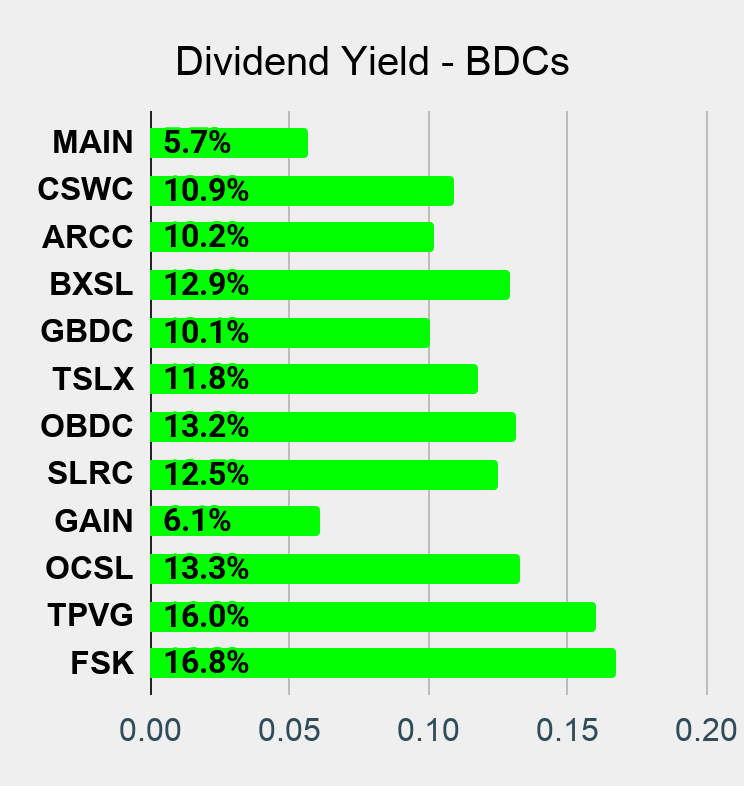
The charts compare the common shares from the following mortgage REITs and BDCs:
Agency mREITs Hybrid mREITs Originator / Servicer Commercial BDC
Mortgage REITs and BDCs:
The REIT Forum The REIT Forum The REIT Forum The REIT Forum The REIT Forum The REIT Forum
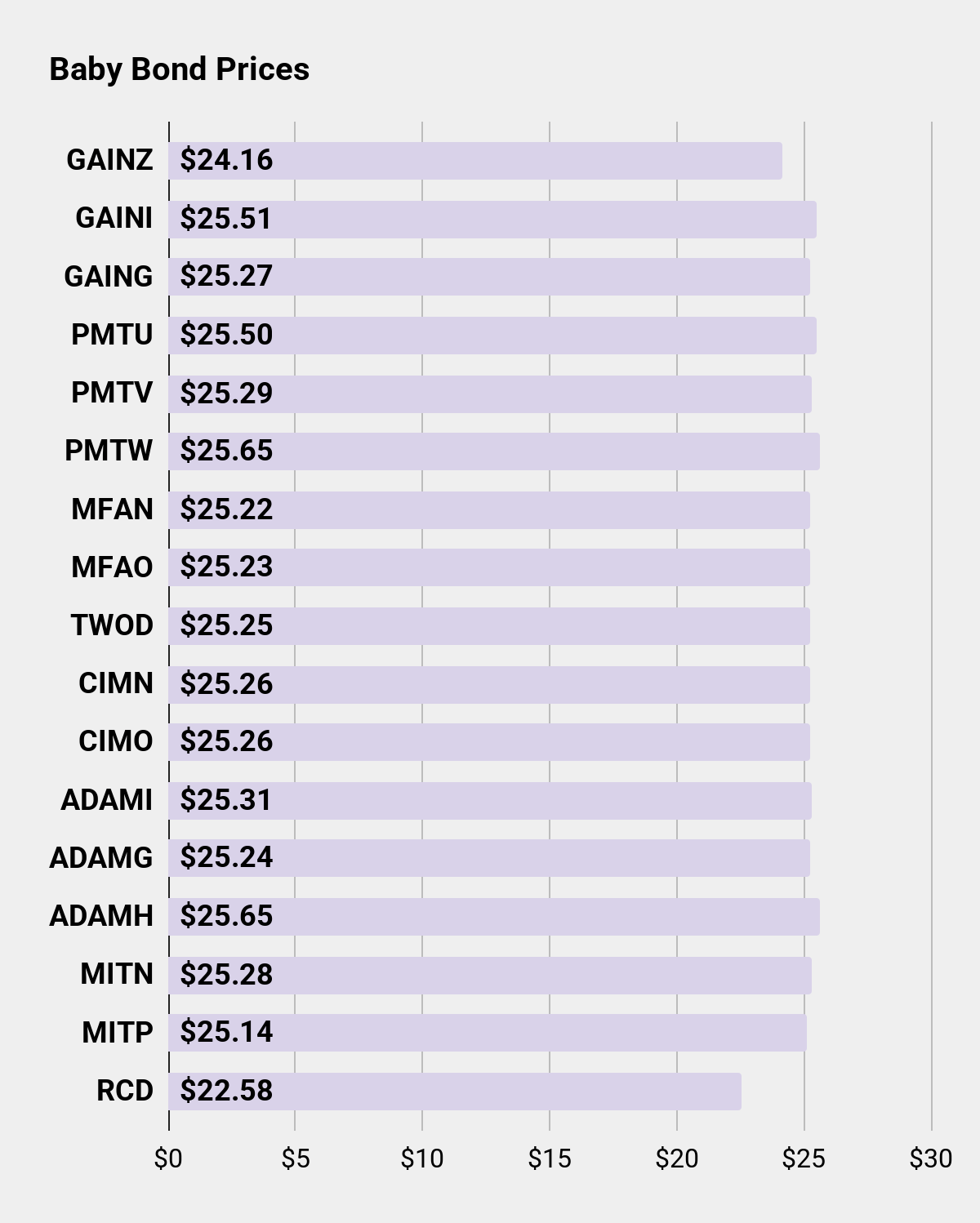
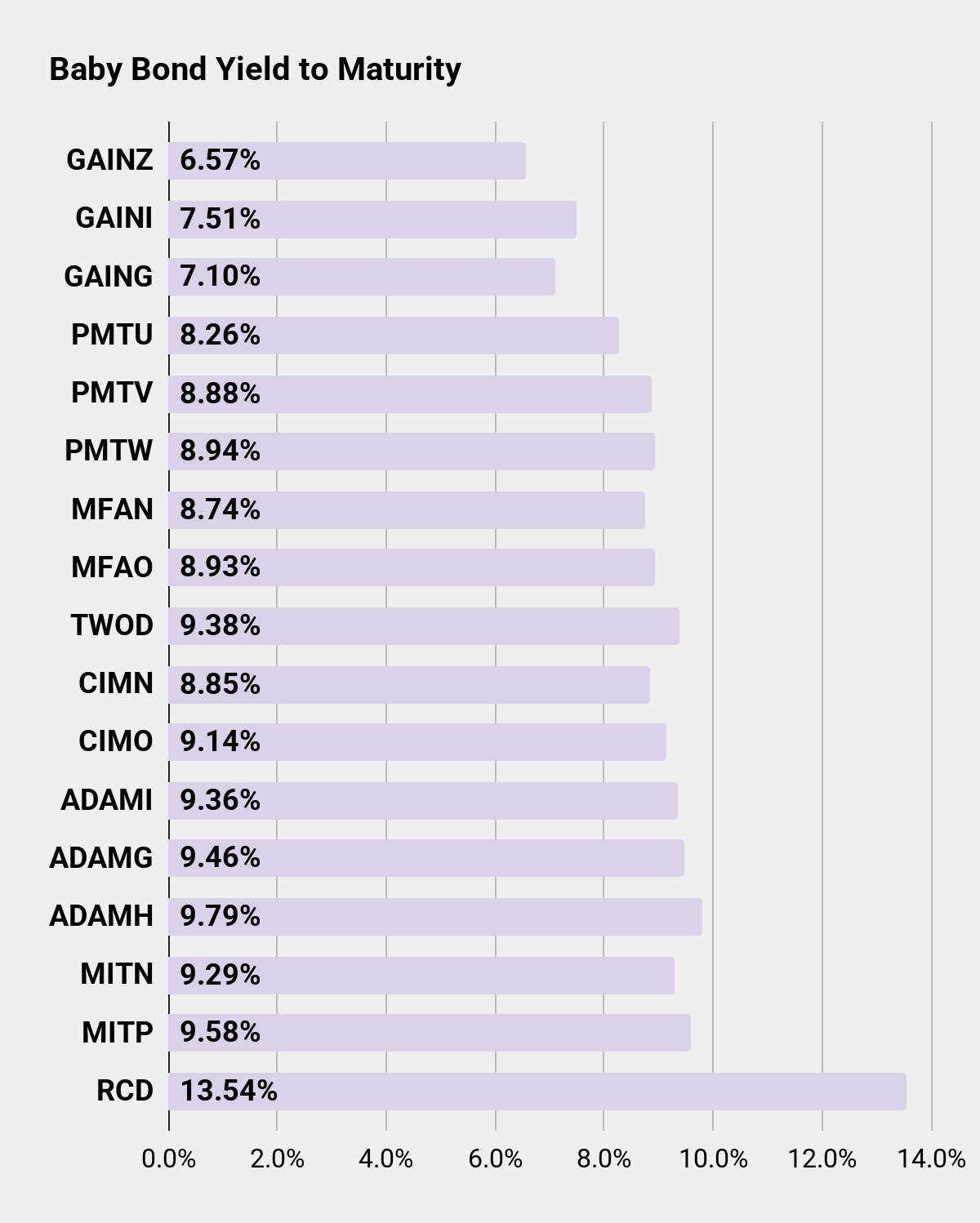
Preferred shares and baby bonds:
The REIT Forum The REIT Forum The REIT Forum The REIT Forum The REIT Forum The REIT Forum The REIT Forum The REIT Forum The REIT Forum
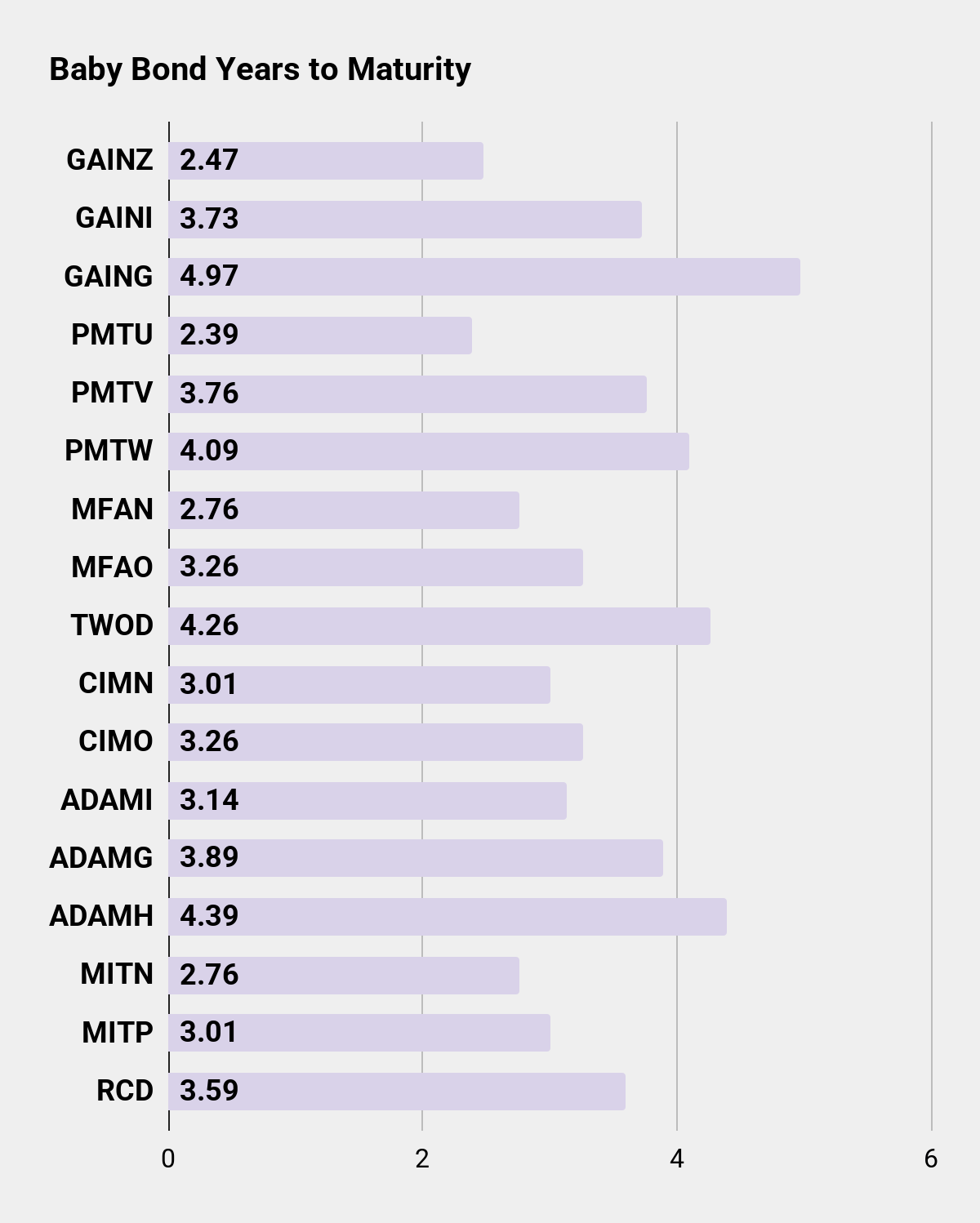
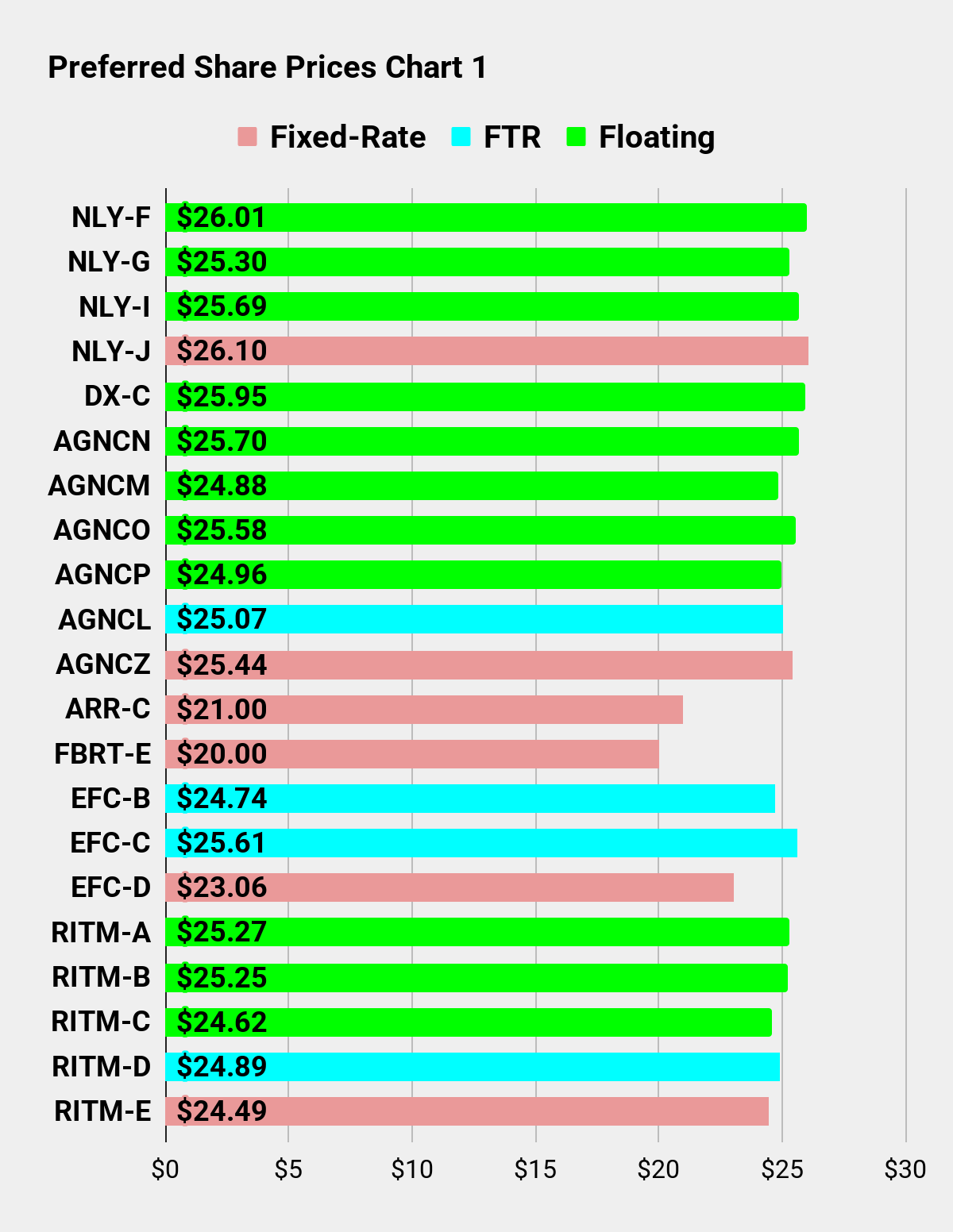
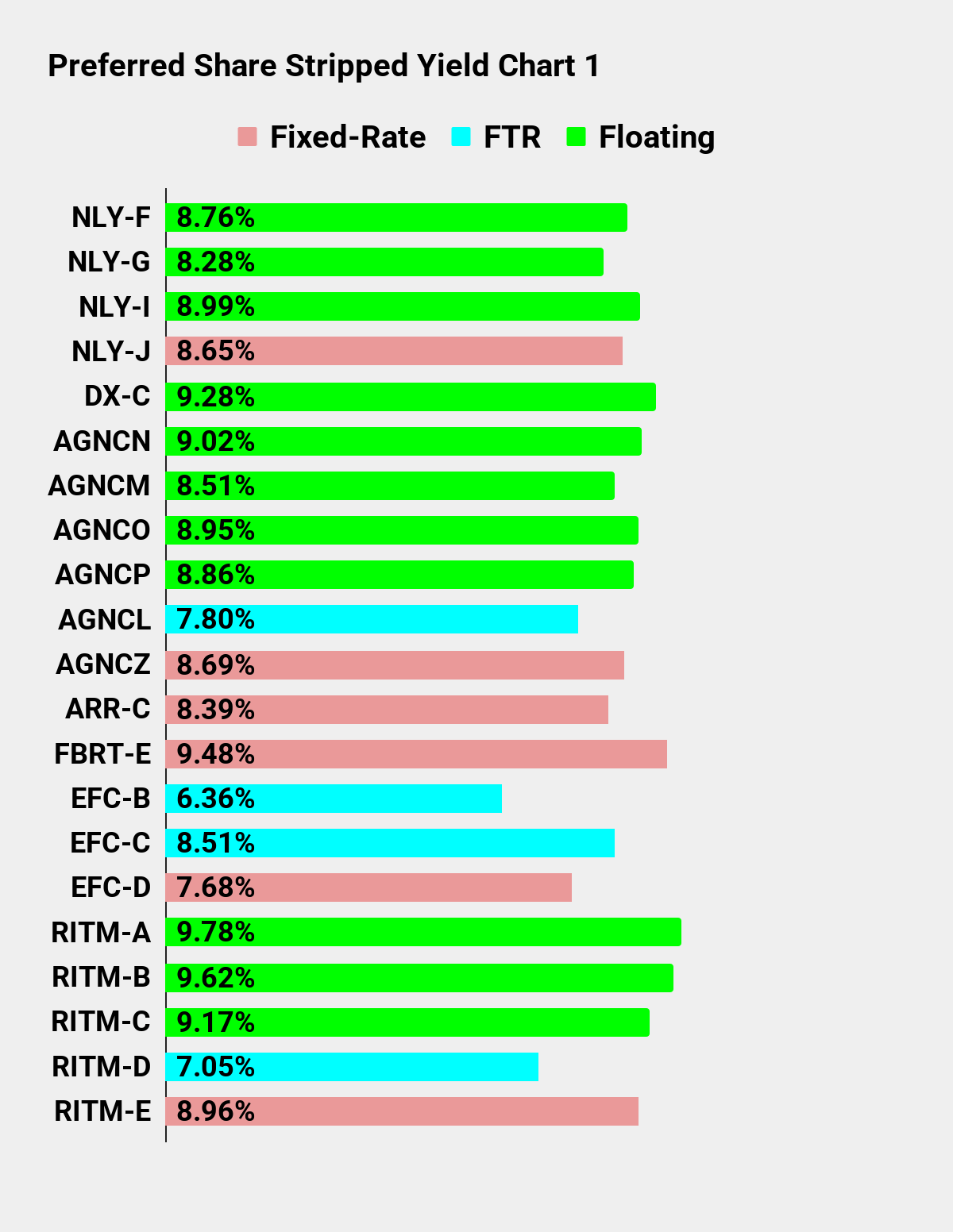
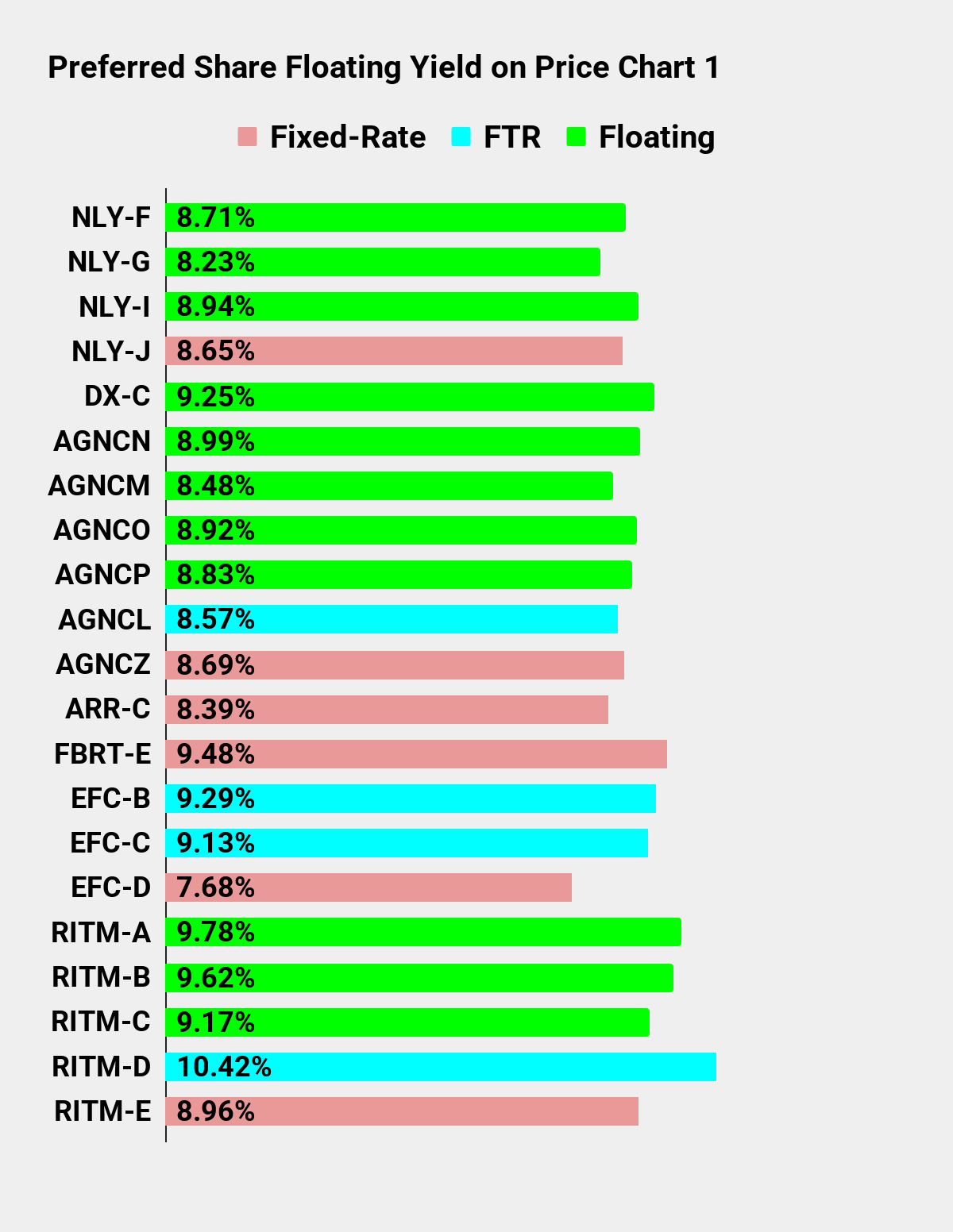
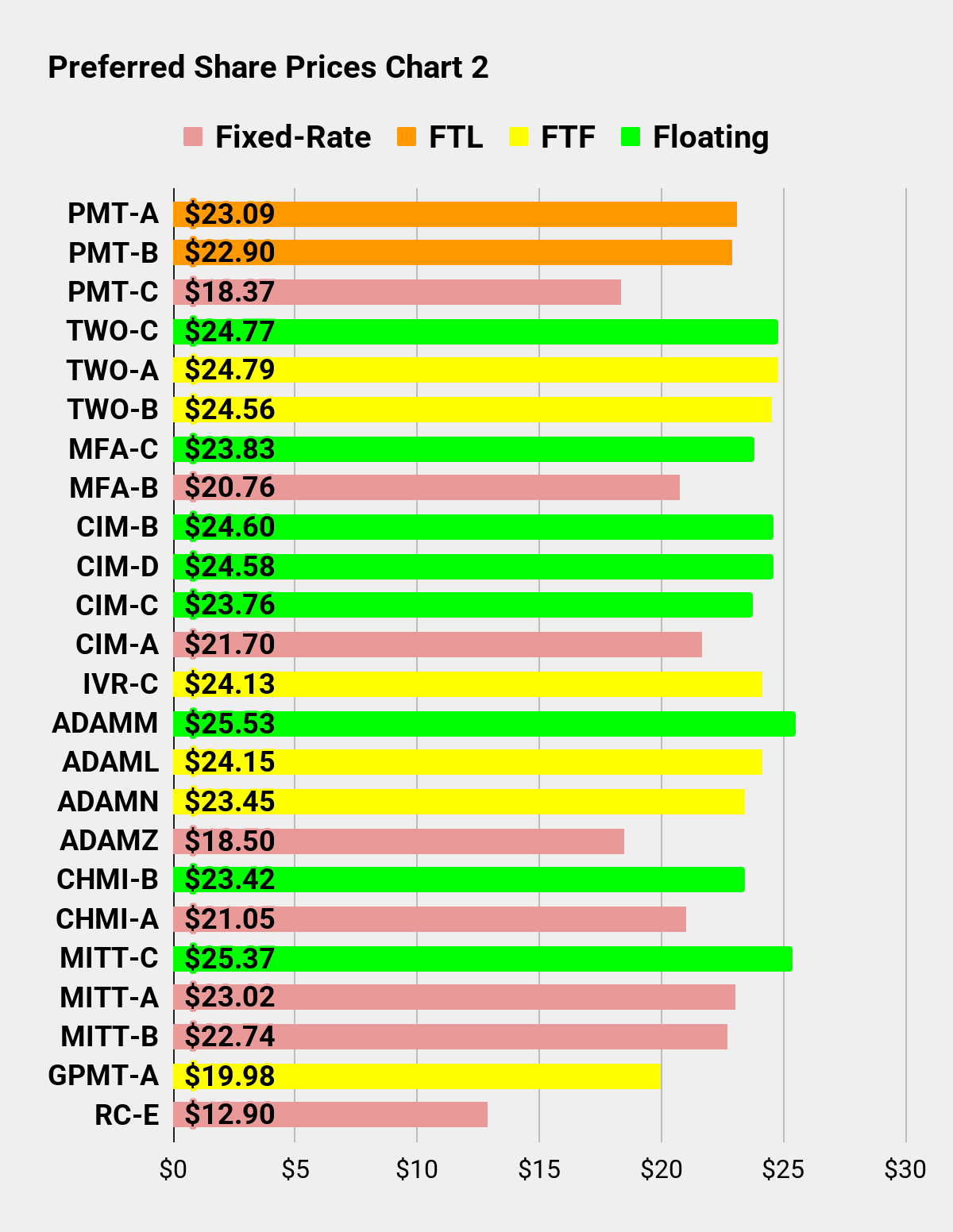
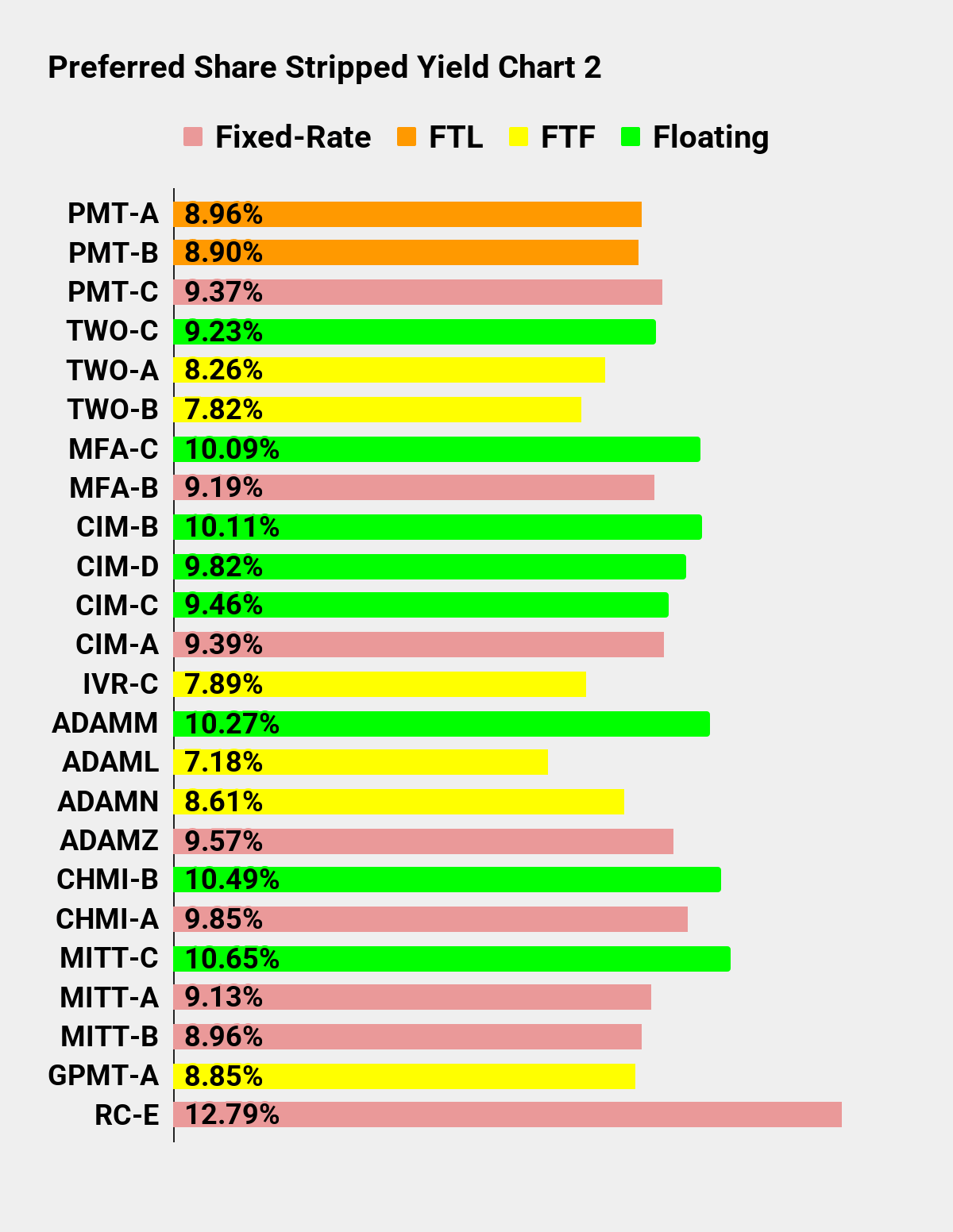
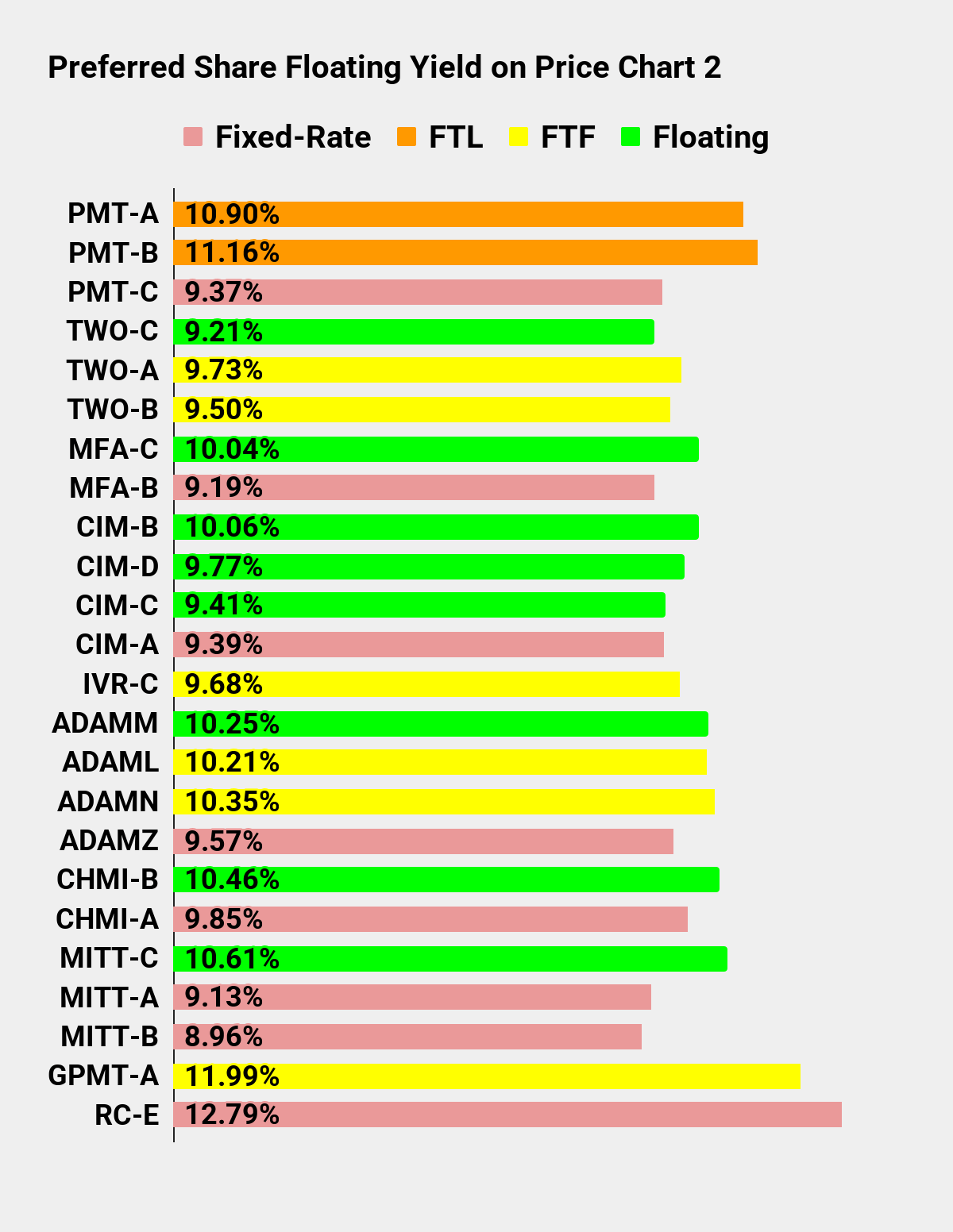
Definitions for preferred shares:
I wrote a few supporting articles over the years that may help investors understand the sector:
The guide to swapping (top link) is brand new. I hope you’ll enjoy it.
We spent the last two months going hard into preferred shares and baby bonds. It turned out quite well. We were able to take advantage of the downturn in the market to acquire some positions at bargain prices. No surprise there. The last time I wrote in this series, I told investors:
“My favorite area for purchasing lately has been the floating-rate preferred shares and baby bonds.”
We cover many of them on The REIT Forum. That should be obvious from the charts above.
The charts are using the Q1 2026 book values. We just finished getting reports from the mREITs and BDCs, so we updated all the values.
This is my favorite area for investing. I think many investors ignore this area. They see lower liquidity or lower yields relative to the common shares, and they decide that it makes more sense to own the common shares and get a higher yield. I strongly disagree. I like the preferred shares for a few reasons.
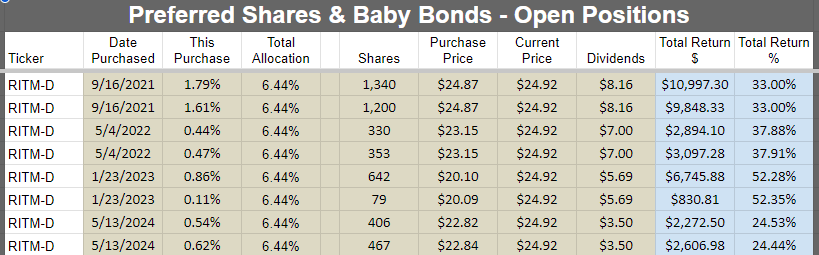
Look, I get it. Many investors would rather focus on double-digit dividend yields. There are times when it makes sense to trade in those common shares, but we rarely go there for long-term allocations. If I’m going for a long-term allocation, the baby bonds and preferred shares offer me much greater certainty. I purchased RITM-D on a few occasions. Some as early as September 2021. All of my longest preferred share allocations are in RITM-D. Is that weird? Maybe. But it worked out reasonably well. These are all of my open preferred share positions that are older than 2025:
The REIT Forum
That worked out reasonably well. When I started the first position, a yield around 7% looked pretty good. That was before interest rates ripped higher. My position continued to deliver dividends, and it eventually recovered. Along the way, I was able to get some shares at cheaper prices and really ramped up the returns. That’s a solid outcome. The shares will be callable starting 11/15/2026. That’s also when the new dividend rate kicks in. It will be 6.223% plus the five-year Treasury rate. If the five-year Treasury rate is similar to today's (4.037%), then the dividend rate would be over 10.2%. That would be a huge increase compared to the current 7% dividend rate. I think it's more likely than not that the shares are called within 2026 or very early 2027.
Since investors either get called at $25.00 or get a big dividend increase (unless five-year Treasury rates crater), it shouldn’t be surprising that those shares are trading close to $25 again.
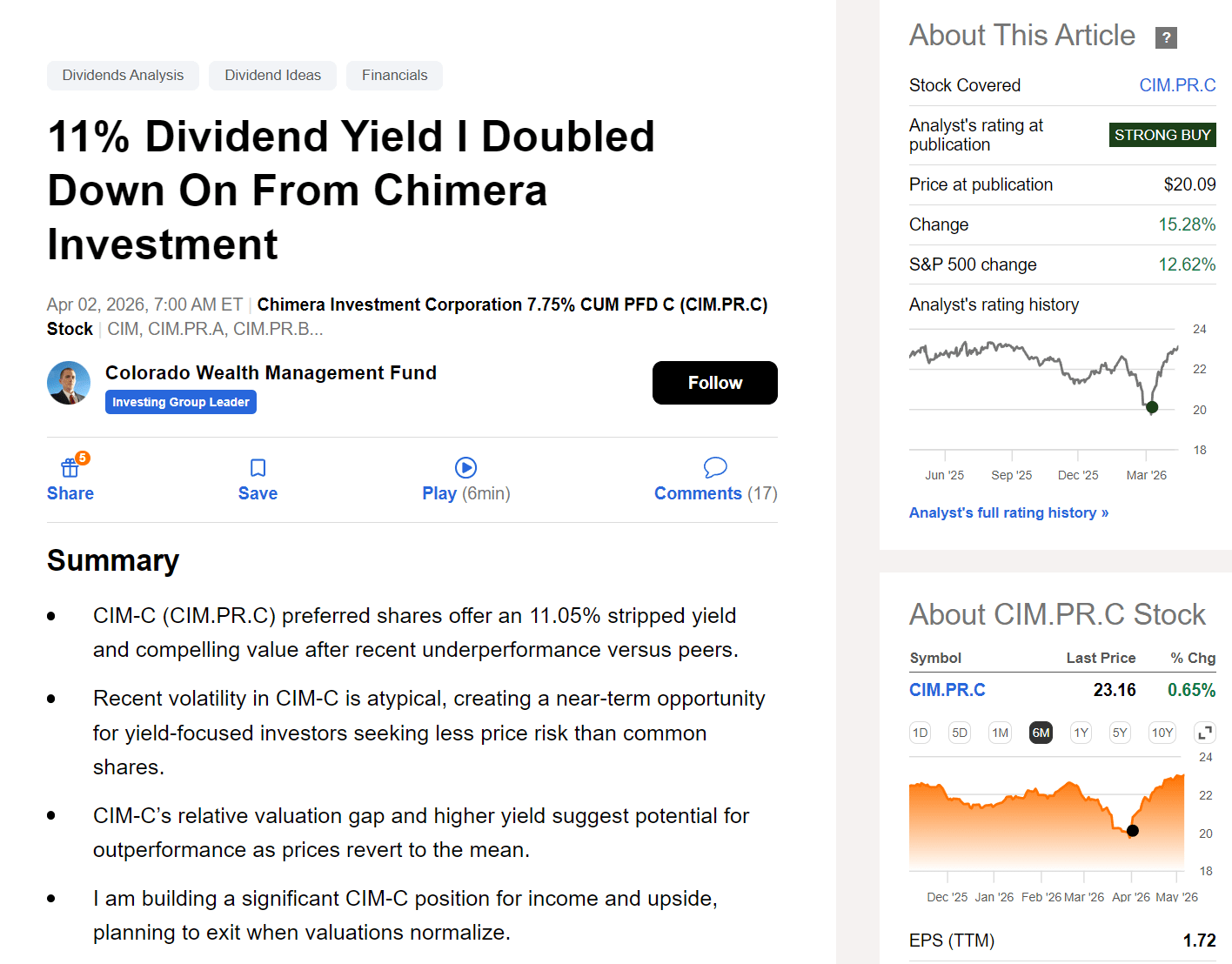
However, I have another example I want to use. This one is CIM-C. We invested in CIM-C recently.
You know that if you read our articles on Seeking Alpha:
Seeking Alpha
I bought shares, and I called it out. That little price chart on the right is pretty handy. You can see that we were very close to the bottom with that call. To be fair, most bullish ratings posted in late March or early April look good. I'm not saying the market goes up forever, but it sure feels like it sometimes.
I want investors to take a look at how these preferred share ideas often play out over time.
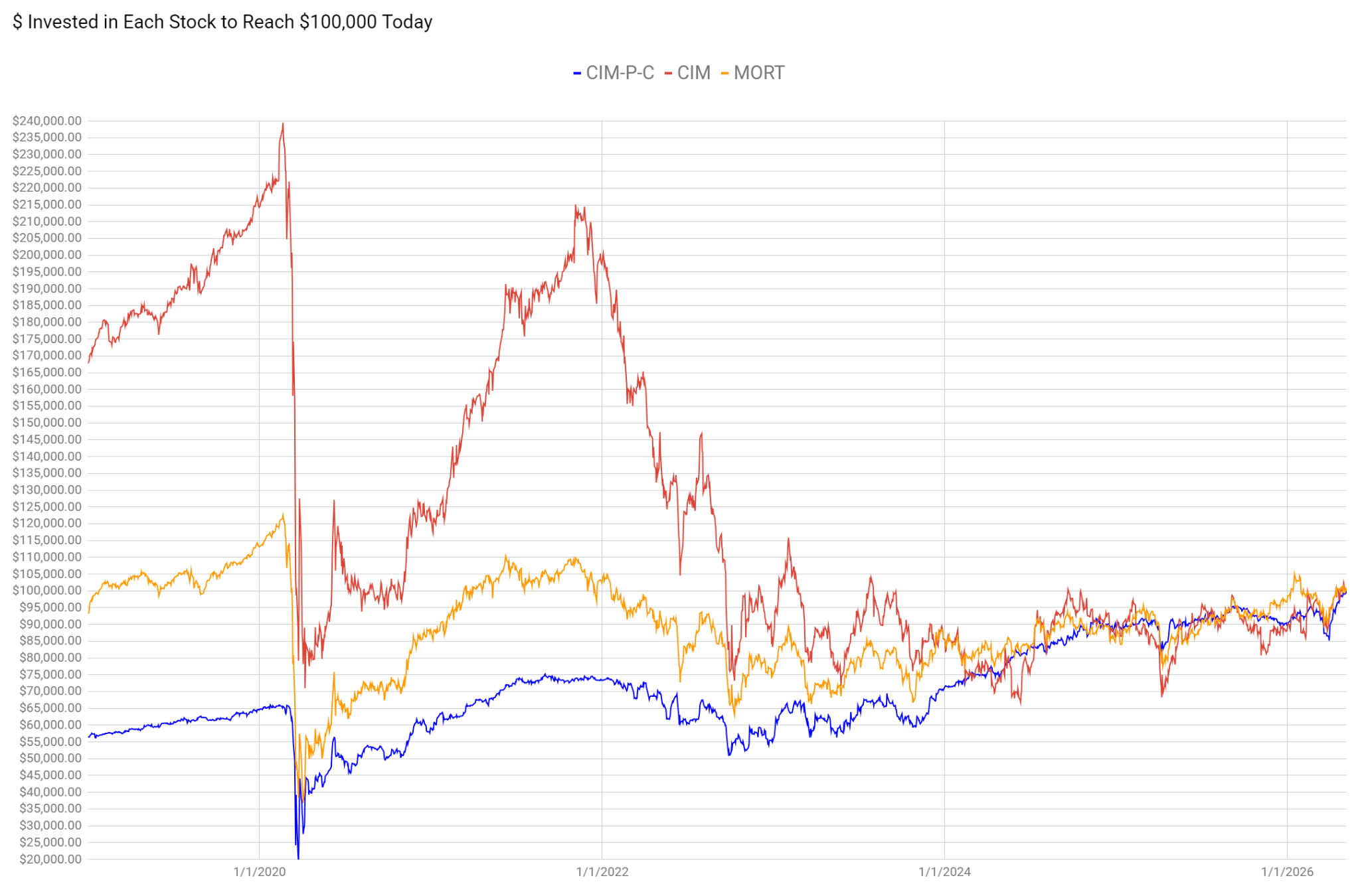
This next chart shows how much needed to be invested on any prior day (with dividends reinvested) to reach $100,000 today. You’ll notice that CIM-C thoroughly beat CIM and the VanEck Mortgage REIT Income ETF (MORT). I tossed in the ETF because CIM had a pretty big decline since the start of 2022 and because I think it helps with the comparison.
The REIT Forum
You’ll notice a few things. Despite CIM-C being one individual share, it actually had less volatility than the mortgage REIT ETF. This is a benefit of being a preferred share. They tend to be less volatile.
You may also notice that the line for CIM-C has a clear tendency to move higher. They got hammered in the pandemic (no surprise). They suffered from the start of 2022 through some time in 2023. Then shares began climbing pretty hard. The initial fixed-rate dividend was replaced with a floating-rate dividend on 9/30/2025. That’s when the shares became callable. I don’t expect CIM to call them, but the floating-rate dividend results in a bigger dividend. So we saw prices go up.
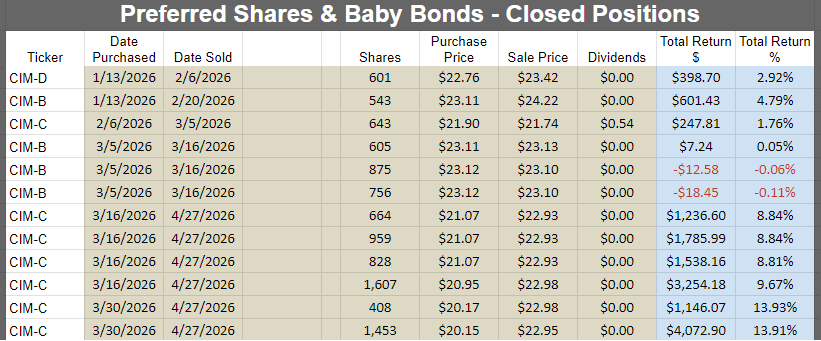
See that dip all the way on the right? That was our opportunity. We traded in the CIM preferred shares quite a few times this year.
The REIT Forum
Yes, I took a loss on some of the shares.
On 3/16/2026, I decided that CIM-C was offering a better value than CIM-B. So I closed my position in CIM-B and used the proceeds to purchase more shares of CIM-C. I also used some extra cash on hand to purchase even more shares of CIM-C. I felt pretty smart picking those shares up around $21.00. However, prices fell further, and I went back on 3/30/2026 to load up again.
Those trades were unusually short because we hit our objectives faster than expected.
The preferred shares can be used for trading or used for longer periods. In general, I'm looking for opportunities where we can trade between shares based on relative values. If I can cycle between the shares to take advantage of one share being more expensive than the other, then we have an even more favorable scenario. That’s the ideal scenario. We want to be able to invest with an attractive yield but pay for opportunities to enhance the position over time.
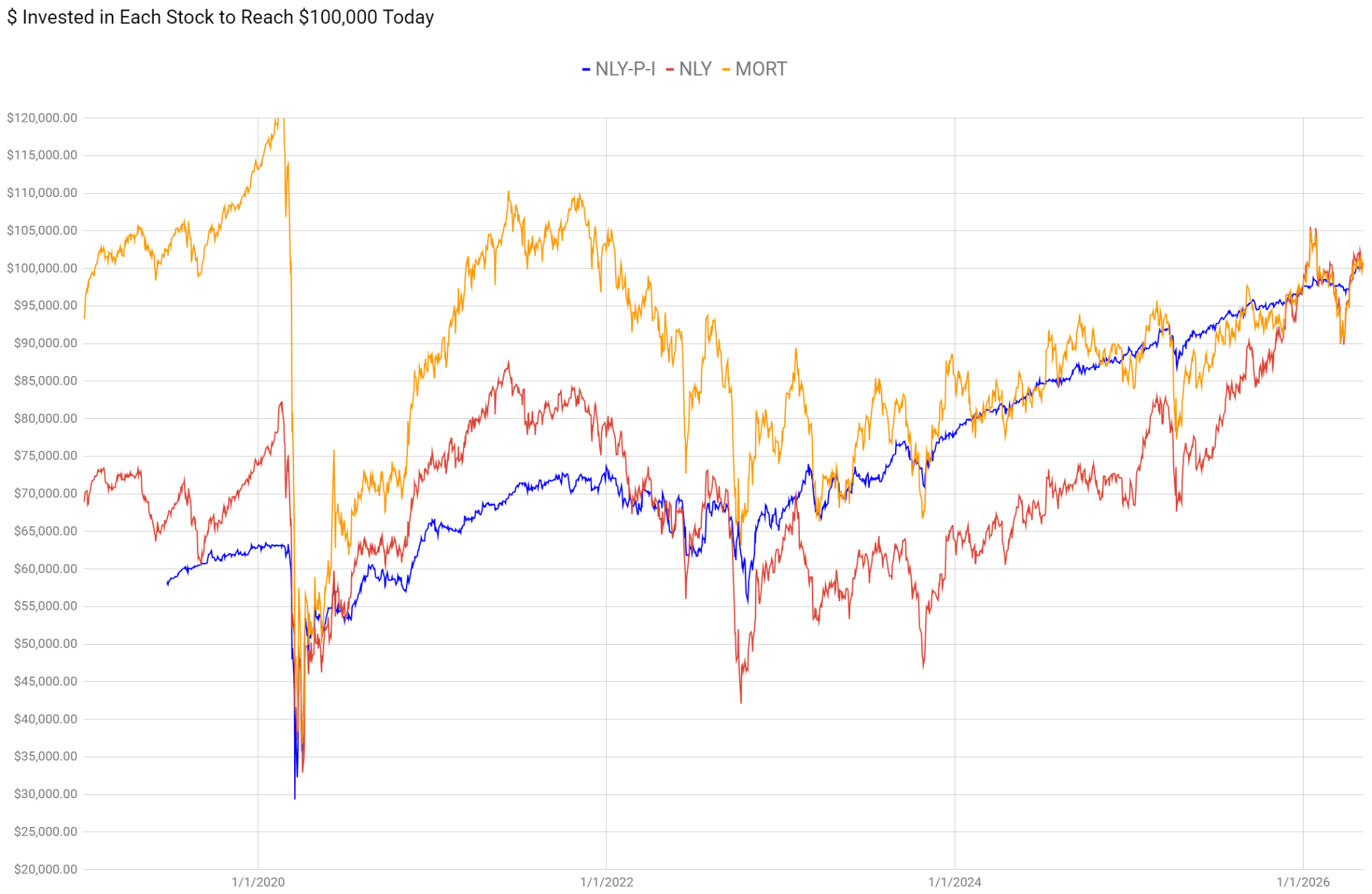
While I’m demonstrating how the preferred shares can offer better stability, I want to include Annaly Capital Management. They’ve performed much better than the index looking backward from today. Pretty much any start date within many years would’ve favored NLY over the index. However, it's a much closer race between NLY and one of their preferred shares:
The REIT Forum
Late 2022 was a key period for the lines crossing:
However, investors in NLY-I had far less volatility. I will grant that some investors don’t care about volatility. They may even think that more risk regularly leads to greater returns. If that was always the case, then it wouldn’t be called "risk." You can even see that while NLY had a great performance recently, the index was less amazing. Even going through late 2024, shares of NLY-I regularly beat the mortgage REIT index on total returns with far less volatility.
If you’re in this space for the high yields, don’t forget to evaluate the volatility. Looking for income? Then you should be considering the preferred shares and baby bonds as well. We’re still talking about yields in the 8.5% to 10% range. That’s not bad. The yields are lower than the common shares, but that doesn’t make them worse investments. They’ve regularly turned out to be superior.
Note: All of our positions for the sector are included in the disclosure to the article.
Editor's Note: This article covers one or more microcap stocks. Please be aware of the risks associated with these stocks.
此内容由惯性聚合(RSS阅读器)自动聚合整理,仅供阅读参考。 原文来自 — 版权归原作者所有。