





niphon/iStock via Getty Images
The American Century US Quality Growth ETF (QGRO) is an equity investment strategy designed to provide investors with a diversified portfolio tied to durability and growth. The strategy actively rotates between the two themes throughout the market cycle, utilizing a factor-based approach to stock selection and weighting. QGRO is ideal for investors seeking active returns and can be best utilized as a buy-and-hold position. Given the concentration in the technology sector, QGRO may exhibit significant beta risk in relation to the S&P 500 (SPX) while providing exposure to some alpha driven by security weightings.
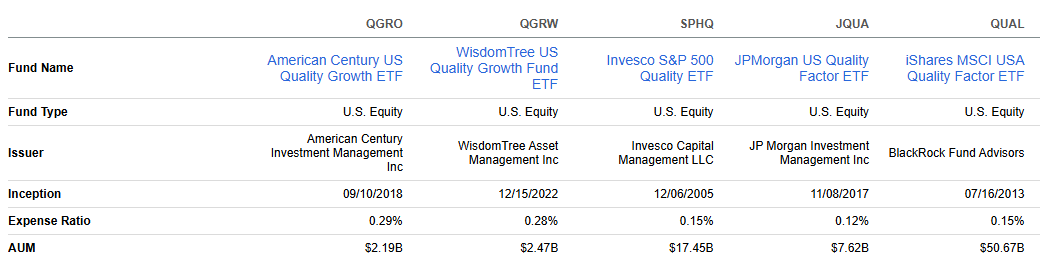
QGRO was launched by American Century Investments on September 10, 2018 on the NYSE Arca Exchange. The strategy’s gross expense ratio of 29bps, aligned with peer strategy WisdomTree US Quality Growth Fund (QGRW), though, is relatively more expensive when compared to strategies offered by Invesco, the Invesco S&P 500 Quality ETF (SPHQ), JPMorgan Chase & Co., (JPM), which is the JPMorgan US Quality Factor ETF (JQUA) as well as the iShares MSCI USA Quality Factor ETF (QUAL) by BlackRock, Inc. (BLK). QGRW has $2.19 billion in net assets at the time of writing with an average of $13.23 million in share value changing hands on a daily basis and exhibits a modest 30-day median bid/ask spread of 0.08%, presenting good liquidity for investors seeking exposure to the fund.
Corporate Filings
QGRW currently pays out a quarterly dividend distribution at an annualized rate of $0.23/share, yielding 0.20%, making the strategy more appropriate for equity growth investors and less so for income investors.
QGRO was designed to track the performance of the American Century U.S. Quality Growth Index. The Index was designed to capture the performance of domestic large- & mid-cap companies that exhibit appealing quality, growth, and valuations, seeking to gain exposure to high-quality, high-growth companies. The Index uses a market-capitalization weighting methodology with monthly rebalancing and is reconstituted quarterly. The Index is broadly diversified across 188 constituents with an emphasis on profitability, earnings quality, leverage, and momentum. The Index is made up of two distinct sub-indexes, the Pure Growth Sub-portfolio and the Stable Growth Sub-portfolio. The Growth Sub-portfolio aims to maximize growth whereas the Stable Growth Sub-portfolio maximizes value and profitability. The Index is relatively dynamic in terms of weightings though presents guardrails in order to protect from overexposure, limiting weighting to a 35% minimum and 35% maximum for either sub-portfolio at any given time.
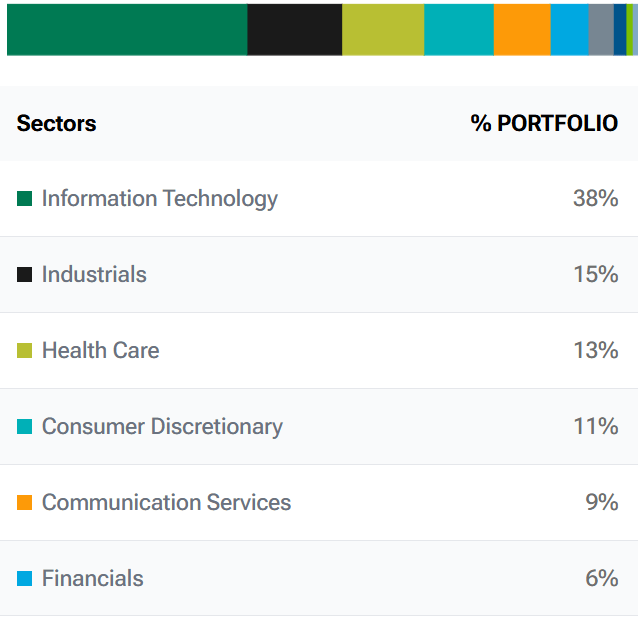
QGRO is most heavily weighted in the information technology sector, accounting for 38% of net assets. Other large exposures include industrials at 15%, health care at 13%, and consumer discretionary at 11%.
Corporate Filings
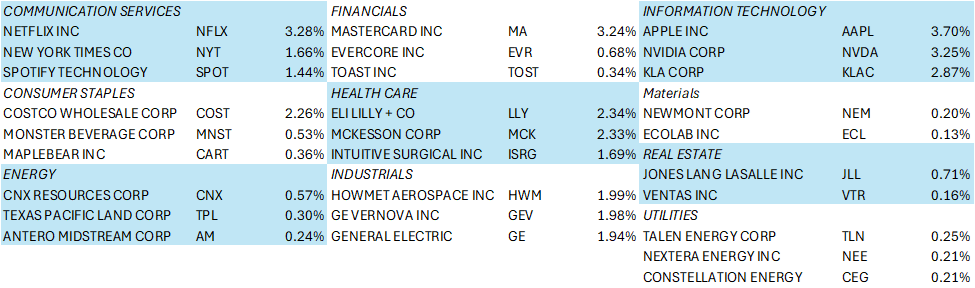
The portfolio is relatively top-heavy with the top 10 holdings accounting for nearly 30% of net assets. In contrast, the bottom 10 holdings account for a mere 0.68% of the total portfolio weight. Top holdings within the strategy include Apple Inc. (AAPL) at 3.70%, TJX Companies, Inc. (TJX) at 3.33%, Netflix, Inc. (NFLX) at 3.28%, and NVIDIA Corporation (NVDA) at 3.25%. Assessing the top holdings across the sectors, it is clear that the information technology sector bears the most concentrated weight on a per-company basis whereas energy exhibits greater diversification across the sector’s portfolio holdings. This of course will shift as markets reflect dynamics that will cause QGRO to reflect different holdings.
Corporate Filings
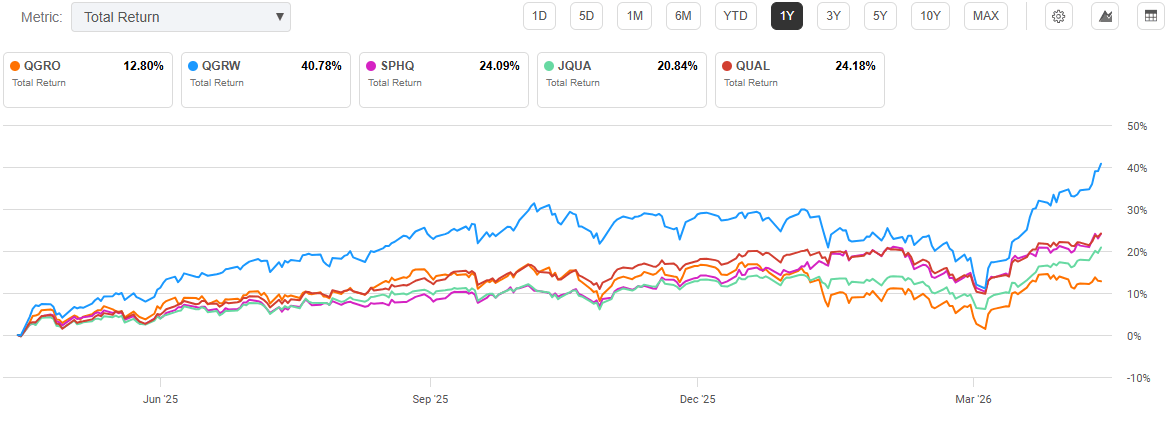
QGRO is most suitable for investors seeking capital growth and can be best allocated as a buy-and-hold investment strategy. While the strategy is technically a passive ETF, the actively managed Index exhibits the qualities of an actively managed portfolio, utilizing a factor-based approach rather than simply weighting constituents by market capitalization. Comparing performance, the WisdomTree US Quality Growth Fund has significantly outperformed QGRO over all historical periods while offering a similar fee structure and investment mandate. QGRW generally weights mega-cap technology stocks more favorably in the portfolio, a potential driver of performance over recent years. QGRW also exhibits greater concentration to the top 10 holdings, commanding 61% of net assets, exhibiting significantly greater concentration relative to QGRO.
Seeking Alpha
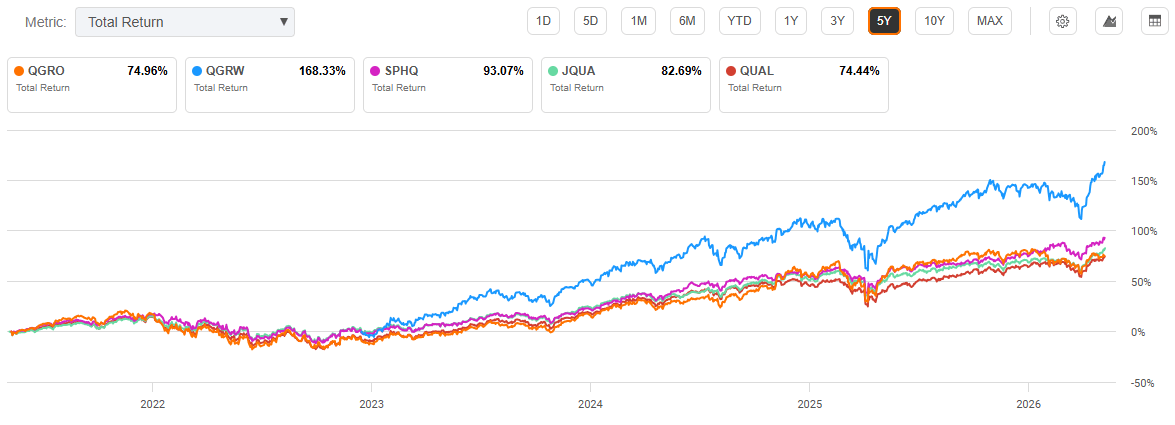
Seeking Alpha
QGRO is a passively managed strategy that’s indexed to an actively managed Index, presenting certain risks that should be considered prior to making a final investment decision. QGRO’s balanced approach between growth and stability may add risk of underperformance during risk-on markets. The significant weighting in the information technology sector may add beta risk relative to the broader market. The rotational strategy in the underlying Index may limit the relative upside potential of the fund with respect to the broader market index. For reference, below is a is a current snapshot of the ETF relative to markets.
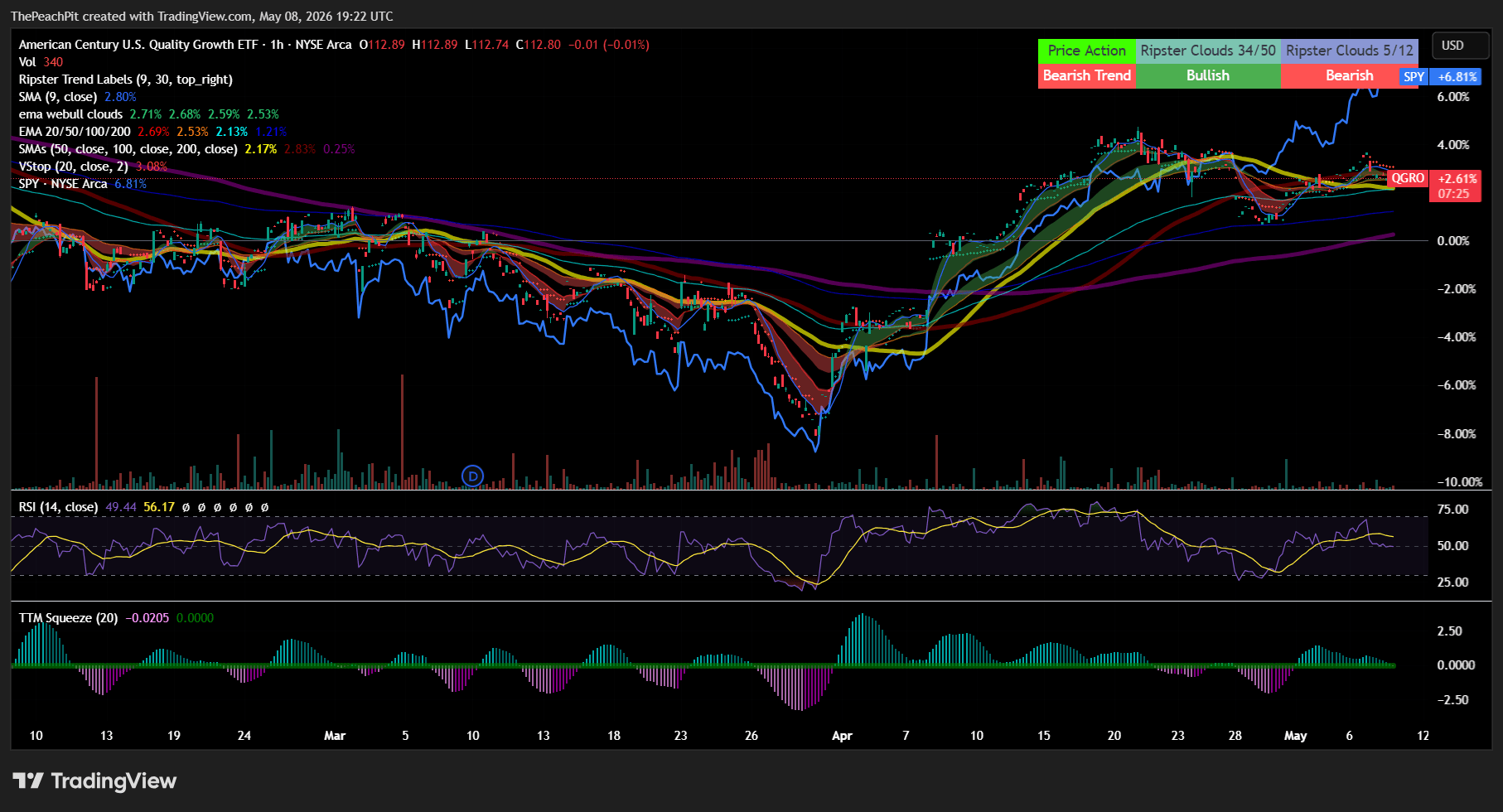
TradingView
QGRO presents investors with a diversified portfolio strategy designed to balance durability and growth through rotational strategy between the two sub-portfolios. While this can be appealing for passive investors seeking to gain broad exposure to the market, investors must weight performance relative to peer strategies as well as the major stock indices as a gauge for whether QGRO is an appropriate investment.
This article answers three main questions about QGRO:
Editor's note: This article is intended to provide a general overview of the ETF for educational purposes only and, unlike other articles on Seeking Alpha, does not offer an investment opinion about the ETF.
此内容由惯性聚合(RSS阅读器)自动聚合整理,仅供阅读参考。 原文来自 — 版权归原作者所有。