






Getty Images
Listen below or on the go via Apple Podcasts and Spotify
Negotiations thrown into doubt (0:20) Keir Starmer's mounting pressure (1:35) China's trade restrictions (2:35) Aluminum market update (3:35) Anthropic's reversal of fortunes (4:24) Toy Story 5 blasts to franchise-record (6:00)
Transcript
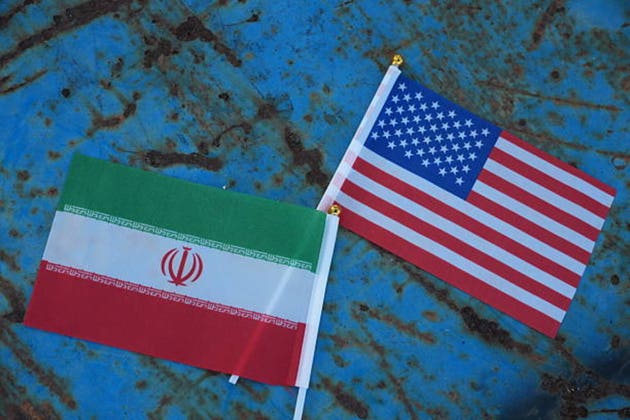
Negotiations between the United States and Iran were thrown into doubt Sunday after Tehran halted participation following new warnings from President Donald Trump over Hezbollah's actions in Lebanon.
Iranian news agencies cited by Bloomberg News reported that talks in Switzerland had entered an uncertain phase, with one outlet saying the Iranian delegation had left the negotiating venue.
For investors, the talks are closely tied to expectations for oil supplies, sanctions policy and stability in the Middle East. Any breakdown in negotiations could increase geopolitical risk, affect crude prices and complicate efforts to restore normal trade flows through the Strait of Hormuz.
Diplomatic sources said the conflict between Israel and Hezbollah has become a central obstacle to broader negotiations. Iran has pushed for the issue to be linked to discussions with Washington, while Israel has said military operations will continue until Hezbollah no longer poses a security threat.
British Prime Minister Keir Starmer is facing mounting pressure from senior Labour figures to outline a leadership transition plan amid growing unrest within the party, the Financial Times reported Sunday, citing people close to the government.
Several cabinet ministers and Labour lawmakers are said to have urged Starmer to consider an orderly handover of power following a strong by-election performance by Greater Manchester Mayor Andy Burnham, who is increasingly being discussed as a potential successor.
Trump said Sunday that Prime Minister Starmer will step down from office, adding his voice to growing speculation about the Labour leader's political future.
For investors, any change in British leadership could have implications for economic policy, energy regulation, taxation and relations with major trading partners. Political uncertainty in the U.K. is often closely watched by currency, bond and equity markets, particularly if it raises questions about the direction of government policy.
In a retaliatory move on Monday, China slapped trade restrictions on dozens of U.S. companies after Washington added more Chinese firms to a Pentagon military-aid blacklist.
The move comes less than a month after President Donald Trump and Chinese President Xi Jinping agreed to boost bilateral economic ties during a much-anticipated summit in Shanghai.
The Pentagon also recently expanded its 1260H blacklist, which targets Chinese tech firms suspected of supporting Beijing's military. High-profile giants like Alibaba Group (BABA), Baidu (BIDU), and EV manufacturer BYD (BYDDF) were among the latest additions.
However, the Trump administration has reportedly delayed adding Chinese AI startup DeepSeek (DEEPSEEK), memory chipmaker CXMT, and more than 100 other companies identified as national security risks to a trade blacklist as Washington seeks to avoid escalating tensions with Beijing.
The war involving Iran triggered one of the largest supply disruptions the aluminum market has faced in decades, but fears of a prolonged shortage and a surge to record prices have eased as producers found ways to keep metal flowing, Bloomberg News reported Sunday.
For investors, the aluminum market has become a key test of how resilient global supply chains remain during geopolitical shocks. The direction of prices could affect earnings for miners, smelters, industrial manufacturers and commodity traders, while also influencing inflation-sensitive sectors that rely heavily on the metal.
Analysts are now sharply divided on what comes next. Some expect significant shortages to emerge as inventories are depleted, while others believe rising production in China and Indonesia will largely offset supply losses from the Middle East.
Anthropic (ANTHRO) has faced a sharp reversal of fortunes at the White House over the past few days, with President Donald Trump telling Axios on Friday that he no longer considers the AI startup a national security threat despite having those concerns just last week.
His remarks came after Anthropic (ANTHRO) was forced to shut its latest AI models, Fable 5 and Mythos 5, last week following a government directive aimed at preventing foreign nationals from accessing them due to national security concerns.
Earlier this year, the Pentagon designated Anthropic (ANTHRO) and its products “a supply chain risk" amid a dispute over how its AI models could be used for defense purposes.
However, Trump did not rule out using emergency powers under the Defense Production Act if the company doesn’t comply. "I have the power to use a lot of things," Trump said, adding, "But I'm not sure I have to do that."
Microsoft (MSFT) Chief Executive Satya Nadella is calling for a different approach to artificial intelligence, arguing that the industry must move beyond a future dominated by a handful of companies building ever-larger models and instead focus on broader access, lower costs and public trust.
In an interview with The Wall Street Journal, Nadella outlined a vision in which businesses and consumers have greater freedom to choose among a range of AI systems rather than relying on a small number of dominant providers. His comments place Microsoft alongside a growing group of companies seeking to reduce dependence on the most advanced proprietary models developed by firms such as OpenAI, Anthropic and Google.
The comments come as Microsoft introduces a series of lower-cost AI offerings aimed at reducing expenses for customers facing rapidly rising AI spending.
Disney (DIS) and Pixar's Toy Story 5, which by the way, finds Woody, Buzz Lightyear, Jessie and their fellow toys facing a new rival for children's attention: electronic devices, blasted off to a franchise-record $160 million domestic debut this weekend. It powered the North American box office to an estimated $230 million, up 80% from the same weekend last year, according to Rentrak data provided by analyst Paul Dergarabedian.
The strong performance helped push year-to-date domestic box office revenue to $4.46 billion, up 14% from the same point in 2025. Summer box office revenue is now running 15.2% ahead of last year's pace.
Universal's (CMCSA) Steven Spielberg-directed sci-fi drama Disclosure Day remained in second place in its second weekend with $17 million, though ticket sales fell 62% from its opening frame.
Focus Features' (CMCSA) horror romance Obsession continued to be one of the year's strongest holdovers, grossing $14.2 million in its sixth weekend.
A24's Backrooms added another $7.3 million in its third weekend, lifting its domestic total to $175.2 million and worldwide receipts now exceed $301 million.
Paramount's (PSKY) rebooted Scary Movie rounded out the top five with $6.7 million in its second weekend. The comedy-horror sequel has generated $84.6 million domestically and nearly $202 million globally.
Editor's Note: This article discusses one or more securities that do not trade on a major U.S. exchange. Please be aware of the risks associated with these stocks.
此内容由惯性聚合(RSS阅读器)自动聚合整理,仅供阅读参考。 原文来自 — 版权归原作者所有。