







Oselote/iStock via Getty Images
By Dr. Mark Shore
The last 14 months have been nothing short of historic for global commodities. Coming out of the first quarter of 2026, investors are facing a complex web of geopolitical tensions, currency fluctuations and shifting supply-demand cycles. To understand the current landscape, it’s important to understand the hidden drivers behind commodity market shifts.
Commodities are not a monolith – they can move independently of each other depending on intervening micro or macro factors, though sometimes they experience higher positive correlation and move in tandem.
Utilizing the Bloomberg Commodity Index (BCOM) and its five commodity sectors as a proxy, we can see that commodities tend to be mean-reverting markets, prone to the ebbs and flows of supply and demand, and may cycle between expansion and contraction periods.
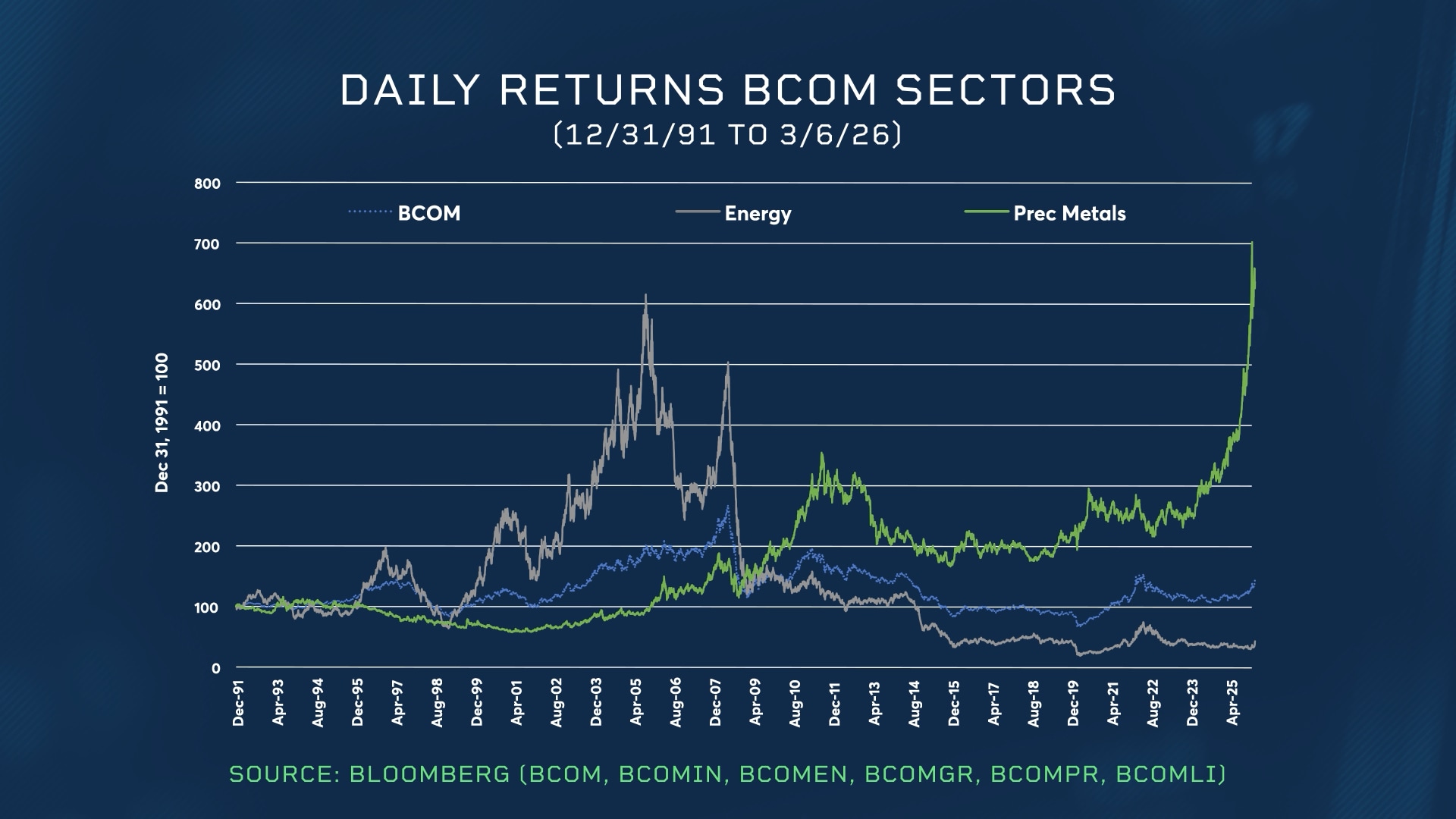
Take the early 2000s, for example. The BCOM energy sector led the index, rallying over 860% from February 1999 to September 2005. This was driven by structural shifts like increased demand from China and India, alongside supply shocks from Iraq and Venezuela. A second energy sector rally followed from January 2007 to July 2008, pushing WTI crude oil over $147 per barrel due to continuing global demand, tight supplies, geopolitical issues and a weaker U.S. dollar.
In addition, the industrial metals sector rallied about 395% from November 2001 to May 2007, primarily due to China's industrialization and urbanization. Simultaneously, grain markets experienced several rallies between 2002 and 2012, influenced by a declining U.S. dollar, the rise of biofuels, and growing global demand for animal products.
Fast forward to recent years, and the precious metals sector has taken the lead. This surge was fueled by increased geopolitical tensions, fiscal and monetary policies, central banks continuing to accumulate gold, and industry demand for silver boosted by the energy transition and construction of data centers.
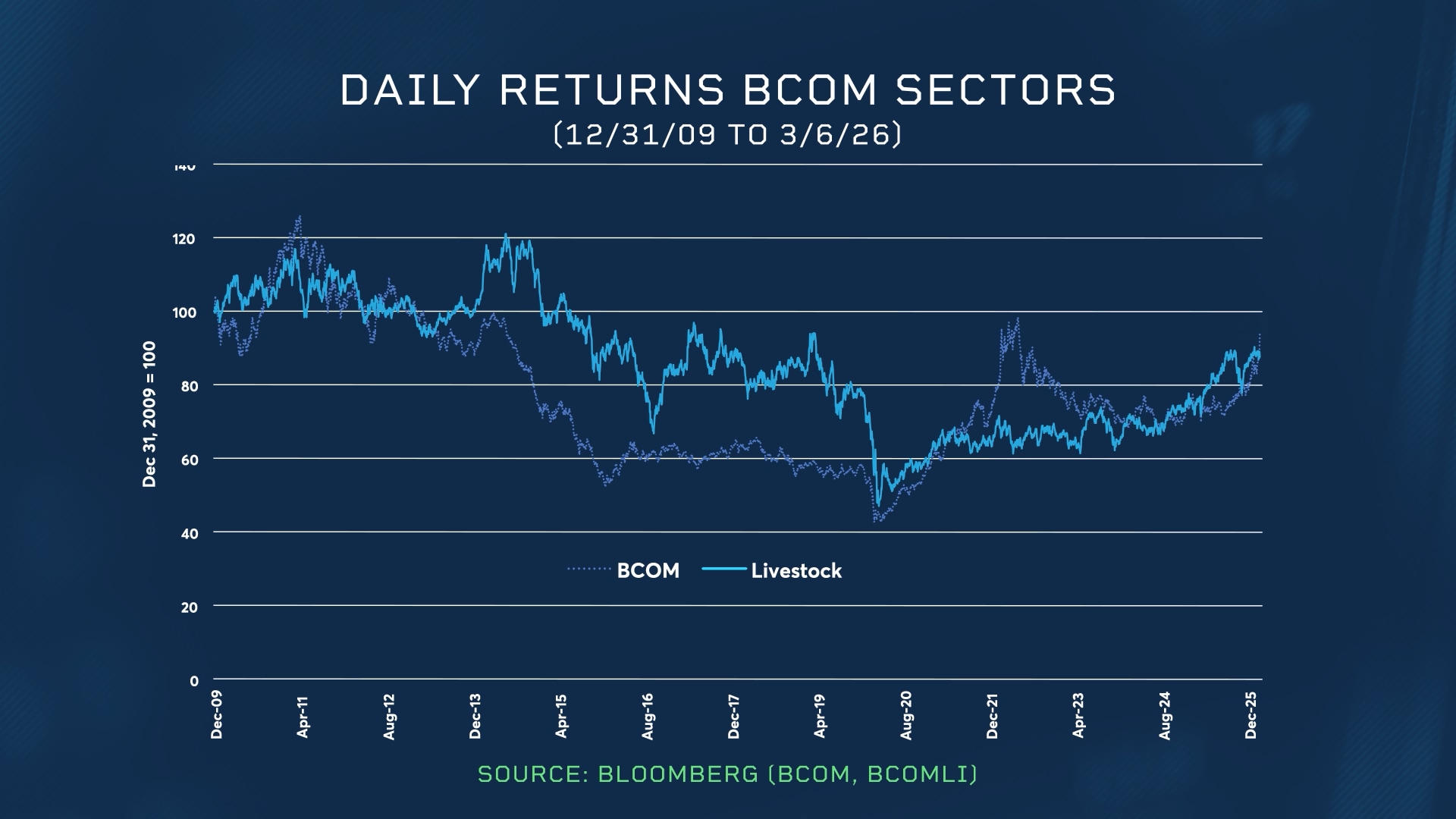
But it's not just the headline-grabbers making moves. While metals and energy received most of the attention, the BCOM livestock sector, particularly live cattle, has drifted higher since 2020. From April 2020 to March 2026, the sector appreciated 86%, primarily due to the smallest herd size since 1951 and the strongest consumer demand in the past two decades.
Perhaps no relationship is more important for commodity investors than the influence of the U.S. dollar. Since many commodities are priced in dollars, currency movements can directly impact global demand. When the dollar weakens, commodities become cheaper for international buyers, typically triggering increased purchasing activity.
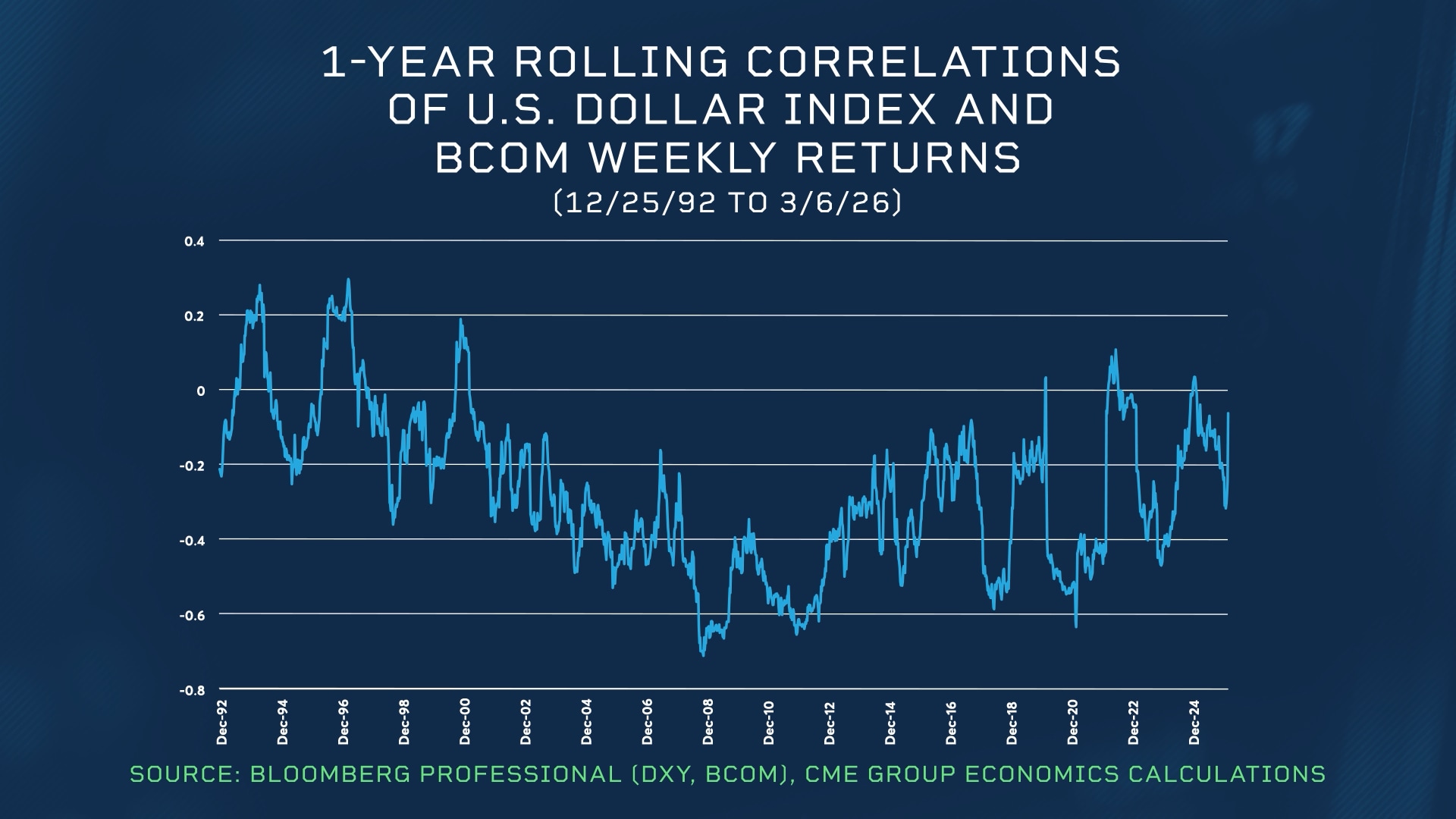
Between January 1992 and March 2026, the correlation of weekly returns between the U.S. Dollar Index (DXY) and BCOM was -0.31, showing an inverse relationship 89% of the time on a 12-month rolling basis.
The relationship between commodity prices and consumer inflation is more nuanced than many investors may realize. Since commodity indices track raw materials at the early stages of the supply chain, there's typically a significant time lag before these price movements reach consumers. It can take several months for shifts in commodity markets to fully manifest in the inflation indices that measure what people actually pay for goods and services.
This lag effect has important implications for portfolio positioning and inflation hedging strategies, particularly as we navigate an environment where central banks remain acutely focused on inflation signals.
The data ultimately shows that commodity sectors may move independently, though their movements can overlap as correlations cycle between positive and negative moments. Whether it's the U.S. dollar, monetary policy, geopolitical tensions, or a supply and demand scenario, understanding these hidden drivers is key to navigating the complex world of commodities.
Editor's Note: The summary bullets for this article were chosen by Seeking Alpha editors.
4.2K Followers
此内容由惯性聚合(RSS阅读器)自动聚合整理,仅供阅读参考。 原文来自 — 版权归原作者所有。