

惯性聚合 高效追踪和阅读你感兴趣的博客、新闻、科技资讯
阅读原文 在惯性聚合中打开

推荐订阅源

H
Hackread – Cybersecurity News, Data Breaches, AI and More
C
Check Point Blog
Hacker News: Ask HN
Hacker News: Ask HN
cs.CL updates on arXiv.org
WordPress大学
WordPress大学
P
Proofpoint News Feed
V
Visual Studio Blog
C
Cyber Attacks, Cyber Crime and Cyber Security
N
Netflix TechBlog - Medium
C
CXSECURITY Database RSS Feed - CXSecurity.com
博客园 - 聂微东
Threat Intelligence Blog | Flashpoint
博客园 - 叶小钗
Cisco Talos Blog
Cisco Talos Blog
S
Schneier on Security
T
Threat Research - Cisco Blogs
腾讯CDC
cs.AI updates on arXiv.org
The Hacker News
The Hacker News
Google DeepMind News
Microsoft Security Blog
奇客Solidot–传递最新科技情报
奇客Solidot–传递最新科技情报
GbyAI
GbyAI
N
News | PayPal Newsroom
L
LINUX DO - 最新话题
酷 壳 – CoolShell
酷 壳 – CoolShell
P
Palo Alto Networks Blog
T
Tenable Blog
S
Secure Thoughts
T
Threatpost
V2EX - 技术
V2EX - 技术
大猫的无限游戏
大猫的无限游戏
Martin Fowler
Martin Fowler
freeCodeCamp Programming Tutorials: Python, JavaScript, Git & More
Vercel News
Vercel News
罗磊的独立博客
P
Privacy & Cybersecurity Law Blog
Engineering at Meta
Engineering at Meta
小众软件
小众软件
Google DeepMind News
N
News and Events Feed by Topic
Y
Y Combinator Blog
CTFtime.org: upcoming CTF events
C
Cybersecurity and Infrastructure Security Agency CISA
P
Proofpoint News Feed
L
Lohrmann on Cybersecurity
P
Privacy International News Feed
H
Heimdal Security Blog
量子位
B
Blog

TIME

How to Watch the TIME100 Gala Red Carpet Livestream Why Epstein Survivors Should Testify Before Congress What to Know About the U.K.’s Generational Smoking Ban With ‘Donnyland,’ Ukraine Becomes Latest to Propose Naming Something After Trump Iran’s Supreme Leader No Longer Reigns Supreme What the Passage of the Virginia Redistricting Plan Means for Control of Congress Robert F. Kennedy Jr. Defends Spending Cuts to Health Agencies Breaking Down the Chilling Ending of Unchosen What to Know About Allegations Against Rep. Cory Mills Amid Calls for Expulsion From Congress Mexico’s President Calls For Investigation After CIA Members Killed in Cartel Operation Democratic Rep. Sheila Cherfilus-McCormick Resigns Ahead of Potential Ethics Sanctions What to Know About Trump’s New Executive Order on Psychedelic Drugs With Michael, the King of Pop Gets a Not-So-Regal Biopic Can a Documentary Help End Gang Violence? Trump Order to Require Banks to Collect Citizenship Info 'In Process,' Bessent Says A Muslim Faith Leader on the Failures That Led to the Iran War, and What Comes Next Trump Says U.S. Will Extend Cease-Fire With Iran Baby Reindeer Creator's Half Man Tests Our Tolerance for Pain. But to What End? What to Know About Shooting at Pyramid in Mexico and Security Concerns for World Cup How American Schools Can Address Political Polarization What to Know About the Louisiana Shooting That Killed 8 Children ‘Dark Money’ Floods Virginia Redistricting Fight, With Millions Linked to Peter Thiel Trump Accuses Iran of ‘Total Violation’ as Strait of Hormuz Remains Shut This Halal Beauty Company Boss Has Big Ambitions What to Know About Allegations of Excessive Drinking by FBI Director Kash Patel Iran Reimposes Control of Strait of Hormuz and Fires on Tankers Welcome to the Second Gilded Age Why the Federal Government Is Making Chicago O’Hare Airport Cut Hundreds of Flights a Day Lee Cronin's The Mummy Is Not a Brendan Fraser Movie. It's Way More Cursed May Bob Odenkirk Always Have as Much Fun as He's Having in Normal What We Know About the ‘Massive’ Military Complex Being Built Beneath the White House The Bigger Energy Lesson Behind Iran’s Control Over the Strait of Hormuz Trump Nominates Dr. Erica Schwartz as CDC Director Even If You Think You're SNL'ed Out, Lorne Offers Some New Angles on Lorne Michaels Modern Dating Is Making Us Less Secure How Businesses Can Apply for Tariff Refunds Through New Portal How Hormuz Could Shape China’s Taiwan Strategy State Department Cracks Down on Visas of People ‘Working on Behalf of U.S. Adversaries’ Israeli Troops to Stay in Southern Lebanon Despite Ceasefire, Netanyahu Says Here’s How to Best Watch the Lyrid Meteor Shower House Democrats Move to Impeach Defense Secretary Hegseth Trump’s Feud With the U.K. Over North Sea Oil: What to Know What The Pitt Says About Burnout, and Why Self-Care Won’t Solve It The Seven Democrats Who Joined Republicans in Opposing Measure to Block Arms Sales to Israel The Looming Risk of Too Many Satellites and Debris in Space 'It's Not Working': Diplomats Fear Trump's Iran Envoys Are Making Things Worse Why Trump’s Strait of Hormuz Blockade May Be a Gift to China Trump Has Abandoned His Affordability Promises Letting AI Do Your Work Erodes Your Confidence, According to a New Study What to Know About the Live Nation Verdict and Its Effect on Ticket Prices Philanthropy Must Choose Courage Over Caution How AI Can Beat Cancer Breaking Down the Action-Packed, Haunting Finale of 'Beef' Season 2 ‘No More Excuses’: Europe Announces Age Verification App in Effort to Crack Down on Social Media Love Is War in Beef's Imperfect But Still Thrilling Second Season U.S. Takes Step Closer to Popular Vote for Presidential Elections as Virginia Joins Compact Senate Blocks Iran War Powers Resolution for Fourth Time ‘It Beats Pitchfork Rebellions and the Guillotine’: Why These Super-Rich Americans Are Asking For Higher Taxes Trump Says Iran War ‘Close to Over,’ Hints at Possible Deadline Ahead of Royal Visit TIME Is Looking For the World's Top HealthTech Companies of 2026 The Neuroscience of the Self Amid Trump's Blockade, Threat of Escalation Leaves Thousands of U.S. Forces on High Alert Shirin Ebadi Rauw Alejandro: The 100 Most Influential People of 2026 Walter Hood Kica Matos Chloe Kim Victoria Beckham American Men Are Set to Be Automatically Registered for the Draft Hungary’s Viktor Orbán Ousted by Voters After 16 Years in Power. Here’s What That Means Medicaid Cuts Could Force More Kids to Become Caregivers Trump Says U.S. Will Blockade Strait of Hormuz After Iran Peace Talks Fail Eric Swalwell Resigns from Congress How Trump’s Proposed Triumphal Arch Stacks Up Against Others Around the World Trump Says U.S. Has Begun ‘Clearing Out’ Strait of Hormuz As Iran Peace Talks Begin The Big Unanswered Question about the Tracking of ICE Observers How NASA Achieved the Historic Artemis II Splashdown Watch Live: Artemis II Crew Returns to Earth Is a Super El Niño Coming in 2026? Here’s What Scientists Are Saying What ‘Emotional Flooding’ Really Means—And How to Handle It What to Know About the U.S. Postal Service’s ‘Severe Financial Crisis’ Israel's War Against Lebanon, Explained America’s Cost-of-Living Crisis Is Really a Pay Crisis Netflix Shark Thriller Thrash Doesn't Know What Kind of Creature Feature It Wants to Be Calls to Impeach Trump Collide With Reluctant Democratic Leadership J.P. Morgan Is Thinking About Climate Tipping Points Why the U.S.-Iran Ceasefire Won’t Last You, Me & Tuscany Delivers Everything It Promises—Including Tomatoes The Christophers Is One of the Best Movies of the Year So Far Not Even Keanu Reeves Can Breathe Life Into the Painfully Unfunny Outcome Breaking Down the Ending of The Miniature Wife Starmer Says He's 'Fed Up' With Trump as Europe Splinters From U.S. Over Iran War What Jamie Raskin Will Tell House Democrats About the 25th Amendment and Impeachment Euphoria Returns, Older But Not Wiser ‘A Perfect Storm’: How AI Is Transforming the Global Scam Industry Women’s Brains Are a $1 Trillion Opportunity Is Hungarian Leader Viktor Orbán, an Icon of the Far Right, About to Be Ousted by Voters? White House Reportedly Warns Staff Against Insider Trading As Lawmakers Raise Concerns Bondi Won’t Testify as Scheduled in House Epstein Probe. Lawmakers Are Threatening to Hold Her in Contempt Melania Trump Says Lies Linking Her to Jeffrey Epstein ‘Need to End’
How Trump’s War With Iran Is Giving Somali Pirates an Opening
Luke McGee · 2026-05-27 · via TIME

Donald Trump’s war with Iran has reshaped the security map far beyond the Strait of Hormuz, drawing Western naval attention toward the Middle East and away from other volatile waters. Off the coast of Somalia, pirates appear to have noticed.

Since March, suspected pirate activity in the waters surrounding Somalia has increased compared with previous years. According to public data from the International Chamber of Commerce Commercial Crime Service (ICC-CCS), this includes four confirmed hijackings, three of which are still active—with cargo and crew captive. There have also been reports of boats being fired at and even boarded by suspected pirates. 

Some commercial maritime intelligence companies put the number of incidents higher.

“Pirate gangs in Somalia are rebooting their business operations,” says Saleem Khan, chief data and analytics officer at Pole Star Global, a leading maritime intelligence company advising shipping firms and governments. “We’ve already tracked 18 incidents this year, more than the entirety of last year. And we still have quite a lot of what we call ‘Pirate Season’ left this year.” 

‘Pirate Season,’ he explains, is the time of year when the region is typically free of monsoons, meaning calmer waters. “We have a few days left before the first regional monsoon season starts in mid-June, but come September through to the end of the year, I expect we will have even more activity, because the conditions that have led to this uptick won’t have gone away,” says Khan. 

The conditions he describes are not just good weather and calm seas, but also a shift in focus by navies and maritime agencies from the Horn of Africa to the Middle East.

While it is not public knowledge what specific military assets have been moved from one location to another, the U.S. and allied buildup in the Middle East since the start of the war has been vast.

Maritime security analysts in government and the private sector told TIME that the military buildup around Iran and the Strait of Hormuz had most likely diverted resources and attention from counterpiracy efforts, making it harder for the U.S. and the U.K. to monitor and deter pirate activity. The analysts spoke on the condition of anonymity because they were discussing sensitive security assessments.

That shift carries consequences. International actors have policed the pirates ever since the world first became aware of the Somali pirate crisis, when there were as many as 200 incidents of piracy between 2009 and 2011. 

“The Somali government is not really stable enough to deal with this itself, so it relies heavily on the U.S. for naval support and the U.K. for information systems tracking activity,” says Manu Lekunze, an assistant professor and expert in international security at the University of Aberdeen.  

“With so much of the U.S. focus now being on the blockade in the Arabian Sea and the White House requesting that Europeans support the reopening of Hormuz, attention is elsewhere. It has sent a clear message to the pirates: the risk-reward balance has changed and you might get away with taking a small oil tanker, worth a few million dollars, and its crew,” Lekunze adds. 

That green light isn’t just based on assumptions that the U.S. and others are not in a position to police waters around the Horn of Africa. United Kingdom Maritime Trade Operations, a Royal Navy-led organization that broadcasts security advisory notes to seafarers, put out a warning on May 12 describing the threat of piracy in the region as “severe.”
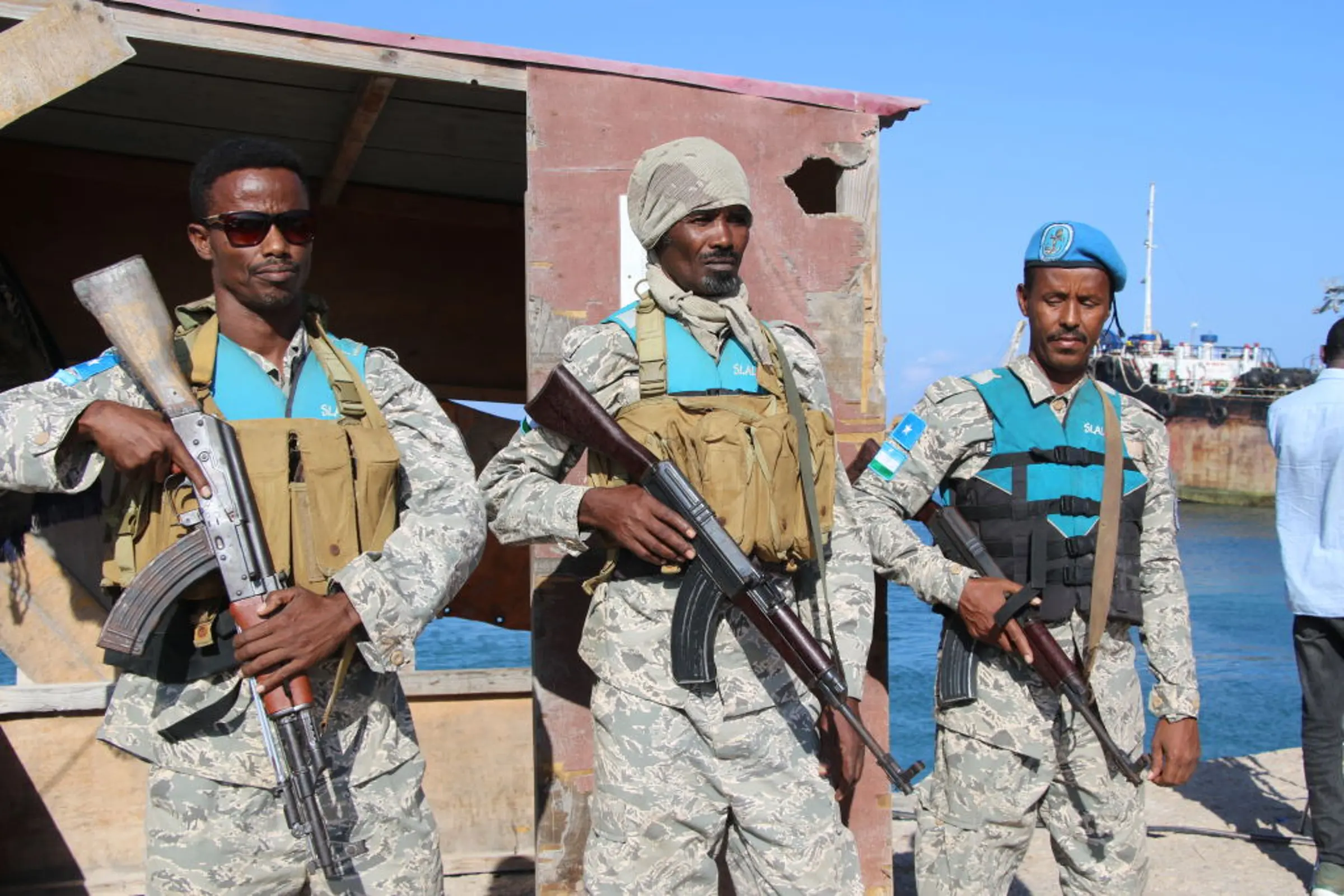
Puntland Maritime Police Forces (PMPF) are patrolling against the recently increasing pirate attacks off the coast in Puntland, Somalia on January 29, 2024. (Photo by Abuukar Mohamed Muhidin/Anadolu via Getty Images) Mohamed Muhidin—Anadolu via Getty Images

The significance of the renewed pirate activity extends beyond the immediate danger to vessels and crews. Analysts say it matters for two reasons: the impact on wider regional insecurity, and the added costs it could impose on global trade.

The first is that the resurgence is taking place during a period of significant global instability. Profits from piracy have been linked to funding for Al Shabaab, a Sunni Islamist Somalia-based offshoot of Al Qaeda. In 2025, analysts reported that Al Shabaab had deepened links to the Shi’ite Islamist and Iranian-backed Houthis operating in Yemen, a country that shares a sea border with Somalia. The Houthis have disrupted shipping in the Red Sea for years, firing on cargo vessels and U.S. warships.

The second is economic. As Khan puts it, piracy is “a tax on globalization that will land in all of our shopping carts.” 

That cost is not theoretical. At the height of the Somali piracy crisis, the World Bank estimated that piracy was costing the global economy roughly $18 billion a year in increased trade costs, dwarfing the ransoms paid to pirates themselves.

Piracy drives up the costs of shipping. Insuring vessels goes up, if insurers are willing to cover the boats at all. Vessels must also adopt expensive protective measures. This can include anything from razor wire that might prevent boarding to water cannons or private security. 

In some cases, exporters shipping from Asia to the U.S. may have to take longer routes, using more fuel—already soaring in price—while delaying deliveries and adding freight costs to move goods across land. It all adds up, and could end up costing major shipping firms like Maersk and Hapag-Lloyd up to an extra million dollars per ship. 

“We have not yet heard of goods on board being sold on, as that would require skills that the pirates likely don’t have and would be complicated,” says director of the ICC-CCS Cyrus Mody, noting that stealing the cargo could also reduce ransom payments. “You would also need to find buyers willing to buy stolen goods from pirates,” he adds.  

Analysts say that could eventually change. Oil shortages and the existence of Russia’s shadow fleet already carrying out crimes on international waters could mean that an alternative, darker market becomes open to the pirates.  

The chief danger here is that the conditions that allowed piracy to re-emerge remain in place. Even if the Iran conflict ends, the ceasefire and security of the Strait of Hormuz will still suck up resources.

Without a renewed international effort to police the waters off Somalia, analysts warn, the latest resurgence risks becoming self-sustaining: pirates continue to operate, their backers continue to benefit, and each successful attack helps finance the next.