


In 2026, if your dream is to work for a big print fashion magazine based in New York City, you’ll need more than talent, drive, or even a trust fund: a time machine is pretty much the only thing that will get you there. There are still a small number of U.S. fashion titles with print editions, but the influence they once wielded has practically vaporized. That's true even at the magazine considered the great-grandmother of them all, Vogue, long overseen by the discriminating, ultra-frosty Anna Wintour. The landscape of magazines in particular, and journalism in general, is much rockier and more barren than it was in 2006, the year The Devil Wears Prada, a picture that mercilessly mocked Wintour and her ilk, was released. To the world at large, magazines barely matter anymore, and imperious editors who dictate what we want to wear, and why, matter even less. What does a Devil Wears Prada sequel look like in the age of influencers, an era where a teenager with a TikTok account can wield more authority than a longtime fashion-magazine grand dame?
The Devil Wears Prada 2, imperfect as it is, is actually a better movie than its predecessor. That’s not to say you’ll necessarily enjoy it more: this is one downer of a fashion fantasy, a movie that’s bracingly honest about both the state of magazines and how that affects our perception of fashion today. Directed by David Frankel and written by Aline Brosh McKenna—as the earlier movie was, with both based on characters created by Lauren Weisberger—The Devil Wears Prada 2 has some problems: there’s barely enough tension in the plot to hold the thing together, and while certain characters profess to care about serious journalism above all else, their heads are a little too easily turned by the allure of posh, and costly, New York real estate that few real journalists could ever afford. But there’s also something pleasingly and realistically melancholy about The Devil Wears Prada 2. The earlier film was all about catty remarks, put-upon underlings, and crazy outfits, an equation that made it a success. But The Devil Wears Prada didn't love fashion at all; instead, it presented fashion as something ridiculous, deserving of our mockery. The Devil Wears Prada 2 is both more affectionate toward fashion and more fiercely protective of what, at its best, it can be. Even more broadly, it considers what it means to live in a world that seems to care more about chasing the next thrill than it does about the pursuit of beauty. As comedies go, it might make you a little miserable, especially if you care at all about fashion. But then, comedies exist not only to make us laugh, but to point us toward truths we might otherwise have trouble articulating. This is a movie that knows it’s chronicling the end of an era—kind of like The Leopard, but for fashion magazines.
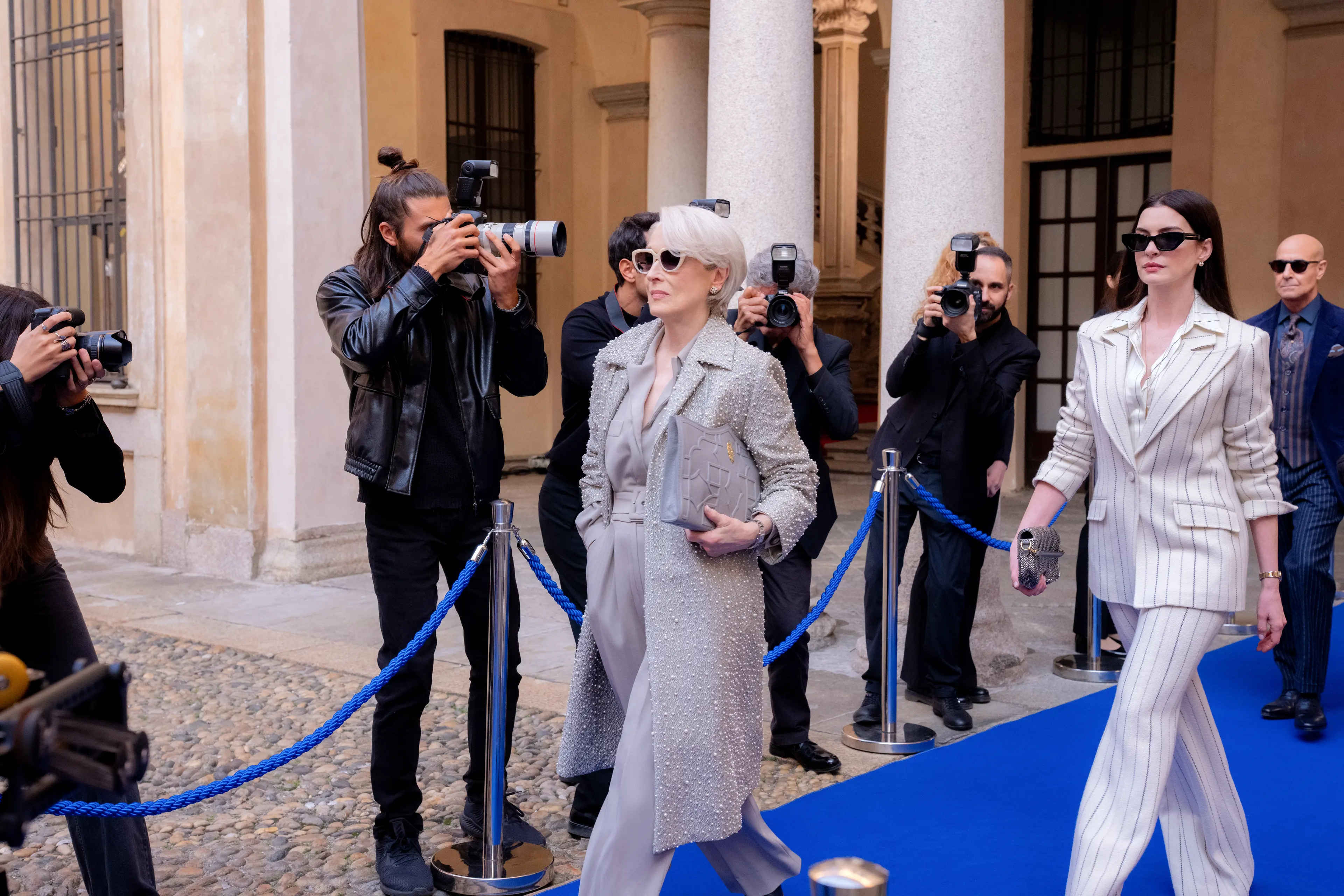
Streep and Hathaway as Miranda and Andy Courtesy of 20th Century Studios
In the earlier picture, Anne Hathaway’s Andy Sachs was the starry-eyed but beleaguered assistant to Meryl Streep’s Miranda Priestly, the Wintour-like editor of Runway magazine, an obvious Vogue stand-in. Now, 20 years later, Andy has achieved her dream of becoming a real journalist—she’s become a star at a fictional paper called the New York Vanguard—only to learn, at the very minute she’s about to receive a big award for her work, that she and all of her colleagues have been laid off. After putting in so many years of working at being a serious writer, she has no intention of ever returning to the shallow yet cutthroat world of Runway. But a seemingly fortuitous phone call from the magazine’s publisher changes her mind. Plus, she needs a job. When she shows up at the Runway office, eager to dig into her new position as features editor, Miranda greets her with all the enthusiasm of a lizard whose sunbath has been interrupted by a stray cloud. Miranda hasn’t been told that Andy is coming back to the magazine; what’s more, she pretends not to remember her at all. Her second-in-command, gimlet-eyed art director Nigel (once again played by Stanley Tucci), hasn’t forgotten. He eyes Andy’s outfit from top-to-bottom—it’s actually rather simple and chic, as well as, we’ll later learn, mostly thrifted—and purrs, “Look what T.J. Maxx dragged in.”
But all of that is for show: he and Andy are really grudgingly fond of one another. Plus, Runway is in trouble: it recently ran a glowing profile of a company—it’s called, hilariously, Speed Fash—that, it turns out, is full of lies and propaganda, and Miranda and Nigel are desperately trying to stem the damage. Andy thinks she can help, which means she makes things worse before she makes them better. Meanwhile, her old nemesis Emily (Emily Blunt) is now a semi-bigwig at Dior, though she stands to gain even more power over both Runway and the fashion world at large: her new beau is rich tech goofball Benji Barnes (Justin Theroux, in a sly, observant, and very funny performance), and he’s got enough dough to set her up as the doyenne of, well, pretty much everything.
Those are the bare bones of The Devil Wears Prada 2’s plot, but the Speed Fash crisis is hardly Miranda’s biggest problem. She and Nigel are dinosaur survivors of a nearly vanished world. At one point Miranda bemoans the state of her magazine’s September issue: At Runway, as at the real-life Vogue, it has historically been the biggest issue of the year, fat with ads, but now, Miranda laments, it’s “so thin you could floss with it.” Nigel observes that even if he had the budget to set up elaborate, imaginative fashion shoots, they barely matter anymore: The magazine’s “readers” scroll through everything so fast they barely absorb the artistry in front of them. Miranda even has a mournful soliloquy about how increasingly depressing it is to live in a world that barely values beauty. If you’ve come to The Devil Wears Prada 2 looking for laughs, be prepared for a feathery fringe of existential angst on the side.
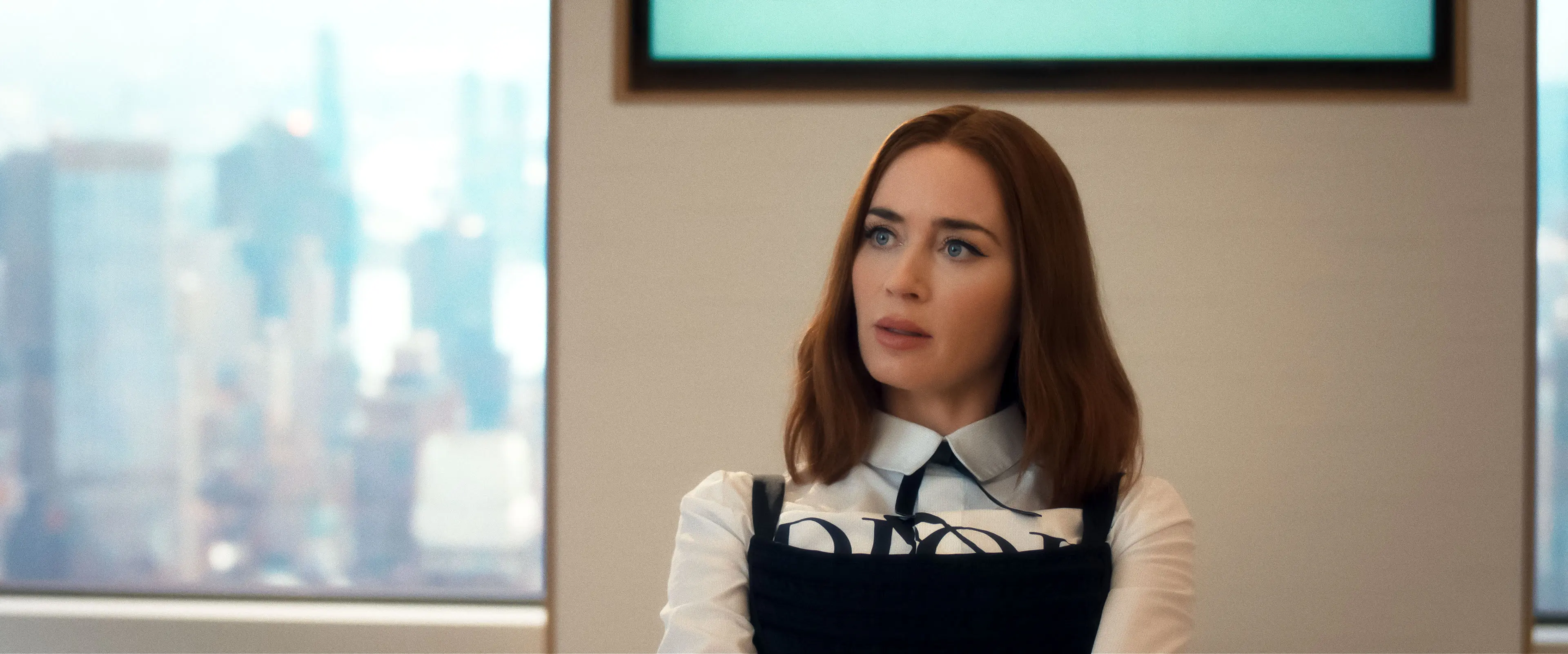
Emily Blunt as Emily, now a bigwig at Dior Courtesy of 20th Century Studios
Yet I'd argue that that makes The Devil Wears Prada 2 more pleasurable than less. We may as well face reality: the worlds of fashion and magazines have changed, and wishing for a vanished past won’t bring it back. You’ll find scraps of gentle satire here: Benji and Emily bear more than a passing resemblance to Jeff Bezos and his new wife, Lauren Sánchéz Bezos, and The Devil Wears Prada 2 points to an overarching grim reality: Billionaire owners currently seem to be the only hope for magazines and newspapers—and thus, by extension, for anyone who prefers getting their information from reading rather than watching one bite-sized video after another.
Even though Andy is positioned as the movie’s true champion of journalism, as Hathaway plays her, she’s still too dreamily wide-eyed to be believable. Instead, it’s Streep’s Miranda who has changed the most in the 20 years since we last saw her. No longer just your stock dragon-lady boss, the 2026 Miranda is an old-school pro with magazines in her blood, her focus sharper than ever. And instead of being a dully tasteful fashion plate, like Wintour, she’s developed a more slightly daring style of her own. Thanks to costume designer Molly Rogers—taking over from Patricia Field—the clothes in The Devil Wears Prada 2 are generally smarter, sharper, and less mockingly ridiculous than in the earlier film. The old Miranda wouldn’t have worn a tassel-bedecked toreador jacket rendered in the soft olive and aqua tones of a weathered Venetian palazzo—and neither the old nor the current version of Anna Wintour would, either. But for 2026 Miranda—older, smarter, just a little softer without being too soft—this mildly crazy creation from Belgian house Dries Van Noten is perfect. It’s a jacket that says both “Look at me!” and “I know who I am.”
If Miranda’s world is dying, she’ll go down fighting, and Streep, even with all her preternatural coolness, captures that fire perfectly. Of all the characters here, it’s only Miranda and Nigel who truly understand what the world of fashion has lost with the death of magazines. At their glorious peak, fashion magazines fed our fantasies of what we, and the world around us, could look like. Of course, that fantasy always fell short of what we mere mortals could realistically achieve. But it was the dreaming that mattered. Is dreaming while scrolling even possible? Nigel and Miranda would say that it isn’t. And as much as we may rail at the idea of fashion dictators telling us what to wear and think, we’d probably have to admit that they’re right. It's as obvious as florals for spring.