


The summer Hoyt Richards was 16, his family made their annual migration to Nantucket, where he spent long, unstructured days at Nobadeer Beach. It was there, on the pale sand, that Richards first encountered Frederick von Mierers: older, lean, striking, full of talk about Eastern philosophy, astrology, and the hidden architecture of the universe. Von Mierers threw parties nearby, nearly every night, and the teenage Richards came for the free beer, certain he was the one getting away with something. What he left with was the feeling that someone was paying attention—the very same vulnerability von Mierers would eventually exploit.
Over the next two decades, von Mierers drew Richards into one of the most unlikely and revealing cult stories of the late 20th century. A self-styled prophet who claimed to have traveled to Earth from the distant star Arcturus, von Mierers recruited models, young professionals, and New York socialites into a group he called Eternal Values—drawing them in through charisma, flattery, and the promise of spiritual purpose, then holding them through psychological pressure, public humiliation, and escalating demands for total loyalty. Richards, meanwhile, became one of the most photographed male models of his generation, appearing in campaigns for Versace, Valentino, and Ralph Lauren and working with Richard Avedon and Helmut Newton. He also gave the group millions of dollars from his earnings and nearly 20 years of his life.
Vanity Fair brought the story to light in 1990 with its definitive account of Eternal Values. Von Mierers died of AIDS-related complications days before the article ran, never fully confronting what that exposure would have meant. The group relocated and slowly unraveled; Richards finally walked away in 1999.
Now, documentarian Chris Smith brings the story to HBO with Bring Me the Beauties, a three-part docuseries premiering June 1. Richards’ account anchors the series, which traces Eternal Values from its glittery Manhattan origins through its unraveling in a North Carolina farmhouse, and asks a question that reaches beyond the cult itself: how does a person surrender their mind without realizing it is happening?
The series draws on archival footage, new interviews with former members, and extensive conversations with Richards to assemble a portrait of von Mierers’ hold on his followers and of Richards’ long, halting effort to understand his own role in it. He was, at once, one of the era’s most visible faces and one of its most invisible prisoners: a man who spent his working hours in front of the world’s cameras and his private hours sleeping on a mat on the floor of a cult apartment, telling himself the two lives made sense as part of a cohesive whole.
“His family had an extensive archive of his upbringing,” Smith says. “You couldn’t have a more ideal, idyllic American family. And there was just nothing in that that would make you think this person was a candidate to end up in a group like this.”
A prophet in Brooks Brothers
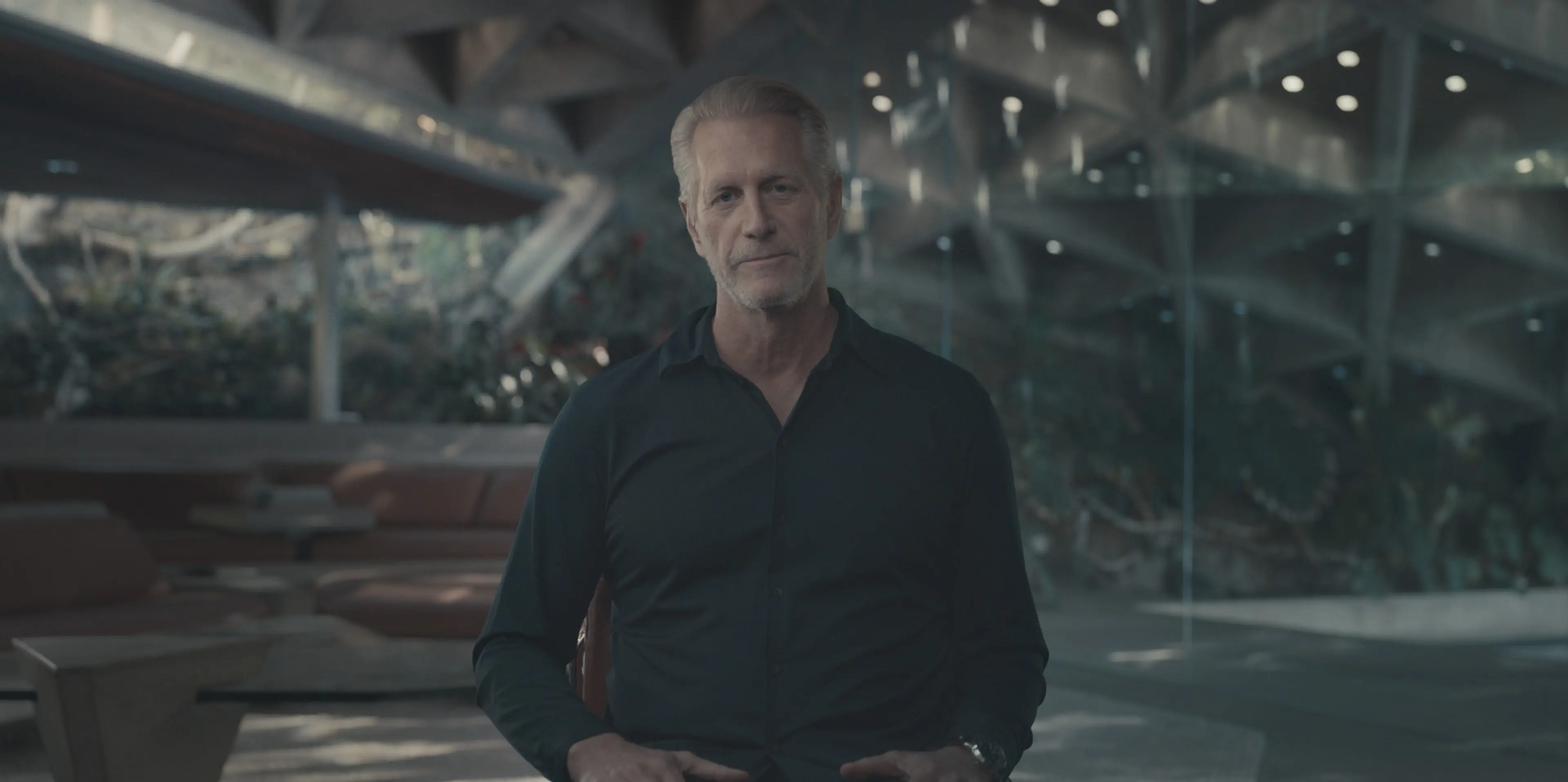
Hoyt Richards pictured in Bring Me the Beauties Courtesy of HBO
Von Mierers started working on Richards long before Richards understood that any work was underway. After the Nantucket summers came the Princeton years, and greater proximity to New York, where von Mierers kept an apartment and moved easily through the city’s social world. In the docuseries, Richards describes him as a “Brooks Brothers version” of a guru: preppy, polished, and exacting about how his followers dressed and carried themselves. The parties got better; the access got easier. By the time Richards graduated in 1985 and his modeling career began to ignite, the relationship had slipped from mentorship into something harder to name.
Von Mierers told his followers that they had arrived on Earth from Arcturus—a star in the constellation Boötes, roughly 37 light-years from the sun—which he regarded as the spiritual center of the universe. Destiny had chosen them, he said, to prepare humanity for a coming planetary catastrophe. The pole shift would arrive by 1999. Eternal Values would survive it; everyone else, largely, would not. Deep in North Carolina’s Smoky Mountains, he had already identified the land where alien spacecraft would one day land to carry his group through the tribulation in rejuvenation chambers.
On paper, the belief system sounds easy to dismiss. But Richards says it didn’t feel that way from where he was standing. “I joined a spiritual movement that I thought was going to be amazing,” he tells TIME. “It just took me 20 years to figure out it’s not what it was.”
Richards now describes, with the clarity he’s spent decades earning, a process of incremental surrender. The group encouraged awareness and emotional discipline, discouraged alcohol and drugs, and demanded celibacy in its early years. Its social world drew people close and kept them there. Members watched one another constantly. When someone stepped out of line—or when von Mierers decided they had—he deployed what the group called “slamming sessions”: hours of shouting, degradation, and public dressing-down. Von Mierers framed the sessions as spiritual correction. Richards now understands them as mechanisms of control.
“I can look back on it and say I felt there was a mental prison,” Richards says. “But while I was going through it, I didn’t see it as a prison. I saw it as a foundation for my life.” He had, as he now puts it, “financed and built the prison” he found himself in.
The man behind the lens

A still from the docuseries Courtesy of HBO
Smith came to the story the way many of the best documentary subjects find their directors: by chance. He was interviewing Richards for an unrelated project when Richards began talking, and the questions kept coming because the story kept unfolding. Four or five days of shooting passed before Smith felt he had what he needed.
The resulting docuseries attempts, above all, to make Richards’ experience comprehensible—to place a familiar, utterly recognizable person at the center of a story many people assume could never touch them.
“Sometimes you can look at cult stories and not see much commonality between yourself and the people who were involved,” Smith says. “Hoyt is so well-spoken, so present. He doesn’t seem like what we imagine a cult member to be. That changes the whole thing. Suddenly you realize that something like this could happen to anyone.”
It worked, in part, because Richards was not obviously damaged or credulous when von Mierers found him. He came from a stable, accomplished family—six children, summers in Nantucket, Princeton on the horizon—and was athletic and easy with people. By any conventional measure, there was no obvious opening. But he was 16, hungry for something larger, and von Mierers offered him a place to belong.
At the height of his modeling career, flying transatlantic and staying in five-star hotels, Richards returned to New York and slept on a mat on the floor of a cult apartment, seeing no contradiction. Each success he had on the runway, he privately credited to the group, certain their spiritual work was driving it. That belief made the cult feel not like a constraint but a secret advantage. “I became my own worst enemy because I so fell in love with the narrative,” he says.
When the world didn’t end
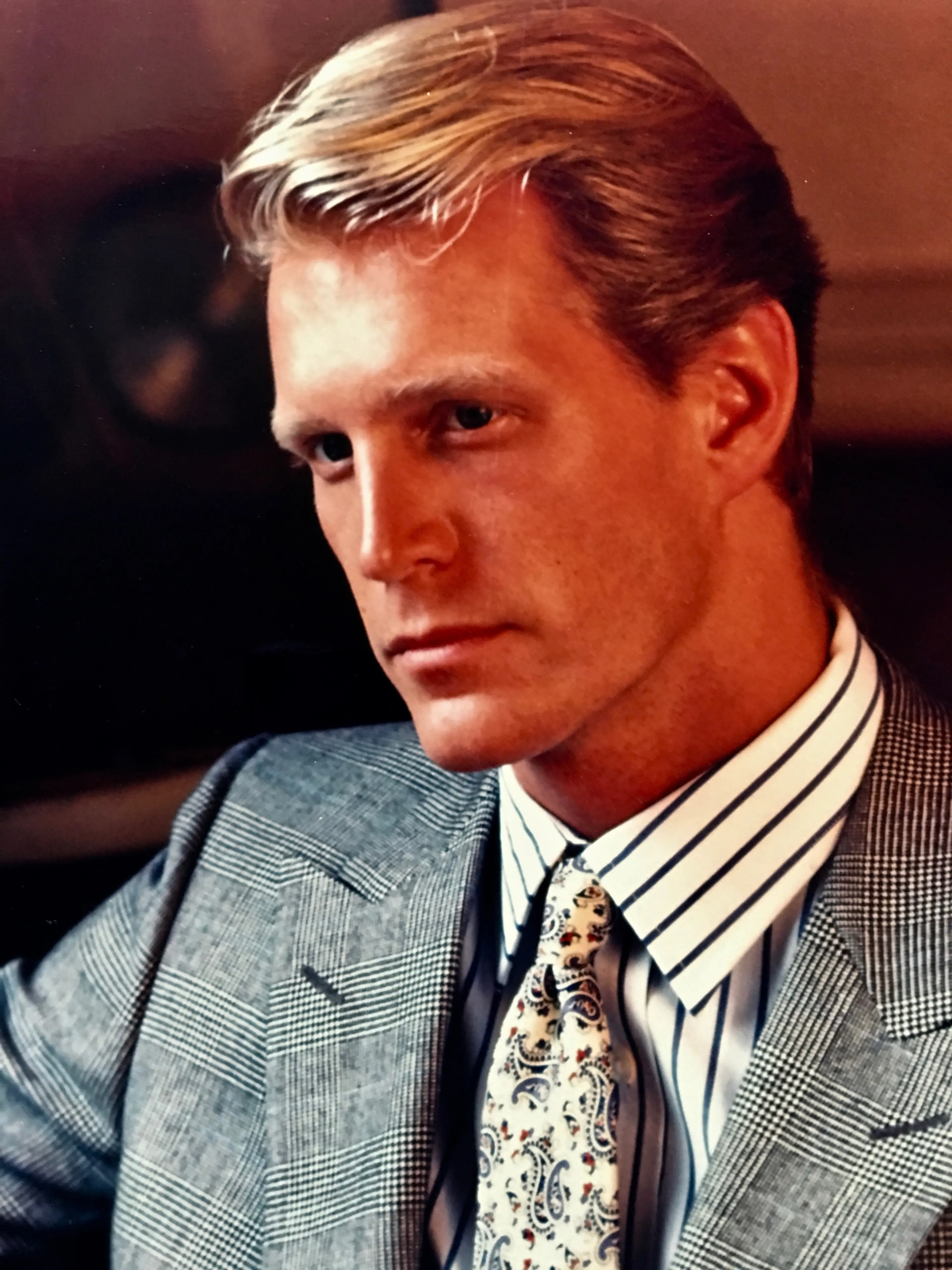
An undated photo of Hoyt Richards Courtesy of HBO
Von Mierers died in February 1990. The Vanity Fair story ran days later, introducing Eternal Values to an audience under circumstances von Mierers never got to contest. The group kept going, relocating to North Carolina and shedding the Eternal Values name in favor of a construction company called the Lotus Group—a thin veneer of normalcy stretched over the same dynamics.
Von Mierers’ death left the group without a clear leader, and when Fritz Diekmann—a TV executive and Eternal Values members—moved to fill that void, it split the group in two. Within six months, Richards’ side of the group staged a mutiny, locked Diekmann in his apartment, and forced him to relinquish control. Then the group turned on Richards.
By 1999, the apocalypse von Mierers predicted conspicuously failed to arrive. Richards had begun privately doubting the timeline—traveling to Paris and London for modeling work, looking around, and noticing an absence of catastrophe. What the group had staked its identity on was simply not true, and Richards, somewhere beneath the years of indoctrination, started to realize it.
He had also been carrying on a relationship, secretly, with a woman named Donna. When he finally confessed that relationship and his doubts to the group, nine weeks of nightly sessions followed, along with menial labor and a shaved head that killed any chance of modeling work. His nickname was “Dipsh-t.” The humiliation cut deepest in what it did to his sense of self: he left not in anger but in a fog of resigned shame, writing a note that he was quitting.
He stayed with fellow model and friend Fabio Lanzoni for a while and slowly began to understand what had happened. Nearly a year and a half passed before he could consider the possibility that he had read the previous 20 years entirely wrong. “My main criteria for the fact that it couldn’t be a cult was the fact that I was in it,” he says.
Finding his way back
In 2002, Richards’ lawyers settled with the remaining group members, liquidated Eternal Values’ assets, and the organization effectively ceased to exist. By then, Richards’ mother was dying of cancer. He hadn’t seen her in 12 years; when he returned, she wore a wig from hair loss due to the chemotherapy. He became her primary caretaker in the months before her death, and the two found their way back to each other in the time that remained. That reconciliation, and the ones that followed with his siblings, formed the other piece of his recovery. In some ways, it was the harder part.
Richards has spent 25 years trying to reframe what happened to him, not as an anomaly, but as an extreme version of something far more common. “A cultic relationship is any relationship where you’ve given your power away to someone, usually unconsciously,” he says. “They extend flattery, attention, what you perceive as love—and you get addicted to seeking it out. Most people will find their way out, but they won’t necessarily recognize how traumatizing that is to your self-esteem.” Without that reckoning, he argues, the pattern repeats. He has made it his life’s work to make sure people know that.
In September, Richards will marry Donna, the woman whose existence he once hid from the group for four years. He talks about Eternal Values with the clarity of someone who turned two decades of confusion into hard-won understanding, more purposeful than bitter. He doesn’t hesitate when asked what he would say if he could somehow speak to the younger version of himself who first found belonging in Eternal Values. “This is not going to be a fun ride, but it’s going to be a journey that’s going to teach you lessons that you’ll be so grateful for,” he says. “So just don’t give up on yourself. Trust that when it starts to make sense, you’ll actually be grateful you went through it.”
In archival footage, von Mierers still carries a faintly recognizable presence: commanding in his attention, acting as the most singular person in the room. The series lets that charisma linger on screen long enough for viewers to feel its pull before understanding what it eventually cost its victims. “If you don’t know these people exist, you’re really vulnerable to them,” Richards says. “And if you don’t think this thing can happen to you, you’re sitting in the same chair that I sat in when it happened to me.”He had once been that certain. That is the real devastation at the heart of Bring Me the Beauties: the certainty that you are safe is often what keeps danger hidden in plain sight.