











Just when you think you can’t tolerate another Beatles documentary, along comes one that you truly might not be able to tolerate. With John Lennon: The Last Interview, premiering here at the Cannes Film Festival, Steven Soderbergh covers some potentially rich, or at least just affecting, territory. On Dec. 8, 1980, John Lennon and Yoko Ono sat down at their home in the Dakota with a small crew from San Francisco’s KFRC radio. It was the only radio press Lennon and Ono would be giving to promote their recently released Double Fantasy album, and it of course turned out to be the final interview of Lennon’s life: he would be dead later that evening, after being shot by Mark David Chapman.
That’s not a bad dramatic backdrop for a documentary, and when Soderbergh sticks to the classic meat-and-potatoes of doc construction—voiceover and archival material—The Last Interview is fine. But when Soderbergh tries to get clever, particularly with the addition of some generative AI material (the film credits Meta as a “technology partner”), The Last Interview falters. Ironically, or not, the very tools Soderbergh has used to make the film distinctive ultimately render it indistinct and unmemorable.
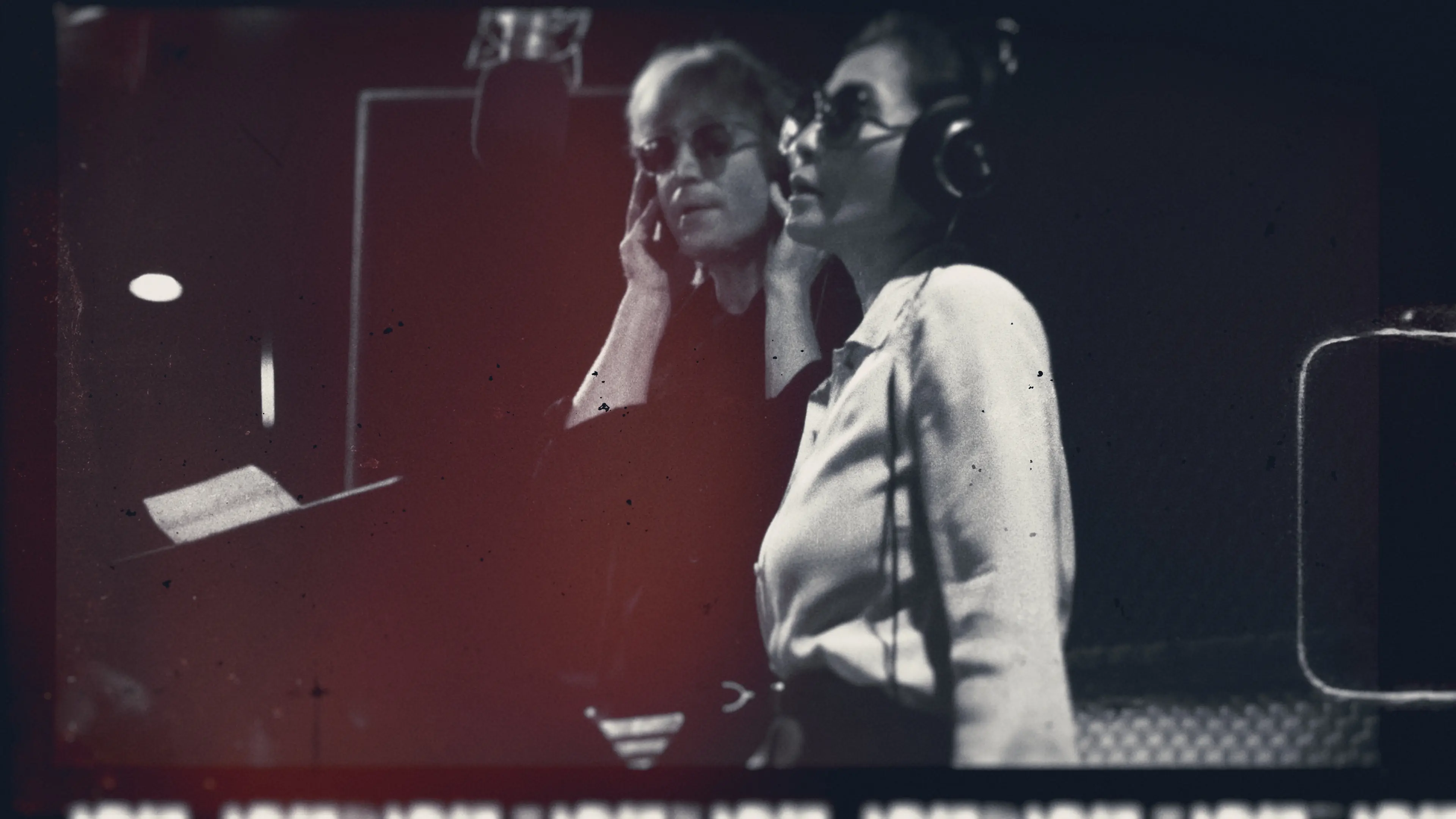
Lennon and Ono Courtesy of Cannes Film Festival
There are only three talking heads featured in the film: Laurie Kaye, Dave Sholin, and Ron Hummel were the three KFRC staffers who conducted the interview. (Warner Bros. Records executive Bert Keane was also present, though he died during the making of the documentary.) Kaye, Sholin, and Hummel, now 70-ish, were young rock’n’roll fans, and members of that special breed you might call radio people, when they were approached by David Geffen, of the recently formed Geffen Records, to conduct this interview. They were thrilled at the opportunity, and their enthusiasm, still apparent to this day, is one of the film’s most charming elements. Kaye explains that she’d gotten to interview Paul McCartney a few years earlier, which was exciting because he was the “cutest Beatle.” Now, she recalls thinking at the time, she’d have the chance to talk to the most intelligent.
And from the interview clips Soderbergh uses here, we can see she wasn’t wrong. Lennon had always had the quickest and most acidic wit of all the Beatles. By this point, at age 40, and having recently weathered some marital difficulties with Ono—famously, she’d gotten fed up and kicked him out—he’s mellower, sweeter, wittier in a gentler way. Throughout the interview, the couple speak, separately and together, about their belief that men and women have become disconnected from one another and need better ways to communicate. Lennon admits, with his newfound wisdom, that men simply need to get better at listening. He expounds on the joys of being a househusband in charge of the daily care of his young son, Sean (at least until, sometime after breakfast, the nanny takes over for the rest of the day). He speaks of the deep pleasures of returning to music after a five-year break, to emerge with a collaborative album designed to affirm the joys of marital love. There’s little that’s wrong with the interview itself, and some of Lennon’s pronouncements are more illuminating than he may even realize. There’s no doubt about his love for Ono and Sean. Every once in a while, he mentions his “other” family, referring to his first wife, Cynthia, and older son Julian, as if they were a faraway footnote—because for him, they clearly are.
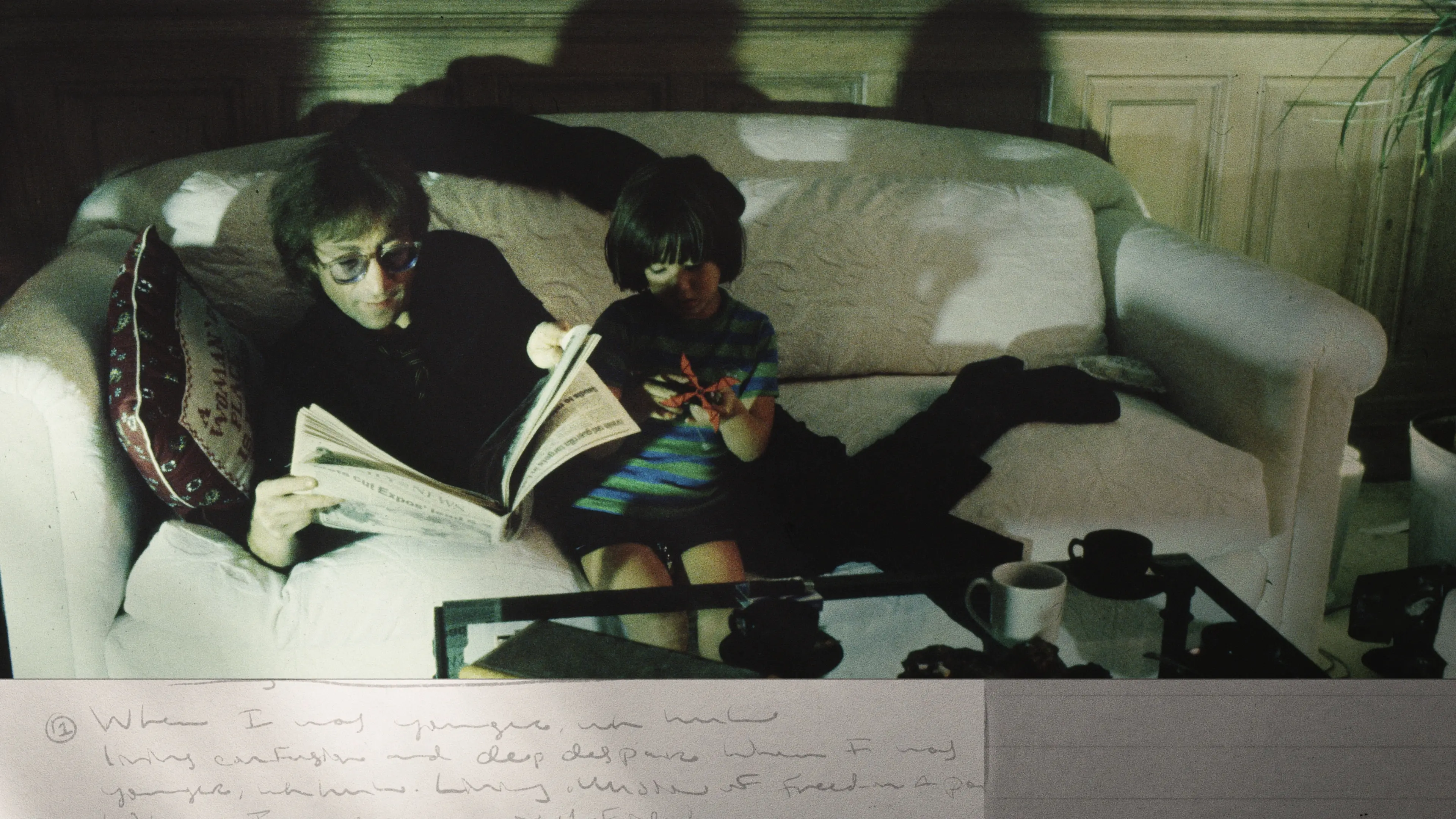
Lennon and his son Sean Courtesy of Cannes Film Festival
And even if this is the 10th Beatles-related documentary you’ve watched within just the past few years, there are still moments of surprise. Ono confesses that until she met Lennon, she was sort of a “macho woman,” at which point Soderbergh shows us a pre-Lennon photograph of her, in tights and gold high heels, perched flirtatiously on a stool as if it were a giant martini glass. It’s an amusing, endearing image, especially considering Ono’s generally regal, intimidating demeanor. And as Lennon speaks of his love for Sean, we see a picture of him sitting cross-legged in an embroidered kimono, clearly delighted with the tiny bundle in his lap. You do feel you’re seeing a man reborn, admittedly at the expense of others he may have hurt in the past.
Yet it’s strange that Soderbergh, currently one of our most innovative and energetic filmmakers, felt he had to jazz up the movie’s visuals with AI. There are blossoming psychedelic flowers that would be more interesting-looking if they’d been grabbed from an old clip-art book. An assortment of fake-looking whiny babies in flashy hippie outfits accompany a Lennon rant about the counterculture’s post-’60s disillusionment. We’re supposed to be wowed by an Escher-like sequence featuring crowds of people milling about in a landscape of mirrors—heavy, man! Even if AI images like these take only minutes to generate—not considering the massive quantities of electricity and water they require—what do they add? Why bother at all, when you’ve got plenty of good old-fashioned words and pictures at your disposal? Soderbergh has defended AI as a handy generator of “theatrical surrealism.” But it also stands in opposition to everything Lennon stood and continues to stand for. He was a fantastic, complex creative weirdo whose like we’ll never see again. The least you can do is hire an out-of-work illustrator to draw a groovy flower or two for him.