






All horror movies are metaphors—we know that from the million and one essays we've read on zombie movies as a critique of the soullessness of capitalism, or on how alien invasion movies of the 1950s emerged from the fear of Communism. Still, it’s always best when the edges of a film’s overarching metaphor are blurred enough so they blend into the fabric of the story. That’s what writer-director Adrian Chiarella pulls off with his feature debut Leviticus, a story of two teenagers, Naim (Joe Bird) and Ryan (Stacy Clausen), who are drawn to each other even though they risk the disapproval of the remote Australian Christian community in which they’re being raised.
But first, a shocker: Leviticus opens with a scene in the shower area of a public indoor pool. A young woman is taking pleasure in a hot shower; she may be alone, or maybe not. Then she screams, grasping at a tiled ledge with bloodied hands. Next, we get a sense of the landscape in which this story will take place: We see a scrubby field bordered by barbed wire, and a sun-bleached cow skull hanging on a fence. There’s a snake devouring a frog whole. A mildly tough-looking but very hot blonde teenager is about to poke at it with a stick; the boy he’s with begs him not to. The two make their way to an abandoned mill, where they take pleasure in f-ing stuff up, throwing old cans and other assorted detritus at the decrepit walls. One minute they’re roughhousing, wrestling on the floor; then they’re kissing, their raw testosterone transmuting into something dreamy and forbidden.
Ryan, the snake-poker, is the instigator, one of those electrical kids who just makes things happen. Naim is quieter, more reticent, but he’s thrilled at the prospect of this new friendship-turned-romance; he has recently moved to the area with his mother (a prim Mia Wasikowska, vibrating with subterranean menace), and he hasn’t figured out how to fit in. The boys’ feelings of guilt and shame certainly aren’t the problem, at least at first. Then Naim realizes he has a rival, another kid from school, Jeremy Blewitt’s Hunter. His jealousy provokes an act of betrayal and cruelty. The community at large responds, and Hunter’s and Ryan’s parents enlist the aid of a “deliverance minister” who specializes in a purification ritual—it's simply conversion therapy by another name, and it's a horror unto itself.
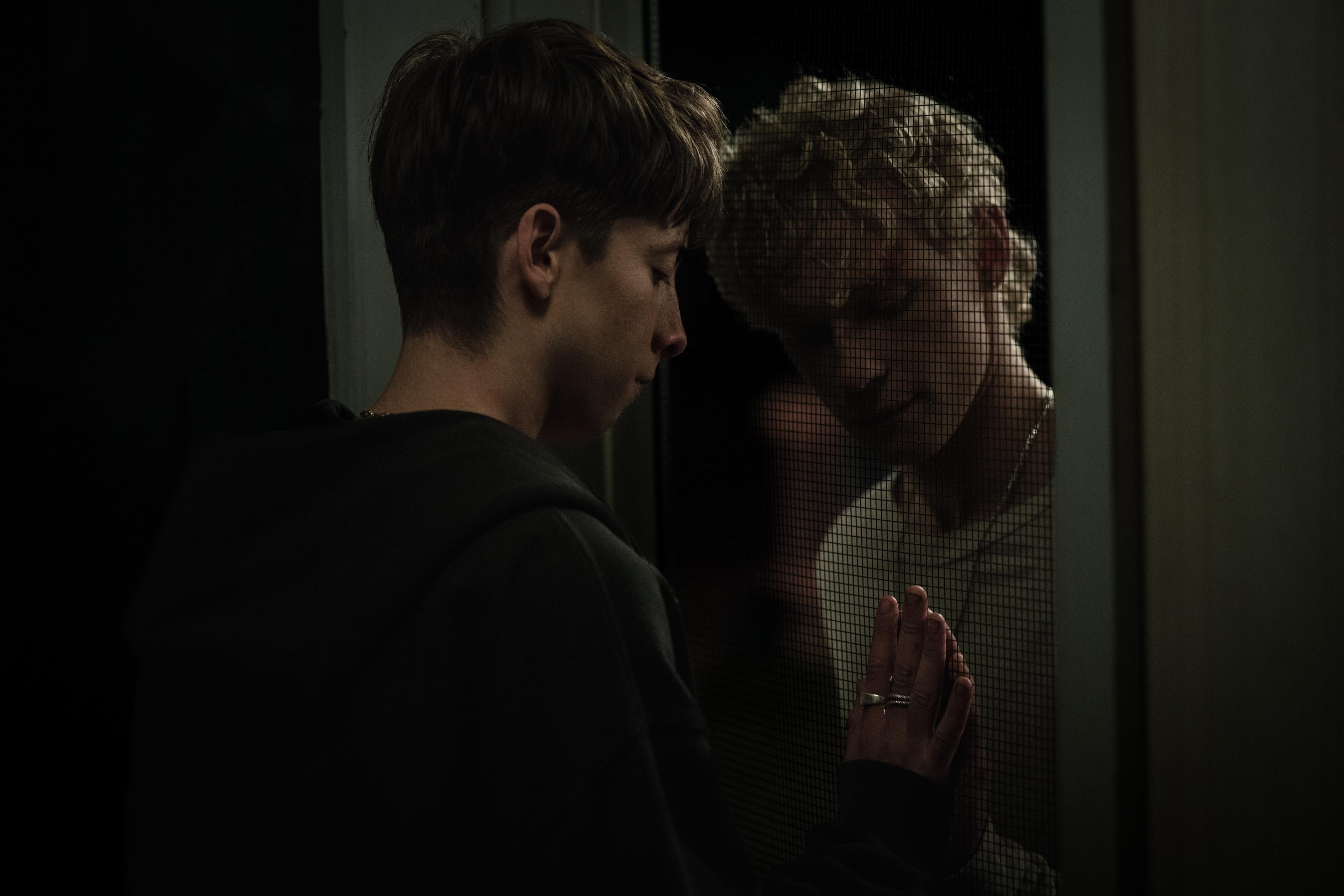
Bird and Clausen Courtesy of Neon
In Leviticus, it’s the alleged Christian ritual, and not the boys’ mutual attraction, that summons unseen demons. Chiarella explores some rugged psychological and spiritual territory here: He’s in tune with the way sexual attraction between two people can feel transformative and special; it’s only outsiders who can make it profane. But he also allows for the possibility—it can happen in any romantic or sexual relationship—that our desire might inspire fears or even self-loathing that we’d rather not feel. When Naim and Ryan look at one another, each sees the person who might be able to look into his very soul. The monstrous entity that invades their little circle tests that comforting intimacy. Aside from a bloodied ear here or there, most of the horrors in Leviticus are implied rather than shown. Chiarella doesn’t rely on jump scares (though there are a few), and he has zero interest in sadistic gore. Nor is he arty or arch; his approach feels direct and heartfelt.
And while you could sum up the central metaphor in one sentence—sexual desire sometimes feels like the monster within—Chiarella and his actors are more invested in exploring what it means to risk intimacy. And when it comes to that, fear is the enemy. Naim and Ryan, just learning to trust one another, kiss (and more) as they ride in the back of a bus; it’s both tenderness and hunger that have drawn them together. Together, Bird and Clausen make young queer love seem both transcendent and terrifying. And unlike so many modern horror movies, Leviticus finds its way toward a natural, graceful, if not necessarily definitive ending. It closes on a melancholy note brushed with just a flutter of optimism, allowing for the possibility—or at least the dream—that two people can find their definitive truth in each other. Outsiders may disapprove, but that’s their problem to solve. As for the demons within—those are yours to manage, and no one ever said it would be easy.