





Richard Gadd wants to tell the truth. By that, I don’t mean he preaches. Quite the opposite. So fierce is his commitment to emotional honesty that the Scottish writer and performer ensnares audiences in murky scenarios that we have to analyze our way out of like Freud interpreting dreams. His semi-autobiographical breakthrough series, Netflix’s Baby Reindeer, concerns a comedian who is stalked by a mentally ill woman but can’t bring himself to seek help. Gadd slowly fills in his character’s history, finally letting us see his paralysis as part of an identity crisis rooted in sexual abuse by a male mentor. This is not the kind of story that normally draws crowds. It became a hit because, I think, Gadd wasn’t moralizing on the fraught topic of male sexuality or casting himself as a victim, but depicting one man’s reality in all its disarray.
His follow-up, Half Man, is pure fiction. Yet the series, co-produced by HBO and the BBC, takes a similarly raw and tangled approach to a similar set of issues: sexuality, masculinity, violence, love, addiction, creativity, self-loathing. It is also more disturbing than its predecessor; every spark of black comedy is extinguished by a torrent of despair. I came out moved—devastated, really—but ambivalent about whether its payoff had been worth the pain.
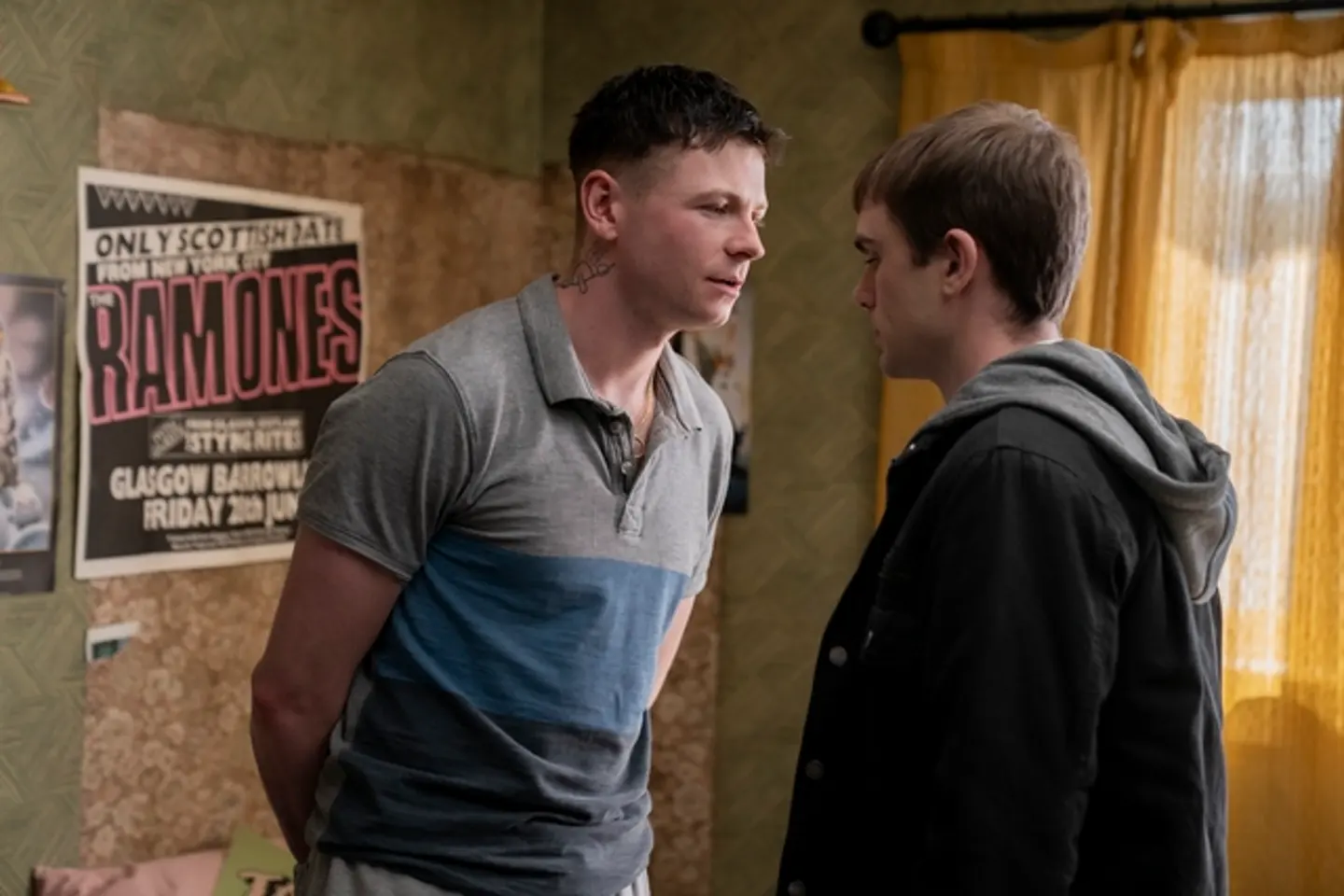
Stuart Campbell, left, and Mitchell Robertson in Half Man Anne Binckebanck—HBO
In flashbacks that make up most of the show, two inextricably bonded men spend 30 years circling one another. As boys without dads, Niall (played in youth by Mitchell Robertson and adulthood by Jamie Bell) and Ruben (Stuart Campbell, then Gadd) are “brothers from another lover” whose moms combined households in a liminal form of lesbianism. Ruben, a charming but terrifyingly angry juvenile delinquent, pummels timid, bookish Niall’s bullies. Their mutually destructive connection is sealed by a sexual initiation as complicated, emotionally and in terms of consent, as it is excruciating to watch.
Framed by their tense reunion at a middle-aged Niall’s wedding, whose chronology is muddled by Gadd’s insistence on restricting our access to context, episodes revisit crucial moments in their relationship as they grow together and apart, thrive and spiral, save and damn one another. Key to their turmoil is Niall’s inability to tell the hypermacho Ruben that he’s attracted to men; as the former stays trapped by his repression, the latter lashes out in horrific acts of violence. “It’s like one needs a head and the other needs a body,” one character observes.
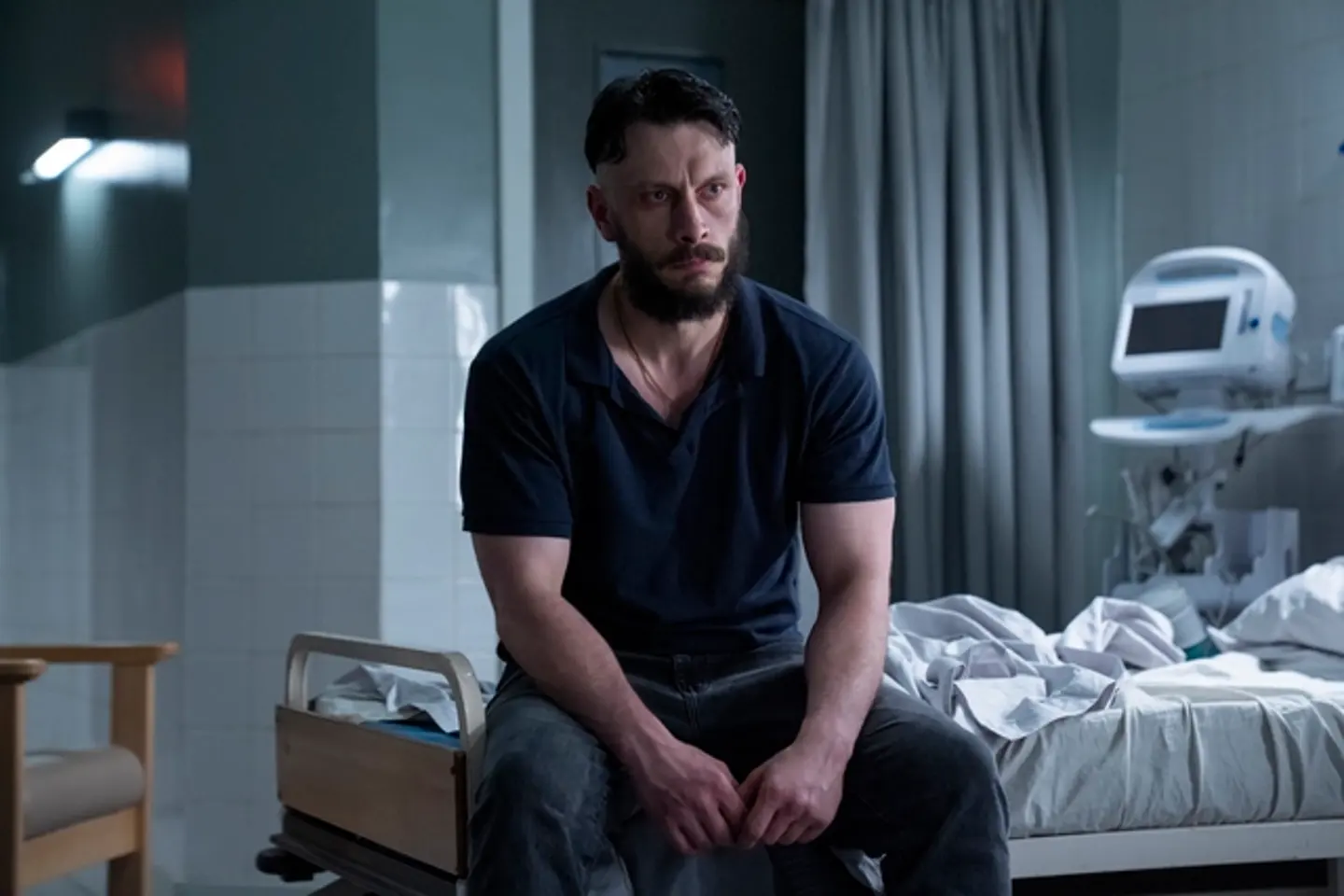
Richard Gadd in Half Man Anne Binckebanck—HBO
The appeal of comfort TV is self-evident, and never more so than in tumultuous times. But why do we voluntarily consume art—and especially television, which demands hours if not years of attention—that reminds us of how painful life can be? The most effective feel-bad stories give us insight into our imperfect selves and assure us we’re not alone in our suffering. They help us understand what is so broken about the world. They might even spur us to action.
Half Man achieves its annihilating effect through scenes that rattle the nerves and performances that bare tortured souls in such detail, they expose most other TV characters for the clichés they are. Gadd’s choice to bulk up and play Ruben instead of Niall confirms his range as an actor. These are no small achievements.
Whether they justify putting us through vicarious hell is a question with as many valid answers as the show has potential viewers. I don’t doubt that its ugliest scenes are sincere efforts to blast away narrative euphemisms, leaving only scorched kernels of truth. But for me, it doesn’t expand upon the revelations of Reindeer enough to merit the misery. Someone more invested in dissecting the nuances of masculinity might disagree. If Gadd has taught us anything, it’s that we are all shaped by an infinite accumulation of experiences, and thus all tragically unique.