


King Charles III’s’ state visit to the U.S. marks the first time a British Monarch has visited the White House since Queen Elizabeth II was hosted by President George W. Bush in May 2007.
That visit landed at a time when the “special” relationship between the U.K. and U.S. was prosperous and celebrated. British Prime Minister Tony Blair, who shared a close working relationship with President Bush, was still in power.
President Donald Trump and British Prime Minister Keir Starmer have clashed numerous times in recent weeks, with Trump rebuking the U.K. leader for not actively joining the Iran war.
But Royal visits such as this traditionally take a diplomatic approach, largely avoiding engaging in any divisive matters, and with Trump a long-time admirer of the British monarchy, there’s hope this trip could repair the historically strong bond between the two nations.
“Americans have always had a love affair with royalty, and the relationship we have with the British royal family is part of that,” royal observer Kristen Meinzer tells TIME.
And Elizabeth, who reigned for 70 years, remains for many at the center of the royal legacy. “Queen Elizabeth was an institution. She was British history embodied in one,” Meinzer says.
During her six-day stay in 2007, Elizabeth managed to charm the President, lawmakers, and the American public.
From the jovial, widely-quoted joke she shared with Bush to the wider political context of the stay, here’s a look at the key highlights from Queen Elizabeth’s last state visit which set the bar high for King Charles.
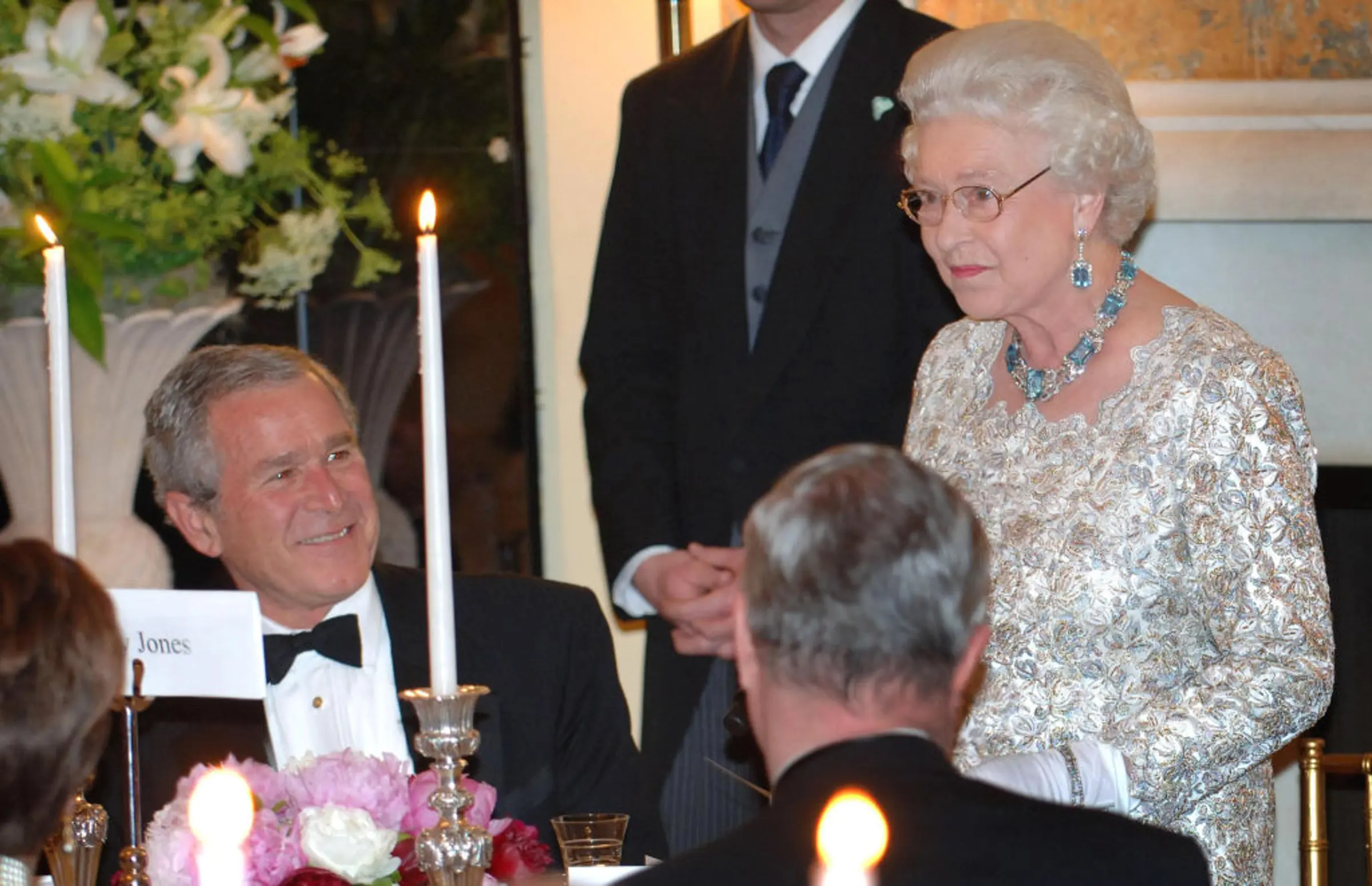
Queen Elizabeth jokes with the President during a dinner at the ambassador's residence in Washington, D.C., on May 8, 2007. Fiona Hanson—Getty Images
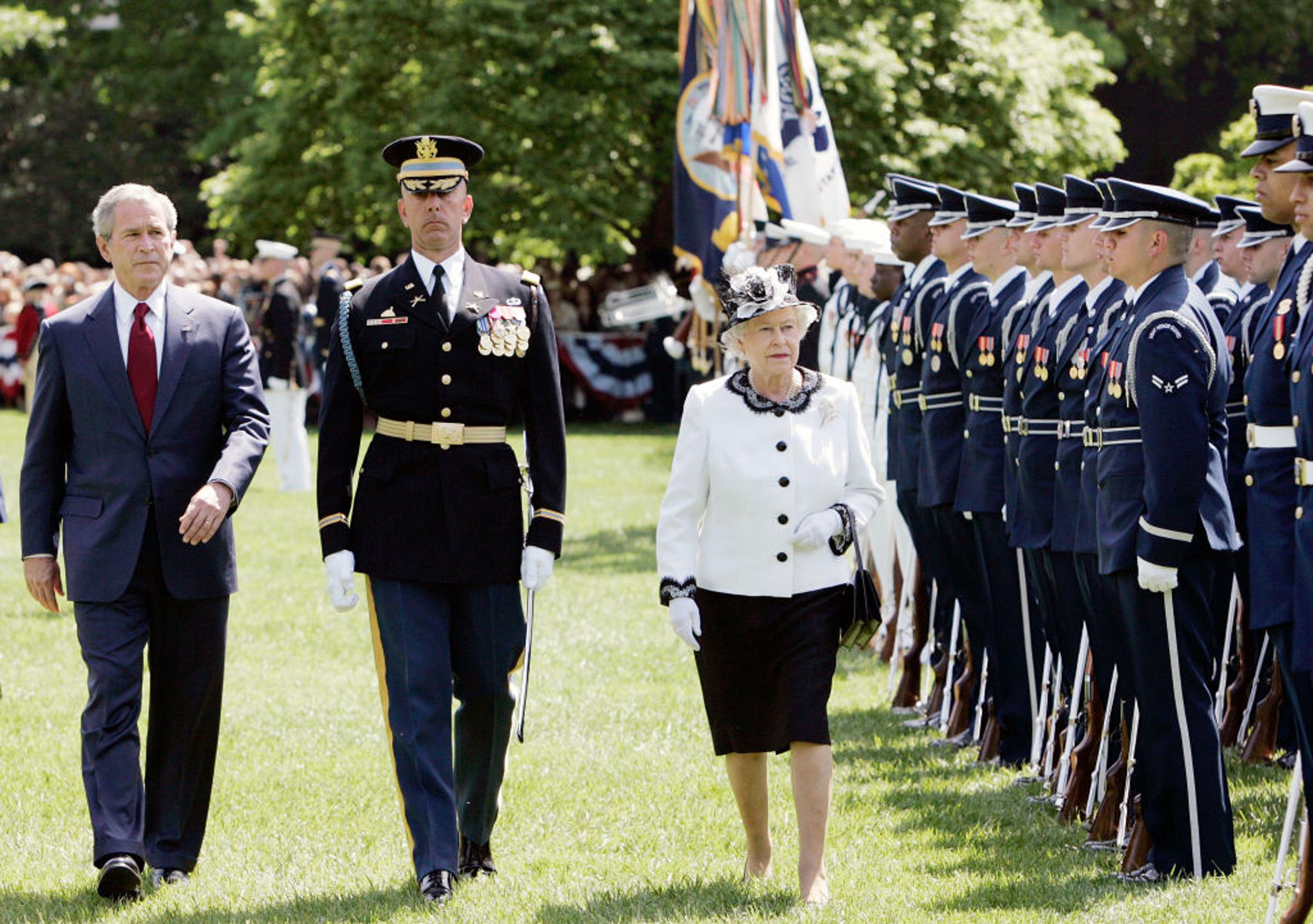
Queen Elizabeth and President George W. Bush inspecting the troops during an arrival ceremony on the South Lawn of the White House in Washington, D.C., on May 7, 2007. Tim Graham Photo Library—Getty Images
The Queen poked fun at President Bush’s gaffe
After visiting Virginia and stopping by the Kentucky Derby, Elizabeth and her husband, Prince Philip, arrived in Washington, D.C., where they were greeted by President Bush and First Lady Laura Bush.
“There was a lot of interest in the Queen's decades of public service, and also in President Bush, hosting a royal visit, as he was known for being more informal,” Carolyn Harris, a royal commentator and instructor of history at the University of Toronto tells TIME.
Harris recalls that Bush, in a departure from his known relaxed approach, reportedly took etiquette lessons ahead of the Queen’s stay.
“We honor our traditions and our shared history. We recognize that the strongest societies respect the rights and dignity of the individual,” said Bush as he took to the stage to formally welcome Elizabeth at a White House event.
Reflecting on the Queen’s prior visits to the U.S., President Bush continued: “You helped our Nation celebrate its bicentennial in 17—in 1976.”
The gaffe was met with laughter from attendees, including Elizabeth herself.
Bush turned sheepishly to the Queen before jokingly telling the crowd: “She gave me a look that only a mother could give a child.”
Elizabeth did not forget the President’s brief slip-up, leading with it when she later delivered remarks during a dinner at the ambassador’s residence in Washington. The dinner was organized by the Queen in return for a white-tie dinner, the first of its kind hosted by the Bush family at the White House.
“I wondered whether I should start this toast saying that I was here in 1776,” said Elizabeth, prompting raucous laughter from Bush and the other attendees.
During his own speech, the President replied: "Your Majesty, I can't top that one."
The moment is often revisited as a strong example of Elizabeth’s ability to adapt to the moment and inject whimsy into her speeches.
“She had a strong sense of humor, especially when there were moments at these carefully scripted events that did not go according to plan,” Harris says.
“She knew how to make jokes that were exactly the right tone, where, even if she was poking fun a little bit at somebody, she would do it so gently,” Meinzer adds.
The Queen established common ground with the shared joke, following a more serious speech the day prior at the arrival ceremony, during which she paid tribute to the long-standing transatlantic alliance between the U.K. and U.S.
“[A state visit] gives us the chance to look back at how the stories of our two countries have been inextricably woven together; it is the moment to take stock of our present friendship, rightly taking pleasure from its strengths, while never taking these for granted,” said Elizabeth.
The Queen was particularly amicable during state visits and dinners, says Grant Harrold, a former royal butler.
“She was very easy to talk to. And she was very engaging, she would ask you about your background,” he tells TIME. “She'd also put you on your guard. She could give you a look and you’d think ‘she’s still the Queen.”
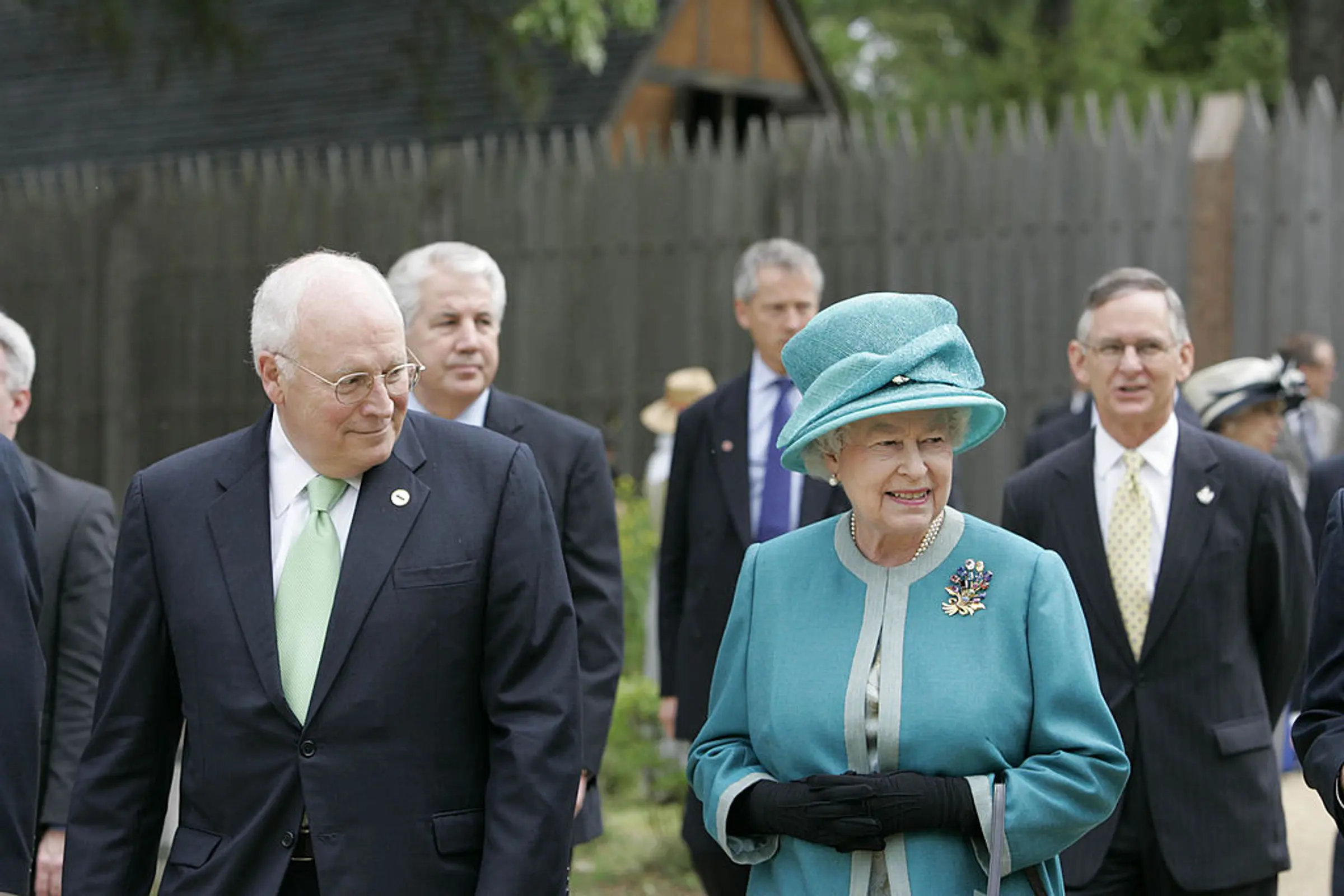
Queen Elizabeth II touring the Jamestown Settlement alongside then-Vice President Dick Cheney in Williamsburg, Virginia on May 4, 2007. Anwar Hussein—Getty Images
Elizabeth’s visit also took place against the backdrop of a Middle East conflict
The U.S. was still heavily involved in conflict in Iraq, following the U.S.-led invasion of the country in 2003. Despite the withdrawal of the majority of British troops, at least 5,500 U.K. personnel were still deployed in Iraq at the time.
Known as the ‘Surge of Iraq’, Bush deployed more than 20,000 additional troops months ahead of the Queen’s visit. During the trip, the President mentioned the U.S. operation in Iraq, as well as the wider "War on Terror."
“Today, our two nations are defending liberty against tyranny and terror. We're resisting those who murder the innocent to advance a hateful ideology, whether they kill in New York or London or Kabul or Baghdad,” said Bush in his address during the arrival ceremony, also thanking the Queen on account of her “leadership” and for speaking out “against extremism and terrorism.”
“We got some very serious coverage about what was happening in the Middle East and the Anglo-American relationship in that context. But at the same time, there was this more light-hearted coverage that focused on the personalities who were involved,” Harris explains.
Charles’ trip is also landing during a time of U.S.-Middle East conflict—but with the added complication that London and Washington are far from on the same page.
Commemorating the 400th anniversary of the founding of America's first English settlement
Elizabeth’s visit to the U.S. in 2007 marked four centuries since British settlers landed in Virginia, establishing the nation’s first colonial settlement in North America.
“With the benefit of hindsight, we can see in that event the origins of a singular endeavour; the building of a great nation, founded on the eternal values of democracy and equality based on the rule of law and the promotion of freedom,” said Elizabeth in a speech delivered to the Virginia General Assembly in Richmond.
“Since I first visited Jamestown in 1957, my country has become a much more diverse society, just as the Commonwealth of Virginia and the whole United States of America have also undergone major social change,” she added.
Elizabeth pointed towards the “melting pot” metaphor used to describe the U.S., calling it an “inspiration to others around the world as we face the continuing social challenges ahead.”
“There's something kind of bringing it full circle about the Queen actually visiting Jamestown and seeing, this is the place where people died, where people first settled,” says Meinzer. “You're the Queen, you are of that same bloodline that essentially sent those people off in the first place.”
Leaning on connections of the past to forge a way forward for the future served as a key part of the trip.
“There was a strong emphasis on history and heritage and the role of Britain in the development of the United States,” says Harris, adding that "it was an opportunity to look back at this earlier history” that is sometimes overlooked.