


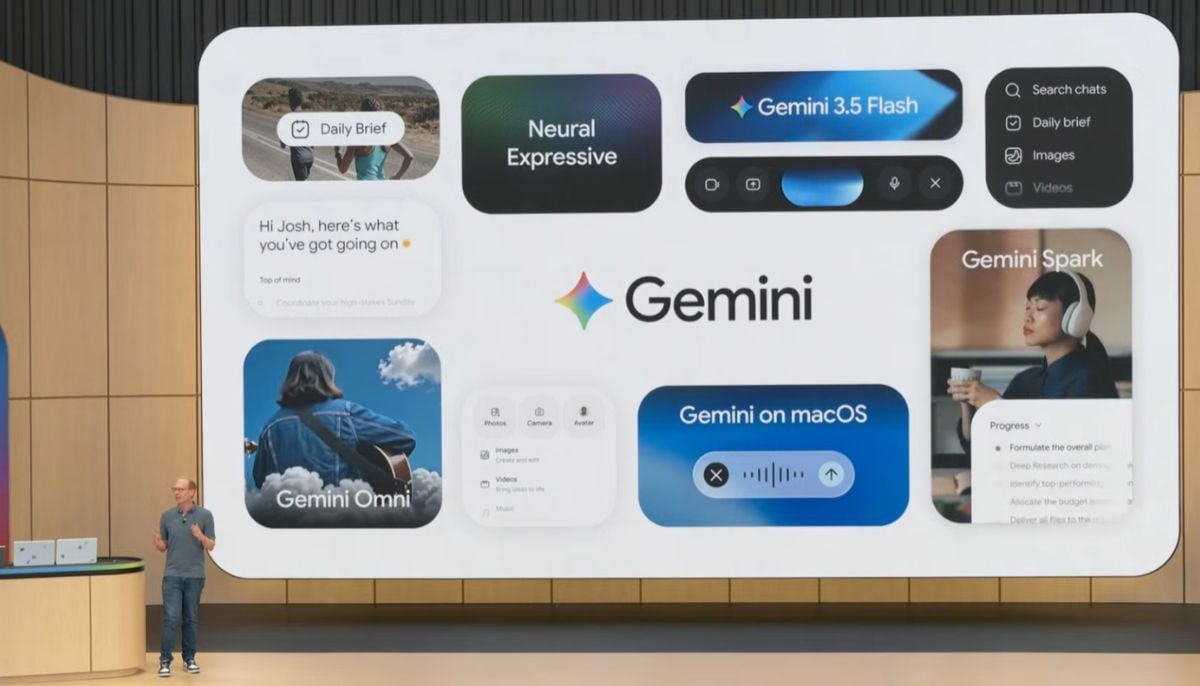
At Google I/O 2026, Google quietly announced a fundamental change to how Gemini usage limits work, and depending on what tasks are being run, some users will feel it immediately.
With the new plan, asking Gemini to summarise a news article costs almost nothing. Asking it to generate a video or run a deep research session costs significantly more, and both now draw from the same refreshing pool.
under the old model, every prompt counted equally toward a daily limit. One text question equaled one prompt. One video generation request equaled one prompt.
The new system accounts for that difference. Limits now refresh every five hours rather than once daily, but the speed at which a quota depletes depends entirely on what is being asked.
Google confirmed the tasks that draw heaviest on usage limits: image, video, and music generation; Deep Research; the Pro Model; and extended thinking features including Deep Think.
"Gemini will move to compute-based usage limits that will refresh every 5 hours until you reach your weekly limit," Google stated. "Calculation of your usage will factor in the complexity of your prompt, the features you use, and the length of your chat."
Casual users running basic text queries, summarising documents, drafting emails, asking factual questions, will see almost no meaningful change. The compute cost of these interactions is low enough that standard limits will absorb normal daily usage without disruption.
Google confirmed that usage limits for users under 18 remain unchanged under the new system.
Users without a paid plan operate under standard limits. AI Plus subscribers receive limits twice as high as standard. AI Pro users receive four times standard. At the top tier, AI Ultra subscribers receive either five or twenty times the AI Pro allocation, depending on their specific subscription.
此内容由惯性聚合(RSS阅读器)自动聚合整理,仅供阅读参考。 原文来自 — 版权归原作者所有。