


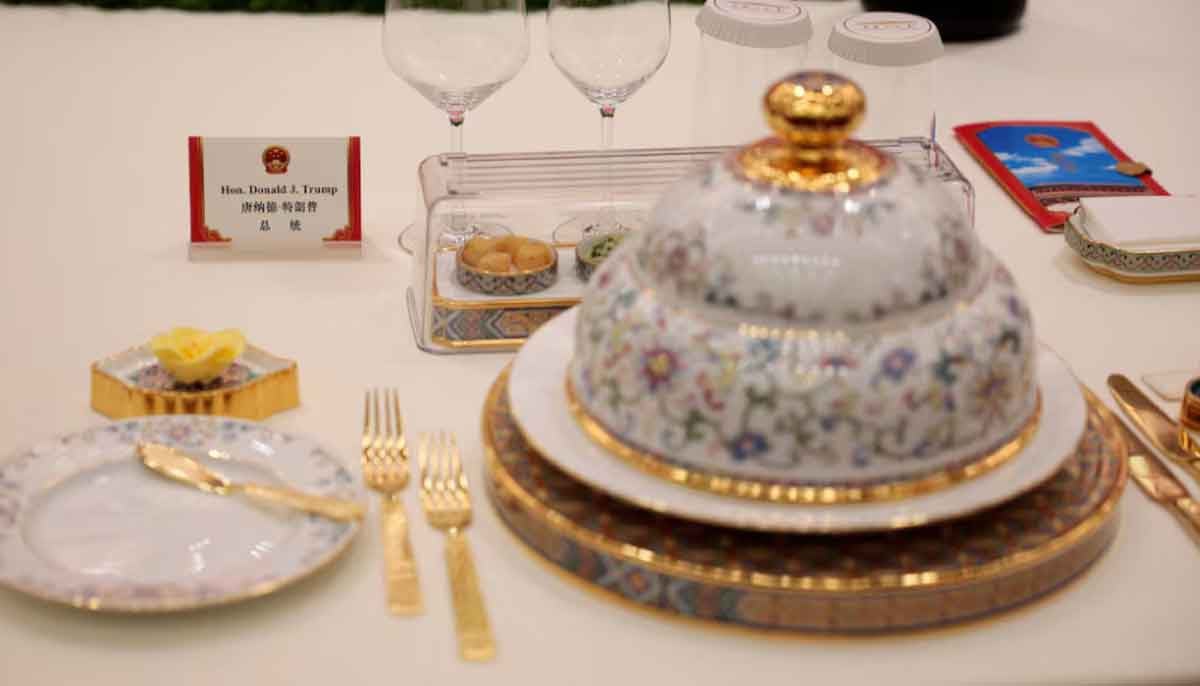
US Presidents Donald Trump and Xi Jinping sat down to a lavish state banquet in Beijing on Thursday.
According to Reuters news agency, Chinese state dinners traditionally draw on Huaiyang cuisine, from the region surrounding Shanghai, known for its mild, subtle flavours, refined knife-work and emphasis on seasonal dishes.
To cap a meeting in which both sides expressed a willingness to reset relations, menu planners appeared to add a note of culinary flexibility - including Beijing roast duck, China's national dish, and beef ribs, in an apparent nod to Trump's preference for a well-done steak.
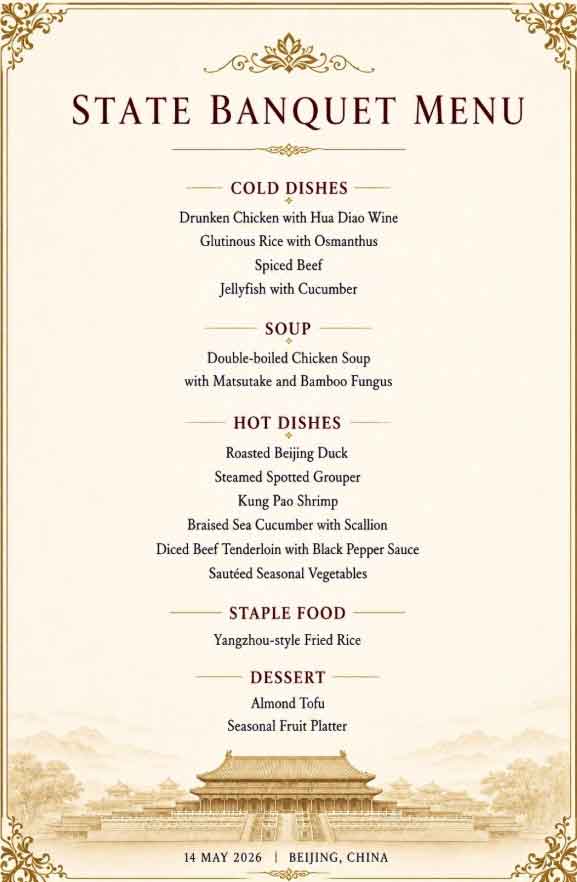
They also went heavy on dessert options for American guests: tiramisu, fruits and ice cream and a "trumpet-shell shaped pastry."
For decades, China has used the powerful symbolism of food during landmark official events and when receiving distinguished foreign visitors. In China's modern history, famines and political turmoil that caused decades of widespread rationing turned food into a potent status symbol in Chinese culture.
One of the eight major regional cuisines of China, Huaiyang cuisine has long played a starring role at major diplomatic events.
Signature dishes include tender, springy "lion's head" pork meatballs, Yangzhou fried rice, "squirrel fish" deep-fried in a sweet-and-sour sauce, and "wensi tofu" - a block of tofu sliced into thousands of fine strands.
The cuisine features ingredients native to the Yangtze river basin like freshwater fish, eel and bamboo shoots, as well as minimal seasoning to highlight their freshness.
此内容由惯性聚合(RSS阅读器)自动聚合整理,仅供阅读参考。 原文来自 — 版权归原作者所有。