


The dramatic exit of two leading Nigerian opposition figures from a coalition preparing to challenge President Bola Tinubu in January’s elections has dealt a potentially deadly blow to hopes of a united front to take on an increasingly powerful incumbent.
Peter Obi, a former state governor in the southeast, finished third in the 2023 presidential poll with a quarter of the popular vote compared to Tinubu’s 37%. He left the African Democratic Congress (ADC) — a smaller party that several major opposition politicians co-opted as a united platform to challenge Tinubu — alongside Rabiu Musa Kwankwaso, a popular figure in Kano, the most populous northern state. Both men had left the parties with which they contested the last election to join the ADC with other heavyweight opposition politicians including Atiku Abubakar, a former vice president, who came second in 2023. Last month they attended a meeting where a pact was reached to field one consensus opposition candidate.
But citing legal disputes over the party’s leadership, as well as “suspicion and division,” Obi joined the newly formed Nigeria Democratic Congress and looks set to be on its ballot in January, potentially with Kwankwaso being tipped as his running mate. At a convention last weekend, NDC said its candidate will come from Nigeria’s southern region but that he or she will only serve one four-year term should he win the election.
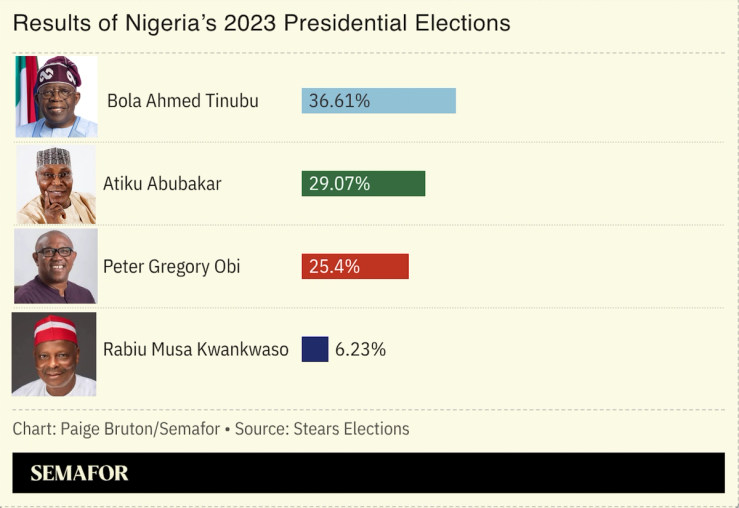
The move gives Obi more control over his own political destiny and a second chance to tap into young people’s disenchantment with mainstream parties, a move that made him a force in 2023. Whether it helps anyone other than Tinubu win January’s vote remains to be seen.
“I think it has definitely weakened the opposition as far as unseating the incumbent is concerned,” Joachim MacEbong, a Lagos-based analyst for Control Risks advisory firm, told Semafor. He expects a repeat of the three-way contest and the same result of four years ago, unless Abubakar steps down to back Obi.
Nearly two dozen lawmakers who were ADC members have left the party following Obi’s move, and a similar exodus is happening with aspirants to political offices across the country. Basil Abia, an economic policy consultant running to occupy a federal legislative seat, also moved to the NDC, citing “a bandwagon effect on down ballots that you must not take for granted.” He initially joined ADC to benefit from Obi’s social equity, he told Semafor.
此内容由惯性聚合(RSS阅读器)自动聚合整理,仅供阅读参考。 原文来自 — 版权归原作者所有。