






An uncomfortable energy deadline is looming for the White House.
Back in March, when it became clear the Strait of Hormuz closure represented the biggest disruption to global oil trade in history, the Trump administration authorized 172 million barrels of crude oil to be released from the US Strategic Petroleum Reserve, equal to 40% of the available stockpile. The decision was taken in coordination with other members of the International Energy Agency, who collectively agreed to kick in an additional 228 million barrels.
Because of the physical structure of the underground caverns that hold the SPR, only a few million barrels can be siphoned off daily, so the drawdown has been gradual. But the market was spooked last week when fresh federal data made clear that total US oil reserves, including the SPR and privately-held stocks, had reached their lowest level since 2004.
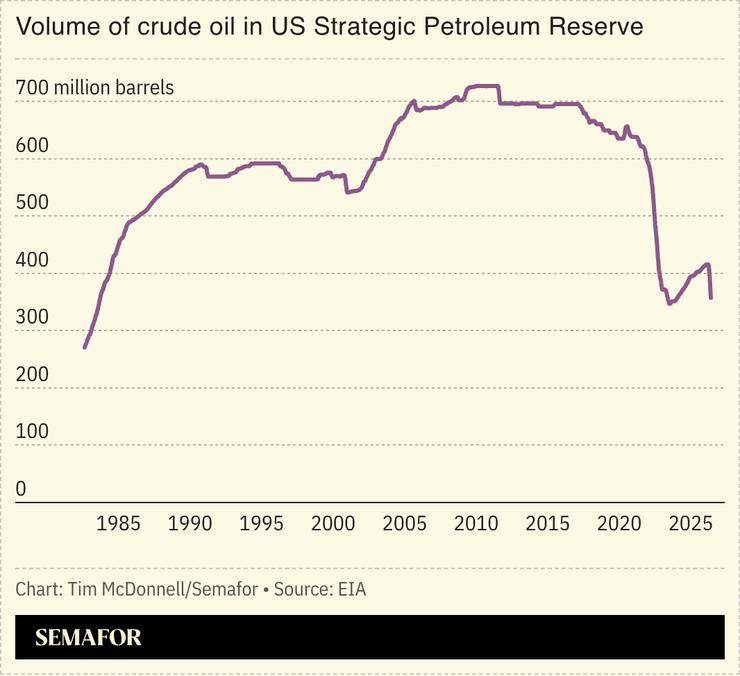
Now the SPR itself is about to cross two important thresholds. The first is that this week, it will likely dip below the low point hit during the Biden administration, which authorized the biggest SPR drawdown in history following the 2022 invasion of Ukraine. The last time the SPR was this low was in 1983, only a few years after it started being filled. The second threshold is that by the first week or so of July, the initial drawdown will have been fully withdrawn, leaving the administration facing a tricky decision about whether to approve another release.
On Friday, US Energy Secretary Chris Wright told Fox Business he was “not concerned” about draining the SPR, because rather than “selling” barrels, the administration is signing swap contracts in which traders can take a barrel today with a commitment to return 1.25 barrels in the future. So far 133 million barrels have been contracted this way, a DOE spokesperson told Semafor, and are due to be returned “beginning early next year.”
There’s a tension in this strategy that the administration is running out of time to resolve. On one hand, Wright’s argument is that tapping the SPR is essentially net beneficial to US taxpayers. And traders, which so far include most of the usual suspects like Shell, Vitol, and Trafigura, are clearly happy to sell these barrels at high prices now, replace them at low prices later, and pocket the difference. On the other hand, authorizing more releases would look like an admission of defeat in negotiations with Iran, and a clear vote of no-confidence from the government in its own strategy for reopening the strait. It would also push the SPR dangerously close to its legally-mandated operational minimum of 150 million barrels. The DOE spokesperson declined to comment on whether further releases are under consideration.
The biggest problem with more SPR releases is that they could backfire and send prices up, not down, Ben Cahill, senior fellow with the Atlantic Council Global Energy Center, told me. Promises of future replenishment notwithstanding, the only number the market really cares about is the SPR’s current level. “And at a certain point it becomes a self-defeating move,” he said, “because releasing more oil into the market is overwhelmed by the perception that we’re running out of options and have less slack.”
此内容由惯性聚合(RSS阅读器)自动聚合整理,仅供阅读参考。 原文来自 — 版权归原作者所有。