


惯性聚合 高效追踪和阅读你感兴趣的博客、新闻、科技资讯
阅读原文 在惯性聚合中打开

推荐订阅源

博客园 - 叶小钗
Last Week in AI
Last Week in AI
OSCHINA 社区最新新闻
OSCHINA 社区最新新闻
雷峰网
雷峰网
GbyAI
GbyAI
Hugging Face - Blog
Hugging Face - Blog
N
Netflix TechBlog - Medium
博客园 - 聂微东
Y
Y Combinator Blog
罗磊的独立博客
博客园_首页
小众软件
小众软件
有赞技术团队
有赞技术团队
爱范儿
爱范儿
F
Fortinet All Blogs
C
Check Point Blog
Google DeepMind News
云风的 BLOG
云风的 BLOG
Apple Machine Learning Research
M
MIT News - Artificial intelligence
月光博客
月光博客
钛媒体:引领未来商业与生活新知
钛媒体:引领未来商业与生活新知
博客园 - 司徒正美
aimingoo的专栏
aimingoo的专栏

Latest from Tom's Hardware

Our experts review your astonishing PC builds and setups in Rig Rundown — from wall-mounted setups to a system… News outlets are blocking Wayback Machine from archiving their pages — 23 outlets concerned AI companies might abuse fair use and use it to train their models Mark Zuckerberg reportedly working on AI clone of himself — Meta insiders claim 3D photoreal animated Zuck will be able to engage with employees on his behalf Score a massive $700 off this 4K-ready Lenovo gaming PC with an RTX 5070 Ti, now just $1,899 — epic Legion Tower 5i pre-built ships with a 20-core Intel CPU, 32GB DDR5 and a 2TB SSD Pay $1,349.99 for Gigabyte's Aero X16 laptop and save $300 on this 32GB beast with RTX 5070 graphics —… Veteran Windows dev shows off AI running on 47-year-old PDP11 with 6 MHz CPU and 64KB of RAM — 'gloriously absurd' project runs transformer model written in PDP-11 assembly language Half of all US employees now use artificial intelligence at work, crossing landmark threshold for first time — Gallup data shows daily and weekly usage hitting all-time high of 28% in Q1 2026, with 65% feeling positive about its impact on productivity China has spent 3.6 times more than the US on chipmaking subsidies over the past decade — $142 billion and counting, easily outweighs CHIPS Act FAA approves military use of drone-killing laser weapons in US airspace — decision comes after it was decided ‘systems do not present an increased risk to the flying public’ Nvidia says AI cuts 10-month, eight-engineer GPU design task to overnight job — company is still 'a long way' from AI designing chips without human input Small Missouri town ousts half its city council after $6 billion AI data center approval — petition calls for mayor's removal as frustration (and violence) over AI data centers mounts New tech can see a CPU's transistors in action — terahertz radiation can potentially steal data as a chip is… Intel's Nova Lake CPUs gear up to seize AMD’s 3D V-Cache gaming throne — early leak points to up to 52 cores, blazing DDR5-8000 support, and massive 175W TDP Acer Predator GX850 SFX power supply review: Solid electrical performance with good efficiency NZXT to cough up $3.45 million over 'predatory' Flex PC rental scheme in RICO class-action settlement — in-debt customers to get up to $5,000 of relief, eligible renters to be granted ownership Bulbous 15x fan PC case side panel dubbed the ‘Superdome’ lowers temps by 20 degrees —  $600 worth of Noctua fans arrayed in 3D-printed structure Approvals for Nvidia and AMD AI chip exports to China stall under government bottleneck —  20% staff turnover… Espresso Lite 15 Review: An entry-level portable monitor with a splash of color Save a massive $700 on this 4K-ready HP gaming PC with a 9800X3D and RTX 5070 Ti, now just $2,499 — discounted HP Omen 35L pre-built powerhouse ships with 32GB DDR5 RAM and a 1TB SSD 'CopprLink' destroys every eGPU standard in new test, achieves near-native-level performance with an RTX 5090 — setup requires $2,300 worth of additional hardware Website backup crippled by 1.6MB Friends GIF that was replicated 246,173 times, breaking Linux's EXT4 filesystem limit — Jennifer Aniston's 'happy dance' animation ate up 377 gigabytes of data due to security policy Why we spent 50+ hours retesting Intel’s Core Ultra 270K Plus and 250K Plus Just $284.99 for 32GB of Team T-Create Classic DDR5-6000 RAM is the cheapest going right now — this double-dipping… Grab MSI’s RTX 5080 gaming laptop for just over $2,000 — offers fast 240 Hz QHD+ display, dual storage slots, and expandable DDR5 memory Lenovo hikes Legion Go 2 handheld gaming PC to almost $3,000 for 2 TB model — Handheld now costs more than AMD's Strix Halo devices despite relatively weaker Z2 Extreme chip Iran's forced nationwide internet blackout becomes second-longest on record as it passes 1,000 hours offline — possessing Starlink terminals punishable by death, country using 'military-grade jamming' against service Tiny 3-inch cube PCs bring a splash of color to the passive PC market with red, orange, green and blue options — Intel Twin Lake-powered Kubb Mini PCs start at $500 Veteran Microsoft engineer says original Task Manager was only 80KB so it could run smoothly on 90s computers — original utility used a smart technique to determine whether it was the only running instance Tech enthusiast gets Doom to run on a 40-year-old printer controller — ancient Agfa Compugraphic 9000PS came with a Motorola 68020 onboard for fast processing Keychron Q6 Ultra 8K Review: 660 hours of battery life at 8 KHz
Chinese startup claims photonic chip production without D...
Etiido Uko · 2026-06-09 · via Latest from Tom's Hardware
Prinano
(Image credit: Prinano)

Chinese semiconductor start-up Prinano announced that it has successfully validated the mass production of photonic chips without using the industry-standard lithography equipment. According to an SCMP report, the company said in a WeChat post on Friday, June 5th, that it had made 8-inch optical chip wafers in collaboration with Shenzhen Litra Technology. The company said it achieved this while “completely avoiding” the need for deep-ultraviolet lithography (DUV), a significant breakthrough in China’s push to reduce its dependence on ASML lithography tools, which remain subject to export restrictions.

Go deeper with TH Premium: Chipmaking

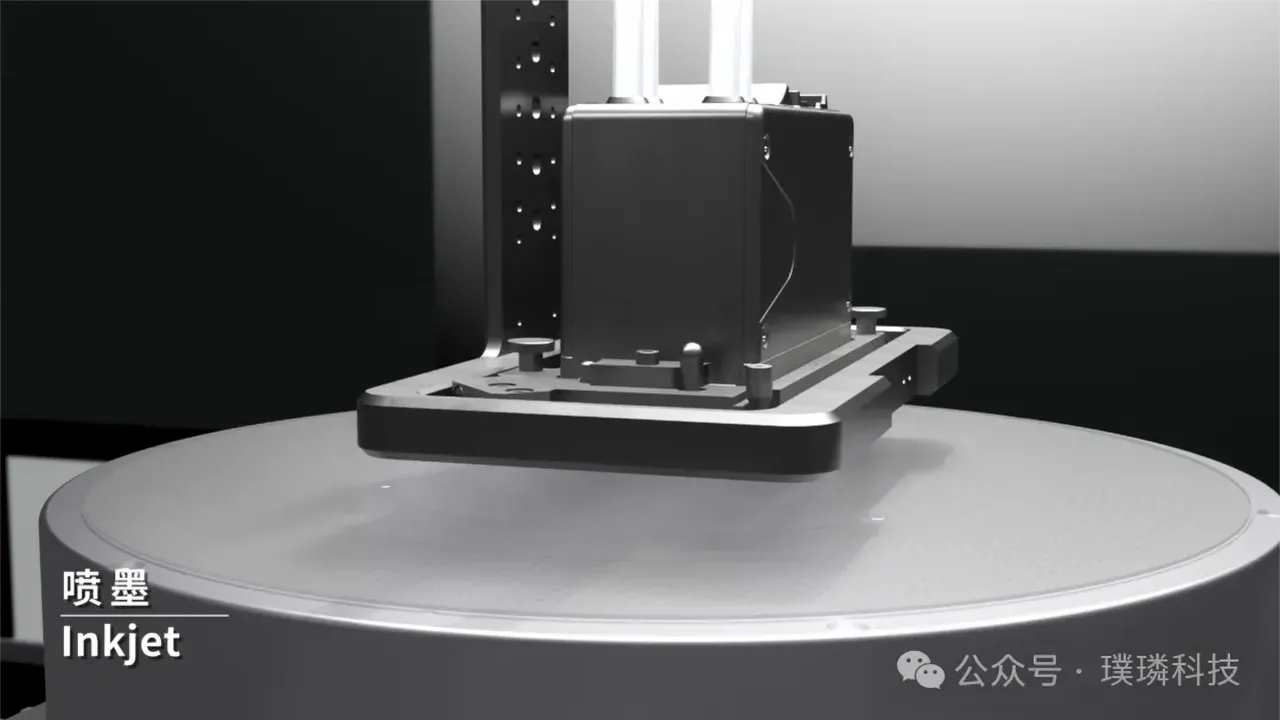
Instead of conventional optical lithography, Prinano said it used its PL-AS vacuum air-cushion nanoimprint lithography (NIL) system, which, according to the company, can reduce manufacturing costs to roughly one-tenth that of traditional DUV-based processes, while supporting wafer-level production of photonic chips.

Modern chips are typically produced using highly sophisticated DUV or more advanced EUV (extreme ultraviolet) systems that project circuit patterns onto silicon wafers using light. These machines contain some of the most complex optics ever built and can cost hundreds of millions of dollars. Nanoimprint lithography takes a very different approach. Rather than projecting patterns using light, it physically presses nanoscale structures into a specially prepared resist layer, basically stamping microscopic patterns directly onto the wafer surface. This process eliminates the need for many of the expensive optical systems required by conventional lithography equipment.

Nanoimprint lithography has long been viewed as a potential alternative to conventional optical lithography because of its potential for lower costs and extremely high pattern resolution. However, despite its promise, the technology has struggled to achieve widespread adoption in semiconductor manufacturing due to concerns about defect rates, template wear, throughput, and production yields, all of which become increasingly important in high-volume manufacturing environments.

Founded in 2017, Prinano has spent the past several years working to overcome those limitations by developing its own nanoimprint lithography ecosystem. The company took a significant step in 2025 when it announced the delivery of what it described as China's first semiconductor nanoimprint lithography system to a domestic customer, marking an early effort to commercialize the technology.

The company's latest announcement suggests it may have progressed beyond equipment development and pilot deployments. According to Prinano, its PL-AS vacuum air-cushion nanoimprint lithography platform incorporates wafer-level pressure control, customized double-layer imprinting materials, and proprietary process technologies capable of producing sub-10-nanometer features. The company now claims those developments have enabled the successful validation of wafer-scale photonic chip production on 8-inch wafers.

Importantly, Prinano is not attempting to replace the production of cutting-edge processors or AI accelerators. Instead, the company's announcement focuses on photonic chips, a category of semiconductors that manipulate light rather than electrical signals. These devices are widely used in fiber-optic communications, data center interconnects, sensing systems, and LiDAR technologies.

Get Tom's Hardware's best news and in-depth reviews, straight to your inbox.

Photonic chips are considered particularly well suited to nanoimprint lithography because many of their critical structures, including waveguides, gratings, and ring resonators, consist of repeating nanoscale patterns that can be replicated efficiently through imprinting techniques. This characteristic makes them a more practical near-term application for NIL than advanced logic chips, where defect rates and alignment requirements are far more demanding.

Another noteworthy detail is the use of 8-inch wafers. While leading-edge processors are increasingly manufactured on larger 12-inch wafers, 8-inch wafers remain widely used across specialized sectors such as compound semiconductors and power electronics. Demonstrating production on full 8-inch wafers suggests the process has moved beyond laboratory-scale demonstrations and into a format more compatible with commercial manufacturing.

The development also highlights China's broader search for alternative semiconductor manufacturing pathways amid ongoing export restrictions. Access to advanced lithography equipment from ASML — required for EUV and DUV — has been increasingly constrained under US-led controls, prompting Chinese companies to explore alternative approaches ranging from advanced packaging technologies to new chip architectures and novel manufacturing methods. Huawei recently announced a new LogicFolding chip architecture that allows the company to develop high-performance processors without relying on restricted EUV lithography machines.

Significant questions remain about Prinano’s announcement. While the claims have been validated in mass production, the company did not disclose production volumes, yield rates, defect densities, customer shipment data, or independent third-party validation. These metrics are critical for determining whether a semiconductor manufacturing technology is commercially viable rather than merely technically feasible.

Google Preferred Source

Follow Tom's Hardware on Google News, or add us as a preferred source, to get our latest news, analysis, & reviews in your feeds.

Etiido Uko is a news contributor for Tom's Hardware covering the latest updates in big tech and the PC industry. He is a mechanical engineer and senior technical writer with over nine years of experience in documentation and reporting. He is deeply passionate about all things engineering and technology, and is an expert in gadgets, manufacturing, robotics, automotive, and aerospace.