











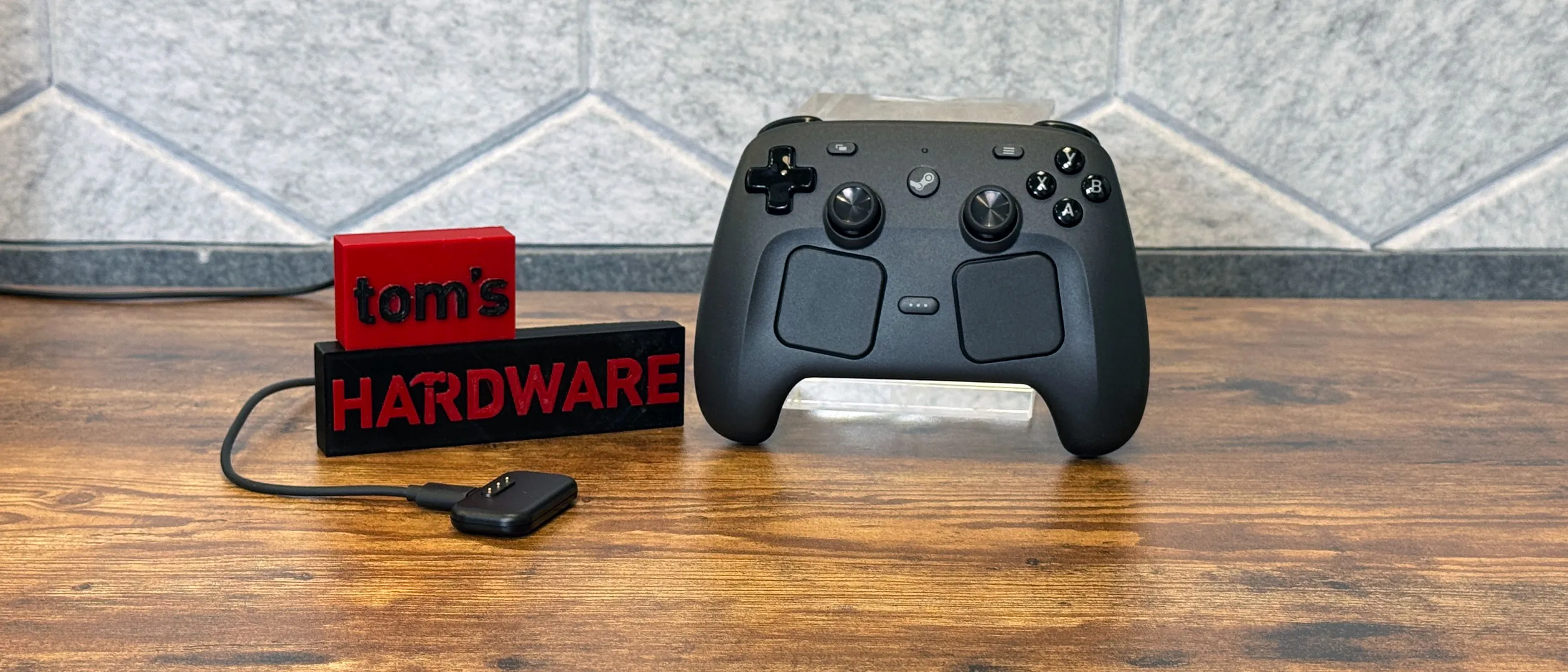
When we reviewed the Steam Controller, we had the chance to sit down with Valve and talk about our experiences using it and ask questions about it.
We talked with Valve programmer Pierre-Loup Griffais and Steve Cardinali, a mechanical engineer on the Steam Controller team, to talk more about the controller's design, the fact that it works only with Steam, and to learn more about how the company is dealing with latency, among many other topics. We published excerpts from this interview in a story alongside the review. Here, we're presenting the full transcript of our conversation.
Article continues below
Andrew E. Freedman, Tom's Hardware: So I've been playing around with the Steam Controller. I have questions about why you made some of the choices you did. I also have some questions about the Steam philosophy behind the controller. So I want to get into all those. I think the first thing is, why is now the time to make a controller again? The Xbox controller is widely seen as the default. The PlayStation controller has better PC support than ever. I was just plugging it in for some comparisons and had a whole bunch of PC drivers. Why is now the time for Valve and Steam to get back into the controller game?
Pierre-Loup Griffais, Valve programmer: Yeah, actually, on the PlayStation side, we've been working closely with Sony to enable that stuff and make it work as well as possible out of the box. So we expect the situation to be pretty good there.
In terms of our controller, I think that if you look at efforts like the Steam Machine and the Steam Controller, they're more or less all coming from the same spot, which is we had a bunch of Steam Deck users that were using their Steam Deck in all kinds of different ways, and some of these ways included docking on a TV, right? We got some feedback that while they really appreciated having the same exact experience with respect to like the UI and being able to get in and out of their games quickly and all that, docking a Deck meant missing some of the inputs, right? Like leaving some inputs behind, because you're leaving the Deck on the dock. And so I think the Steam Controller is a great experience for that. You have all the same inputs that you're familiar with. It's pretty much the exact same layout as the Deck, with a bunch of improvements on it, but also just for PC as a whole.
I think the Deck was a great data point on that input scheme working really well to both work for games designed with controllers and games designed without and, you know, take control of your desktop and use a bunch of PC apps and all that. So that stuff's been looking really good. And so making a controller, you know, as a standalone version of those same inputs, I think, is a logical next step there.
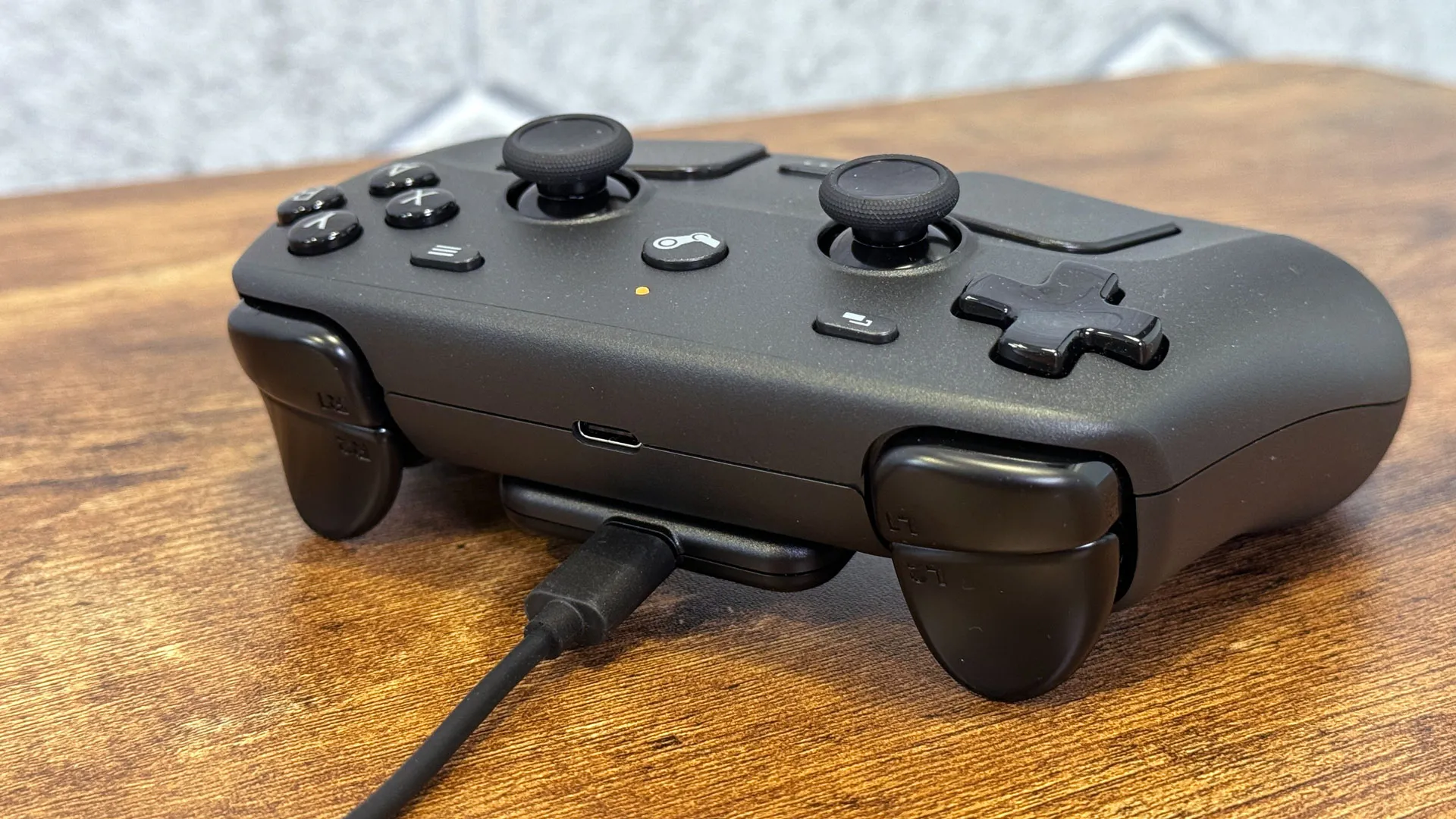
Freedman: One thing I was very surprised about when I first plugged the Steam Controller in, was that the setup flow really is pretty minimal, right? Update your firmware, here's how to enter Big Picture Mode, and off you go. And I think in many ways, to get the most out of the controller, it had me digging deeper in Steam Input than I think I admittedly ever have before. Did you ever consider having more sorts of teaching moments about Steam Input for newer users? Or did you just kind of kind of assume people would sort of dig in as needed?
Steve Cardinali, mechanical engineer on the Steam Controller team: You know, we wanted it to be out of the box, easy to use for people who maybe just want a controller that works like a controller and how they would expect, so that you're seeing that element there, of course. And a lot of thought went into that process. But on top of that, in developing this controller, and along with the original Steam controller in the Steam Deck. A lot of work has gone in Steam Input, like you're saying. And there's a lot, a lot there. And one of the things that the controller team is working on right now is actually a couple rounds of how-to tutorials on like how to set up your track pads in these certain ways, and the ways that we find work best; how to set up gyro; different input mappings' and layouts that we have found success with to get people started to get exposed to Steam Input and all the power it has behind it without being too overwhelming.
Griffais: It's really important to us that if you don't want to deal with any of that stuff, you don't have to, right? That the surface level experience gets you controller compatibility in games that are meant for controllers without any sort of tinkering. So the Steam Input stuff is there if you want it, but we don't want it to be a required element to just experience the baseline functionality there.
Freedman: Was there ever consideration for instance, the way Steam Deck had a game, I'm blanking on the name.
Griffais: Aperture Desk Job.
Freedman: Right. Was something like that ever a consideration for people who hadn't used the Steam Deck before or maybe might be considering this for the first time on a desktop or eventually, a Steam Machine? "Hey, here's how you get used to the input."
Griffais: Actually, I think that — and this might still be a conversation that's ongoing — but there were some conversations here about making Desk Job work well with the controller as well, because 99% of what you get through Desk Job is actually controller functionality. There is one step, I think, where it teaches you to use the touchscreen on the deck and maybe a microphone, and so I think we were thinking about making some adjustments so that it could be used just with the Steam Controller on a PC to teach you the same elements around motion controls, trackpads and all that that, you know, it walks you through. I'm not sure where those discussions are, but I think that was in the cards at some point.
Freedman: That's really interesting. So speaking of features and functionality, I happen to be playing a lot of Resident Evil 9 on my Steam Deck, and transitioning to the Controller felt very much like playing on my Steam Deck. I'm pretty sure that's the goal. When you were deciding to make a controller out of the Steam Deck, how do you decide which features from other controllers and the Steam Deck to include?
You have some from a lot of what you might consider more "basic" controllers, right? You know, your face buttons, things like rumble. Then you have things that you might consider from "elite" style controllers, for lack of a better term, right? Back buttons, gyro. So how did you decide that "OK, we're going to do back buttons, but we're not going to do replaceable thumb sticks, or we're not going to do replaceable back paddles." Where do you sort of decide?
Cardinali: Sure, yeah. For the controller, at least, it was, I wouldn't say, straightforward, but we had the guiding principle of Steam Deck users who get this controller, it should feel very similar. And it shouldn't be like a bunch of new stuff in their face that they have to then go and to the Input layout configurator and change settings, right? We wanted it to be natural. You're playing a game on your Steam Deck, and you go sit on your couch. You play it on Controller, it feels similar. So that helped us kind of keep the feature set down to what we had in Steam Deck.
The one main thing that kind of crept in that you probably have noticed or heard about is the Grip Sense. We're always trying to highlight new ways that you can play mouse and keyboard games — like competitive mouse and keyboard games — with a controller. The original Steam Controller did a great job of that, and then we carried over those trackpads and gyro over to this new controller. But as the gyro community becomes more and more prevalent, they do all sorts of things to enable and disable gyro for ratcheting. And we wanted to put something in there for them, for that community, to make sure this supports them in a competitive style as well. So that one kind of snuck in there, because we feel like that's an important feature for those kinds of games. Everything else is like. We didn't want to overburden the product with too much additional cost, or weight, or battery consumption. We wanted it to be a great controller for everybody. So we tried to really focus in on what we thought was the core, important feature set with this, you know, extra bonus in there.
Griffais: Yeah, some of these questions apply to the design of the Steam Deck too, right? Like, how did some of these inputs get in there? And what did not get in there? I think, like Steve said, every time we look at an input, we're conscious of overburdening the user. Like, having too many inputs is really not something that we want to see. And you know, the cost, the weights, everything comes into play there, But for for the back buttons in particular, I think we saw pretty early, including the first Steam Controller, that we had a bunch of players that felt limited in what they could do while manipulating the camera. And we thought it was really important to have all the functions in the game still available while you're fine-tuning the camera. We saw a bunch of users use claw grip to counteract that, right, where you're using your thumb and your index fingers to still have access to the diamond buttons, even though you're fine-tuning the stick. And we thought back buttons was a really good solution to that. So on the Steam Deck, you know, the four of them tested really well, and they weren't too invasive, right? Like, they're disabled by default. They're just part of the grip. You don't really have to think about it.
Freedman: Right.
Griffais: Grip sense is a similar thing, right? Like, it's, it's in because it doesn't really change how you have to approach the controller if you don't really use it. And so it's, it's this easy, additive thing that doesn't perturb things that way. It and is, is really, easy for us to — well, I mean, it's not that easy. There's a lot of considerations there. But it was doable, I guess, to put it in while retaining the whole feature set and not compromising the rest of the, you know, the core principles around the controller there, which are, first and foremost, have all the inputs that you would expect from regular controllers in the place that your fingers expected. Which is something that was really important for us on the Deck as well. So that the diamond buttons, the bumper trigger, the analog sticks all kind of fall into place, and then all the extra inputs are there if you need them, just like the software features for configurability.
All-new TMR sticks
Freedman: The other big addition you didn't mention is the TMR joysticks. That didn't make it into the Steam Deck or the Steam Deck OLED. So why was the controller the right place to start?
Griffais: I think the answer there is that we tried seeing if the TMR sticks would work in the Deck, right? And it was a little bit early for that. I think the technology was nascent, and the vendors there were, you know, new into the market, but we tried to see if it would have made sense for the Deck, for the Deck OLED, and, you know, we were looking at it. And so, I think, in the Steam Controller timeframe, it was just ready enough that it made sense. But I think we've seen the value around it from the get go, we tried to make it work pretty hard.
Freedman: Were there any sort of technical discussions on using TMR versus Hall effect when you're designing it?
Cardinali: You know, it primarily came down to which version of the technology we were most comfortable with using, which felt most mature and ready for us to use. But, you know, TMR, it has all the same pros as Hall effect, but the extra benefit it has is that it has lower power consumption. So that's like a huge benefit for why we went down that path, right? We don't have to eat as much battery life when using these new sticks.
Freedman: Why not put a headphone jack for passthrough audio on the controller? You're on the couch, you might want to be chatting. Why not? Why leave that one off?
Griffais: It's a hard one. I mean, it's just very, very hard to productize, like in terms of the audio bandwidth and the additional cost and complexity in the system design. I think it's something we evaluated, and then we looked at all these other features, and we focused on that instead. No, it's not to say that we don't see the value there. So it's more than it didn't make the cut this time around. Because, you know, the other things were more important when it came down to prioritization.
Connectivity
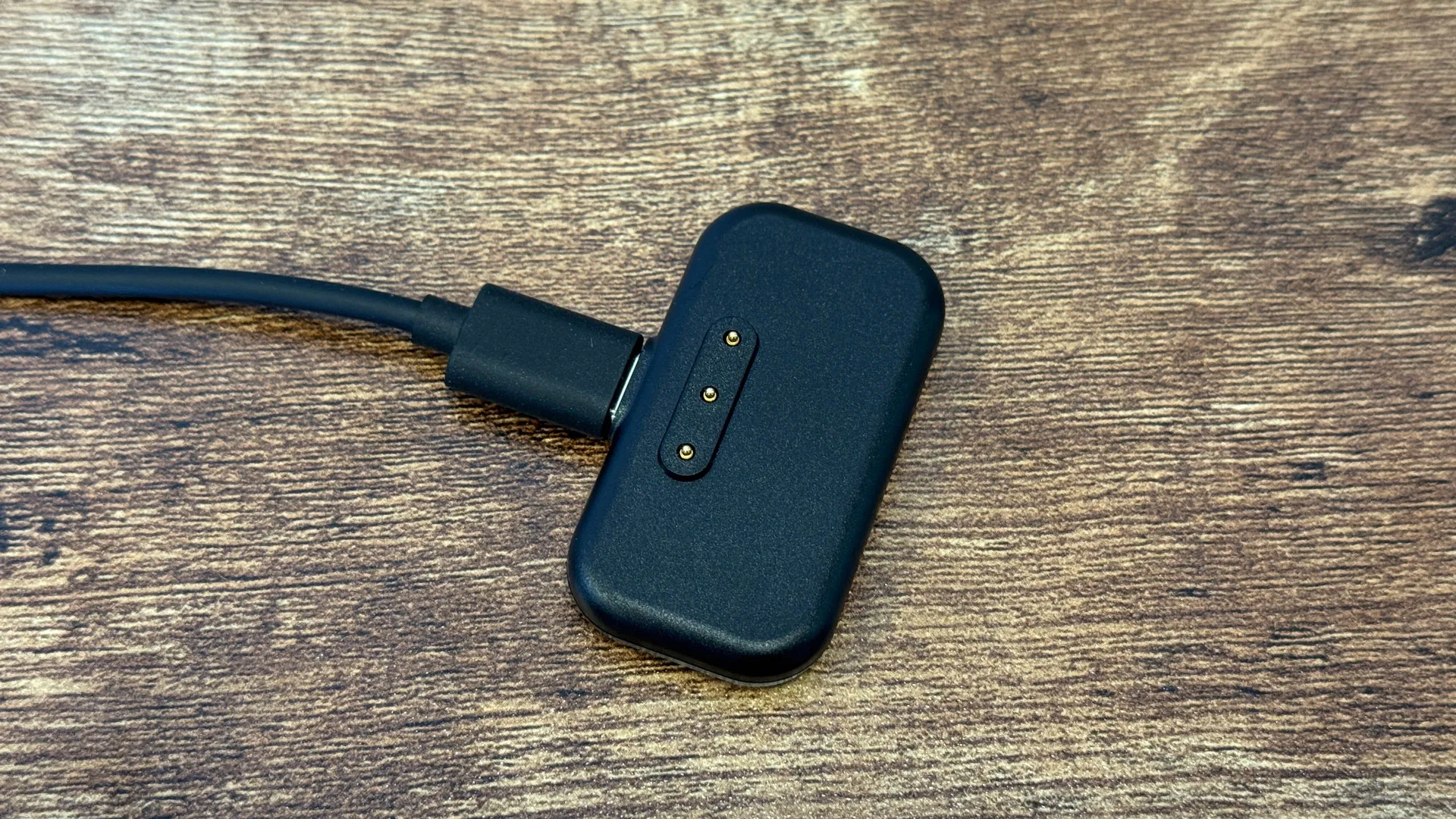
Freedman: Let's talk about the Puck. I have never seen a dock for a controller that wasn't huge before, right? It's always a big stand. So at what point did it come about that you were going to turn a 2.4 GHz wireless solution into a charger? Because it's made it hard for me to get the best battery life, because it's so easy for me to just take it and put it down and walk away and think, "Oh, I put it in the natural spot."
Cardinali: Yeah, well, we did our job then, right? [Griffais laughs] I mean, that was, that's honestly primarily one of the reasons, right? We knew we wanted a proprietary wireless connection, just to make sure that we had a robust, low-latency connection, and we can control the end-to-end conversation so that we can guarantee performance. But it's a hard thing to ask customers to have a little dongle and, like, plug it in somewhere. And then a lot of people solve that problem by having a dock, which adds extra value, but from our perspective, we wanted to minimize the burden to the desk. Right? Your desk base, some people have small desks. A big dock can take up a lot of space.
And the Puck itself — We know there's an active community of makers that use our products, and we have people internal [sic] who have designed and printed their own little mounts that hold the puck as a full dock. And we expect people to do stuff like that with this, and keeping it small allows people to do that without kind of over-prescribing how they design it and use it around it. And then it has the added benefit that it has this nice, satisfying little click when you put it over, it snaps into place. You don't have to worry about plugging it in. It kind of came about just because we knew we needed that connection. We were trying to solve problem with getting away from your PC, as well, with wireless interference. Just kind of popped up out of all those. How do we make this a good user experience.
Freedman: Speaking of connection, you recommend Bluetooth 5 or higher. How did you combat latency here? And you have a 250 Hz polling rate. We are seeing some things go up to 8,000 Hz. For me, I can't tell the difference. How do you settle on what type of connection to use to reduce latency?
Griffais: In terms of what we're working back from, it's very much the actual experience, right? So we're looking at the polling rates of the internal components and what they're actually able to report their updated data. Every component there that has analog data or digital buttons, has different performance characteristics when it comes to how quickly you can poll them from the MCU [microcontroller unit] and the trackpad, and the analog triggers. And analog sticks are all going to have different characteristics. But we wanted to make sure that we weren't leaving anything on the table where the transport, like getting the data to the PC would actually, you know, gatekeep, limit. any of the core potential of those parts. So that's kind of how we picked our core update right there, which I think, you know, is pretty high-performance. There's a lot of updates there.
But then, when we look at the transport, we think we got to a pretty good place with Bluetooth, right? Where Bluetooth, if you have one controller connected, the performance is actually pretty comparable to what you would get over our direct link using the Puck, right? But as soon as you add more controllers into the picture, that's where the limits of Bluetooth start showing up. So if you have two controllers over Bluetooth, the latency is actually doubled, and then it keeps going like that, right to the point that it becomes very noticeable, even for people that are not looking for that kind of stuff. So the custom protocol there, when you use our Puck, lets you have up to four controllers on one puck with no latency hit, which we're really excited by. But at the end of the day, the latency we're working back from is the core performance of the actual parts in the in the controller.
The Steam Ecosystem
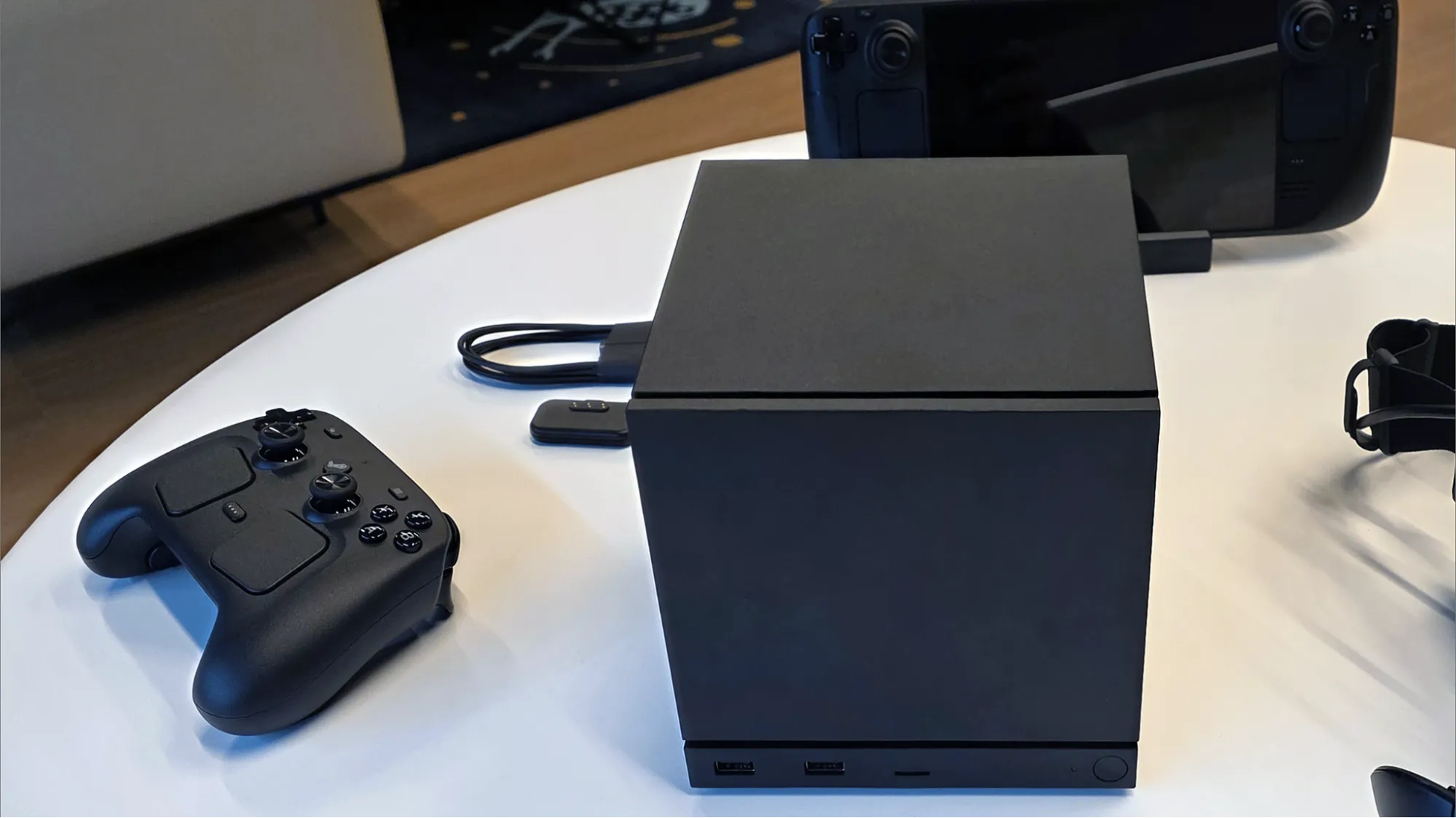
Freedman: I want to ask more about the philosophy of the controller within the Steam ecosystem. The controller only works through Steam, right, on Windows, on macOS, if you're not in Steam, it's seen as a USB mouse. I plugged it into a PlayStation and it's seen as a USB mouse. Why not have it so that it works more widely outside of Steam even if Steam would actually still be the best place to use it?
Griffais:, I guess there's a couple dimensions to that. I guess one thing that I must point out before continuing this answer is that on Linux, we have made a built-in driver that is actually in the Linux kernel that lets you have gamepad functionality without needing Steam running. So it's kind of a baseline level of support. There's no analog to other platforms right now. So like, like you said, on Windows, macOS, or any other computer or computer-shaped object, it's going to be in default operation of, you know, being a USB mouse and keyboard composite device where you can use it to mouse around, to use arrow keys, escape, enter. You know, have basic control over your device there.
But the the main thing to keep in mind is that to be a controller, like a PlayStation controller on PlayStation or an Xbox controller on a Windows PC, you have to go through the driver framework for those controllers, and the licensing program for those controllers. Essentially, if you want to work out of the box as a PlayStation controller, you have to be a PlayStation controller, right? And so there's a bunch of stuff in a Steam controller that is kind of its own thing. And so there's not really a set precedent for having custom controllers with extra inputs that are not just aliasing buttons over standard controllers, or just doing things that don't require, you know, those extra software features to be registered using the standard driver. So then you'd end up in a spot where you have, you know, maybe a button to switch modes, where you're either in PlayStation mode, or you're in the full mode. And then, you know, the burden of trying to, like, the complexity of trying to navigate that and added cost to have those different mode of operations, and the added parts would, we think, not be worth it for the end user there.
That being said, we're pretty happy we're with where the ecosystem is. Adding games to Steam is pretty easy. We keep making it easier and easier on SteamOS, you can just right-click any installed app and say, "add to Steam." And then from that point on, you're good to go. You can assign a custom configuration to it, and it's pretty easy on other operating systems as well. So I think getting the full feature set there is possible on the whole catalog, even non-Steam games and standalone apps outside of Steam. But for sure, it comes with the kind of trade-offs when it comes to first-time setup that you enumerated.
Freedman: One of the first things I felt like I had to do once I had used the Steam Controller in Steam was that I gotta play Fortnite with it. Because that's very famously only available in one place in the PC ecosystem. And I was able to do that, but one of — I think it was one of the joysticks wasn't working as expected. Has there ever been a thought of, like, can we get this working at a baseline on other launchers, or is that just like so far down the pipe, because you can add other games to Steam?
Griffais: It's definitely something we think about, and we get feedback along those lines. I think right now, we are trying to make it as easy as possible to get it working through Steam, including adding other things through Steam. But it's possible, you know, in the future, it's something we'll look at with a different approach there. But I guess we're limited in what we can do with things like core operating system drivers and such, right?
Like Xbox controllers have built-in support within Windows itself. PlayStation controllers have a driver that they work with Microsoft on. So it's, you know, it would be quite a bit of a different method of supporting it to try and go with those ways. I think we'd rather just make it as easy as possible to get it added to Steam so you can benefit from that functionality without needing any sort of kernel driver that would potentially, down the line, cause system instability or things like that.
Like we're really, we're really happy with not having a kernel driver, because it comes with the onus of not messing it up, right? And so right now, the current method of supporting the controller is pretty safe.
Launching before the Steam Machine and Steam Frame
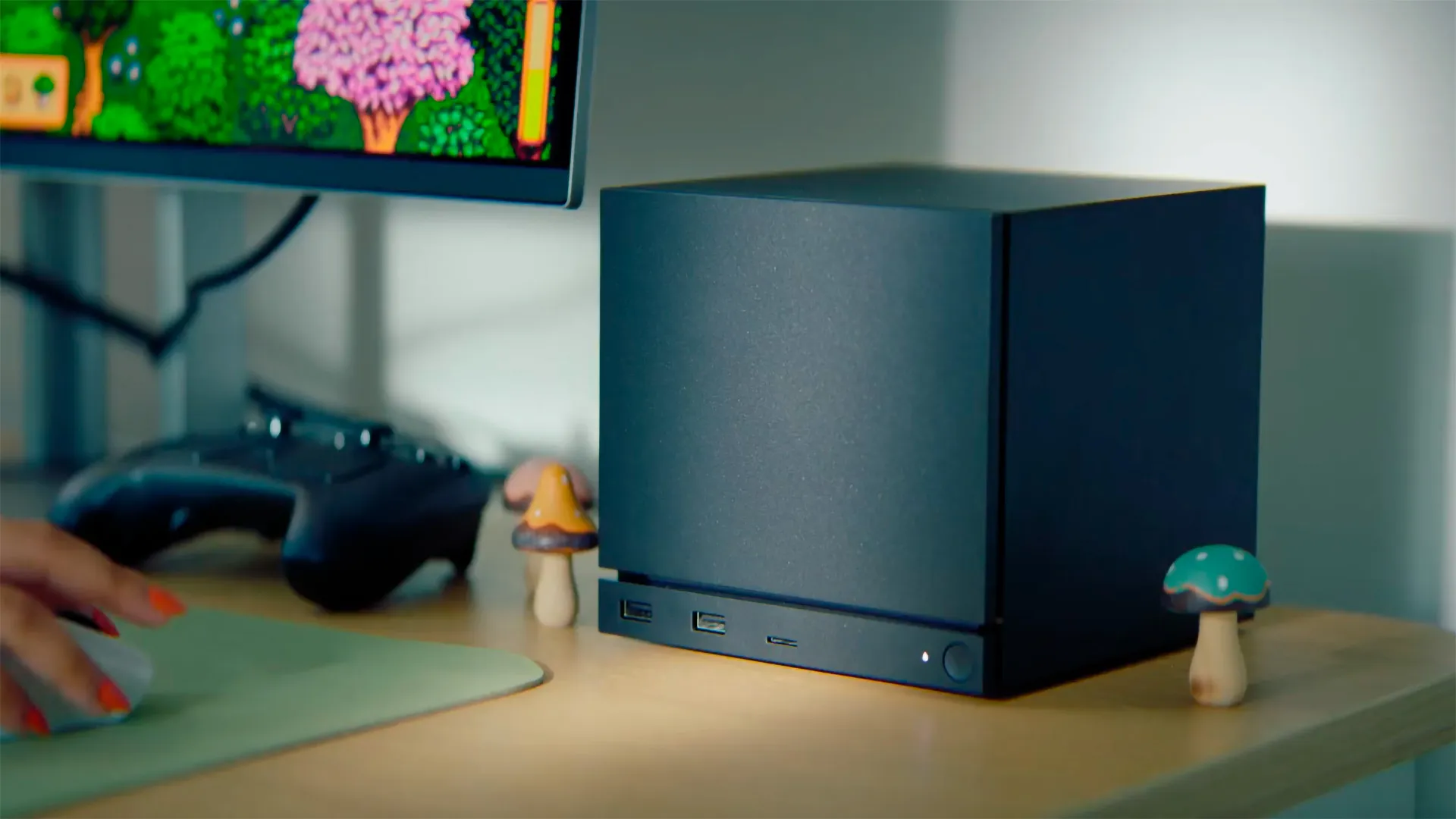
Freedman: The Steam Controller is launching ahead of the Steam Machine and the Steam Frame? How has that changed launch for you? It kind of feels from history that people are used to controllers launching alongside consoles. That there should be a specialized box that it controls. Obviously, it works great on other things. I've used it on a Steam Deck. I've been using it on my rig. But how has that changed the launch and how you're looking at messaging with the controller?
Cardinali: I was gonna say it really hasn't. Because from the get go, the controller wasn't just something we saw as only a Steam Machine controller, right? It is, first and foremost, a PC controller. It's going to work great with your Steam Machine. It's going to work great with your Steam Deck, but on your Windows, or wherever you have Steam, it'll work great as a Steam Controller. And essentially, you know, we had, we had thought at some point maybe they would launch together, depending on how the timing lined up. But it was never a constraint internally that it's something we had to do, because we saw them truly as two separate products that work well together, but they're their own things.
Griffais: We expect a vast majority of users will be on PC, right? There's so many people there that might be in demand for a controller. And so I think that was always our priority from the get-go.
Griffais: You can definitely draw a line between the first Steam Controller and this one in terms of development features and philosophy. Like you said, though, the first Steam Controller was more of a peripheral for PCs to play PC games, whereas this controller is more a normal controller, first and foremost, And then it adds some of the same features that let you play PC games with the first Steam controller. So a lot of it is actually working back from the feedback that we got on the first Steam Controller, where people appreciated the features that let them play their PC games, the mouse controls and all that. But they, instead of, switching between a Steam Controller when they're playing PC-only games and an Xbox controller, they wanted something that did both.
And so when we designed the controls of the Steam Deck, we very much were implementing that feedback and made sure, like we were saying before, to have a standard controller, you know, and with all of its inputs in all the spots that your hand would expect it. And so that was a that was a pretty core design principle there that followed us from the legacy of the first Steam controller. So all the extra features are there, but also, you know, the knowledge of the desire that people just want a device that does all of those things.
Ergonomics
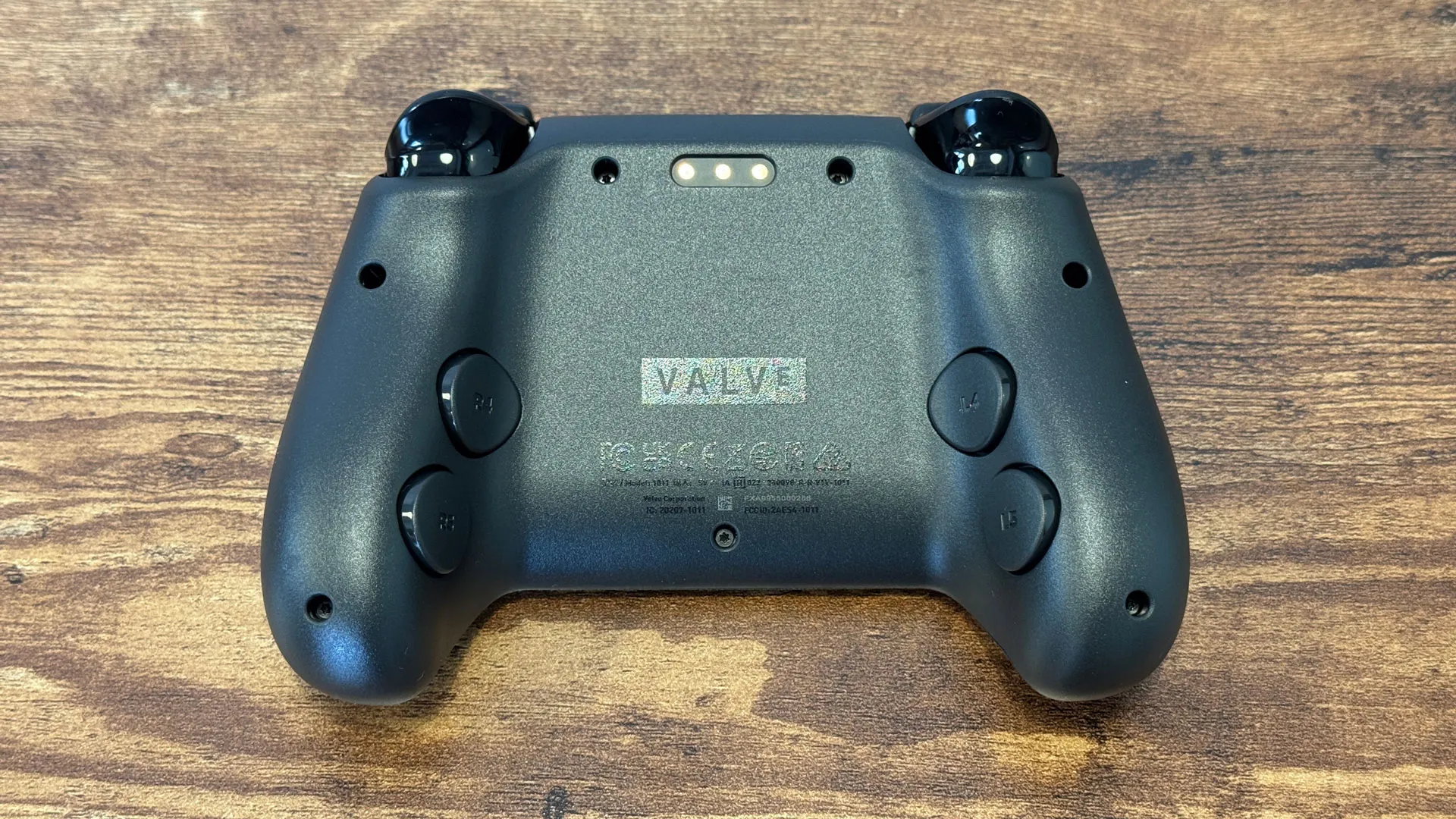
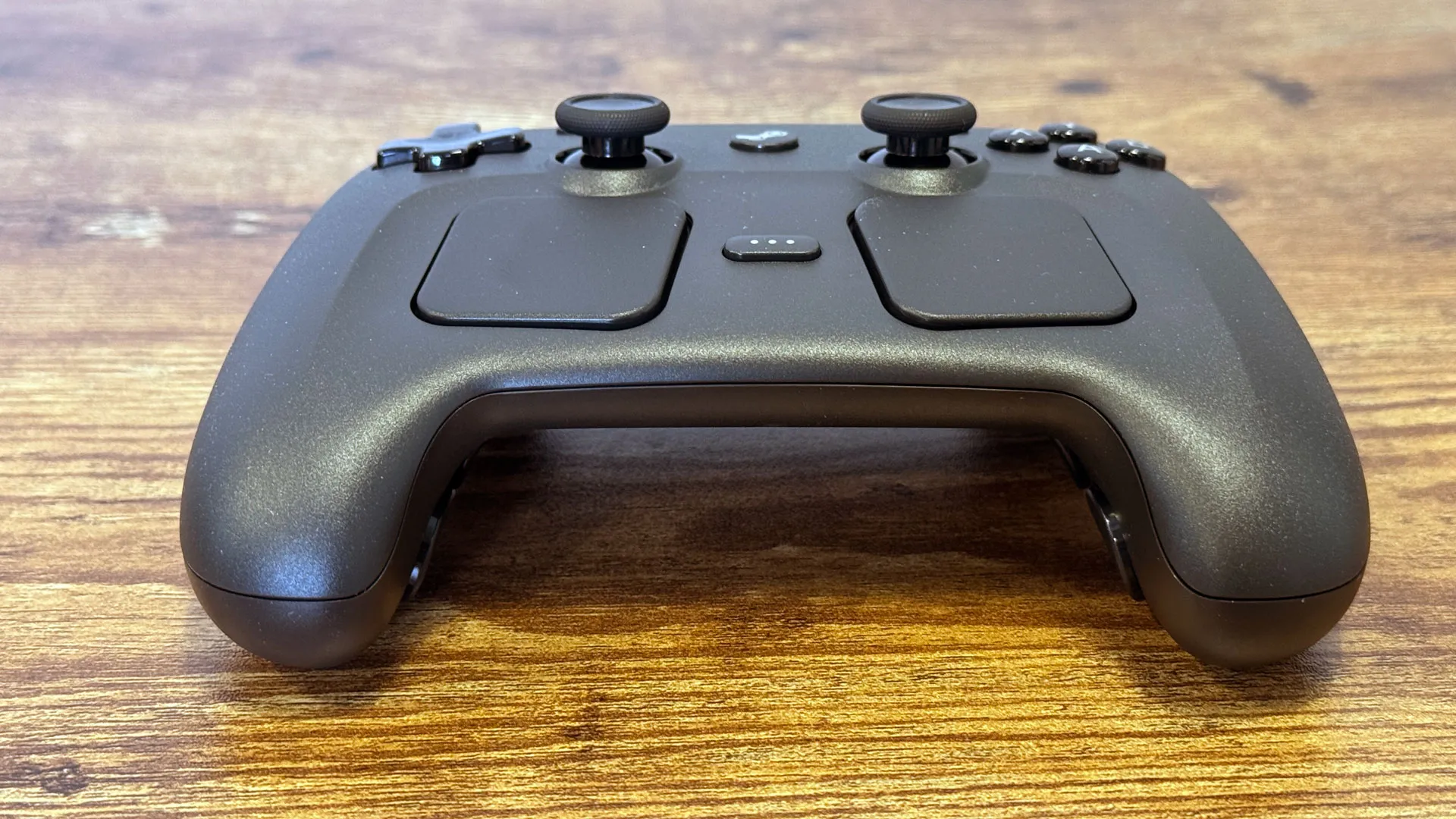
Freedman: One thing that surprises me about this, given how many things are packed into it, how do you work to make it feel good in the hand? I mean, it's very it's ergonomic for what it is. I expected, after an extended period of time, I would find issue with, "oh, you know, you have, the touchpads down here," or, you know, where the back buttons are, anything like that. How do you sort of fit all that into something so ergonomic?
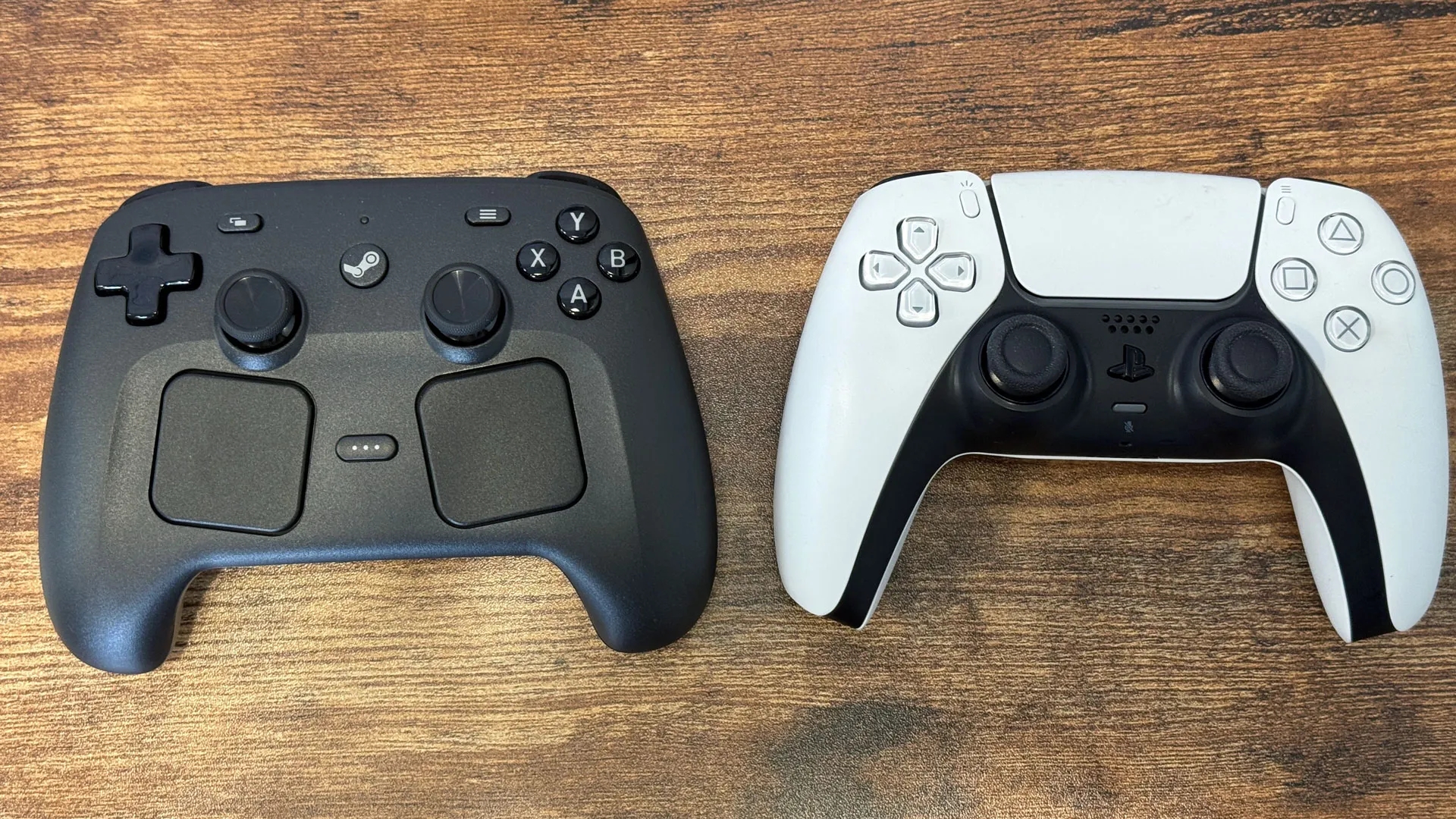
Cardinali: A lot of prototypes, a lot of prototypes. Like, we spent an entire year for this controller just thinking about ergonomics, and how do we take the Steam Deck inputs and put them in a controller in a way that's comfortable, doesn't feel too big in people's hands, especially people with small hands, and feels good in people with big hands, right? A lot of internal testing, we brought in external people to come get their hands on functional prototypes. I mean in terms of functional prototypes, before we even, like, locked the ergonomic design, we probably made 30-plus functional controllers that people could play games with.
Many of them were just different iterations on the trackpad alignment and, like, the direction orientation. The first inception. They were just square, and just like, aligned with the system, like it is in the Steam Deck, versus "clocked and canted," as we lovingly call them now. That took a lot of work to land there and a lot of testing, because with something with this many inputs, you really have to spend time and do the due diligence to make sure that it's going to be comfortable for the majority of people.
Griffais: Yeah, just like the Steam Deck, ergo was pretty much at the top of the priorities list when we're designing things. So things like making sure it's comfortable, definitely above, you know, the cosmetics around it, right? So we got the feedback a ton that Steam Deck looks bulky and uncomfortable, but then once you hold it, it feels great, right? Then, I think that's very much a result of that. Unfortunately, we didn't find a way to make it feel great and also look great. But you know, there's, there's always next one.
Component shortages & tariffs
Freedman: There's been a lot of questions about the rest of the Steam hardware lineup because of things like component shortages and tariffs. How has that affected the Steam Controller? Has that affected the $99 pricing or the timing of its release?
Griffais: Yeah, it has definitely, it's definitely affected it. I think [that] our price reflects the reality of building the product and getting it to customers at the real cost that we can make it with the reality of today's economics and, you know, dynamics. So for sure, there is things like tariffs included, depending on the region and so on.
But that being said, like for something like a controller, the current conditions, with all the memory shortages and all that, don't really affect it that much, it would have been way worse during Covid. Like during Covid, there was a microcontroller shortage, the same kind of microcontrollers that you use in a controller like that. But that's really not a problem right now. So I would say for the controller itself, it's more things like import duties and shipping costs rising because of current conditions that would affect it. So it's not as much as it would, you know, a big PC product with lots of memory in it, but it's definitely affecting it.
Freedman: And you guys definitely have experience shipping PC products during Covid.
Griffais: Unfortunately, yeah. I mean, it seems like whenever we decide to launch a product or some kind of worldwide, global condition trying to prevent us from doing so, but we've been persisting.
Freedman: Given the current situation in which you've built and priced the controller, was there anything — any features — that you had to consider taking out of the controller to make it price-efficient?
Cardinalli: I mean, those conversations happened way earlier on in development of the program, so nothing that kind of came about in the past, call it year, really affected any final feature decision, right? Those were made way earlier.
[Interview ends]