


A global framework for reparatory justice has been adopted at a conference in Ghana.
Heads of state, governments and other officials adopted the strategy on Friday at a gathering in a hotel in the capital, Accra, which was the first major meeting since the adoption of the landmark United Nations (UN) resolution declaring the trafficking of enslaved Africans as the gravest crime against humanity.
The document lays out an 18-point global framework for reparatory justice. They include resolving to ensure fair and adequate compensation for Africans and people of African descent, including those affected by legacies of enslavement, colonialism, genocide and apartheid, and resolving to accelerate the return of cultural property, human remains, archives and heritage to countries of origin.
The framework also calls for multilateral measures to address sovereign debt burdens, including debt relief, restructuring and cancellation to address enduring socioeconomic consequences of enslavement, colonialism and related historical injustices.
“We recognise and honour the extensive efforts undertaken over generations by several governments, intergovernmental organisations, our forebearers, individuals and civil society partners across Africa, the Caribbean, the Americas, as well as in Europe and Asia in shaping the global reparations agenda,” the participants say in the document.
“We adopt this document as a basis for global collaboration and commit to engaging in transparent, constructive and good faith dialogue in advancing reparations and reparatory justice among all state and non-state actors.”
Ruth Ogbewekon, the project lead on reparatory Justice at the Pan African Lawyers Union who supported the preparation of the document, said the process tried to be inclusive given the pressures to build on the momentum of the resolution towards a global movement for reparatory justice.
She added that representatives from Africa and the African diaspora, as well as non-African allies, were consulted over several weeks. “Ultimately, it was a process where people wanted to be heard and to see that they were heard, and the events in Accra provided that” she said.
The adoption came on the last day of a three-day conference billed Next Steps that also resulted in the establishment of three global panels on reparatory justice and restitution.
On Thursday, Ghana’s president, John Mahama, announced the creation of an advisory panel on reparatory justice, an expert panel on the restitution of cultural artefacts, and a legal panel on reparatory justice “to serve as the pillars of the next phase of this international effort”.
“These panels are not intended to replace the work of governments, regional organisations, or international institutions,” Mahama told hundreds of participants. “Rather, they are intended to strengthen that work by providing intellectual, technical and policy support as the international community advances from recognition to implementation.”
The advisory panel on reparatory justice is made up of leaders of countries with historic ties to the transatlantic slave trade in Africa, Latin America and the Caribbean. They include Mahama, prime minister Mia Mottley of Barbados and presidents Joseph Boakai Sr, Netumbo Nandi-Ndaitwah and Bassirou Diomaye Faye of Liberia, Namibia and Senegal.
The three-day event started on Wednesday and has attracted heads of state and government, ministers, civil society representatives, historians, researchers and legal experts from more than 80 countries.
The conference is happening nearly three months after the UN general assembly voted to adopt a proposal by Ghana on behalf of AU member states to recognise the trafficking of enslaved Africans and the racialised chattel enslavement of people from the continent as the gravest crime against humanity.
The resolution, a turning point for Africa’s quest for reparatory justice, calls for UN member states to have “inclusive, good-faith dialogue” on reparatory justice and “prompt and unhindered” restitution of properties that are of value to their countries of origin.
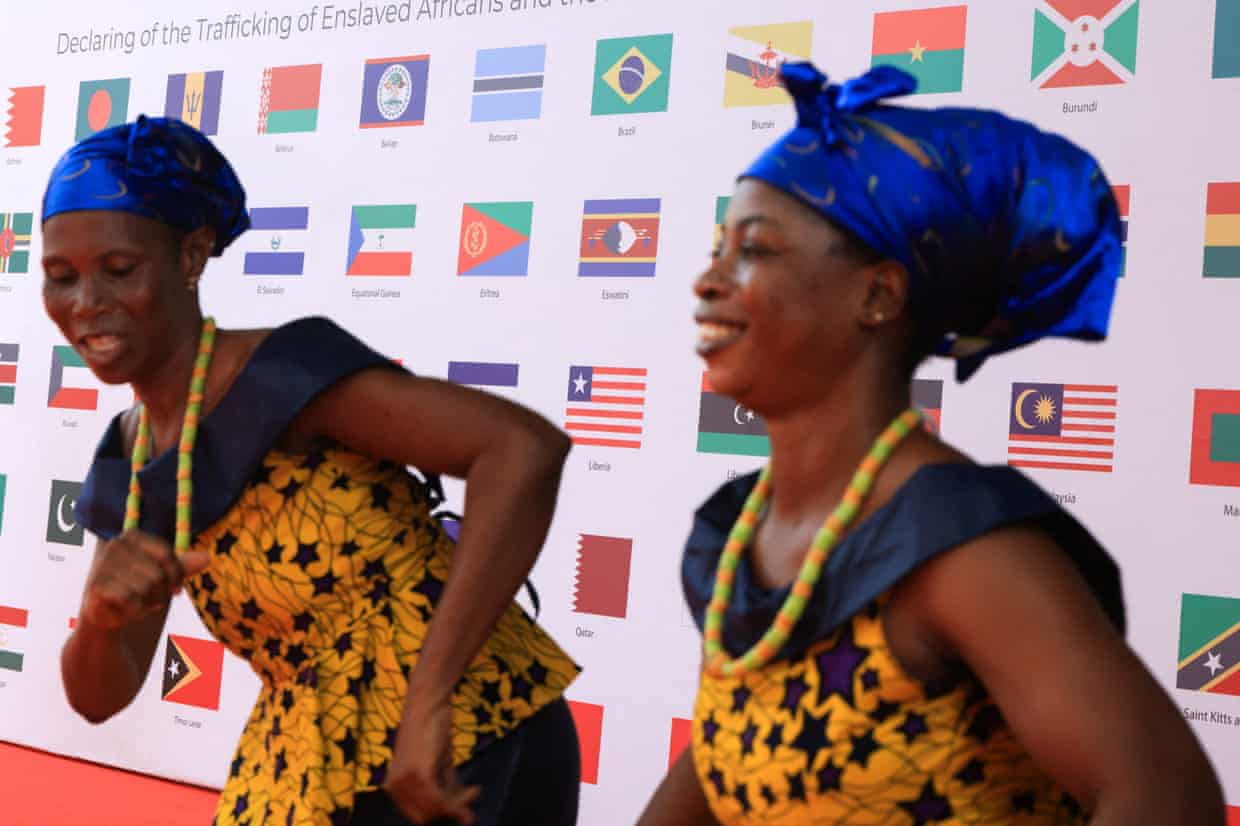
Thursday’s events also featured documentary screenings, a music performance, a stage play and remarks by heads of state and government, ministers, civil society representatives and leaders of international organisations. Many called for a united approach to the quest for reparatory justice.
In his keynote address, Mahama, who is also the African Union Champion on Reparations, said the adoption of the resolution was intended to provide the foundation for “more meaningful” engagement, reflection, and action on reparatory justice.
He urged a global partnership by a broader community of nations and institutions in the pursuit of reparatory justice, noting that Caribbean Community’s (Caricom’s) 10-point reparation plan would serve as “an important starting point for the work of the new panels.
“We’re here because recognition creates responsibility, and because the enduring consequences of this history continue to demand thoughtful, coordinated and sustained international engagement,” he said.
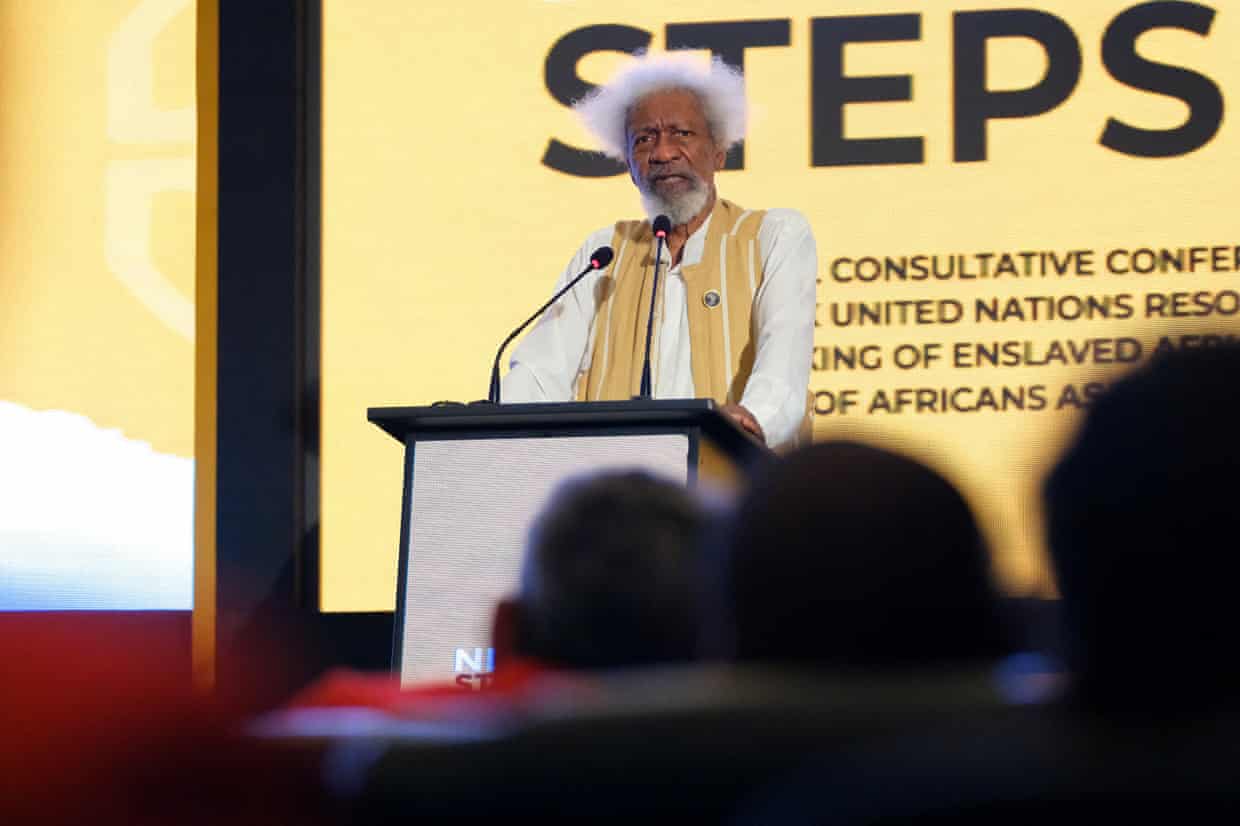
“The crime we seek to address was transcontinental in its reach. Its consequences remain transcontinental in its impact, and the search for justice must therefore be transcontinental in its ambition.”
Mottley announced a revision of Caricom’s 10-point reparation plan to factor in the disproportionate impact of slavery on girls and women. She also encouraged a coordinated global effort to pursue reparatory justice.
“Let us not embark on separate journeys, but let us today reflect the unity of purpose, the recognition that whether it is through advocacy or advisory opinions or actions, our role is to ensure that there is no retreat from our requests and that we recognise that repair comes after recognition,” she said. “For in all that we do in the rest of our lives, where damage is perpetrated, repair is always, always required.
Boakai Sr said the UN resolution “opened a door” and collective resolve would determine whether it would lead to “meaningful justice, reconciliation and healing”.
“Let us not be remembered as another conference or another resolution that stirs consciences briefly before fading into history,” he said.
“Let us … leave Accra united in purpose and committed to ensuring that the greatest crime against humanity is met with one of humanity’s greatest responses: a determined global effort to restore dignity, repair historical wrongs and build a future founded on equality, shared prosperity, and our common humanity.”
Thursday’s events were preceded on Wednesday by consultations led by technical experts to formulate the framework.
Later on Friday, at Osu Castle, a 17th-century fortress in the capital built by the Danish that served as a hub for the transatlantic slave trade, attendees will take part in an event to honour Juneteenth, which marks the end of slavery in the US.
The Guardian’s connections to enslavement: can an institution atone for its history?
On Thursday 2 July, join Maya Wolfe-Robinson, Ebony Riddell Bamber, Prof Verene A Shepherd and Ahmad Ward in this free event for a wide-ranging discussion on the Guardian’s Legacies of Enslavement programme. Book tickets here or at guardian.live