












At Dave Eggers’s suggestion, we’re starting the interview by life drawing together. The novelist dropped out of art school but has been drawing for decades, and his new book is set in the art world. Prudence, our model, stands before us with her palms open, nude but for a pair of black knee-high socks. This, unsurprisingly, is an interview first for me. Eggers shows me how to hold my pencil at arm’s length and use my thumb to measure Prudence’s proportions. Since the pandemic, he’s been organising regular life‑drawing sessions in the book-lined offices of McSweeney’s, the publishing house and literary journal he founded in San Francisco in 1998. He loves the element of chance in figure drawing – you never know which sketch will work out – and believes it helps cultivate empathy.
How so, asks Prudence, helpfully interviewing him for me, because I’ve been thrown off my game. “I feel like in three hours of drawing a human, you learn so much about them and there is so much affection that comes from carefully trying to get them right,” he says.
Eggers is 56 and emanates rock-dad vibes, with his grey curly hair, black graphic T-shirt and jeans, brown lace-up boots. He has written more than a dozen novels, half a dozen nonfiction books, as well as children’s books and art books, and has launched a huge number of nonprofits over the years, many of them aimed at reducing the barriers to literature and the arts. Asked how he manages all of this, Eggers is modest: he says, for example, that he likes to hand over leadership as soon as he can. His most recent venture is Art + Water, an arts centre on the San Francisco waterfront modelled on a traditional artists’ atelier, in which, in exchange for free studio space, 10 established artists will provide mentorship and instruction to 20 local emerging artists. The programme will be free to attend. In the US, a master of fine arts (MFA) degree can easily cost $100,000 a year, an “absurd” price, says Eggers, that produces an “arts industrial complex that makes everyone miserable”. “There’s nothing that makes me more crazy than an economic barrier to a creative writing class or a drawing class,” he says.

After we finish drawing, we pass through the Narnia-style wardrobe that separates the McSweeney’s offices from the International Library of Youth Writing at the front of the building. The library showcases books written by children who attended the international network of writing centres that Eggers helped found almost 25 years ago. The original centre, 826 Valencia, is across the road, inside a pirate-supply shop, because local planning laws dictated that the building be used as a commercial space, and Eggers believes children need more whimsy in their lives.
We settle on a pair of grand, mismatched armchairs. Local school kids can come to the library to read or to write, with a pen or a typewriter, or make their own zines. There are oriental rugs on the floor and on the wall, there is a portrait of Queen Elizabeth I, but with her nails painted fuchsia and her head replaced by a cartoon pink dog. Behind a grandfather clock a hidden door reveals a Marie Antoinette-style boudoir, in which students can browse replicas of famous writers’ juvenilia. There is a pink chest of miniature drawers, each one a postbox for one of the neighbourhood kids, who send each other letters and often receive jokes and other missives from the library’s curator. The children love it. “It’s not like a digital mailbox, it’s a box with a real person that’s putting a letter in every day,” he says. “If you give them a real, tangible choice, they will always choose the person, the typewriter, the tactility, as opposed to another screen. But we assume that they want more screens, and we give them more screens, and we serve nobody. It’s just a tragedy.”
Eggers pulls out a pamphlet in which a professional illustrator has captured a story composed by a group of children that is set in “the fluffy pizza beetle desert of doom”. A lot of the books in this room are “bonkers”, he points out, delighted. “We don’t question the weirdness, as long as it’s original,” he says. “That’s the only requirement, it can’t be about you know, SpongeBob or something. It has to be their original thoughts.” Eggers had thought, over two decades of working with children, that he had met and seen every educational challenge. Then AI entered the classrooms. “The AI challenge really is beyond an existential one. Every time I think I’m going to talk to somebody who would never deign to use AI in any form I find there’s this very porous line where, you know, a smart 10-year-old will say, ‘well, I don’t use it to write, I just use it to generate ideas’, which is far, far worse.”
When he hears stories like that, he likes to remind students of their uniqueness. “You’re one of one,” he’ll say. “You’re unprecedented in the entire line of human history. Only you have your brain. Only you can think of what you can think of. Only you can tell a story in a particular way. Why would you cede that to a machine?” Eggers’s voice, usually quiet, almost monotone, rises as he warms to his theme. “Once you have a machine think for you and write for you, you’re cooked as a species. That’s it. That’s the worse dystopian outcome there could ever be,” he says. He can think of nothing worse than “the idea of us willingly, without any overlord telling us so, saying ‘I think my voice would be better expressed by an unthinking machine who has plagiarised all of the world’s authors and has come up with this terrible soup of bad writing.’”
For all the dispiriting news about AI-written books and reviews, Eggers believes that eventually there will be a countermovement, much as there is growing resistance to giving teenagers smartphones and social media access. Most teachers, he suspects, understand the problem with tech in schools. The problem stems from policymakers. He mentions a speech in which the US education secretary Linda McMahon talks about the benefits of introducing AI into schools, even for children as young as five, except she keeps referring to AI as “A-one”. “This is who we have leading the department of education,” he complains. “We’re in such a comical place right now …”
Eggers and his wife, the writer Vendela Vida, are part of two class action lawsuits against Anthropic over the AI firm’s unauthorised use of their books to train large language learning systems. “I guarantee you they didn’t even think they were stealing anything because it’s just ‘content’ to them,” he says. Content is the “world’s worst word”, he adds, because it dehumanises writing and suggests “it has no real value inherently, and it doesn’t matter if humans made it or not”.
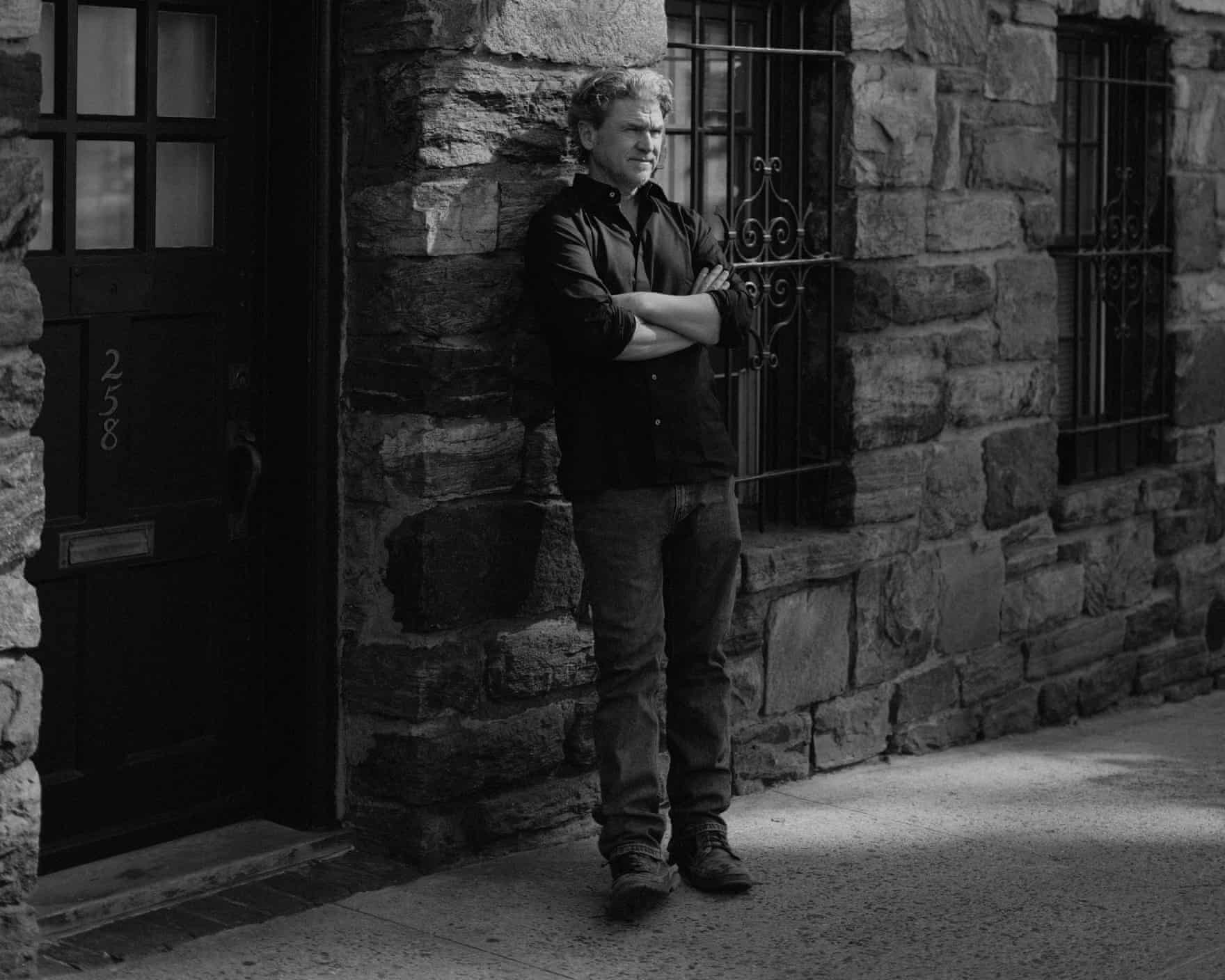
Eggers’s writing is often very politically engaged. His nonfiction books, he says, “all started with outrage and just being aghast at some recent moment in American history and wanting to illuminate it”. The Monk of Mokha, for instance, is a story of immigration and the American dream, about a Yemeni who hopes to resurrect the ancient art of Yemeni coffee, while Zeitoun tells the story of a Syrian-American businessman who helps his neighbours during Hurricane Katrina and then is wrongfully accused of terrorism. It faced criticism afterwards for over-simplifying its hero, who was later imprisoned for stalking his ex-wife.
When he studied journalism at the University of Illinois, he tells me, his professors – “hardcore old Chicago newspaper guys” – warned the class that “no one will get better than a B-minus because you don’t deserve it, there’s no chance you will do work that’s better than that”. He talks about the “slog” of writing nonfiction, the challenge of fact-checking every date and detail. He says he has so many unwritten stories from reporting trips that he cannot bring himself to write. “Fiction is not pure joy, but it’s infinitely more fun,” he says.
He has written two dystopian novels, The Circle (2013) and The Every (2021), about a monopolistic big tech firm that is trying to take over every aspect of human existence, and somehow reality seems capable of outdoing his imagination. In The Every, the president communicates in emojis, rather than rightwing memes, and AI is used to sanitise novels, rather than write them from scratch. He was recently invited by Sam Altman of OpenAI to speak on campus about AI-written novels. To everyone’s credit, Eggers says it was an interesting, open conversation. “It was a really nice afternoon, actually, because what we always forget is that the maniacal illusions of a few of the people at the very top are not always shared by the rank-and-file … at least some of the people working there do want to be told what’s right and what’s wrong,” he says. “But I definitely did have to give them the bad news … there’s no such thing as AI art. Only humans can create art.” At best, the stuff a machine can spit out can be described as “computer generated imagery”.
after newsletter promotion
When Eggers’s phone rings mid interview, he pulls out an old-fashioned flip phone. He writes first drafts by hand and then transfers his writing to a Mac computer from 1998 that has never been connected to the internet and is now patched up with duct tape. He has never seen the appeal of social media – “I’ve never seen Facebook. Like, I don’t know what exactly happens on Facebook,” he says – but ESPN sports news and watching old concerts on YouTube are a massive temptation. “A Kate Bush show from 1981, that’s where I waste my time … so the last time I was online I did like a two-and-a-half-hour Sinéad O’Connor concert.” He did not have internet access at home until he had to install it during the pandemic, a change that means, instead of writing in his garage, he now writes on a boat in San Francisco Bay “to escape the internet”. On his boat he has no phone reception and the only interruptions are the passing fishers and the occasional porpoise or harbour seal.
Eggers was born in Boston and raised in Chicago, where his mother worked as a teacher and his father was a lawyer. He burst on to the literary scene in 2000 with the publication of his tragicomic memoir, A Heartbreaking Work of Staggering Genius, which recounts how, after both of his parents died of cancer within weeks of one another, at the age of 21 Eggers became an acting parent to his eight-year-old brother, Toph. A year after the book was published, his sister Beth killed herself. Reporting suggests that he later became estranged from Toph. In a 2010 Guardian interview he describes the memoir as an “aberration”. He rarely gives interviews, does not like to use the first-person “I” in his writing, and will no longer talk about this extremely painful chapter of his life. I was warned by two people not to go there, and whenever our conversation veers close to personal, he becomes visibly uncomfortable. Today, only Prudence is baring all.

He started work on his new novel, Contrapposto, around 20 years ago, when he began – as he always does – jotting notes for a story set in the art world on random bits of copy paper that very slowly accumulated in a box. The novel spans six decades and follows the friendship, and thwarted romance, between Cricket and Olympia, who meet as children when Olympia, a very worldly 10-year-old, commissions Cricket, a reclusive, art-loving nine-year-old, to write ornate, pornographic graffiti on the playground. This becomes the first of many artistic collaborations. Usually, it only takes about five years for a box filled with notes to become a book, but Eggers says it took turning 50 for him to understand it was possible to write a story like Contrapposto because people are surprisingly consistent. “Most of my friends I’ve had since first or second grade, and none of us changed much. We have the exact same relationship,” he says.
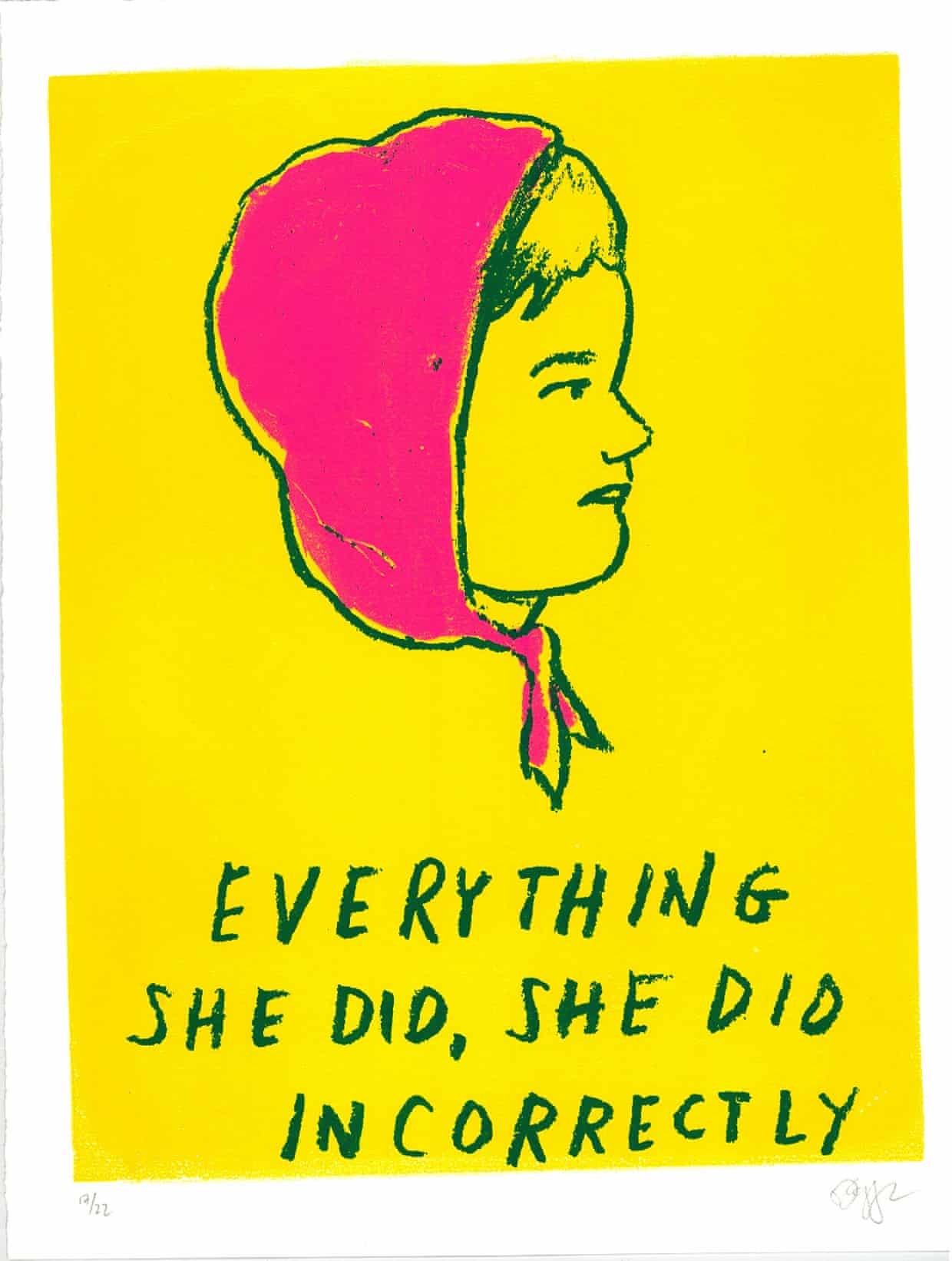
I had wondered about the similarities between Cricket and Eggers, but he quickly quashes that. It is true that he loved drawing as a child, but he was an “active, antsy kid” who was friends with all the naughty boys. It is true he, too, briefly studied art at his local state university, and once interned at a snooty gallery that received not a single visitor for a whole week, but the similarities end there. Unlike Cricket, who struggles to make a living in art because he refuses to compromise and cannot make deadlines, Eggers is, by necessity, practical. He sells prints of his art – he’s made many animal drawings with amusing juxtaposed captions, like a slightly forlorn-looking bear beneath the phrase “Oh God the beauty will kill me” – to pay the rent on the library, and he finds satisfaction in meeting the numbers each month.
One theme that runs throughout Contrapposto is the complex relationship between talent and success. One character points out that the most talented guitarist you’ll ever see is probably playing in a Journey cover band in Reno – “which I’ve seen, you know,” Eggers says. “Best guitarist I ever saw was in Reno in some bar.” It’s not only because of a lack of opportunity. Sometimes people are talented but lack the right ideas, he says. Sometimes their skill simply isn’t valued for esoteric reasons – he finds it strange, for instance, that we place so little artistic value on those streetside artists who draw portraits for tourists. “I’m astounded when I see some of them, what they can do,” he says.
Before I leave, we flick through our sketches one more time. He says generous things about my work, because that is the kind of thing he’ll always do for aspiring artists. There is one drawing of his that he thinks he’ll keep. It’s a sketch of Prudence facing away from us and pulling playfully at the end of one of her dark braids. The image manages to bring about a sense of motion: you can almost feel Prudence tugging on her hair. He conveys the impression of looseness, while retaining total control.