








There was a moment, deep in the throes of my illness, when I realised I was never getting better. There was no cure for me: only ways to manage. At that time I was not managing very well.
Of course, writing about my past self in this way gives the illusion that I was once in the throes of my illness and that it did get better. This is deceptive. I live with a chronic illness called premenstrual dysphoric disorder, or PMDD. It is a severe form of premenstrual illness that leads to depression, anger and even suicidal ideation. It rears its head in the week or two before menstruation then goes away. One week I’d be lying on my bedroom floor, unable to move, starting fights with my partner. Then my period would come and I’d be back at work, seemingly fine, and completely oblivious to the person I’d been mere days before. Notably, this illness is chronic and recurring. I am always in, or just out of, or about to enter the throes of my illness. It does not get better in any static sense.
I realised that I wasn’t getting better in the middle of 2020. I was 27. The world was in lockdown and I’d just been through an exhaustive diagnostic process to understand my body and the moods that shaped me so violently. For three months, I removed my birth control and kept a daily log of my moods and symptoms. I saw GPs, gynaecologists, endocrinologists, psychologists, psychiatrists.
I was lucky: my diagnosis only took months. For those suffering from the chronic pain of endometriosis, a diagnosis takes an average of six and a half years. I continued to track my symptoms long after I needed to. I wanted to know more. I still hoped that if I properly understood my illness then, with enough self-awareness and willingness to fight, I could get through it and come out well.
In western culture, the dominant narrative structure is that of the hero’s journey. A singular character is called to adventure. At first, they refuse the call, fearing the unknown. Then, with wise words from a mentor and their allies, they accept their fate. Their world shifts. After one or two false victories and a new mindset, they take on their biggest challenge and overcome it. They return a hero.
Many of our stories about illness follow a similar narrative arc. There is an inciting incident: someone gets sick. The person does not want to be sick. The illness is eventually accepted, bravely fought, and our hero either gets better, or they don’t, and they die. This is a narrative structure that relies on closure. It values transformation over endurance. But it has nothing in common with how chronic illness actually plays out.
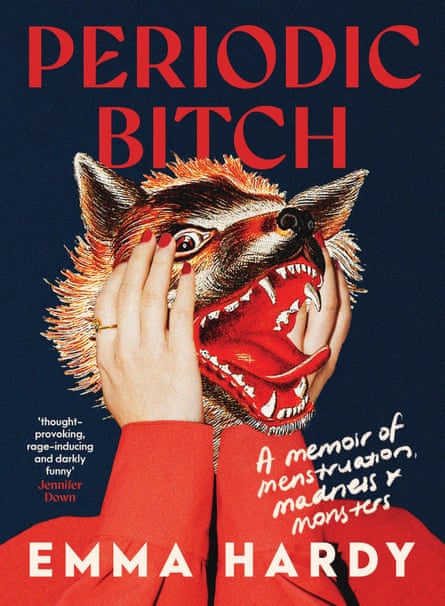
Since releasing my memoir about premenstrual illness, Periodic Bitch, I am often asked about how I am now. Each time I am asked this question, I feel an overwhelming urge to neaten the narrative and say that I am good. I want to tell a hero’s story. Despite knowing otherwise, I want to tell people that I’m fine now. I’m better.
But my diagnosis was not a call to adventure. And for people living with chronic and recurring illnesses like mine, there is no neat recovery. We don’t get to return as heroes. Through the narrow lens of the hero’s journey – they either get better, or they die – chronic illness quickly becomes terminal. How, then, to live with an illness that comes back? How to tell a story about illness that doesn’t end in death, or recovery, but allows for life with illness?
I began to look for new shapes with which I could tell my story. In Jane Alison’s book on narrative patterns, Meander, Spiral, Explode, she describes how narrative patterns can follow shapes found in nature. The hero’s journey follows the pattern of an arc, or a wave. “There’s power in a wave, its sense of beginning, midpoint and end; no wonder we fall into it in stories,” she writes, then goes on to equate this structure to that of a male orgasm: “But something that swells and tautens until climax, then collapses? Bit masculo-sexual, no?”
I find this both funny and transformative. There are so many patterns to draw on beyond waves or arcs or hero’s journeys. I realised I didn’t need to tell my story in a straight line with a neat ending. There are alternative ways to tell a story. Just as my illness loops around, so can the stories I tell about it.
One example of this is the spiral. It’s a pattern fit for recurring illnesses, or looping obsessions, or stories told over years as the Earth spirals around the sun. I think if a narrative arc is a male orgasm, a narrative spiral might be a female one: building, repeating, ongoing.
I want to write myself a world in which illness narratives don’t have to be neat or digestible, but can be messy and real. The neat moral lessons of the hero’s journey do not help me when my body will not re-enact that story. A neat ending does not help me live my messy middle. I wanted to allow room for patterns, repetitions, for looping back to the same moment, only with new understanding. I find hope in a spiral. I am still here. The story continues. There is meaning, perhaps even pleasure, in that.
-
Periodic Bitch by Emma Hardy is out now (A$29.99, Allen & Unwin)