








I shouldn’t have been surprised that the rain didn’t stop the Dutch kids. All day it had been thunderstorming, and the forecast didn’t look so great for the evening. And yet at 5pm, hundreds of kids started arriving – many by bike – with their parents to Amsterdam’s Westerpark, a beloved city park that caters to a more residential area of the capital. Today, it functions as a starting point: volunteers coordinate registration, and groups of children gather, decked out in raincoats and eager to embark on either a 5km or a 10km excursion around the surrounding neighbourhoods.
It’s the second night of Avondvierdaagse (which literally means “four-day evening walk”) , organised by a group of neighbourhood volunteers. It’s not a race, but if children complete every night, they get medals, a bouquet of flowers and, if they’re lucky, a lot of sweets. It’s not just Amsterdam; across villages, towns and cities in the Netherlands, hundreds of thousands of Dutch people are doing the same: every year, kids spend four evenings in early summer exploring their neighbourhoods with their school friends and parents as part of the Week van de Avond4daagse. Some places had celebrated earlier; others were walking the following week. A variation of the tradition has even made its way to Suriname, one of the Dutch former colonies. There are also four-day cycling and swimming events. According to the Royal Dutch Walking Association (KWbN), which helps coordinate the events, half a million people take part every year, in 700 locations across the country, powered by tens of thousands of volunteers.
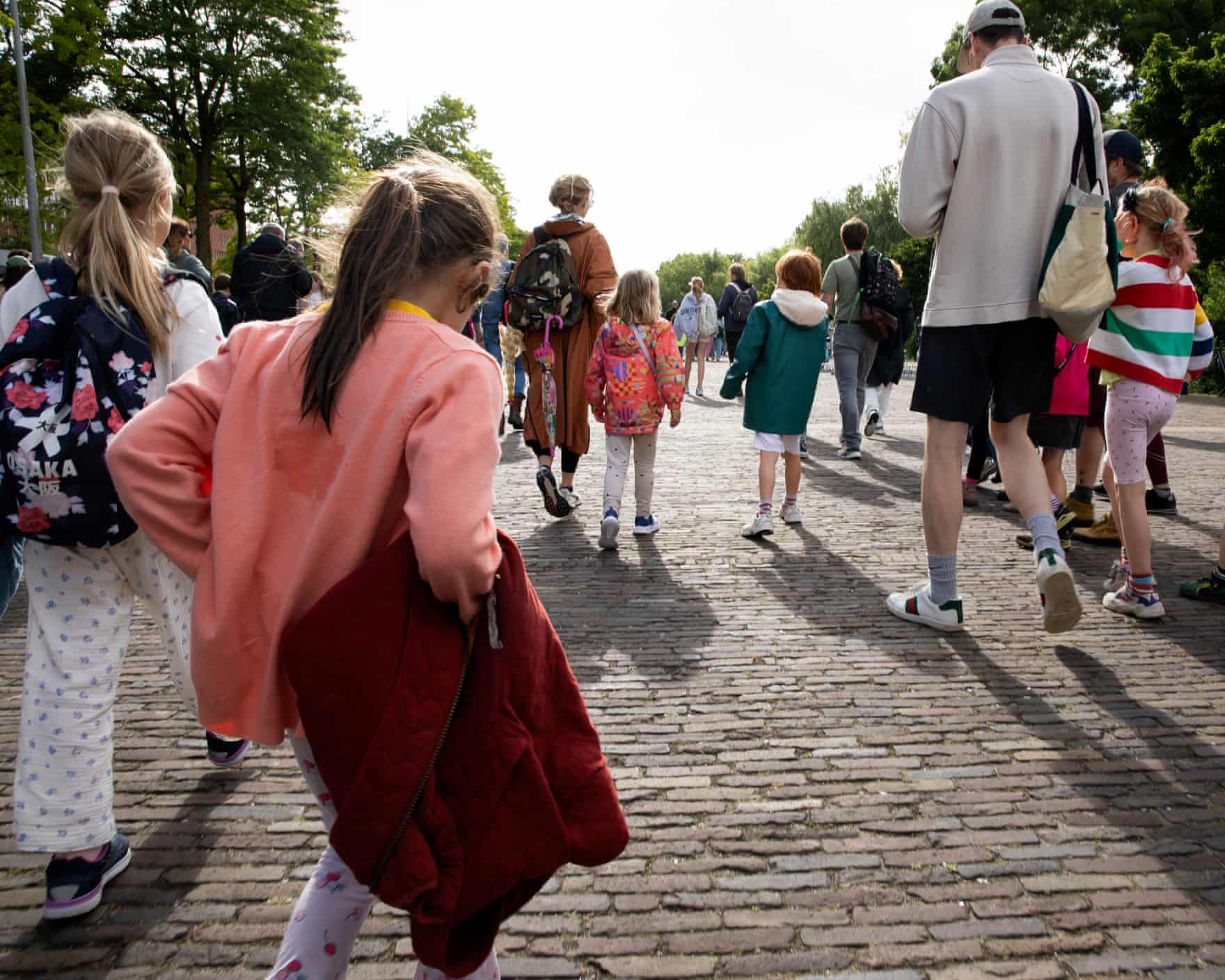
“The event is just so Dutch – they don’t have this really anywhere else,” says fellow volunteer Judith van Oudheusden as we cycle from one checkpoint to another to catch the wave of kids at another part of the route. We are responsible for stamping cards to confirm they have completed this part of today’s 10km walk. A full card means they can get their medal on the last day, a feat many are determined to accomplish. Tonight they’ll be walking along the west boundaries of the neighbourhood, making their way through green city parks such as Erasmuspark and Rembrandtpark, and charming residential streets, catching a glimpse of the historic Molen de Otter windmill on the way back to Westerpark. Van Oudheusden participated in the activity as a child, she says, and then walked with her own children when they were younger. Volunteering is a full circle moment for her.
Avondvierdaagse originated from military ideology, explains Inger Leemans, professor of cultural history at the Royal Netherlands Academy of Arts and Sciences. The first march was held in 1909 in Nijmegen as a military training event. But when the second world war broke out, different towns started to organise their own walks for soldiers. After the war, citizens were invited to walk along with them: the four-day marches in Nijmegen grew into an immensely popular event where tens of thousands of soldiers and citizens walked in solidarity. Aimed at older crowds, this is now the largest walking event in the world, with 45,000 participants from more than 80 countries, walking the same 30km, 40km and 50km routes each year. According to Arno van Gemert, a team leader for programmes and projects at KWbN, the Avondvierdaagse is like the event’s “little brother or sister”, mainly aimed at primary school children and their parents.
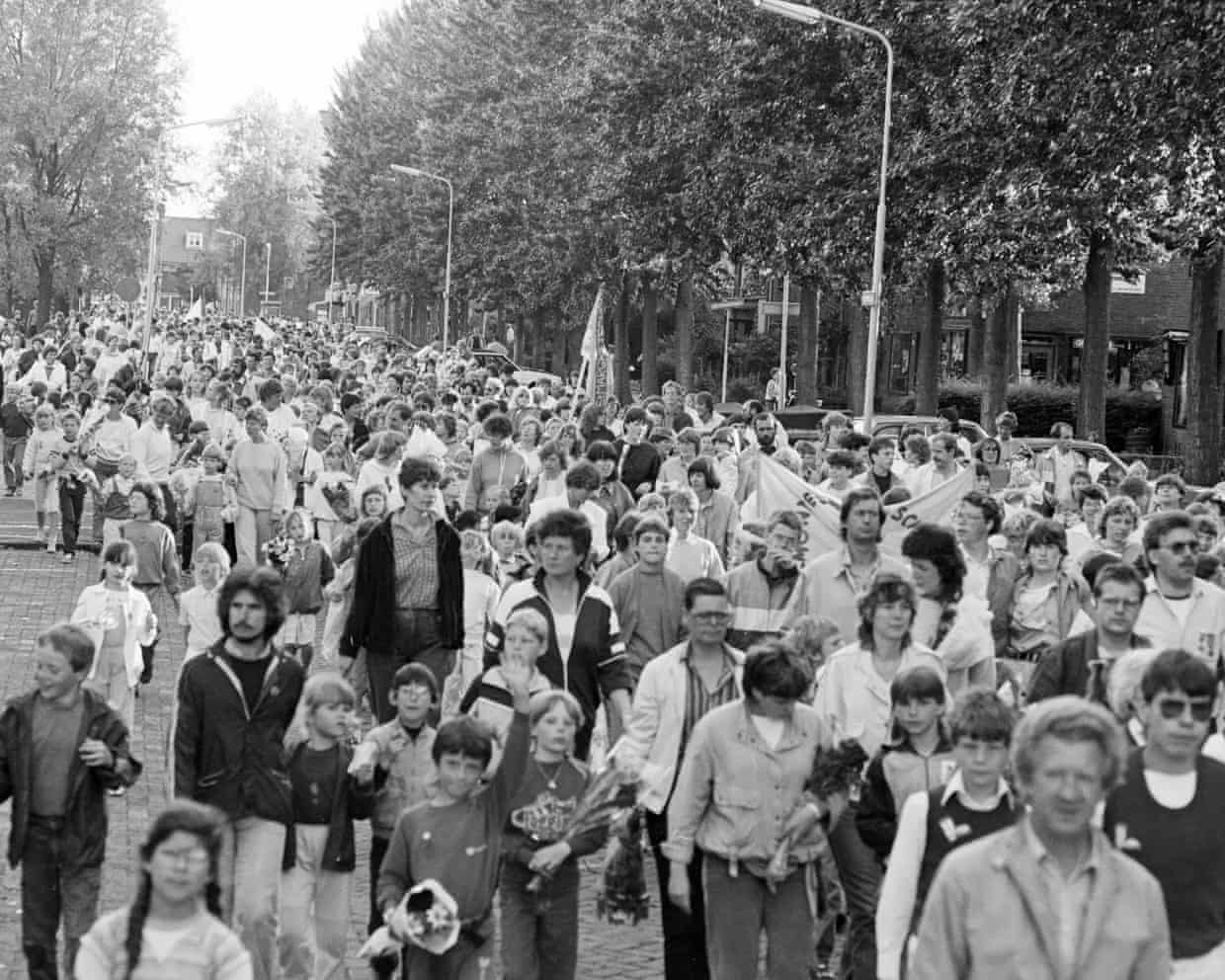
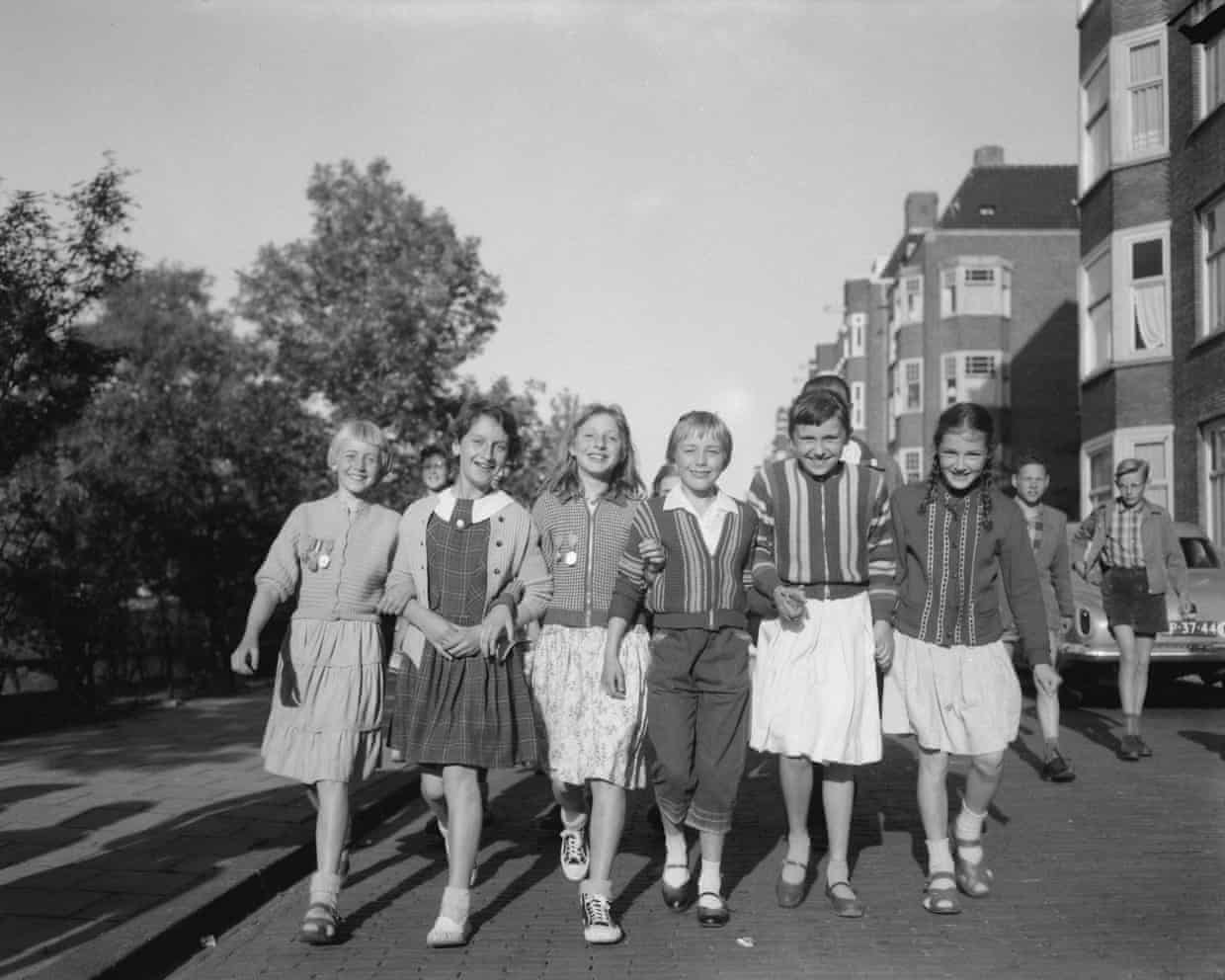
“It is interesting that this walk – with its military origins – grew into one of the national identity markers for the Dutch, a country that does not often self-represent as a military nation,” says Leemans, who also participated in the tradition when she was growing up in Leende, a village near the Belgian border. Most people now see it as a national event, comparable to other festivities such as King’s Day, a national holiday to celebrate the Dutch monarch’s birthday, involving street parties, flea markets, and lots of orange apparel. Avondvierdaagse even has its own traditional delicacy: half an orange, topped with a white Wilhelmina peppermint and wrapped in a piece of muslin, for kids to suck on as they walk. Many children were enjoying one along the route.
While the original walks were not necessarily to promote exercise, Avondvierdaagse has become a way to motivate kids to enjoy being outside and moving their bodies. “It’s important that children are physically active and can develop their motor skills from a young age,” explains Sanne de Vries, professor of physical activity in childhood at Leiden University Medical Center. Encouraging children to go through the whole week of walking – rain or shine – and rewarding them at the end can help build a positive association with physical activity. “Positive emotion that sticks is important.”
It also helps build resilience. “It’s been presented to them as a big challenge because it’s 5km and it sounds super hard,” says Fernanda Gomes, 44, who is walking the shorter route with her seven-year-old daughter, Alicia (who is snacking on the traditional orange as we speak). “Even if it’s raining, they do it and the message behind it is very great for the children.”
Dutch kids are consistently judged to be some of the happiest in the world. This year, a Unicef report again ranked them number one out of 44 western countries for overall wellbeing, and for mental health. Rich social relations were cited as a key factor. Research has shown that Dutch children have strong connections with their peers. In addition, many Dutch parents work part-time, so have more time to spend with their children. Children also have increased independence: parents let their kids roam more freely, and many start young, cycling to and from school by themselves.
Those social relations are at play at Avondvierdaagse: the walks are a chance for children to spend time with not only their parents but also their school friends, outside the classroom. Some even have matching shirts to represent their school: one reads “Ren voor je leven”, Dutch for “run for your life”. “It’s fun with friends,” says Robin Astill, 10, who is walking with her mum and a friend.
“I like that it’s something that happens each year and you get exercise out of it,” says Ansel Howard, 13. “It’s something that people have been doing for a long time and that you can do with friends and family and just enjoy.”
Parents also enjoy the Avondvierdaagse. Rebecca Astill, 46, participated when she was younger; as a parent, it’s a chance to explore more of her surroundings. She’s walked with her kids 10 times, first with her son and now with Robin. “You get to see more of your neighbourhood and walk through parts you don’t normally walk through,” she says. The organisers specifically pick out routes to expose participants to new places, and it’s a different route every year. “That’s the art and craft of the routemaster,” says organiser Philip Bueters, who walked as a parent with his own children years ago.
Astill also likes that it’s a social opportunity: a sentiment echoed by many other parents. “At school, you usually see other parents for a couple of minutes,” says Joost de Koning, 44, as his five-year-old, Noa, trails behind us at the beginning of a 5km walk. “But this is bringing the school community together.”
Avondvierdaagse is such a positive event, it’s hard to find any downsides to it. Some have questioned whether the walks are inclusive enough – for people with disabilities, for instance, or those from different cultural backgrounds. In Amsterdam, especially, the events’ participants may not necessarily reflect the diversity of the population, appealing more to higher-income parents in the neighbourhood.

Another problem: while the beauty of the event is its volunteer nature, it can be a huge undertaking. “In recent years, some events have had to stop because of a lack of volunteers,” says Bueters, who joined the neighbourhood organising committee when the last round of volunteers retired. “People are willing to chip in every now and then but not four days in a row.”
Avondvierdaagse is very much a communal effort. Locals provide their time, businesses donate food and flowers, and the KWbN supports the local committees (and provides the coveted medals) all because they know the importance of the event for the kids and the surrounding area.
“It has survived for decades because it brings communities together in a very simple, healthy and screen-free way,” says van Gemert of KWbN. As he explains, there is a specific Dutch word for it: Gezelligheid. The word doesn’t have a perfect English translation – perhaps cosiness or togetherness, but you know it when you see it. “It captures the Dutch spirit of being active outdoors regardless of the weather, combined with a highly organised community effort.”
And while Avondvierdaagse is uniquely Dutch, that doesn’t mean it needs to stay that way. “It’s not an invention of the government to make kids do sports; the formula can be copied,” says Bueters. Aicha Lagha, another volunteer, agrees. “I think it can be anywhere there is a community or you want to build a community,” she says.
And in Westerpark, as I wait at the finish line on the last day, when the sun is finally shining, that sense of community is strong. A few hundred metres from the finish line, volunteers hand out flowers, provided by a local florist. Family members wait patiently at the finish to celebrate the achievement: one grandma arrived 20 minutes early to make sure she could catch her seven-year-old grandson, walking with her daughter. “It’s a very special event,” she tells me, reminiscing about walking during her own childhood – “and that’s a long time ago”, she jokes.
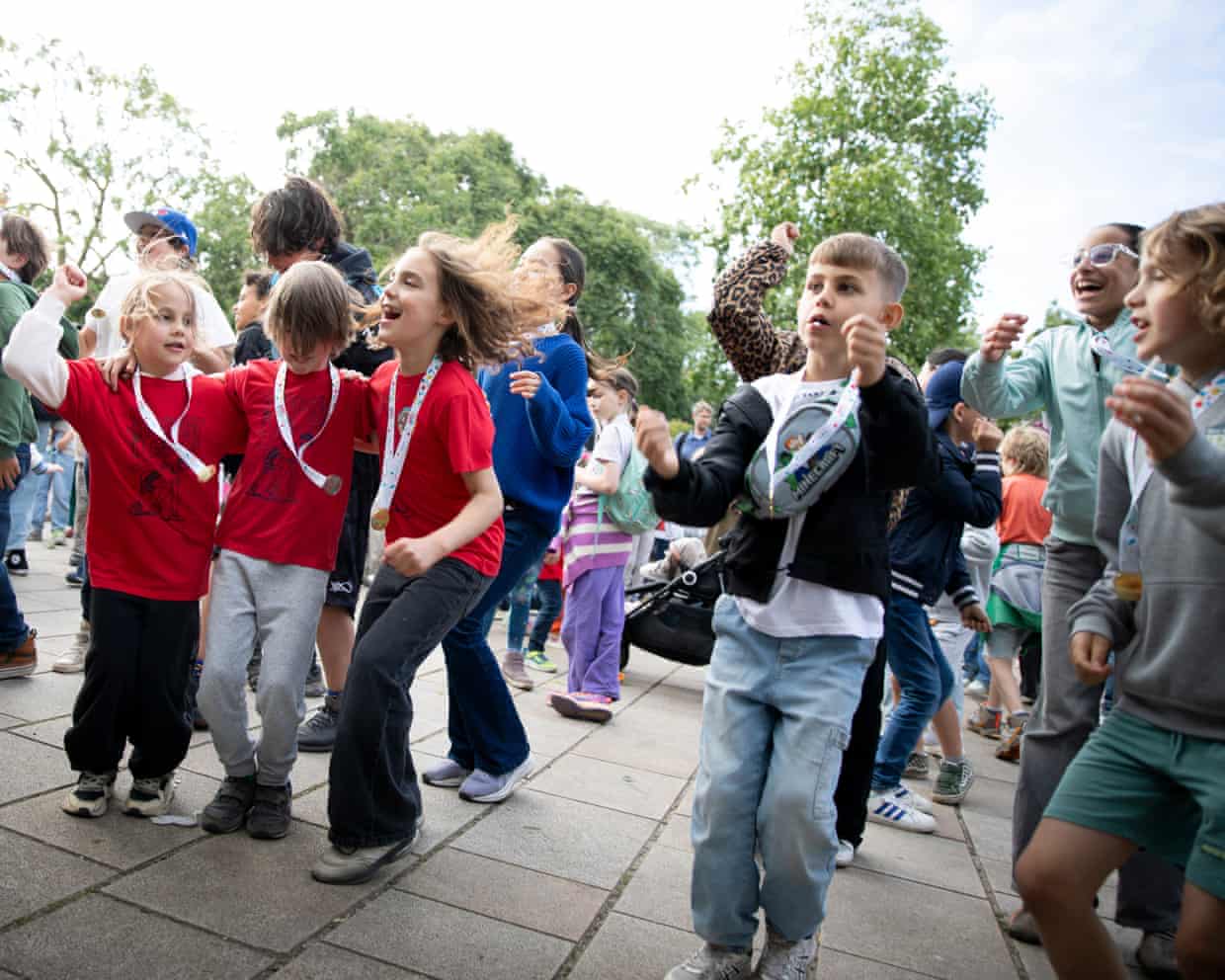
As more and more kids pass the finish line, the area turns into a major celebration: children dance to Snollebollekes’ 2015 hit Links Rechts, jumping from left to right in a line during the chorus in what has become a national tradition of sorts. Some kids climb a statue for a photo opportunity. Parents are celebrating too: proudly taking pictures of their kids with their medals.
As I leave, Joost Klein’s 2024 Eurovision entry, Europapa (another local kids’ favourite), is playing for the third time in 20 minutes, and no one seems to care, nor do they mind that the weather seems to be turning overcast and rainy. They are more focused on the party. There are no English words to fully describe the feeling of pure joy that encapsulates the area. It’s just gezellig.