








Did you get more fomo than usual from last year’s Glastonbury? Did you see a video of Overmono or Lorde or Self Esteem that made you seethe with jealousy? That may have been because more of your friends genuinely did attend the festival last year – or it could be because those acts, and 25 others including Fatboy Slim, Charli xcx and Doechii, paid a digital marketing agency that sent influencers and content creators to watch their sets and upload organic-looking clips to social media.
Take a quick look at Your Culture’s Instagram page and you’ll find that the boutique UK agency had a hand in disseminating some of 2025’s most viral live music moments: the Last Dinner Party’s raucous “medieval sleaze” album launch party; Chappell Roan’s headline set at Reading festival. If you saw video from Calum Scott’s surprise set at St Pancras International last year, or Alex Warren’s outside Warren Street, it’s likely because of Your Culture. An Instagram post from January boasts that the brand “worked with 55% of the nominees” of the most recent Brit awards.
It has long been understood that political parties and A-list actors use social media platforms to create fake sentiment. Music fans may also expect it of mainstream pop stars – but not so much in indie music, where there is still an expectation that online discourse comes from real fans.
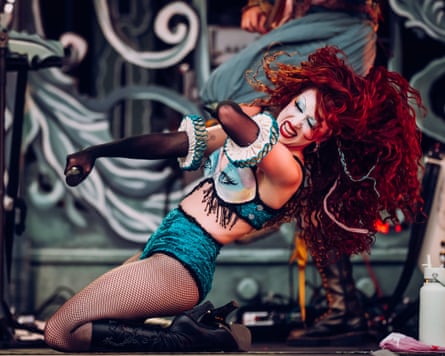
That illusion was shattered earlier this month when Reddit users and musician Eliza McLamb highlighted a recent Billboard interview with Chaotic Good Projects, a marketing company that specialises in disseminating music on TikTok. Chaotic Good’s roster features many of 2025’s biggest breakouts, including Geese and their frontman Cameron Winter’s solo project, plus Sombr, Warren, Oklou, Zara Larsson, Mk.gee and Dijon.
Chaotic Good uses a variety of methods to manufacture a positive sentiment around an artist. There are narrative campaigns, designed to push a specific story about the artist by paying microinfluencers and music-discourse accounts to post about them. There are user-generated-content campaigns, which employ Chaotic Good’s network of affiliated influencers to share specific types of content soundtracked by specific songs from the artist. And there are fanpage campaigns, wherein Chaotic Good creates and maintains social media accounts of fake fans for the artist. These accounts post a variety of content – including clips from music videos, concert footage, and posters for upcoming tours – all with captions about how brilliant they are, in a tone that skews young and zealous.
Since the interview went viral, many of the above artists have faced accusations that their success is confected, Geese and Winter especially. (Geese offered no comment when contacted by the Guardian.) But according to multiple sources, this kind of marketing has long been employed by indie and major label artists alike.
Other firms offering similar services include Byword, which promises campaigns “rooted in the marriage of contextualisation and cross-pollination”. Its client list overlaps with Chaotic Good’s – including Oklou, Mk.gee, Geese and Winter – and has included Depeche Mode and Dominic Fike. There are also older, more influencer-focused agencies such as Creed Media, which has been described as “the agency behind some of the most viral songs on TikTok”, and Flighthouse, which works with musicians as well as film studios. There is also an automated service, Floodify: for less than $200, artists can have their music hosted on posts from hundreds or even thousands of TikTok accounts, many of them owned and operated by Floodify, which set the music to viral – and generally banal – video formats such as surrealist AI “brainrot” animations or edits of YouTubers reacting to things.
It is well known that majors and indies often operate fake fan pages for their artists. In some instances, as with former Fifth Harmony singer Normani, it has also been suggested that artists are running fan pages themselves (Normani neither confirmed nor denied this). Even unsigned acts do it: many sources I spoke to mentioned a manager who disseminated clips of his buzzy young artist on various fake TikTok accounts in order to drive a bidding war between labels, securing them a healthy record deal and a plum support slot on one of the year’s biggest tours.
In many ways, this is the oldest music marketing trick in the book – akin to a new version of 20th-century payola strategies, when labels would pay radio programmers or record stores to promote a single. Hype is rarely truly organic, instead resulting from tit-for-tat agreements between publicists and editors, agents and festival bookers. Yet the recent revelations have left many fans feeling duped. Genuine Geese fanpages are alight with debate about whether the band’s success can still be seen as legitimate. Meanwhile many listeners who were already sceptical of the hype around Geese and Winter are revelling in the “proof” that they were right. The somewhat hysterical discourse speaks to the fact that, even in the streaming era, listeners felt that indie music offered respite from an increasingly corporate music world.
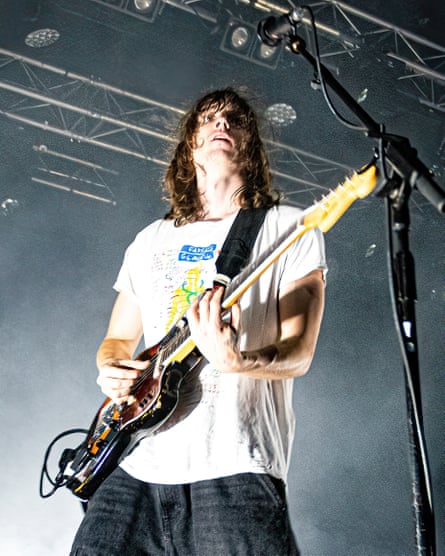
“I forgot the general music consumer doesn’t realise there’s a million companies that do this, and that this is just a symptom of a larger marketing trend that’s been happening for a decade now,” says Jack, a music manager who recently employed Chaotic Good to boost his artist (Jack requested anonymity). Listeners are familiar with conventional advertising, he says, but for many of them, “this idea that you can create an atmosphere that incepts people’s opinions is crossing a line. Even though every public figure who uses marketing does something like this.”
Jack’s attitude was: “If you can’t beat them, join them.” Spending on, say, Facebook and Instagram ads isn’t effective if competitors have “a million fan accounts working for them”. So he contracted Chaotic Good to create a handful of fake TikTok fan accounts, each posting videos three times a day, aiming to “encourage discourse through seeding bespoke narratives”: in this case, that Jack’s artist is a prestige songwriter, among other objectives. The package cost $2,000 (£1490) a month with a minimum nine-month term, according to a marketing deck seen by the Guardian. But after Chaotic Good bragged about manufacturing virality in its Billboard interview, Jack began to worry that it “could overshadow all the super hard work the artists I work with have been doing, just because we decided to fuck around a little on TikTok.”
Your Culture’s creator marketing service is different: the agency sends a set number of flesh-and-blood TikTok creators to a gig to post about it favourably, charging clients £200 a pop, sometimes with a minimum spend of £2,000. Laura, a marketing professional who has worked with major labels and indies, and who also requested anonymity, says doing this can be “a gamble” because clients can’t choose which creators attend each show – meaning that “they’re not necessarily genuine fans, and their [viewers] aren’t necessarily going to be fans of what they’re posting”. In Laura’s experience, Your Culture’s service is useful “if you’re trying to show that a band is having a moment”, but can also feel “like a box-ticking exercise”.
It’s also debatable whether these campaigns are strictly legal in the UK. The Federal Trade Commission has deemed this kind of marketing legal in the US, but per the UK Competition and Markets Authority, any time a social media creator has been “incentivised to promote, endorse or review a product”, they must clearly label the content as an advertisement. But the guidance for creators is aimed at product endorsement – for example a clothing item or cleaning product – which doesn’t cover what agencies such as Your Culture and Chaotic Good do.
When a song by her management client started to gain traction on TikTok, artist manager Anna – not her real name – employed Chaotic Good to generate more content around it. This was a user-generated-content campaign, so Chaotic Good contacted the owners of meme pages, song-lyric accounts, and those who post montages of TV shows and movies, and paid them to use Anna’s client’s song in their posts. Working with such agencies is only worth it off the back of organic groundswell, Anna says – although that does make it impossible to measure tangible benefits. Her artist’s song numbers went up, “but I don’t know whether to attribute that to them or if it was just the natural trajectory of what that song was going to do.”
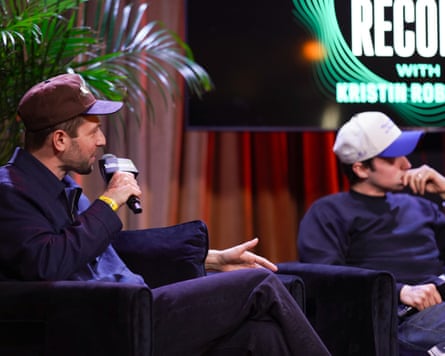
Agencies such as Chaotic Good offer “the illusion of really helping”, she says, when realistically, “all of these things are kind of a complete hoax”. What is successful on TikTok changes by the week. “No one actually knows the answer, so it’s just people who do really well at pretending like they know the answer. I think they would say that themselves.” (Chaotic Good, Your Culture and Byword did not respond to repeat interview requests from the Guardian.)
Before the outcry, the awareness that indie artists are employing these services had spooked other managers and labels into hiring them too. Jane, an executive at a medium-sized indie label who also requested anonymity, says that, last summer, as the hype around Geese and Winter surged, managers she worked with started expressing concern that they needed to be employing agencies like Chaotic Good. “Everyone was like, ‘Oh, is this the new baseline?’” Jane says that she was shocked to find out that indie artists were employing these services, having imagined her peers were holding to “this inherent code of ethics where we’re not really practising the same skeezy marketing tactics that major labels are”.
There is a house-of-cards feeling to all of these campaigns. Traditional print or digital advertisements, and even social media ads, have long been losing efficacy. But streaming audiences keep growing; there is marketing money to be spent, and a handful of companies with vague promises of “narrativisation” and “organic growth” have stepped in to fill the void. But Geese were already popular before they employed Chaotic Good, and social media sentiment wasn’t what drove critic-led outlets such as Stereogum and the New Yorker to name their 2025 album Getting Killed the best of the year. A few extra TikTok clips of Chappell Roan don’t change the fact that she is one of the biggest artists of her generation, chiefly due to the quality of her songwriting and stagecraft. Recent weeks, however, have shown that these campaigns can wreak very real damage: no marketing spend can buy a genuine fan connection – as opposed to simply engaging “lean-back” listeners – and it’s the genuine fans who now feel betrayed.
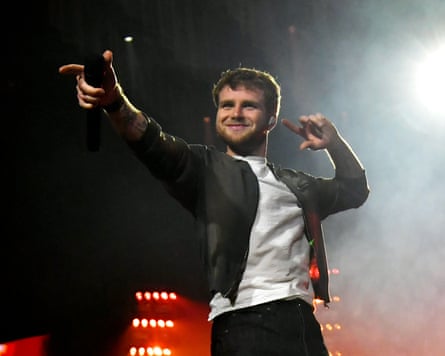
According to Jack, in many cases, artists – busy with writing music and touring – don’t realise where their marketing budget is going, To him, it’s all in keeping with the murky ethics of operating in today’s music industry – no different to sharing music on Spotify, a platform often criticised for its low royalty rates or for previously running recruitment advertisements for ICE. “This is the same sort of moral quandary.”
Anton Teichmann, a Berlin-based manager and founder of the indie label Mansions and Millions – home to artists including Discovery Zone and Sean Nicholas Savage – argues that the use of these agencies is evidence of a music industry that is closed off to artists without big budgets. In a widely shared recent Instagram post, Teichmann wrote that “the same few platforms now control access to audiences, and of course they want to charge anyone trying to break through that barrier.”
Now that organisations such as Chaotic Good claim to drive music discovery – rather than community-based underground scenes – “I, even as a small indie label, have to basically compete in the same arena as [big pop artists] whether I like it or not”, Teichmann says. “We need to bring some kind of transparency to how these things are being done, because we are being told that it’s a level playing field, but that’s just not the case.”
Laura, however, remains sceptical as to whether this kind of marketing even works. “The interesting thing about Geese is that the streaming numbers are actually quite low,” she says. “For the amount Geese are being talked about right now, you’d think that number would be a lot higher, and I wonder if it’s because some of the hype has been inflated.” And Anna and Jack insist that these campaigns only work if fans already like your artist in some capacity. “You can’t contrive the moment if there’s nothing else going on,” says Anna.
Even so, the Chaotic Good debacle has sown mistrust among committed fans who are now destined to question how genuine the success of their favourite “indie” artist is in the future. Jack says the response also speaks to the ugly revelation that everyone seems to be trying to manipulate the algorithm these days. Perhaps it shouldn’t have taken them so long to realise, he says. “I’m also like, ‘most of the internet is bullshit’. Maybe people needed to wake up.”