








Music came to me very early on. I’m told that as a baby I would fall asleep to opera – arias would stop me crying. By age six I was enrolled at the local conservatory of music in Athens, learning classical guitar and moving, quite seriously, through music theory and the fundamentals. By my teens, I was in a band with friends, covering everything from Avril Lavigne to Muse, aiming for precision over hours of rehearsal. My music practice was very disciplined and far removed from anything resembling “entertainment”.
Sport, on the other hand, barely registered for me.
This made me a bit of an outlier in the family. In Greece, sport – especially basketball and football AKA soccer – is everywhere. My dad and older brother were deeply invested. One of Greece’s major sport clubs, Olympiakos, is based a few blocks from our house, and their stadiums are part of the neighbourhood’s landscape and soundscape. My brother started playing basketball at a local lower division team and showed talent at a young age.
I mostly watched from the sidelines, literally and figuratively. The post-game ritual involved my dad breaking down every play, while my brother lay slumped on the couch, half listening. I sat nearby, with absolutely nothing to contribute and no particular desire to try.
Some years later, my dad joined the management committee of my brother’s team. One of his visions was to upgrade the game experience – make it feel bigger, more like an NBA broadcast. Part of that meant adding music. In what I can now recognise as both practical thinking and classic family logic, he turned to me. The outlier was drafted in.
In many ways, this was a family operation, so I never officially applied for the role. It wasn’t paid, and I don’t remember feeling like declining was an option, in that unspoken way family decisions sometimes work: you’ll do this, it’ll be good for you.
So, at about 14, I became the team’s unofficial basketball musician.
My setup was a laptop balanced on top of a keyboard, sitting on a tiny desk inside the even tinier security guard’s office. It was the only place with access to the PA, via a quite short and unreliable audio cable. The laptop stored MP3s of top American hits, while the keyboard was loaded with ‘80s disco synthesiser stings and wacky sound effects. My job was to fill the gaps: play music during breaks, add drama in key moments and occasionally provide comic relief.
During time-outs, I’d go for recognisable hits, things I’d absorbed from passively watching NBA games on TV: The Final Countdown, We Will Rock You. During play, a big shot earned a triumphant snare drum roll with a resolving crash. And if someone missed badly – an airball – I’d drop in a “du-ba-dum”.
At first, my timing was interpretive. I was often slightly late, occasionally wildly inappropriate. Apparently, testing sound effects during free throws was distracting.
But gradually, I began to understand the musical as well as the emotional rhythm of the game.
I could feel when something worked. A well-timed sound, like accelerating drum hits to heighten suspense during an offence, would lift the crowd’s energy. My sounds weren’t central to the game, but they added atmosphere.
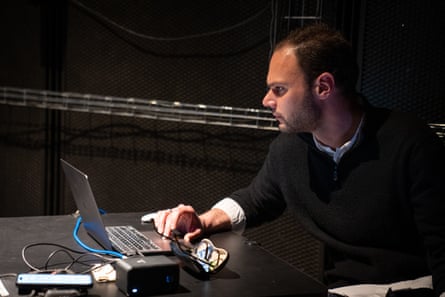
I only did the gig a few times over two years. At the time, I didn’t think much of it.
But before all this, sport was my family’s shared world, while music was only mine. This was the first time they overlapped, which felt almost cathartic.
It changed my relationship with music, too. Up until then, my approach had been structured and serious. At basketball matches it was messy and freeing. No one expected perfection; I just had to respond. Quickly. If I got it wrong – which I often did – the game moved on and so did I.
Later, when I moved into composition, especially electronic music, I found myself drawn to timing, texture and how sound shapes your experience in a space. And after years of following a career in music, including obtaining a PhD and teaching at a university in Brisbane, I try to instil this experimental, spontaneous mindset in students. Those slightly chaotic basketball games were free from educational constraints, but looking back, that was its own kind of lesson.