

惯性聚合 高效追踪和阅读你感兴趣的博客、新闻、科技资讯
阅读原文 在惯性聚合中打开

推荐订阅源

cs.CV updates on arXiv.org
freeCodeCamp Programming Tutorials: Python, JavaScript, Git & More
MyScale Blog
MyScale Blog
Microsoft Azure Blog
N
Netflix TechBlog - Medium
M
MIT News - Artificial intelligence
GbyAI
GbyAI
人人都是产品经理
人人都是产品经理
奇客Solidot–传递最新科技情报
奇客Solidot–传递最新科技情报
博客园_首页
爱范儿
爱范儿
博客园 - 三生石上(FineUI控件)
L
LangChain Blog
CTFtime.org: upcoming CTF events
云风的 BLOG
云风的 BLOG
Y
Y Combinator Blog
L
LINUX DO - 热门话题
Project Zero
Project Zero
罗磊的独立博客
Threat Intelligence Blog | Flashpoint
MongoDB | Blog
MongoDB | Blog
Spread Privacy
Spread Privacy
S
Schneier on Security
cs.CL updates on arXiv.org
J
Java Code Geeks
P
Palo Alto Networks Blog
D
Darknet – Hacking Tools, Hacker News & Cyber Security
博客园 - Franky
T
Threat Research - Cisco Blogs
D
Docker
Hugging Face - Blog
Hugging Face - Blog
S
Securelist
Google DeepMind News
T
The Exploit Database - CXSecurity.com
L
Lohrmann on Cybersecurity
月光博客
月光博客
V
Vulnerabilities – Threatpost
NISL@THU
NISL@THU
V
Visual Studio Blog
AWS News Blog
AWS News Blog
I
Intezer
T
The Blog of Author Tim Ferriss
P
Privacy International News Feed
T
Tor Project blog
F
Full Disclosure
P
Proofpoint News Feed
SecWiki News
SecWiki News
H
Heimdal Security Blog
Help Net Security
Help Net Security
The Hacker News
The Hacker News

The Guardian

Rory McIlroy surges into six-shot Masters lead with stunning second-round flourish ‘That’ll be the end’: actor Sam Neill joins fight to stop controversial goldmine near his New Zealand vineyard Roberto De Zerbi targets ‘Ange-ball’ revival to save Spurs from relegation Bath hit back to reach semi-final after stunning Northampton in 11-try epic Secret Garden to Outcome: the week in rave reviews Zebras, wealth and power: Hungary’s election tests Orbán’s grip on power ‘TikTok effect’ brings sellout crowds and younger fans to Grand National meeting The war over Omagh’s gold: the £21bn mine plan tearing a community apart Britain’s shadow workforce is paid as little as 65p an hour. Who cares for the carers? From You, Me & Tuscany to Euphoria: your complete entertainment guide to the week ahead Six great reads: the man who let snakes bite him, masked heavy metal and the brutal reality for foreign students in the UK American Classic review – I defy you not to fall in love with Kevin Kline and Laura Linney’s tender comedy Cuba’s doctors were a lifeline for the world. Now the Caribbean is shamefully complicit in the US drive to expel them An environmental disaster in Moldova has Russia’s fingerprints all over it RMIT drops misconduct case against student who accused university of being ‘complicit in Gaza genocide’ Ichiro Suzuki statue unveiling goes awry as bronze bat snaps during ceremony Survivors of Epstein’s abuse accuse Melania Trump of ‘shifting burden’ on to victims European football: Real Madrid held at home by Girona to extend winless run Arne Slot insists he is ‘aligned’ with Liverpool board and fans as squad is rebuilt Kamala Harris ‘thinking about’ running for president again in 2028 JD Vance warns Iran against trying to ‘play’ the US in peace talks West Ham double up twice to thrash Wolves and put Spurs in relegation zone Trump administration releases new renderings of so-called ‘Arc de Trump’ Crispin Odey drops £79m libel claim against FT over sexual misconduct allegations Bafta apologises for events surrounding John Davidson’s Tourette’s outburst Cocktail of the week: Bar Shrimp’s la rosita – recipe New drug may extend survival in aggressive ovarian cancer, trial shows One dead and 27 injured after bus with British passengers crashes in Canary Islands Pope adds to Smith’s mass of Surrey runs with England woes a world away OpenAI CEO Sam Altman’s home targeted with molotov cocktail Reform UK local election candidate was twice disciplined by Tories over ‘racist comments’ Remaining in Nato is in best interests of US, says Keir Starmer Prince Harry sued for defamation by charity he co-founded Anthropic’s new AI tool has implications for us all – whether we can use it or not Concerns raised about motorbike tourist trail after death of British teenager in Vietnam The Guardian view on Trump’s civilisational threats: the words that fuel war must be condemned The Guardian view on dystopias for our times: the American nightmare Doctors’ leader claims new reduced pay offer killed chances of ending strikes in England Netanyahu-ism has achieved nothing for Israelis – and come at a monstrously high price Deborah Levy: ‘CS Lewis’s White Witch terrified me – but I wanted to meet her’ How I Shop with Michelle Ogundehin: ‘We grownups have enough stuff already’ Trump’s war and Melania’s Epstein statement, with US editor Betsy Reed – The Latest We have to stop killer motorists on Britain’s roads UK starts crackdown on EU citizens’ post-Brexit rights Londoners aren’t unfriendly – but don’t compare us to New Yorkers The religious right and the perversion of faith Artemis II images reignite moon mission memories Orbán and Magyar trade accusations in last days of Hungary election campaign Reckonwrong: How Long Has It Been? review | Safi Bugel's experimental album of the month Martin Rowson on Middle East peace talks – cartoon Masters magic, the Grand National and Premier League drama – follow with us Fears of UK and EU flight cancellations as airports warn of jet fuel shortages Reform’s petulance over slavery reparations shows it just doesn’t grasp Britain’s place in the modern world Peers vote to ban pornography depicting sex acts between stepfamily members Starbucks’s retail arm gets £13.7m tax credit even as sales increase Flyby review – interstellar musical is a voyage of epic strangeness Grand National preview: Jagwar can deny Irish cohort in Aintree classic Week in wildlife: an ostrich on the lam, a tortoise crossing a road and surfing seals Anger as swifts’ nesting holes in Derbyshire rail viaduct ‘blocked up’ Peter Mandelson faces fixed-penalty notice for urinating in public ‘There’s no shortage of terrifying technology’: how AI became TV drama’s new go-to villain ‘Fresher than anything in a shop’: the best recipe boxes and meal kits for time-poor foodies, tested Who was Hilma? Af Klint exhibition to highlight exclusion of women from abstract art Critics assemble! Here’s my list of the greatest superhero movies of all time US inflation soars in March as war on Iran drives economy into uncertainty Amazon to finally launch Leo satellite internet in ‘mid-2026’, says CEO Grand National 2026: horse-by-horse guide to all the runners Pete Hegseth’s holy war: the militant Christian theology animating the US attack on Iran Add to playlist: the beautifully dazed, countrified indie-rock of Tracey Nelson and the week’s best new tracks Not just about Gaza: the Muslim voters turning from Labour to the Greens ‘I’m worried there’s too much of me,’ says a birch: inside the interspecies council giving nature a voice Why is anyone surprised by the US and Israel’s latest war? It’s only what the world allowed them to do in Gaza Tori Amos review – fans hang on every note of this dramatic deep dive into her back catalogue Coachella 2026: Justin Bieber launches a major comeback in the desert Super Mario what?! The seven best obscure Mario games ‘An abomination’: the Lancashire town kicking up a stink over reopened landfill Pillion to Roofman: the seven best films to watch on TV this week Holly Humberstone: Cruel World review – Taylor Swift fave trades gothic melancholy for pop glow-up Thrash review – cursed shark thriller sinks like a stone on Netflix Gulf states rethink security in light of US-Israel war on Iran Go Gentle by Maria Semple review – a joyfully clever New York romcom Welcome to Y’all Street: bullish Dallas aims to steal New York’s financial crown Margo’s Got Money Troubles to Beef: the seven best shows to stream this week I baulked at the idea of ‘friction-maxxing’. But there’s more to it than meets the eye Reich: The Sextets album review – Colin Currie celebrates the minimalist master’s joy of six Benjamina Ebuehi’s sweet and salty chocolate chip cookies recipe Experience: my house was taken over by 70,000 bees Malcolm in the Middle: Life’s Still Unfair review – the TV magic they’ve created here is absolutely miraculous Lava bursts forth as Hawaii’s Kilauea volcano erupts Sonos review: Are these the best portable speakers that money can buy? I tested to find out Buy bread in the evening, hit the sales on a Tuesday: retail workers’ top tips to cut your shopping bill The best water flossers in the UK, tested for that dentist-clean feeling Where to start with: Muriel Spark You be the judge: should my girlfriend stop mixing gold and silver jewellery? The best carry-on luggage in the UK, tested on an assault course How games capture the awe and terror of cosmic isolation I never text back – and it’s ruining my relationships The pet I’ll never forget: Beau, the labrador who saved my life Life Is Strange: Reunion review – a decade-long story comes to an impassioned close Why is gaming becoming so expensive? The answer is found in AI
My Phantoms author Gwendoline Riley on winning $175,000: ‘It was unimaginable. I felt overwhelmed.’
Alex Clark · 2026-04-19 · via The Guardian

Gwendoline Riley and I are talking over Zoom very early on the morning of Good Friday; she sits in a neat room, sipping tea from a mug with a cat on it in lieu of the pet she can’t have in her current accommodation - “a literal garret, but that’s probably where I was always going to end up”, she laughs, although she adds that she loves it.

It’s possible that she might be feeling more tolerant of straitened circumstances because her work has just received significant critical – and material – recognition in the shape of a Windham-Campbell prize. These awards are the antithesis of many other hoopla-heavy literary prizes: each year, eight writers across fiction, nonfiction, drama and poetry are given $175,000 (£135,000) to allow them to work with financial ease and security; previous winners include Anne Enright, Margo Jefferson and Yiyun Li. An anonymous jury selects the recipients from a pool of nominations – nominators and their choices also remain undisclosed, with the criteria being excellence across a body of work – and, aside from a select number of events, there’s little of the media circus about the whole affair. They are, quite simply, a boon to writers without obvious additional means, who are all operating in an increasingly challenging marketplace.

What did it feel like to be selected? “Unimaginable. It was just an ordinary, wet Wednesday, and I had an email through. I hadn’t heard of it, but then I did remember seeing Anne Enright getting it, because I remember some of the language she used to describe what it was like to get exactly this kind of call. And then I came up with the phrase ‘Deus Ex Cashmachina’, which I think would work better on the page than when you say it out loud. And then I felt completely overwhelmed. I think they filmed me crying.”

Her novels take around four years each to write and, aside from some ad hoc teaching, she declares herself incapable of making money any other way. And it has been thus for a long time: Riley’s first novel, Cold Water, was published when she was 23, and she is now 47. Having been born in London, she grew up in Wirral on Merseyside before going to university in Manchester; after a few years working odd jobs there, she moved back to London, where she now lives. The “sticky spot” she has found herself in up until now, she says, is that “I was never going to stop writing”, even when the rent was due.

Riley in 2012.
Riley in 2012. Photograph: Sophia Evans/The Observer

“My adrenaline or cortisol levels, or whatever it is, have been so high for as long as I can remember, so to suddenly have the prospect of that being taken away when the money arrives … It’s very odd, because suddenly a sort of counter life opens up. There’s the me who’s going to suddenly be able to relax, and I think that will affect how I write, definitely. And then there’s the me that was the more likely me in most universes, who by this Christmas would have been thinking: Oh God, I’ve got to finish a book as quickly as possible, which for me, is not quick.”

Her home seems a close relative of the studio flat occupied by Laura, the protagonist-narrator of Riley’s seventh novel, The Palm House, who forges a precarious living writing essays and book reviews for a cultural magazine called Sequence. Her great friend there is Edmund Putnam, the deputy editor, who quits his job in despair when the cheerfully philistine Simon “Shove” Halfpenny is brought in by the management to ramp up the magazine’s presence and reach – which in Shove’s mind, means trying to transform a niche, venerable and very English institution into the New Yorker. (Riley is silent on whether there is a similarity here to the Times Literary Supplement; she was married for a decade to its former deputy editor, Alan Jenkins.)

“It’s weird how things happen in books without you realising. You know, at the start, they’re in this little alcove in the back of the pub. And then I realised the whole book, the whole setup, is people finding little alcoves because they’re frightened of the world. And then I thought, oh, England’s a bit like that. It’s just this sort of damp, frightened space where people cower and tell themselves that they’re the civilised ones.”

The Palm House is Riley’s latest attempt to express what it might be like for a woman – usually, like her, from the north of England, highly intelligent and immersed in literature, often with a hinterland of family dysfunction – to live among the self-styled “civilised ones”. Her novels are compact in size, light on obvious plot and stylised in such a way as to appear to be withholding information while in fact telling you all you need to know. They are often horrifying – as in the grim relationship between the narrator and her mother in the much-praised My Phantoms, or the failing marriage in First Love – and brutally funny. Her writing is often described as pitiless and, certainly, one can feel scalded by it.
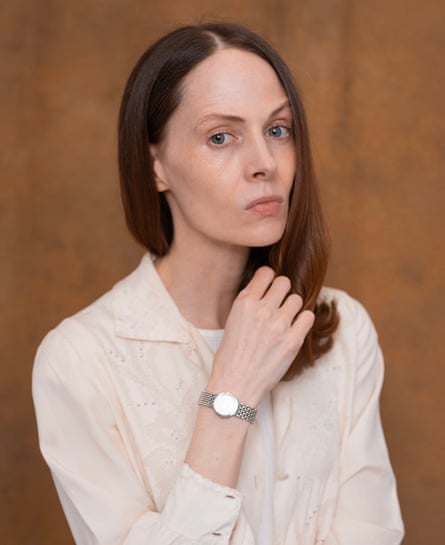
Gwendoline Riley.
‘England is this sort of damp, frightened space where people cower and tell themselves that they’re the civilised ones’ … Gwendoline Riley. Photograph: Karolina Heller

For example: just as we’re settling into the ironic undercurrents of life among the Sequence crowd, Laura plunges us back into her past, growing up with her mother and grandmother in a house with no overt neglect or cruelty, but little in the way of affection or communication, which is why, explains Riley, “this poor girl ends up talking into a tape recorder and sending it to someone off the TV, because there’s no one to talk to or interact with at home or get a hug off”. The man off the telly, unfortunately, is a standup comedian who cultivates Laura to hideous, abusive purpose: “There are monsters around us, you know, predators and parasites and, of course, my whole bent is toward human complication.”

She wanted to get at something of the carelessness with which people like Laura are used, whether sexually, socially or professionally – but she also shows her narrator to be resourceful, dogged and acute, and the milieu she finds herself in as an adult to be both open to pastiche and yet treasurable. Among the comic hay she makes of literary life is a scene in which the Sequence staff recall a moment of cultural relevance when Coronation Street’s Ken Barlow spots a colleague at the Weatherfield Recorder reading a copy: “Is he going to be rescued? Has he found someone he can share his intellectual pursuits with? His love of Shakespeare and new wave cinema.”

Riley talks as she writes: on a tightrope, taut and exhilarating. She has, however, tried to make her work a little more expansive. She tells me that she recently saw a little boy on the tube in London – “a scouser, by the way” – whose mother was trying to persuade him to use the handrail. “And he said: ‘No, no, I’m holding my stance so I don’t get flung,’ like a sailor on deck. It was quite sweet. And then I thought: Is there something in my prose that maybe has a little bit of that flavour?”

What kind of book would she like to write? There’s lots, she says, that she hasn’t been able to find a place for in her novels yet, partly because she’s felt so “under the cosh”. Now she’s intrigued to find out what else might be possible. “I never know what’s happening till I do it. I’ve just got a strong sense that it’ll be different. But I’ll probably be saying that till they cart me off, won’t I?”