


‘You’re special needs’: Matt Haig
When I was 14, I had to start a new school. I wasn’t great at starting new schools, even though I had done so quite a few times – once for my dad’s work, once because I wasn’t fitting in at my primary school and once because my parents didn’t like the teachers. Of course, 14 is possibly the most awkward of all the ages to start a new anything. Anyway, it was halfway through the first term at the new school in Newark, Nottinghamshire, and I was taken aside by my history teacher, Mr Philips, at the end of a lesson. He didn’t like me very much. To be fair, I was probably hard to like, from a teacher’s perspective. I had trouble concentrating, I stared out of windows, I clowned around. However, it is difficult to explain the shock to my self-conscious teenage soul when he told me, “I think it would be a good idea for you to join a special needs class.” Now, for context, the year was 1989, and in my state comprehensive at that time the idea of being “special needs” was akin to being given a leprosy bell or being marked with a cross for the plague. It was a binary system. You were either “normal” or you were “special needs”. To make matters worse, I was told that another teacher – my art teacher – had come to a similar assessment.
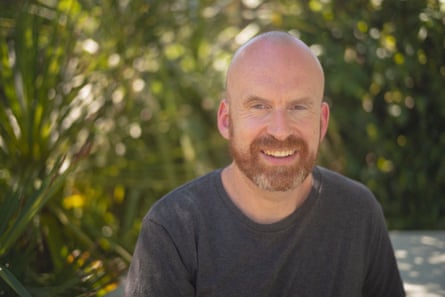
I resisted, and my parents even more. They thought it ridiculous and expressed that sentiment to the school. I never went to the special needs class. But the damage was done. I stigmatised myself. I felt I was a reject. A fact confirmed when I went on a school trip to the Peak District and experienced sleep psychosis and smashed a window in my sleep. The trouble was, back then you were told you were “special needs” but never told what those needs were. Or why you were “special”. I would be deep into another century before I realised that I was both autistic and had ADHD, a dual diagnosis part prompted by my son being diagnosed with autism. So for years I just had a feeling of, well, unexplained difference. I was an oddball, I told myself. One who mumbled to himself, who found it easier to talk to my dog than any person, who stared at clouds too long, who sometimes as a kid walked on tiptoes for no reason, or flicked my fingers over and over, and had his mouth open and eyes in a trance when overstimulated (which was seemingly half the time). I sometimes think it would have been easier if I had known earlier, but also highly unlikely. I masked well. Most of the time I was just considered shy or sensitive or – as my nan put it – “poetic”. Autism was not well diagnosed back in the 80s and 90s. The criteria were narrower and the stigma was higher. So it may have been as much of a curse as a blessing to have known back then, as a teenager desperately trying to be “normal”.
Yet, on the positive side, it gave me something to prove. History soon became my focus. I needed to become good at history in order to prove to Mr Philips and the world that I wasn’t someone to be left on the wayside of learning. Of course, there was nothing wrong with being “special needs”, but try telling that to my peers in the 80s at a time when even teachers seemed to treat those classes as the wastebin of education and when the only autistic person we knew was Dustin Hoffman’s character in Rain Man.
I don’t know if Mr Philips ever found out that I got an A in history A-level, or whether he knew I studied history at university, but he definitely played his part in getting me there. For years, I thought Mr Philips was the problem. But, really, it was me. I don’t mean neurodivergence, I mean self-stigma. I was so scared of being different, of being distant and distracted and difficult, without realising that difference would help me in so many ways later on in life. The hyperfocus that used to make me seem detached from the world now helps me write novels, and the ability to talk about my own oddities, paradoxically, has helped me connect with people online and in real life. Also, neurodivergence is only a divergence because there are more neurotypicals out there. To us it feels the natural way to be. Life is a freak experience. Why ruin it by being normal?
The Midnight Train by Matt Haig will be published on 21 May (Canongate).
‘You’re still healthy’: Megan Nolan
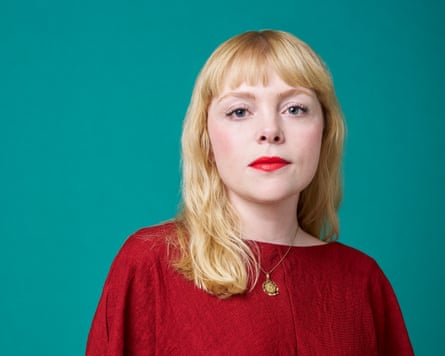
This remark, made by an administrator in my secondary school, wasn’t well received. I recall muttering some not entirely friendly reply under my breath as I turned away, condemning it and its bearer. It would lodge somewhere, though, and clarify things for me when I really needed it.
It’s not the world’s most obvious scathing insult, but this is to ignore the impressive imaginative capacity of a teenage girl’s paranoia. I was 15 and I was in the school secretary’s office because I had fainted, and I had fainted due to not eating for two days. The year previously, I had lost a quarter of my body weight by learning an elusive trick, that when you stopped eating altogether things were a lot simpler than when you made little plans about protein and supplements and the glycaemic index. The only issue was that all other life beyond not-eating became undoable.
I had never been in truly dangerous territory physically, but I was dangerously depressed, unhealthily thin, and wanted only to become more so. I was furious at my mother and teachers when they expressed concern, but my fury was conflicted because it had mostly to do with their failure to be sufficiently concerned for me before I shoved it in their faces with my whittled collarbones and big self-pitying eyes. By the time they came round, I was not only scornful that they hadn’t understood my previous suffering, silent as it may have been, but was also sour with the righteousness of my current pain. Starving, even when self-inflicted, is no joke.
When the secretary appraised me after my fall and judged me to be healthy, I was appalled. I was not healthy, did not want to appear to be something so contrary to my reality, and, besides, to call a girl healthy was to me then akin to calling her monstrous. I efficiently deleted the surrounding parts of her remark – she had actually said, “You’re still healthy. For now. You won’t be for long if you keep this up.” I went away mortally offended.
It was only a year later, at a funeral, that I began to understand how disgusting it was to be wounded by the intimation of good health. By this time I had started tentatively to eat again, having grown sick of my weakness and listlessness and inability to do the things I wanted to. I was lucky: my desire to stay small was not in the end in opposition to my desire to live with gusto. My great‑grandmother had died, in her 90s, and my father was giving the eulogy. We had visited her together in the nursing home where she spent the last years of her life, a place I could never wait to leave, cowed by the sights and smells, the ambient suffering and the loss of physical control. I sat there thinking about her body, which I had only ever known in decline, and thought to myself,
“You’re still healthy”, resolving that I would no longer live or eat in such a way that this could be a negative.
‘I didn’t think you could be yourself and be taken seriously’: Yomi Adegoke
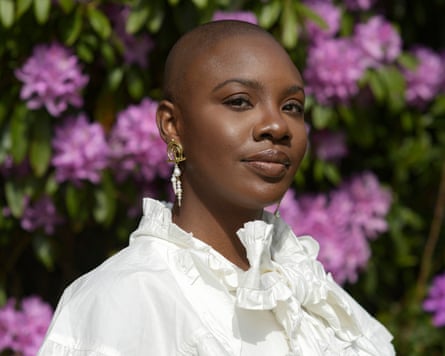
About five years ago, while stationed by the bar at some boozy industry event, a young woman stumbled over to me excitedly. After introducing herself as an aspiring writer, she rested both arms on my shoulders in that way drunk people do. “I just wanted to say, you inspire me,” she said over the music. I placed my hands to my chest, immediately humbled. “Really?” “Yes, really!” she said, gesturing at my dancing feet. “I just love that you’re a proper journalist but you’re also all over the place. You know, I didn’t think you could be yourself and be taken seriously in this industry!”
Now, I myself was a few drinks in at this point and what she said didn’t immediately register. I threw my arms around her and embraced her in a big, sweaty hug, without thinking much of it. The next morning however, while much of that night remained a blur, her words stuck in my mind. When she’d approached me, I’m pretty sure I was mid-slutdrop and definitely had a drink in each hand. I hadn’t actively thought I was “being myself”. I was just, well, being myself. And, given my job, was that … a good thing? The job title of “author” often implies a certain po-faced solemnity. I spend a lot of time writing about serious things, which can sometimes feel at odds with my general inability to take anything remotely seriously.
I’ve always been something of a free spirit. Less “dance like nobody’s watching”, more “dance like they’re watching because you’ve made it to the Strictly final”. That being said, as a black woman who has often worked in predominantly white workplaces, I’ve felt hyper-aware of how that might make me easy to underestimate. In almost every job I had before going freelance, I was among the youngest staff members, and sometimes one of the only people who hadn’t been privately educated. Therefore, how I am perceived definitely isn’t something that I never bothered to think about. In fact, in my first book, Slay in Your Lane, I spoke at length about walking the tightrope between being “real” and being respected. During our press run, my co-author and I often joked about cos playing as women much older than ourselves, donning blazers and low heels in a bid to look the part. “Learning how to move between different audiences, styles and approaches when at work should also mean keeping your true self and sanity intact,” I’d written.
Two years before my encounter with the stranger, I wrote a piece for Vogue making a passionate case against being authentic online. “For many Black women, restraint is our reality,” I’d argued. “The messiness and lack of filter that often comes with ‘relatability’ isn’t often a luxury we have in portraying ourselves publicly, if we hope to be taken seriously.” And here was someone who had seen right through my veneer, essentially telling me to my face I was a silly goose! Right when I thought I was at least doing a decent impression of someone who had their shit together. Soon after, however, I decided her comment was one of my favourite things a stranger has ever said to me. Primarily because I had thought the exact same thing she did when starting out; that you had to shave off certain parts of your personality in order to get somewhere. Little did I realise that, for someone else, I was proof you don’t.
‘You eat too much’: Bella Mackie
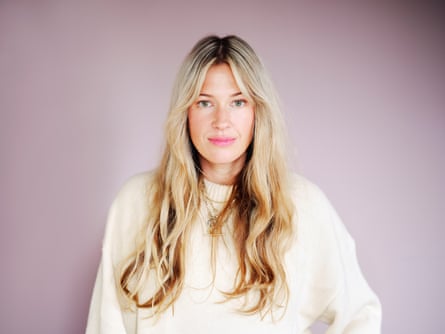
I’m always staggered by the number of blissful moments I’ve forgotten, while my brain doggedly holds on to even the most fleeting of bad ones. It feels like the opposite of self‑preservation, my brain determined to take me down with ancient memories.
I was eight or nine, in an obviously awkward stage, sporting a bowl cut and carrying what was inexplicably called puppy fat, as if this was a kinder way to tell a kid they were overweight. My mum needed something from the local hardware shop at the top of our road and, too young to stay at home alone, my sister and I were dragged along. I remember standing there, staring at the rows of paint cans and tool displays, wanting my mum to hurry up so we could go to the infinitely more fun newsagents. As she dealt with the man behind the counter, his wife (whom I’d met countless times before) poked me in the stomach with her index finger and said loudly, “You eat too much.” I remember being instantly crushed, knowing this was horribly rude but not having the language to respond. In shock, my mum quickly ushered us out of the shop and desperately tried to tell me that the woman was an idiot, that the fault was all hers. But it was too late to prevent the insult from soaking through my skin.
Later that night, undressing for bed, I poked my stomach, counting the rolls it made as I sat on the edge of my bed. I saw my body for what it was: I was fat. What I weighed had never had any bearing on my life, but now my own body had been judged too large. If a stranger could say something so blunt, my weight must be a real problem.
Growing up in the heroin chic-obsessed 90s, it would be silly to say that this lady was the only one telling me I was the wrong size, but she did have the dubious distinction of being the first to do it in person. Obviously, I’ve never forgotten it, mainly because the moment before we walked into that hardware shop was the last time I felt comfortable about my body. Since then, I’ve been everything from a size 8 to a size 16 but never happy with my weight. I have instinctively put my arm over my stomach in almost every photo and spent a lifetime breathing in. Pathetically, my stomach is still my biggest physical insecurity and I don’t see that changing as I settle into middle age.
I look back on that unsolicited comment with a sort of awe. Did she mean to make a joke? Did she have a terrible moment where she said what she was thinking by mistake? Was she, in her own larger body, trying to show camaraderie? Whatever the reason, I can’t think of her too harshly. Most of us have said inappropriate or hideously awkward things at some point. I have lain in bed at night sweating over mine. But, by God, I wish I didn’t still feel that poke so vividly.
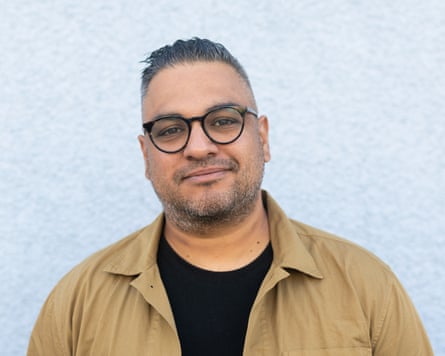
‘You have to work twice as hard’: Nikesh Shukla
The thing about my mum drilling into me that “as immigrants, we have to work twice as hard to have half the opportunities” is that she was right. Yet I resented her for it. Her. Not the landscape that made everything twice as hard. Her. My mum. My poor dear mother.
This phrase is not an uncommon one for children of colour to be told by their parents. I think being told it from a young age changed something in me. I worked so very hard. But I never felt good enough. It has fed into many of my relationships. I’ve felt inadequate my entire life, desperate to please, obsessed with validation. I have prioritised hard work over smart work. I have put in the hours, the endless hours. People will tell me I’m a hard worker and part of me will feel validated and the other part of me will be pissed off because I have to work twice as hard as everyone else, simply because I’m a non‑white child of immigrants. I don’t make the rules.
In these times of precarity for immigrants, these words to live by feel important, they bind us as a community. But why does hard work have to be lionised in this way? Why can’t I work a normal amount? Maybe I could have a holiday, or even a weekend, or maybe the occasional bank holiday, where I’m not itching to get back to my desk. Working this hard all the time will probably give me a heart attack at some point.
I’ve held a lot of anger about this. Towards my parents for putting such a burden on me at a young age. I didn’t get to be a kid. I had to excel at school, be the best at all times, spend every hour studying, not going out, not playing or enjoying, just working working working. And when I wasn’t working, I was expected to help with the family business.
Recently, a dear friend shared something their therapist had told them with our group chat. It exploded us all in various ways. I had to lie down on the floor. He said, “The problem is that when your parents told you that you would have to work twice as hard, they were right. So now you have to get rid of the negative connotations, but also know they were correct.”
The thought blew my mind. Why was I so angry with my parents? They were trying to help me navigate society with the tools they thought were best. It’s not their fault that society is set up this way. I’ve been angry at the wrong people all this time. Sorry, Mum and Dad. You gave me what you thought was the best advice and I held it against you. And that hard work has resulted in me being here writing this column and it hopefully being read by other kids whose parents told them the same thing. Now we know our parents were right, we should direct our anger towards the correct source.