





Saccharine is soundtracked by a rumbling stomach. Ping-ponging between binge eating and regimented workout routines, first-year medical student Hana Hitching (Midori Francis) considers how she could drop down to her ideal weight. For someone whose body-image issues appear longstanding – a brief shot reveals the diet books stashed away in her drawer – a quick fix appears irresistible. Hana begins taking an illicit supplement guaranteed to make the weight just “melt off”. The secret ingredient? Human ash.
Soon she begins to be stalked by the ghostly presence of the woman whose cremated last remains she has been consuming. “It’s kind of worth it, right?” says a formerly overweight friend, who once took the same pills and experienced the same ensuing anxiety and audio hallucinations, in a scene that encapsulates the cruel motto central to extreme diet culture: nothing tastes as good as skinny feels.
Like the female protagonists of writer-director Natalie Erika James’s previous two films, Relic and Apartment 7A, Hana experiences a destabilising loss of control over her own body. The entity grows increasingly violent as it pushes her to binge, often even in her sleep –and the more she does, the stronger this phantom tormentor grows. It isn’t long before Hana is drastically underweight but longer until she lets go of the denial that she is changing for the better.
The punishing toll of disordered eating is depicted even more viscerally in Maddie’s Secret, in which food influencer Maddie Ralph (John Early) is hospitalised for cardiac arrest and later a gastrointestinal perforation after mounting work pressures prompt her dormant bulimia to resurface, trapping her in a vicious cycle of bingeing and purging. The threat to her life is made clear but Maddie pushes on. It’s the loss of a friend under similar circumstances that breaks her but also breaks through to her.
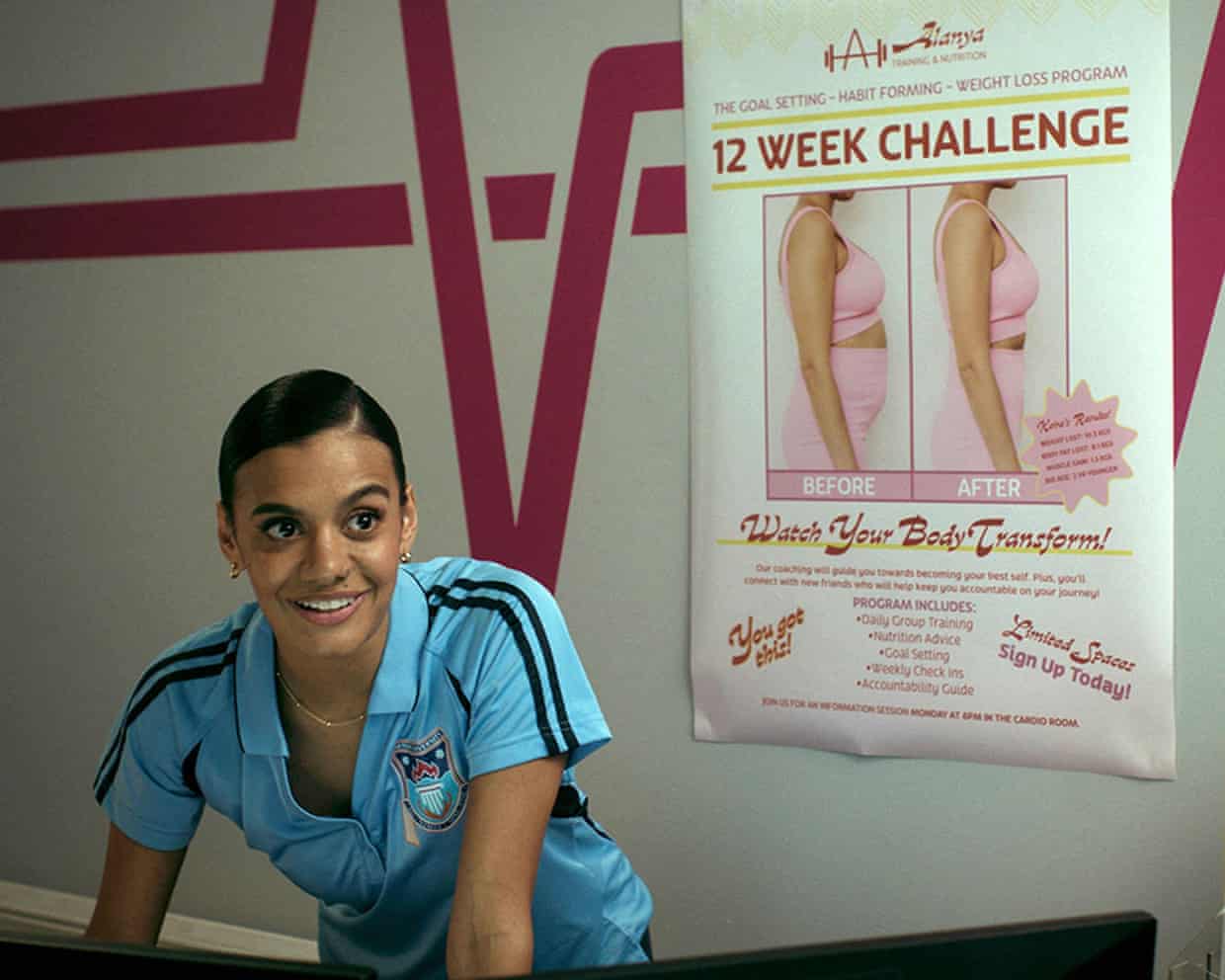
Closeups of food being shovelled into, or smeared across, mouths recur throughout Saccharine and Maddie’s Secret. The protagonists, both shy and self-conscious, turn to food as a coping mechanism for stress and have jobs that enable their disorders. While one is a supernatural horror film and the other a melodramatic comedy, they both channel anxieties that are age old yet fuelled by distinctly modern mechanisms.
Saccharine’s Hana watches then eventually tries out the online potato masher challenge, in which users test the slimness of their arms by attempting to fit them through the narrow kitchen utensil. If this sounds ridiculous, it’s not entirely unrealistic. Recall last year’s similarly themed viral TikTok sunglasses challenge, designed to showcase waists tiny enough for a pair of sunglasses to fit around them. While Hana’s dad is obese, her slender mother fits the stereotype of the almond mom – a term originating from a 2013 Real Housewives of Beverly Hills episode, then popularised on TikTok a decade later, to describe a woman who not only adheres to restrictive eating habits but also imposes them on her kids. The misshapen birthday cake Hana’s mother bakes her daughter is sugar free, butter free and sans flour.
Maddie’s Secret was partly inspired by the “sinister and very sexual” style of food content that Early – who also wrote and directed the film – told IndieWire his algorithm began recommending. Ozempic gets namedropped. At an inpatient treatment centre Maddie later admits herself to, patients’ phones are confiscated so as to prevent their exposure to triggering online content. Sure enough, once they swipe a staff member’s phone, they gather around to watch a mukbang (or “eating show”) video characterised by the excessive quantities of food consumed.
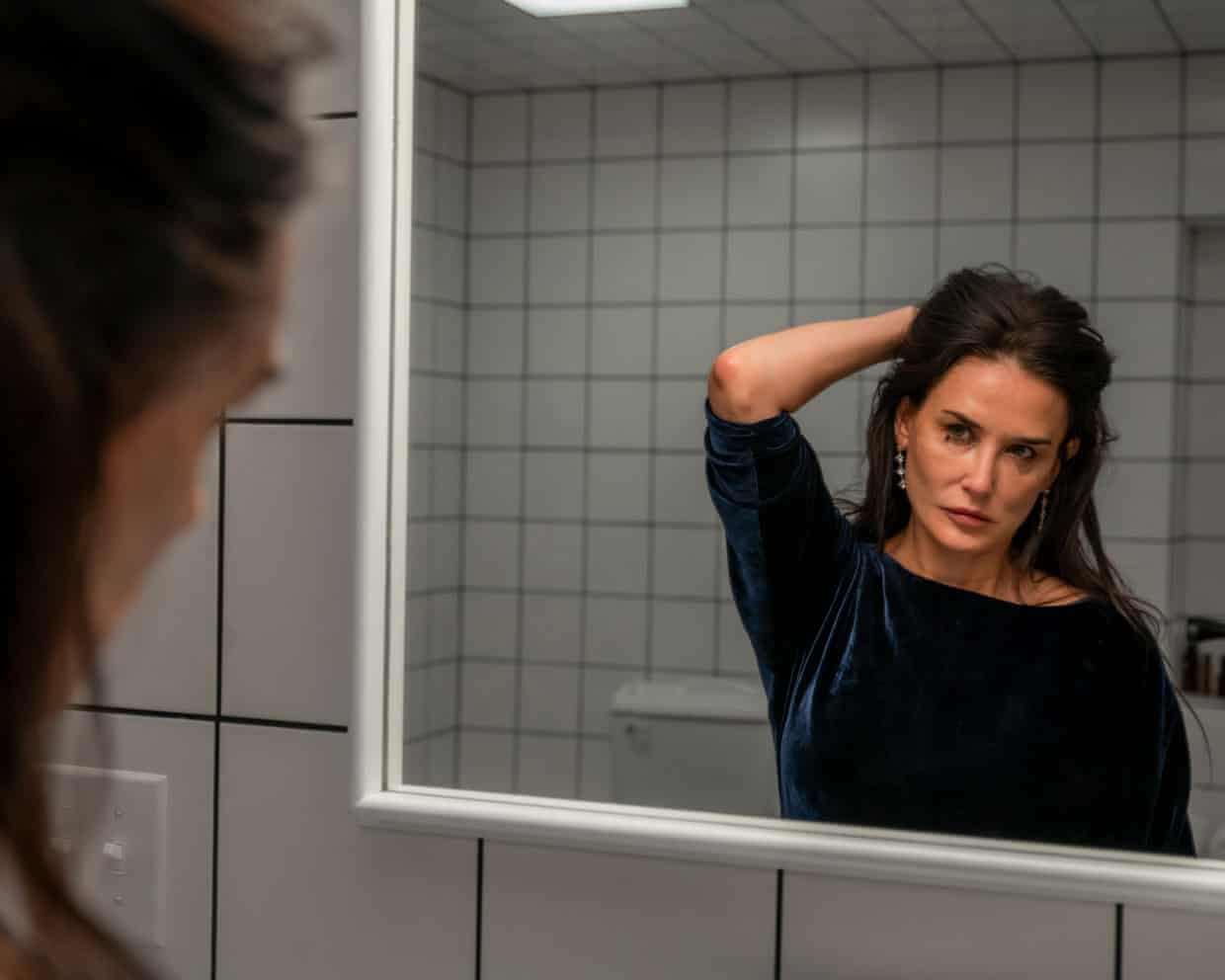
While films about disordered eating date back at least to the made-for-TV movie The Best Little Girl in the World (1981), Saccharine and Maddie’s Secret are released less than a year after “shrinking girl summer” – spurred by the proliferation of weight-loss drugs – and are the inevitable extension of 2024’s wave of films about women driven to fixate over and then “fix” their perceived physical flaws. Take body horror movies The Substance and Shell, in which female actors sidelined by an ageist industry desperately grasp at dubious experimental treatments, only to undergo traumatic physical transformations.
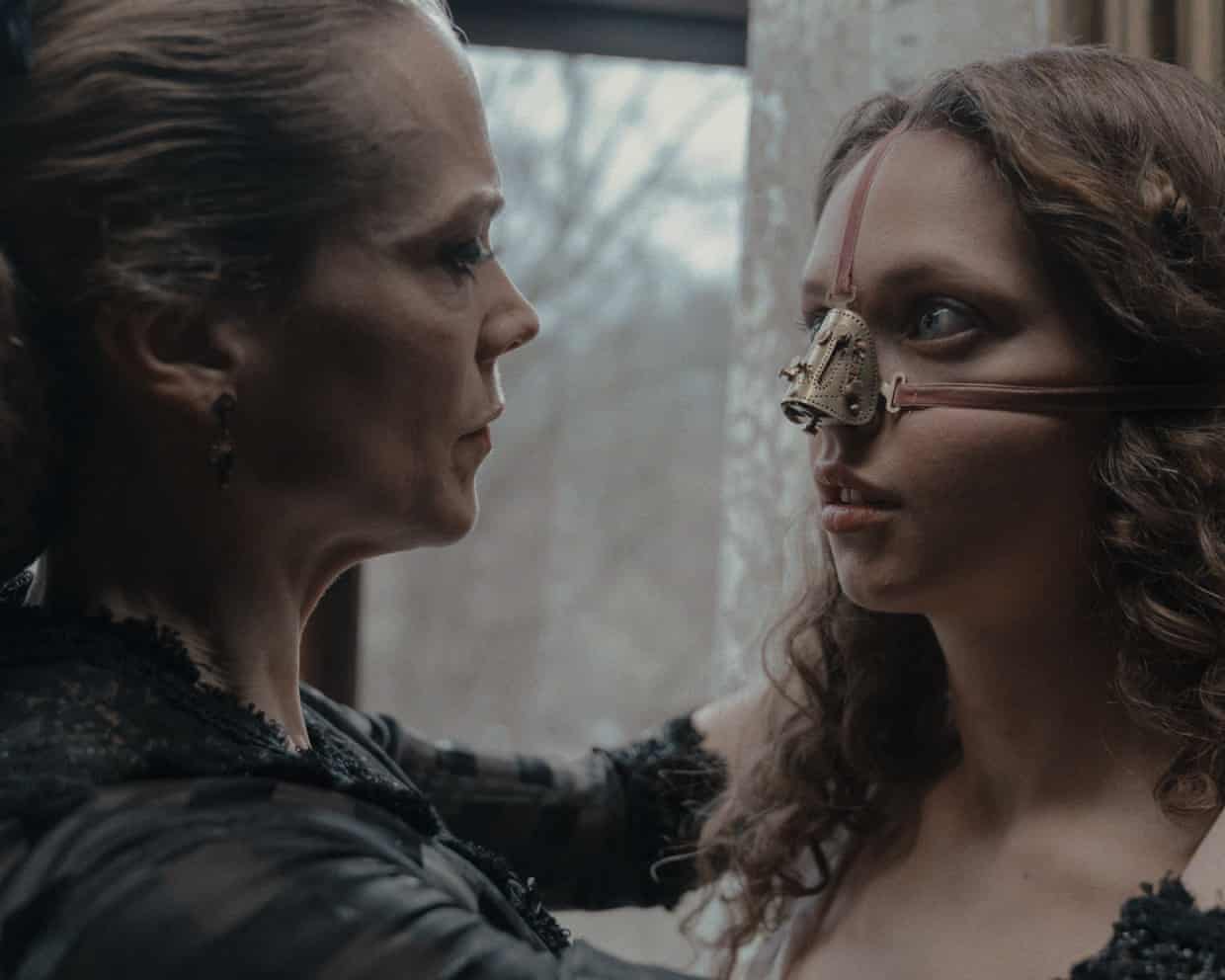
From period films to futuristic dystopias, concerns of bodily imperfections have remained constant over the past few years. If the young female protagonist of 2024’s Uglies yearns to undergo the government-mandated procedure that will beautify her, that of 2025’s The Ugly Stepsister is subjected to barbaric, primitive cosmetic surgery, including a “nose job” carried out with hammer and chisel. A weight-loss remedy foisted on her by a well-meaning teacher in this Cinderella reimagining is even harder to swallow – it involves ingesting a tapeworm.
The maternal figures of Saccharine and Maddie’s Secret aren’t evil stepmothers, as in that film, but they saddle our protagonists with inherited trauma all the same, fuelling their unhealthy relationships with food. Hana’s cravings reflect her bottomless need for validation – having grown dangerously thin, she voices the deep-seated suspicion that she is finally the size her mother, long prone to making comments about her face and body, always wished her to be. And while Maddie has the familial support system Hana doesn’t – a husband who utterly dotes on her – the disordered eating patterns she relapses into were taught her as a child. Not only is she triggered by her mother’s stinging jabs but she has so internalised them that the putdowns about her appearance are just echoes of what she’s been told before.
Even outside the family unit, bodies are scrutinised, weight becomes a focal point of discussions and casually cutting remarks are inescapable. Hana’s fellow students mock the obese cadaver they’re meant to be dissecting, and cruel online comments about Maddie’s appearance accompany her first brush with virality. To someone struggling with body-image issues, however, even well-intentioned compliments can feel barbed. Referencing her own struggles with disordered eating, a new hire tells Maddie how refreshing it is to see a food content producer with an “actually healthy” body, “like not scary thin”.
The inability to feel at home in your own body is a profoundly isolating experience, examined through both these protagonists losing out on meaningful connections either by pushing away the people who care about them or by being too self-conscious to put themselves out there in the first place. For all its messages of body positivity, Saccharine succumbs to its own form of “othering”: an obese woman is turned into a monstrous figure and an object of revulsion in death, despite being remembered as kind and caring while alive. Maddie’s Secret, on the other hand, radiates a sincere empathy for its protagonist throughout, readily offering her the acceptance she struggles to extend to herself.