






In 1986, an exhibition called Chambres d’Amis took contemporary art beyond the confines of the museum setting and into the homes of 58 residents in Ghent. Forty years on, a similar experiment is taking place, but on a small street in Peckham, south-east London.
Rooms of Neighbours is the brainchild of curator Ben Broome, who came across Chambres d’Amis when he was between institutional jobs. With time on his hands and an urge to get to know his neighbours better, he began to wonder how he could apply the idea to his own community, but with a broader focus. Unlike the exhibition in Ghent, which mostly took place in the homes of art world friends and museum patrons, his own street – a mix of council and privately owned flats and houses – represented a wider demographic, with different age groups, social classes and diasporas. Few of the residents had any prior connection to the art world, he tells me: “The majority of people have never been to the Tate; they have never even been to the South London Gallery, which is a local institution. But that’s not to say some of the neighbours aren’t really creative.”
Early last year, Broome knocked on the doors of his neighbours to introduce himself, before pitching the idea to them over cups of tea. The 12 households who signed up were paired with a mix of established and emerging artists, each of whom had an interest in domestic spaces or what Broome refers to as a “social practice”. Since then, a collection of bespoke, site-specific works have been installed in the homes, gardens and communal spaces of those taking part.
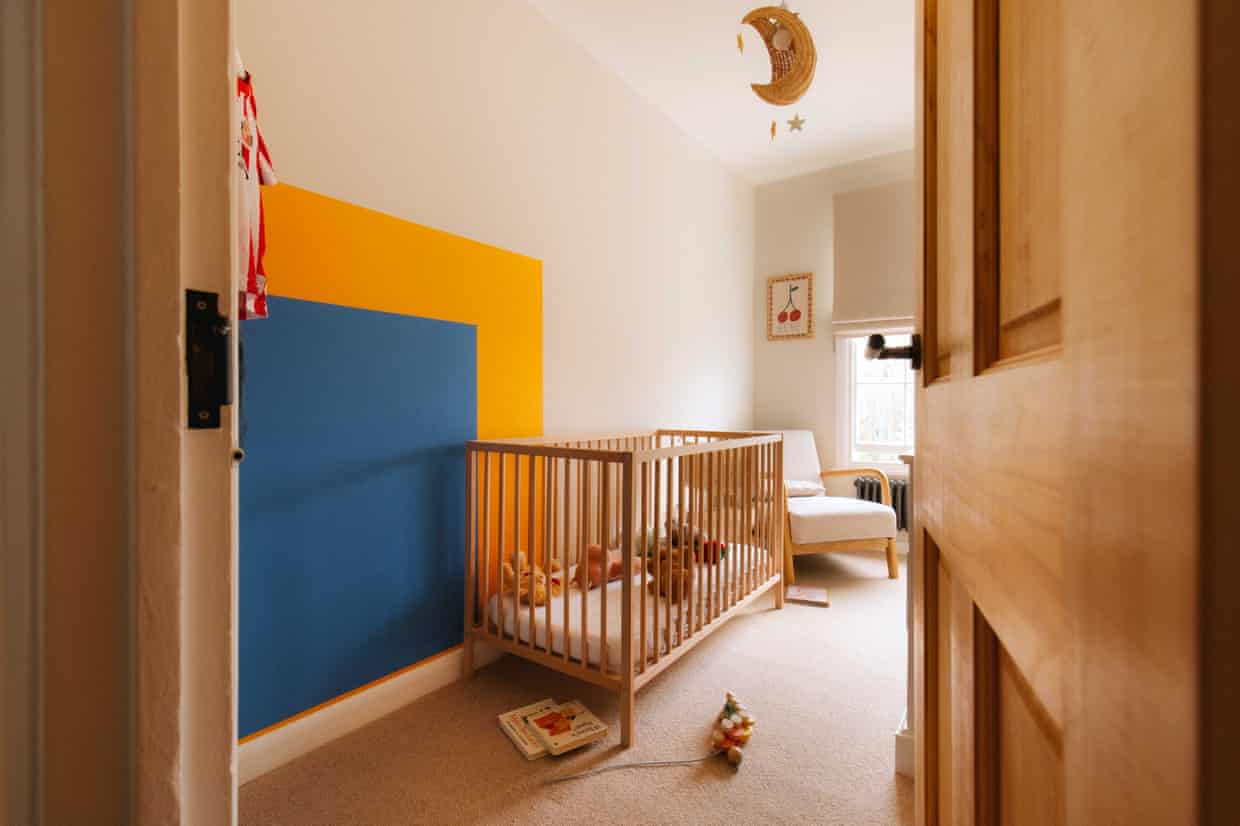
The works span different media, from painting and sculpture to more conceptual and ephemeral forms. Alongside an olfactory work designed for resident Raluca’s bathroom, artist Racheal Crowther made a motion-activated speaker which plays calming sounds at a frequency suited to her pet cat. A few doors down, 2023 Turner prize nominee Ghislaine Leung, whose work explores childcare and family dynamics, recreated her 2024 mural for a young family, using bold block colours to interrogate the UK government’s childcare provisions. It lives behind the cot in their child’s bedroom.
Meanwhile, Raheel Khan, who has previously made work related to sound in devotional spaces, developed a sound piece to be played on the custom stereo in Nigel’s convertible. Inspired by William Blake’s childhood memories of Peckham Rye Park, it features a warped and looped rendition of The Lamb (the choral song based on the Blake poem) with added bass tailored to Nigel’s subwoofer. “It was a fun project, because we could have gone very art history and critical theory about it, but actually it was just fun to drive around blasting this tune and get to know him a bit.” The composition now lives among the UK garage in Nigel’s playlist, and he continues to play it while the car roof is down. “It’s nice to think that the work could potentially just be part of the fabric of Peckham,” Khan adds.

This community spirit runs through much of the exhibition, from developing the ideas together to choosing the placement of the work, processes in which the residents have become both collaborators and “curators in their own home”, says Broome. Multidisciplinary artist Olukemi Lijadu worked with Pamela, a retired social worker who has lived on the street for 40 years, to select images from her family photo albums to scan and transform into collages that connect the dots between their shared Caribbean heritage. “It was so refreshing and so real,” Lijadu says of the experience. “I think when you’re making work that’s going to live in somebody’s home, there’s a responsibility, but there’s also an intimacy because they’re going to live with it every day.” After months of working together, the pair remain in touch and Pamela now sees Lijadu as family.
In many ways, then, Rooms of Neighbours is as much a social project as an exhibition. Many of the residents have met for the first time, and they now communicate regularly over a WhatsApp group. Pamela, who lives alone, says “it’s like a new world that has been opened to all of us. It’s nice to know what’s happening on the road instead of us just living in our little bubbles.”
Most of the works will remain in situ indefinitely, living among the residents’ plants and furnishings. An architectural sculpture by Liam Gillick, which is installed in one of the communal gardens, has since been repurposed by the neighbours, who use it as a gathering spot for BBQs and a storage space for their garden furniture. Rirkrit Tiravanija’s customised ping-pong tables opposite the houses are gradually becoming scuffed from use and layered with graffiti tags, developments that the artist and Broome welcome. “I think it’s important for these kinds of projects to happen, outside the art world and in civic space, because they engage with people in a different way,” says Broome, who believes institutional spaces are increasingly failing both artists and the public due to lack of funding. “Bringing art to people’s doorsteps can act as a catalyst for something more.”