


‘After my son’s birth, I was a different person’
Lana Jones, midwife, former principal dancer at the Australian Ballet
I loved taking the audience on a journey in ballet, pushing my body to its limits. But I knew I couldn’t dance for ever. After the birth of my son, I came back as a different person. Although I could add a beautiful vulnerability to my work, there was such a pull on my heart, missing out on time with him when he was little.
Even before finishing ballet, I knew I wanted to be a midwife and do something that wasn’t about me at all. My final performance was in 2018, in Cinderella; I was happy to finish but it was a big part of me that I was leaving on that stage. Still, I was looking forward to being a full-time mum – being just Lana and trying to find who I was without that ballet identity.
In the months that followed, I definitely missed my community. You’re just taken away from your whole network. And you have a bit of decision paralysis, because your whole life has been set out for you in dance. Within a year of retiring, I enrolled in a midwifery course at medical school. Starting university in my 30s was a whole new ball game. In my first lecture, there was everyone on their laptops and I’ve got my book and pen, writing everything down, freaking out.
In my work now, when I see a woman who is in labour and in so much pain, looking at me with all this fear, if I can make her feel safe or even just listen to me and be present in the room, that is really great. It has been the hardest thing I’ve ever done.
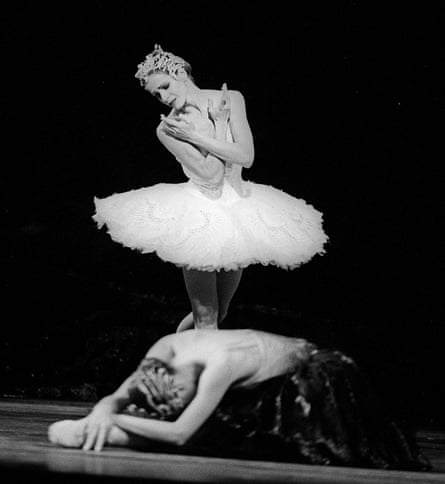
‘Working as a peer is similar to a performance’
Baroness Deborah Bull, peer, former principal dancer at the Royal Ballet
Ballet was a childhood dream pursued to middle age, frankly. So I found the idea of giving up very hard. I was a little bit Peter Pan-ish about it. I just thought tomorrow would never come. It is hard to imagine you are going to find something else that satisfies you in the same way. And there is a fear: if you start talking about retirement, then other people – in whose hands your career rests – might start talking about it too.
I had the experience of two ankle injuries at different times. The first time it happened, there was a sort of loss, a sense of “who am I if I’m not dancing?” But during my time as a principal dancer, I also began writing books and hosting television programmes. So when I injured my ankle for the second time, I recognised it as an opportunity to get on with some other things. That was part of me realising that maybe the career was coming to its natural end.
In 2018 I was selected as a life peer in the House of Lords. There is something quite similar about it to a performance. You do a lot of work outside the chamber, a lot of preparing, researching things, testing your ideas. Then, you go into the chamber and, particularly in debate, you stand and perform. There’s also the sense of heritage, convention and performativity in the way people move around the chamber.
The bit I miss about ballet is the physical articulacy. I can’t move my body in the same ways that I could, with that feeling of extreme fluency and fluidity. It’s as if my body used to have 10,000 words in it, and I feel like I’ve only got 1,500 now.
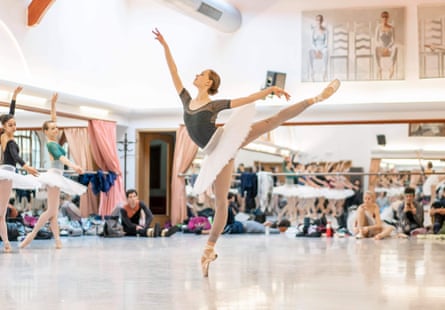
‘The day after my last show, I cut my hair off’
Sarah Dolník, social worker, former dancer (as Sarah Schaefer) at the Czech National Ballet
The first time I considered retirement was during the 2020 Covid lockdown. It made me realise how risky this profession is. When the government closed the theatres, it made me feel very replaceable. I started studying social work and social pedagogics at an online university. I wanted to learn something a bit more stable.
While studying, I kept dancing for three and a half more years. That was a little exhausting. It’s nothing I would have said in front of ballet masters or my director. It was very secret. I think most artists believe you cannot have two passions at the same time.
The last three months of my ballet career were crazy. I had to write my bachelor’s thesis while still performing in Swan Lake. So I would have a show, write my thesis in my breaks, and then perform again in the evening. The more mature I got as a dancer, the more I had a different perspective on things. Especially health. I had never really been healthy during my ballet career. Very slim, very stressed.
So I decided to quit ballet before 30, that was my cut-off point. I wanted a family and a new career. I left aged 27. The day after my last show, I cut all my hair off. It’s just something that I couldn’t do before. Ballet puts a lot of pressure on your body image. As a dancer, you’re very aware of what you’re eating, you’re training all day. Your value is what your body looks like or how you perform. Being pregnant was the first time I could accept my body looking a little different.
I wrote my CV, looked at it and thought: What should I put here? Nobody is going to care if I danced as a fairy in Sleeping Beauty! Now I’m a kindergarten teacher and focus on aspects of social work like prevention and safeguarding. In a ballet company, the dancer’s opinion is not important. But now, I really enjoy being part of the conversation of how decisions are made.
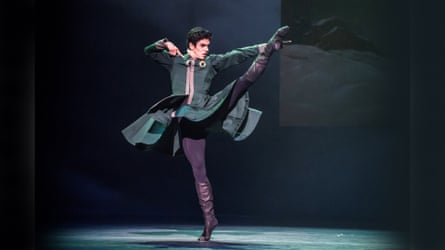
‘I knew I wanted to stay in the performing arts’
Federico Bonelli, artistic director of Northern Ballet, former principal dancer at the Royal Ballet
When I was 14, I went to a vocational ballet school. At 18, I joined Zurich Ballet – I had a salary and was living by myself in a foreign country. It was cool. I was there for three years, and then I moved to the Dutch National Ballet. And then in 2003, I joined the Royal Ballet in London.
I danced 19 seasons there. Even now, it’s my artistic home. That’s where I grew and matured the most as a dancer. I started considering retirement in my mid-30s. I knew I wanted to stay in the performing arts, so it was a question of how I want to stay. I was 43 when I stopped dancing. Lots of people stop a bit earlier, some go on much longer. But I was very grateful for my career. I stopped because I had applied to be artistic director at Northern Ballet, and I got the job.
People don’t really step away from dancing to something else in the ballet world without some sort of preparation. And I did all I could. The charity Dancers Career Development gave me some grants for independent study. It led to a Clore fellowship, about a year of studying.
Being a performer wasn’t the only thing that I loved. I really love the theatre environment, creating the conditions for people to give their best, to express their talent, the creativity involved in making new shows. When I came to Northern Ballet, it was very much part of my pitch to bring a diversity of voices on stage. I’m a real believer in the power of ballet to change lives – including people that maybe don’t think ballet is for them.
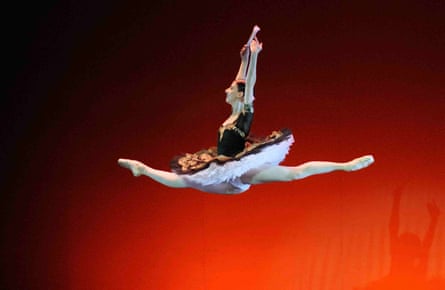
‘Conducting seemed like a reckless thought’
Maria Seletskaja, conductor, former principal at the Estonian National Ballet
When I joined the Estonian Ballet, someone from the orchestra of the National Opera suggested I consider becoming a ballet conductor. I said, “Absolutely not.” The conductor was like a god. He’s so far up. You don’t object, you don’t speak. You only say, “Yes, maestro,” and dance to the music.
When I moved to the Berlin State Opera, the main ballet studio was next to the orchestra studio. Whenever I had a spare moment, I would peek in. The music would just draw me in.
Conducting seemed like a possibility, but still a reckless thought. No one really became a conductor with the background of dancing. And I needed to support myself – I couldn’t just leave and go to a music academy. When Covid hit I suddenly had time on my hands, and enrolled in a professional conducting programme.
As a conductor, I know what dancers need: it’s about microseconds. Everything is really calculated. If the tempo is slightly too fast or slow, gravity begins to work against the dancer. So I try to accommodate them while my musicians also have certain technical needs. It’s about balancing them all.
I firmly believe that every dancer who has managed at least five years in a company will excel in any profession. Why? Because we are taught to obey without doubt, accept critique. We work like crazy. We are trained to cut everything unnecessary and just focus, and maintain that for years. So if any dancer finds their second calling, there is no doubt they will excel at it.

‘A dancer dies twice? I see it more as a rebirth’
Kay Tien, former dancer, founder of career consultancy Pivot Pointe
My dancing career ended before it even began. I got injured with achilles tendinitis in my final year of training – which you never think is going to happen to you. I still landed a contract with the Bavarian State Ballet but turned it down. I was just quite unhappy: an injury changes you. You feel you’re at this peak and then it just declines. Two weeks after I graduated, I started working at a design agency in Munich. I just took that ballet fire and directed it elsewhere. I progressed into PR and then built a marketing and strategy career.
There’s a quote you often hear, from Martha Graham: “A dancer dies twice.” There is some sort of a death in retiring because it’s a parting with that identity. But I see it more like a rebirth. I really wanted to make career transition more fun, more of an exploration for that individual. So I founded my consultancy, Pivot Pointe, which runs a career transition programme for dancers.
There are many reasons a dancer might retire. There’s age, injury or deselection, where your contract doesn’t get renewed. A new director might come in with a vision that doesn’t necessarily match what you present to the company. And, of course, there’s free choice.
Historically speaking, retirement is like a dark cloud. It triggers a lot of fear. For one, you’re heavily indexed in one area. When dancers retire, it’s typically in their late 20s or early 30s. Others have already gone to university or may have gone from their entry level to a more senior position. So you are playing some sort of catch up with others.
There’s an identity issue as well. Because your body is your instrument, you really have to live and breathe your craft. And when you leave that structure, that tribe, all the people who went to school with you, danced with you, understand you – that can make you very vulnerable.
When I’ve spoken to employers and hiring managers, they see dancers as a huge asset: their work ethic, discipline, punctuality and teamwork. Dancers are like sponges: they absorb everything they see, they are fast learners. There just hasn’t always been a way for them to communicate those skills with the outside world.