





Jon Snow: A Last Big Story is a valediction that forbids mourning. The hour-long documentary follows the 78-year-old investigative journalist and former Channel 4 news anchor in the wake of his diagnosis with Alzheimer’s disease. During the course of one of his visits with his wife, Dr Precious Lunga, to family in Zambia, he gets wind of a story about a nearby environmental catastrophe involving a Chinese mining company that has gone virtually unreported. And so the documentary opens outwards and we see the man in his element as well as in the grip of what 850,000 Alzheimer’s sufferers in the UK alone, to say nothing of their carers, families and other loved ones, know to be an unforgiving, relentlessly worsening condition.
Early on, Snow asks with interest and no disquiet what the people with cameras around him are doing. “We’re making a film about your career,” his interviewer, Laura, explains. “And who you are now.” “Lumme!” says Snow, the son of a bishop. “How nice!” As they travel in a car together a little later, he leans forward and says politely: “I’ve forgotten your name already … ?” “Laura,” she tells him. “Lovely,” he says, sitting back. “I’m Jon.”
Historical footage of Snow reporting from El Salvador, Manhattan after 9/11 and Bhopal, and interviewing Mandela, Reagan and Gorbachev, is followed by his appointment with his doctor to measure his decline – he does not know the day’s date and cannot remember three test words a few minutes after he has been told them – and see if there are any treatment trials he could take part in. “I am your willing victim,” he says, because dementia takes memory before it takes the man. But it is hard not to look at his painfully composed wife, also a neurologist, and not see a woman trying not to envisage the time when the man, too, will have left.
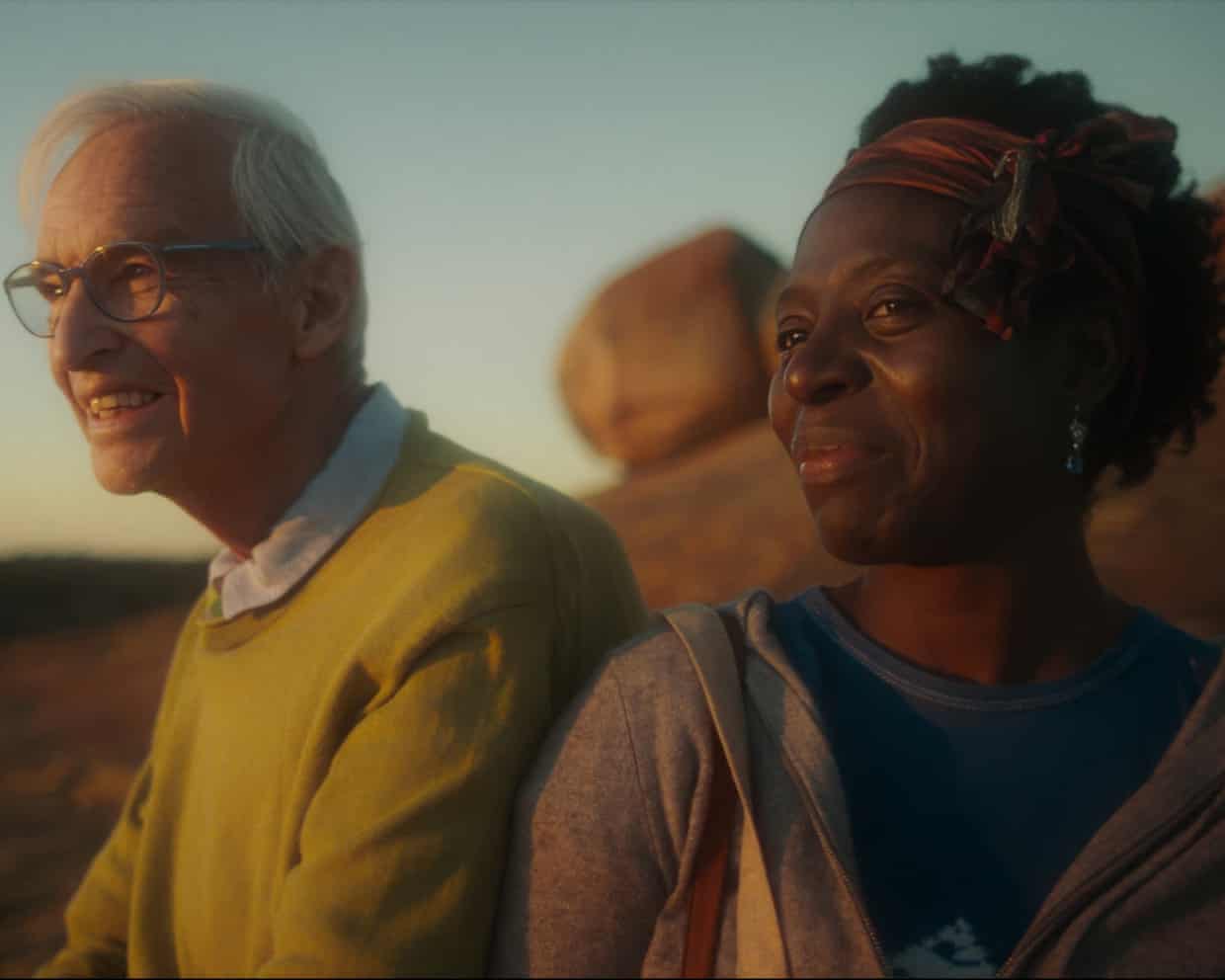
In Zambia, he learns from a safari guide that a dam has collapsed at a copper mine owned by Sino-Metals Leach Zambia, spilling what will eventually be found to be 1.5m tonnes of toxic waste, including uranium, arsenic and cyanide, into great swathes of the surrounding lands and waterways that will carry it yet further. His nephew Charles Sibanda-Lunga takes him to visit the environmental activists Chepa Mahata and Sarah Sakani, who have more information. As they travel downriver he asks, again with interest and no disquiet, what the people with cameras are doing on the boat. They are making a film about him. He laughs. “Did you know about this?” he asks Precious. She did.
He listens to everything the activists say, asking pertinent questions, getting a feel for the size of the story and accurately summarising it for Charles as “the whole nine yards of exploitation, suffering and failure”. And then, in a rare moment of self-acknowledged vulnerability, asks him: “Am I doing all right? You would say if I was not?” A little further on, when Mahata is taking him round some of the appalling devastation, the team film them as Snow repeatedly – and repeatedly – asks him how many people are affected and how many have died. Eventually, Laura calls for Charles.
But Snow’s compassion, his outraged sense of justice (“The whole field is dead! And nothing has been done”) remains undimmed. As does his courage when the team, now including his old editor Ben de Pear, attend a meeting between the affected community and their lawyer Brigadier Siachitema, and it is broken up by police and a representative of the mining company. “Have we got everything we want?” says Snow as De Pear bundles them into the car to retreat. As they drive home, we hear him thank them all “for being so supportive of me, given my condition”. “The privilege is all ours,” says Ben.
Later the team gets hold of an explosive report on the dam collapse and leaks it to international news outlets, who seize with alacrity on the story of the worst environmental disaster in Africa for 30 years. It is not clear how much Snow remembers his part in breaking the story, but he seems happy that it is out there.
Looking back on his career, he says: “It would be arrogant to claim that I have been excellent throughout. I haven’t. But I feel I’ve made an honourable contribution.”
Few would disagree with that, nor with the claim that the film-within-the-film here is part of it. The honourable contribution made by these documentary-makers should not be overlooked, either. This intelligent, gentle-but-unsentimental hour gives the journalist his laurels and the man his dignity, all while acknowledging the cruelty and grief behind the disease. If this is Snow’s swan song, it is as fine a one as he could wish.