






When Franco Manca first opened in south London’s Brixton Market in 2008, its competitively priced sourdough pizzas served in a sophisticated setting quickly drew a buzz.
“It was all the rage,” says food blogger Gerry del Guercio of BiteTwice, who visited in the early days and recalls the novelty of seeing queues forming for pizza in London. “It was just desperately cool, and everyone wanted to try.”
At a time when the high street was largely dominated by US chains such as Pizza Hut and Domino’s, dishing up more standard fast food pizzas, the business had a unique selling point for the UK market – slow-fermented, chewy sourdough bases.
The Naples-originated style of pizza went on to win the hearts of British diners, with its champion Franco Manca expanding into a nationwide chain with more than 70 sites. In 2021 its parent group, The Fulham Shore, said it had identified more than 125 potential future locations.
Now, however, the puffy pizzamonger is deflating. It announced this week that it is to shutter 16 of its restaurants via a company voluntary agreement (CVA), an insolvency process that is thought to put about 225 jobs at risk.
While it did not name specific sites, it is understood that the closures are to cover nine in London (including its original Brixton branch), as well as Hove and Glasgow.
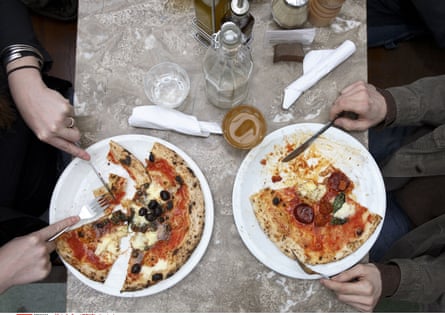
The Fulham Shore chief executive, Marcel Khan, blamed a string of “external cost pressures” hitting the hospitality industry, including increases in national insurance contributions, the living wage and business rates, saying it left a number of its restaurants no longer viable.
Yet despite debate as to whether the UK has hit “peak pizza”, demand for the dish is still on the rise. The market has year-on-year growth well ahead of inflation, says the food service consultant Peter Backman.
So does Franco Manca’s troubles suggest Britons no longer want its signature product, or is this merely a case of a company overexpanding too aggressively, too soon?
According to Backman, it’s neither. Sourdough “isn’t a passing fad,” he says, estimating that it accounts for about 20% of sales in the pizza sector. If anything, it’s become too mainstream to remain the winning formula it once was.
Following a boom online during the pandemic, with TikTok and Instagram awash with videos of users baking the bread at home for low-cost, the sourdough trend migrated to supermarkets.
Now “retail accounts for about half of all pizzas sold”, says Backman, indicating consumers are turning to supermarkets for their pizzas. Pizza has also become a big player in new sourdough product launches, making up 29% between 2022 and 2025, according to data from the market analysis company Mintel.
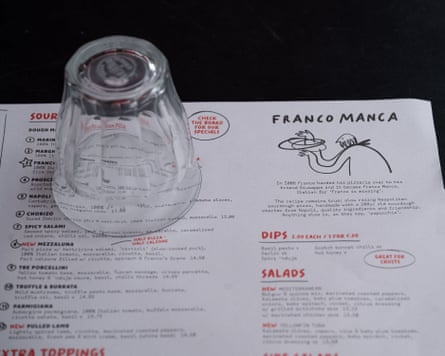
Increasingly, restaurant pizza brands such as Franco Manca are competing with supermarkets on price and convenience, says Trish Caddy, an associate principal for foodservice research at Mintel. Though pizza is a fairly affordable treat, sourdough offerings have tended towards the pricier side, but not because it’s more expensive to produce.
“It’s just more expensive because sourdough is seen as a higher-value product,” says Backman. “It’s got a consumer perception that it’s better quality or more aspirational.” With consumers facing pressure under the cost of living crisis, making them at home or buying them from supermarkets may be more appealing options than dining out.
Del Guercio, however, puts Franco Manca’s contraction “down to the fact that they just peaked”. As the chain expanded, he argues, the quality of its pizzas diminished but their prices rose.
When its first branch opened, margheritas were priced at a modest £4.60, but on a recent visit he noticed that they are now tipping £10. “There’s no way the pizza I had last Saturday was anywhere near, not even in the same ballpark as the one that I had 15, 16 years ago,” he says. “And that’s what happens as you get bigger.”
The blogger, who specialises in reviewing pizzas and co-runs Carmela’s Pizzeria in north London, adds that the UK market is intensifying, as new independent competitors offer fresh takes on the dish. Where once the doughier Neapolitan pizza was de rigueur in the UK, he says the thin and crispy style has now edged ahead.
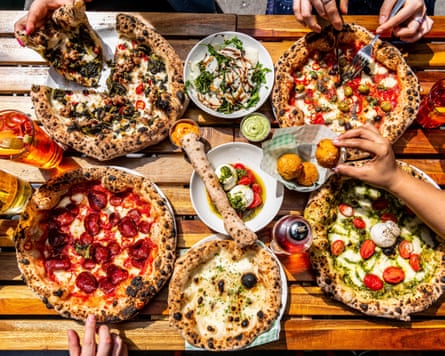
Rival pizza chains such as Rudy’s and Pizza Pilgrims have also come into play. Both businesses have “really accelerated their growth plans over the past couple of years”, says Reuben Pullan, a consultant at CGA, noting the former’s social media presence in particular is connecting with consumers.
However, Pullan adds that it is not the quality of product that has led Franco Manca’s cutback, nor is it in an unusual situation. “We are seeing all operators feeling the squeeze,” he says. “And Franco Manca had a fairly large estate … So if energy costs or purchasing costs for them have recently shot up, it might have tipped the balance for some sites being no longer profitable … I think it is just the unfortunate churn in a market that is under pressure right now.”
Backman concurs. “It’s more to do with operational costs rather than a falling demand,” he says, adding that the closures may ultimately be a positive move for the company. “If they manage the CVA well – and most companies do, because they get rid of underperforming stores and the overhang of loss-making – that gives them a freedom that they haven’t had for a few years.”
As for its future? “I think Franco Manca has got a lot going for it,” he says. “It’s got a good name, it’s got a product that’s still in demand, and I would imagine that they’ll carry on.”
此内容由惯性聚合(RSS阅读器)自动聚合整理,仅供阅读参考。 原文来自 — 版权归原作者所有。