








The Earth is getting hotter. Conflicts are raging, in the Middle East and Ukraine, each increasing the chance of nuclear war. AI is infiltrating almost every aspect of our lives, despite its unpredictability and tendency to hallucinate. Scientists, tinkering in labs, risk introducing new, deadly pathogens, more destructive than Covid. Our pandemic response preparedness has weakened. The Doomsday Clock – a large, quarter clock with no numbers, keeps ticking, counting down the seconds until the apocalypse. Tick. Tick. Tick. In January, we reached 85 seconds to midnight. Experts believe humanity has never stood so close to the brink.
“What we have seen is a slow almost sleepwalk into increasing dangers over the last decade. And we see these problems growing. We see science advancing at a rate that defies our ability to understand it, much less control it,” says Alexandra Bell, CEO of the Bulletin of the Atomic Scientists, the organisation that sets the Doomsday Clock. She speaks of the “complete failure in leadership” in the US and other countries, which are doing little to address global, catastrophic threats, even as they feed into one another. Climate change increases global conflict, for instance, and the incorporation of AI into nuclear decision-making is, frankly, terrifying.
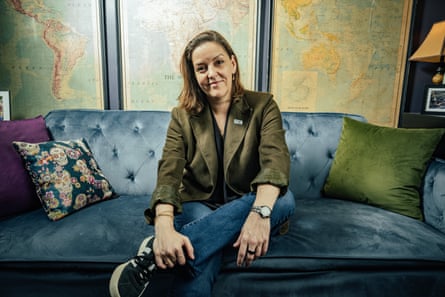
Bell speaks over video call from her office in Washington DC, which is decorated with a huge world map, Day of the Dead cushions and a framed print of Barbie superimposed on to a mushroom cloud – a gift from a colleague in response to the Barbenheimer phenomenon, because in this field it helps to have a sense of humour.
Bell, who has spent much of her career working on nuclear arms control, believes that because nuclear bombs have not been used since 1945, the public has developed a false sense of security. We don’t like to contemplate the role played by luck. “We’ve been lucky, because the odds are not in our favour. The more weapons that exist, for longer, the more likely it is something will go wrong,” she says – though she’s quick to add that diplomatic disarmament and peace-making efforts also played a big role.
The Doomsday Clock was established in 1947 in response to the threat of nuclear war, by a group of Manhattan Project nuclear scientists who wanted to warn the public and politicians of the dangers, the destruction they had helped unleash on humankind. The time is usually set annually – though the setters say if events warrant it, they can change it more frequently. They are members of the Bulletin’s science and security board, a group of leading scientists, academics and diplomats who aim, each year, to reach a consensus on where to set the clock’s hands.
The Doomsday Clock is a symbol; it distils complicated conversations about existential threats into something measurable and easy to grasp. It is a wake-up call, designed to prompt leaders and citizens to take action to stop humankind from destroying itself. It has become a cultural icon. On the Bulletin’s website, you can download a playlist of songs inspired by the clock, from the Clash, Pink Floyd and the Who to, more recently, Bright Eyes, Linkin Park, Hozier and Bastille.
But can the Doomsday Clock help humanity buy itself more time – and, if so, how? And what can the people who set it teach us about how to think about, and respond to, the risk of global catastrophe?
1947: The first clock is set. It’s seven minutes to midnight
In the aftermath of the US bombings of Hiroshima and Nagasaki in 1945, many nuclear scientists felt deep shame and guilt over their role in creating the world’s most deadly weapons. That year, a group of 200 scientists connected to the University of Chicago’s cryptically named Met Lab, which had been tasked with studying the structure of uranium, formed an organisation called the Atomic Scientists of Chicago to help inform the public of the risks posed by nuclear energy. The group published its first bulletin, a print newsletter, in December 1945, calling on the American people to “work unceasingly for the establishment of international control of atomic weapons” and warning that “all we can gain in wealth, economic security or improved health, will be useless if our nation is to live with the continuous dread of sudden annihilation”.
As the organisation expanded to include other Manhattan Project scientists, it dropped “Chicago” from its name and turned the bulletin into a magazine. J Robert Oppenheimer and Albert Einstein were among its early contributors. The scientists understood that, with nuclear energy, humankind had acquired the power to destroy itself. They predicted, correctly, that as science advanced it would uncover new, potentially apocalyptic technologies, and it was critical that the public was properly informed about emerging risks.
The clock itself was a happy accident. It was created by Martyl Langsdorf, an artist and the wife of a Manhattan Project physicist, who was hired in 1947 to design a new cover for the magazine. A clock seemed to her a good way to symbolise scientists’ sense of urgency, and she set it at seven minutes to midnight, simply because it looked good on the page.
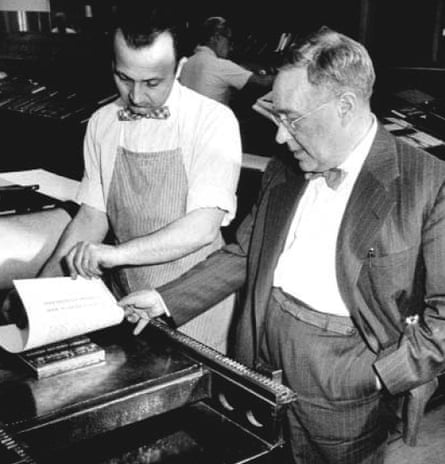
For the next three decades, the time was set by Eugene Rabinowitch, a former Met Lab biophysicist who edited the Bulletin. A 1960s Time magazine profile describes him as a short man with a “jaunty blue beret” and an “ineffaceably cheerful smile” who “bears small resemblance to a prophet of doom”, but Rabinowitch was evidently haunted by the role he had played in developing the bomb. He said he had wondered, in the lead-up to Hiroshima, if he should leak news of an impending nuclear attack on Japan to the press. In 1971, he told the New York Times he would have been right to do so.
1949: The clock moves. It’s three minutes to midnight
In 1949, the Soviet Union successfully conducted its first nuclear test, and the nuclear arms race began. Rabinowitch decided to move the clock’s hands for the first time, from seven to three minutes to midnight. Scientists are not “intent on creating public hysteria”, he wrote in an editorial accompanying the change, “we do not advise Americans that doomsday is near and that they can expect atomic bombs to start falling on their heads a month or a year from now; but we think they have reason to be deeply alarmed and to be prepared for grave decisions.”
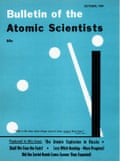
In the following years, Rabinowitch moved his clock sporadically, in response to events. He changed the time to two minutes to midnight in 1953, following the development of the hydrogen bomb, and then back to seven minutes to midnight in 1960, to reflect increased cooperation between cold war powers. The 1962 Cuban missile crisis – the 13 days when humanity came closest to nuclear annihilation – took place between issues of the Bulletin and didn’t prompt an immediate clock change. Instead, Rabinowitch pushed it back to 12 minutes to midnight the following year, in response to the passing of the Partial Test Ban Treaty. He moved the clock hands several more times, but in 1972 it was back at 12 minutes, after the US and USSR committed to reducing ballistic missiles. Rabinowitch died in 1973, and from then on the clock was set by committee.
1991: The cold war ends. It’s 17 minutes to midnight
The furthest we have been from midnight was at the end of the cold war. The Bulletin’s board of directors set the Doomsday Clock at 17 minutes to midnight and argued that “the world has entered a new era”. Humankind had made more progress in reducing the risk of nuclear warfare than its founders had originally thought possible: the initial design of the clock did not allow the hand to go back further than 15 minutes.
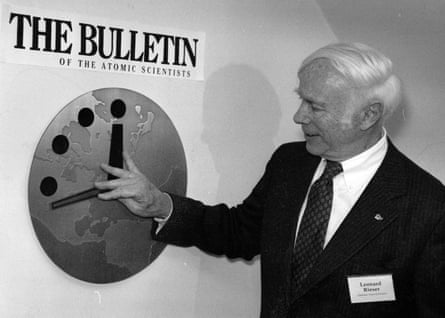
Throughout the 90s and early noughties, the Bulletin struggled financially. The anxieties shared by its founders appeared – briefly – to belong to an earlier era. But history came roaring back, and the clock kept ticking.
2007: A modern Doomsday Clock. It’s five minutes to midnight
In 2005, Kennette Benedict was appointed the Bulletin’s executive director and charged with turning the struggling magazine around. Benedict, an academic, had worked for the MacArthur Foundation (the organisation best known for its “genius grants”) for many years, and she knew many of the Bulletin’s founding members. At the foundation, she had worked with Rabinowitch’s son, Victor, and Ruth Adams, Rabinowitch’s research assistant, who went on to become editor of the Bulletin. She used to attend the artist Langsdorf’s legendary cocktail parties.
Until then, the Doomsday Clock was updated with little fanfare. Benedict recognised that it could become the magazine’s most powerful public communications tool. In 2007, she held a major press conference to mark the decision to move the clock from seven to five minutes to midnight, in response to North Korea’s nuclear tests, Iran’s atomic ambitions, and the rising threat of climate change. She roped in high-profile scientists, including Stephen Hawking and Martin Rees, to take part. “It made a huge splash,” she recalls. “People were hungry for this. They wanted to know.”

Benedict turned the clock-setting, and the press conference, into an annual event. She hired the renowned designer Michael Bierut to update the design of the clock, which became the Bulletin’s logo. And, most controversially, she broadened its scope. From now on, the Bulletin’s science and security board would not only factor in the risk of nuclear meltdown but also consider other human-made threats, such as climate change and disruptive technologies. Critics accused her of “diluting” the Bulletin’s message, and the clock-setter’s debates grew more complicated and heated. Benedict recalls one scientist arguing that the irreversible consequences of climate change were so catastrophic that midnight had already been passed.
“All science and technology can be used for good or ill. They’re dual use. Starting with fire: it can heat our homes and burn down our houses,” Benedict tells me, when we meet in her apartment in downtown Chicago. The Bulletin’s founders recognised as much. Rabinowitch spoke of the “Pandora’s box of modern science”. The modern Doomsday Clock aims to encourage better protections against the dangers that come with scientific progress. The first step to action is awareness, and true awareness is not only knowledge but feeling.
On a clearer day, you can see all the way from Benedict’s apartment to the University of Chicago, where she now teaches a course on nuclear policy. At the beginning of each course, she asks her students to read John Hersey’s Hiroshima, an account of the bombing told through the stories of its survivors. She tells her students: “My basic philosophy is that the truth shall set you free. And I’m going to impart as much as I can. But first, it’s going to make you miserable.”
And yet, like many of the people I speak to, Benedict says her work on the Doomsday Clock has left her optimistic. She is reminded that humankind has pulled itself away from the edge before. “The history of nuclear weapons, at least since the end of the cold war, is actually pretty hopeful: we used to have 70,000 nuclear weapons and now we have 10,000 or 12,000. That’s proof of concept, right?” she observes.
2020: The clock starts counting in seconds. It’s 100 seconds to midnight
Six years ago, the Doomsday Clock moved from two minutes to 100 seconds to midnight. The Bulletin pointed to insufficient arms control, lack of action on climate change, the rise in misinformation and the threats posed by AI. At the time, Rachel Bronson, Benedict’s successor, compared the clock’s new time to the two-minute warning in American football matches: “The world has entered the realm of the two-minute warning, a period when danger is high and the margin for error is low.” The doomsday time has remained so close to midnight that it has been counted in seconds ever since.
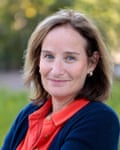
“The question often is: how do you go to work every day?” Bronson says, when we meet for coffee in Chicago, but her time heading up the Bulletin didn’t leave her despairing. “I think, like anything, the more involved you are, the more optimistic you can be, only to know that there’s really good people working on these issues, and fabulous innovations under way.” Bronson noticed during the regular science and security board briefings that people were always more anxious about the dangers they hadn’t been studying. “Whatever your expertise is, you think someone else’s is scarier, in part because it’s always scarier when it’s unknown,” she says.
I observed while working on this article how easy it is to disengage from discussions about how the world ends. Apocalyptic scenarios are so frightening that it can feel easier to ignore them, or to quickly bury your knowledge and anxiety somewhere unreachable. But those who have spent their careers studying doomsday futures seem to derive courage from facing down the terrifying facts, from thinking about them long enough that you can start to see potential solutions. It’s another argument, if you need it, against the head-in-sand approach.
There are, understandably, limits to Bronson’s optimism. She speaks of how scientists, and the public, keep being let down by politicians, who fail to take decisive action or follow expert advice. “I’m so bullish on the science, but I’m so pessimistic on the politics,” she says.
2026: Inching to doomsday. It’s 85 seconds to midnight
In January, the clock was set to 85 seconds to midnight, the closest it has ever been. Within four weeks, the AI expert Gary Marcus argued on the Bulletin’s website that humanity was already “significantly closer to the brink”, after a showdown between AI developer Anthropic and the White House revealed Trump’s determination to have unrestricted military access to AI. A recent study found that in simulated war games, leading AIs from OpenAI, Anthropic and Google opted to use nuclear weapons 95% of the time.
Two days later, the US and Israel began bombing Iran, raising the risk of nuclear war. “Further escalation or expansion of the conflict could lead to actions driven by miscalculation, misperception or madness, as President Kennedy once said,” warned Alexandra Bell, who succeeded Bronson as president of the Bulletin in 2025. From the start, she worried about the lack of a plan to secure Iran’s nuclear materials, and that other countries would conclude that having nuclear weapons is the only way to maintain their security.
I ask Bell about the roots of her work. As a child, growing up in small-town North Carolina, she remembers becoming very concerned about the Exxon Valdez oil spill in Alaska in 1989, and she wrote to then US president George H W Bush, accusing him of giving the environmental disaster too little attention. She received a reply from the White House that read something like “thanks for your letter, keep reading books”. “And I was like, ‘This is unacceptable!’ That lack of response has really driven me over the years,” she says. Many people feel powerless in the face of big, geopolitical problems such as climate change or nuclear war, but Bell believes they underestimate themselves.
“I can assure you, elected leaders care about what their constituents call them about. So, the idea that people don’t have agency is not true,” Bell says. The history of nuclear arms control was shaped by public action, and only public pressure will encourage global leaders to act decisively and collaboratively to address the threats facing mankind. Bell says she understands that voters have many other pressing concerns, over the cost of living, or healthcare or crime. But in an almost-perfect echo of the Bulletin’s first public statement she says: “The message we’re trying to get out is you’re going to have to care about these bigger issues, too. Because if we get them wrong – particularly if we get the nuclear problem wrong – nothing else matters.”
The future: Learning to think in atomic time
One wet Chicago evening, I meet Daniel Holz, the University of Chicago astrophysicist who is the chair of the Bulletin’s science and security board. The board meets at least twice a year and is in regular contact in between; Holz has the tricky job of ensuring that the experts can reach agreement on where to set the clock. He feels that with each passing year the work feels more urgent. One senses the work can become all-consuming. He booked a family holiday in Japan for the spring – and found himself including official meetings in Hiroshima and Nagasaki.
Among certain academic and Silicon Valley doomsayers it has become popular in recent years to speak of ones p(doom) value, the probability one assigns to the world ending. Most people find it hard to think in probabilistic terms, however, and the clock provides a simpler, more symbolic way to express the dangers facing humankind. Because it is a symbol rather than a scientific measurement, Holz says the clock-setters need to consider the psychology of how the time will be interpreted. “If people feel powerless and so petrified that they can’t engage, then we’re making things worse. That’s something I think about a lot,” he says.
It strikes me then that the clock’s usefulness lies partly in its ability to circumvent our deepest fears and the limits of our imagination. You can track the clock’s hands and feel moved to action, even if you find it hard to truly contemplate the end of the world. The scenarios the Bulletin’s board discuss – a nuclear winter, the lab leak that kills all biological life – can be so awful that most people need help to accept they could truly happen. They need to learn how to shift their perspective. Holz says that his day job, studying black holes, has helped him grasp the importance of working on existential risk. “Cosmology is very good at giving perspective. When you study this stuff, you definitely get a strong sense of how insignificant we are here on Earth, which sounds bad but is actually very empowering. The timescales, the length scales, are so vast, and here we are, this super tiny, little irrelevant speck. You quickly realise the universe is not going to save us … If we blow ourselves up, no one will notice or care,” he says. “Which means it’s up to us, right?” A nuclear winter is about the biggest disaster most humans can imagine – and yet, from the perspective of the universe it is practically a non-event. “I taught a class yesterday and one of the questions was: if we blow ourselves up in a nuclear war would anyone elsewhere in the galaxy notice? And it actually would be really hard to notice. You’d have to be really close,” he says.
I haven’t mastered the ability to contemplate humanity’s future from a cosmological perspective, but the following morning I meet a scientist who helps shift my personal view. It is a damp, colourless early spring day, and I travel to a suburb of Chicago to meet Dieter Gruen, who in his early 20s worked for the Manhattan Project in Oak Ridge, Tennessee and later joined other scientists in calling for action to protect the world from nuclear conflict. Gruen is 103 years old, still working – he’s involved in efforts to build more efficient solar panels – and remarkably spry. His long life lends him an unusual perspective on the political problems of today, and I wonder if (or perhaps hope that) outliving other global crises might make him more sanguine than most. It is a week after the US declared war on Iran. Gruen keeps a copy of the New York Times, the New Yorker and the Bulletin magazine on the side-table next to his leather armchair, and he is sombre. He has this morning read media reports of Iran’s claim to have enriched enough uranium to build around 10 nuclear bombs. Does he agree with the Bulletin that the world is in greater peril than ever? “I feel like I’ve never felt before,” he says gravely. What about during the Cuban missile crisis? “Well, that was pretty bad,” he acknowledges. But somehow this feels worse.
What do you think, he asks me then, are you worried? I tell him that while it is not rational, the idea of a nuclear apocalypse is so awful that my brain refuses to hold on to it. Global, existential risks rarely feature on my long and neurotic list of daily anxieties. He looks at me with some puzzlement. “Yes,” he says. “That’s not rational.”