


Our bodies are incredible machines, but we can take the mechanics for granted until something goes wrong. How can we maintain healthy joints throughout life and avoid surgery? Here, rheumatologists and orthopaedic surgeons give their tips …
Move as much as possible
According to the UK chief medical officers, we should all be getting 150 minutes of moderate-intensity exercise (such as brisk walking or cycling) a week, or 75 minutes of vigorous activity (such as running). However, says Prof Scarlett McNally, a consultant orthopedic surgeon at East Sussex Healthcare NHS trust, about 27% of adults in England “do less than 30 minutes a week of exercise that gets them out of breath. If you can increase that just a little, it has massive health gains.”
Arthritis – joint pain and stiffness – is likely to reduce as sport and exercise participation increases, says Prof Alister Hart, an orthopaedic surgeon at University College London. “Clearly there are caveats,” he says, pointing out that some football and skiing injuries can increase the risk of arthritis, for example. “But on a population level, the more sport, activity and exercise we do, the less arthritis should happen.”
McNally points out that “change is really difficult for people,” especially if they are already experiencing problems in their joints. Osteoarthritis – the most common type of arthritis, which occurs when the protective cartilage around the bones breaks down – is no longer referred to as ‘wear and tear’, she adds, “because joints are better if you use them. Stay active and build up your muscles.” Through this you can “keep them strong and it can reduce the pain to keep them moving”.
“When patients have a lot of pain in their joints, muscles or tendons, then exercise can be a frightening thing to engage with because it might make the pain worse,” says Dr Elizabeth MacPhie, a consultant rheumatologist in Preston. “We have to support patients to understand how to look after their joints when they have arthritis, not to be fearful of doing exercise, and find the right type of exercise for them.”
There are resources online, such as the website Moving Medicine, which can help you to get started.
Pay attention to aches and pains
Generally, movement is medicine, says Hart. “As an orthopedic surgeon doing a ward round, you see people recovering from hip fractures. What’s the first thing you do? You say, ‘We need to get you up and moving. It will help you heal your tissues by releasing chemicals that will improve your healing.’”
Try low-intensity movements first, such as stretching or cycling, he says. “Over a few weeks, you’ll realise whether you can do things. If you really can’t do anything, then clearly you need to get help. The red flags are pain waking you at night for many nights and a need for painkillers for more than a week.”
Practise glute bridges
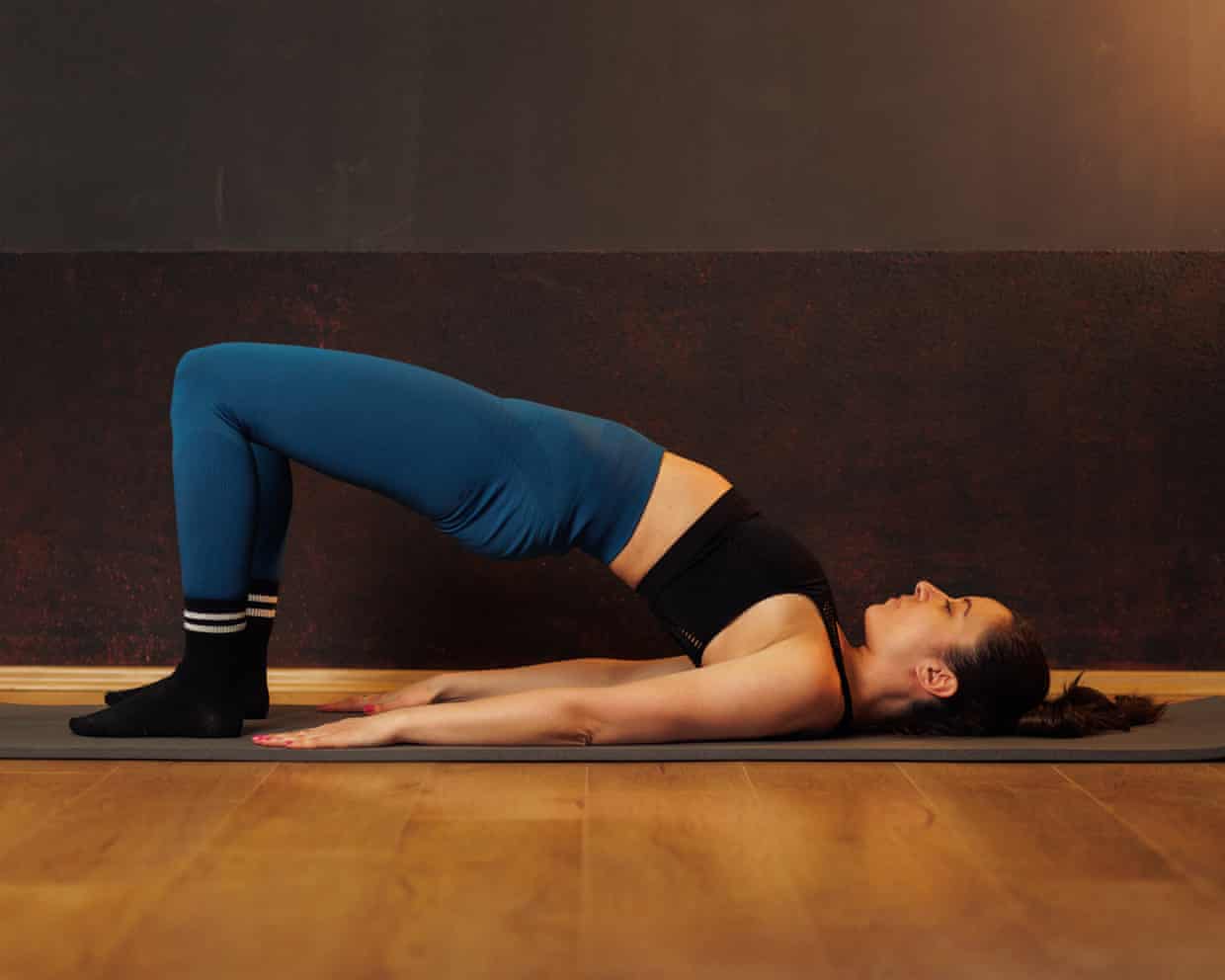
Hart says that the ultimate exercise is glute bridges: “I tell all of my patients that you can do zero harm with glute bridges, and almost anybody can do them – people who are recovering from fractures, hip replacements and back surgery. When you are lying on your back, bend your knees to 90 degrees and push your pelvis to the ceiling. If you do it with an exercise band across the lower thighs, then you start working your gluteal muscles, and that will help both your hips and your knees.”
… and squats
Squatting is equally crucial. “If you fall over and you can’t get up, you’ll become dependent on others very quickly,” explains McNally, “so the glutes and the thigh muscles are very important.” These can be strengthened through squats. Alternatively, “if you’ve got stairs, going up and down them is really good. I teach people sitting-to-standing exercises, because it builds up the same muscles as a squat.”
Do parkrun
“Impact sports such as running often get a bit of a bad name, with the assumption that they are damaging,” says Hart. “In fact, your skeletal muscles and tendons need impact to keep them healthy. If you go into space as an astronaut, you come back wobbling all over the place, because muscles can’t work: you’ve got osteoporosis just from being in space for a month.”
Hart describes running 5k as a “Goldilocks dose”, meaning not too much or too little. You can even take part by walking, says McNally. A healthy living regime, she says, “has to be a habit; it has to be something people just do, otherwise people don’t do it. That’s why parkrun works.”
“Some people like to do long distances or lots of running,” she says. This is fine so long as your body allows you to do it without injury. It’s worth remembering that “the benefits from exercise stop at an hour a day. Beyond that there aren’t so many benefits. Smaller doses really are a miracle cure.”
If you can’t run, swim

“Some activities which are high impact have historically been seen as bad for joints,” says Dr Matthew Hutchinson, a consultant rheumatologist in London and author of Are You Really the Doctor? “You’ll probably have runners who say the contrary, and they may actually be correct – there isn’t good evidence running will lead to long-term joint problems, unless you get injured. Low-impact aerobic activities such as swimming, however, definitely appear to improve function and reduce pain.”
“If people are experiencing pain in their joints, then getting into the water and doing exercise is always easier,” says MacPhie. “Not just swimming, but walking up and down in the pool or doing gentle stretches in the water is a good way to get going.”
Don’t forget to stretch afterwards
Many of us don’t bother to stretch after a workout. “Don’t make it a big deal,” says Hart. “Even if you do two minutes of stretching, that is better than nothing.” He cautions against pushing yourself too far: “Take your joints through their normal range of motion.”
Make time for strength training
Strength training – weights and resistance work – is “the number one way in which you can prevent arthritis. It is never too early or too late,” says Hart.
Even if you are heading for a knee or hip replacement, strengthening is still a good plan. “I’ve had two hip replacements and for the last one I was a day case because my muscles were super-strong,” says McNally. “I couldn’t rotate my hip – it was horribly painful because of the arthritis – but I could go on my electric bike and cycle for an hour, which kept my muscles going, and that meant I could get out of hospital sooner.”

Preparing for surgery is crucial, says McNally: “The big thing is exercise. Just because it hurts when you stand up from a chair the first time doesn’t mean it is going to keep on hurting. Find something you can do – it is likely to be cycling, static cycling or swimming. Keep your muscles strong and practise balancing on the good leg. If you can balance, then you can get to the toilet and back, and you won’t end up stuck in hospital.”
Conditioning is key
Strength training combined with conditioning – cardiovascular or aerobic activity – is essential for avoiding injury, says Hart. “All professional sports people know that, but it’s about feeding it down to us lot who are having a go and trying to live a slightly healthier life.”
He holds the view that “you’ve got all the bendy people in the yoga studios – they don’t need more bending and stretching, they need more strength. And you’ve got all the Muscle Marys in the gym – they need a bit more stretching, conditioning and mobility work. Everyone should swap.”
“The more strength you have in the muscles that surround and support a joint, the less strain is often put on that joint to maintain stability,” adds Hutchinson.
It is not just your joints you need to think about, says McNally. “It’s also your bones. Resistance exercises and weights are proven to keep your bones strong and prevent fractures.”
Eat with your joints in mind

“Try to eat a healthy, non-processed diet, with lots of whole foods, fresh fruit and vegetables,” says Hutchinson. “It is very likely that dysregulation of your gut microbiome has a knock-on effect on the development and the severity of inflammatory arthritis [such as rheumatoid arthritis, where the immune system attacks the tissue around joints] and probably other types of arthritis.” He adds that the evidence is quite poor on what specific kind of diet is best for joints, advising instead to focus on the basics: “Fresh fruit, fresh vegetables, food you cook from scratch … doing those things will help your health across pretty much every domain.”
Vitamin D and K are supplements worth taking, says Hart, “particularly in the UK, in winter; it probably helps every single one of your musculoskeletal tissues.” MacPhie says standard supplements are OK, but the best option is D3 (cholecalciferol) at a dose of 4,000 IU in the winter.
Cod liver oil is also helpful for joints. “It is rich in omega-3 essential fatty acids, which have some anti-inflammatory properties, although we wouldn’t advise this as a treatment for inflammatory arthritis,” says MacPhie.
As for other supplements that are said to help joints, such as creatine for muscle building and glucosamine and chondroitin supplements for osteoarthritis, the experts were cautious about their use.
Slim down if you need to
If you are overweight, losing weight can reduce the strain on joints, says Hutchinson. “There is also some evidence that excess body fat contributes to driving inflammation, and so there is a lot of interest in the dual role of GLP-1 drugs. I’m not saying everyone should take GLP-1 for their joints, but there is probably the benefit that the reduction in weight reduces strain on the joint and inflammation related to metabolic dysfunction.”
Work on describing your pain
Rheumatologists see a lot of patients with unexplained pain. “Describing pain is very difficult,” says Hutchinson. How can you convey it accurately to your doctor? “Try to keep a diary of when it comes on, what time of day, how long it lasts for. Is the pain located in the joint specifically? Is there anything that makes it better or worse? This can ensure that you have the same level of understanding.”
Quit smoking
“For pretty much any disease I can think of, but certainly for rheumatoid arthritis, don’t smoke,” says Hutchinson, as it worsens the condition. “Rheumatoid arthritis is very strongly associated with smoking and the disease’s severity.”
Be careful what you wear on your feet
Carbon-plated shoes have broken all running world records: “What they are doing is changing biomechanics to get an advantage,” says Hart. The downside to this is: “It changes the forces in your body, and if you haven’t strengthened for it, you may have some other knock-on effects you didn’t expect.” There is concern around the potential for stress fractures. “The amount of data is really small but there’s a change, and that change is good for speed, but it does risk an injury. Barefoot shoes have the same risk. There is no shoe that is ideal to wear all of the time.”
“People shouldn’t need expensive kit to start being active,” says McNally. “Any footwear that is comfortable and affordable is fine.”