


Nine-year-old girls reciting the gnomic prose of Don DeLillo – it sounds like an extreme English detention, but for film-maker Ben Rivers this was the foundation of his new movie, and the culmination of an unlikely friendship with the literary titan. DeLillo is an almost mythical figure of contemporary literature. His prose is precisely hewn, his narratives sophisticated and his preoccupations uncannily prophetic: conspiracy, terrorism, nuclear power, hypercapitalism – the 89-year-old New Yorker has been ahead of the curve for much of the late 20th and early 21st century. Rivers, a 53-year-old independent film-maker based in London, has been a lifelong fan, he says. So he was stunned to receive a letter from DeLillo himself one day in 2017.
A mutual friend had sent DeLillo a DVD of Rivers’ 2015 film The Sky Trembles and the Earth is Afraid and the Two Eyes Are Not Brothers, a hallucinatory parable set in a semi-abstract Morocco, and the writer responded with a hand-typed letter. “He thought that the film was really powerful and he was looking forward to watching it again,” says Rivers. “It was a beautiful thing to receive and very meaningful for me, being such a big admirer of his.” Rivers later sent DeLillo another of his films: 2019’s Krabi, 2562, co-directed with Anocha Suwichakornpong, “and he also wrote back about that, saying that he enjoyed it”.
You can see why Rivers might be DeLillo’s kind of film-maker. His work would be more at home in an art gallery than a multiplex; it prioritises imagery and mystery over more conventional movie concerns like story beats or character development, and he often uses grainy 16mm film rather than digital.
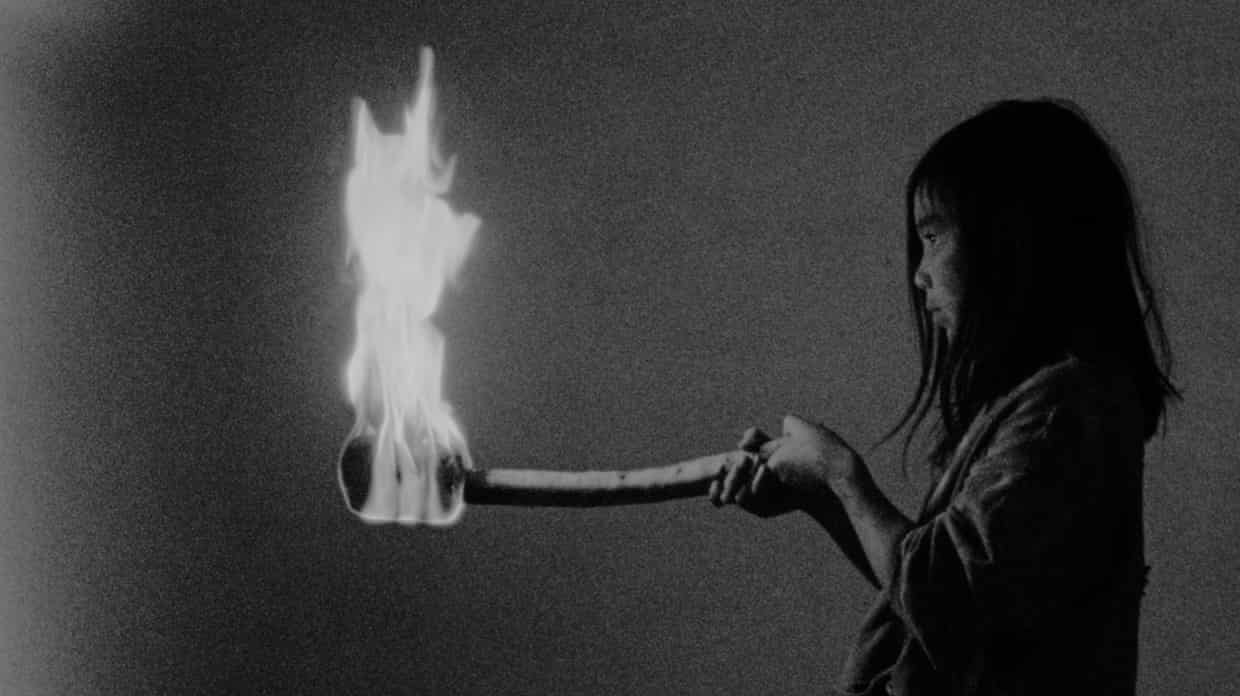
Their correspondence emboldened Rivers to write to DeLillo in 2020 asking if he could adapt his 2007 play The Word for Snow for his latest film, Mare’s Nest. “He said he couldn’t really see it as a film but absolutely gave me his blessing to use it,” Rivers says. The one-act play is a dialogue between a pilgrim who visits a professor on a remote mountaintop seeking answers, at a time of climate breakdown but also a sort of breakdown in language and meaning. The professor has only cryptic answers: “The logic of north is shattered”; “What is the point of this language or that language?”; “The word for snow will be the snow.”
“I read it during the pandemic, which was appropriate,” Rivers says. “At the same time, I’d started filling a notebook with scenes and fragments of a film with children set in a near future where there are no adults. So then I thought this play, even though it’s written for three adult men, would actually be really powerful coming out of the mouths of children. And once I got that in my head I couldn’t get rid of the idea.”
Mare’s Nest is not a straight adaptation: The Word for Snow forms a key scene within a larger story following a young girl, Moon, as she wanders a strange, postapocalyptic, adult-free landscape. (The film was shot in numerous locations including Menorca, Snowdonia and a studio in London.) This is no Lord of the Flies – the kids seem to be doing fine without us. They’re not fighting or eating each other; instead they are playing, sharing and living in nature but reusing the detritus of civilisation. “They’re sort of reinventing,” says Rivers. “They’re coming up with their own rituals, objects have lost their previous meaning and get given new meaning.”
As well as DeLillo, Mare’s Nest also incorporates a monologue borrowed from the writer Daisy Hildyard, and excerpts from the work of Portuguese playwright Fernando Pessoa. (Rivers’ lead actor, Moon Guo Barker, is the daughter of Xiaolu Guo, the British-Chinese novelist and film-maker, and a longtime friend.)
We tend to think of literature and cinema in the context of straight adaptations of writers such as Jane Austen or Stephen King, but Rivers takes a different approach. Literature has always been a big part of his creative process, he says, but he rarely takes it literally. The Sky Trembles … the film that first caught DeLillo’s attention, for example, was an interpretation of a Paul Bowles short story, but almost unrecognisable from the source material. When I first met him on his 2012 film Two Years at Sea – a dialogue-free study of a Scottish hermit living in the forest – he explained how it was inspired by Knut Hamsun’s wilderness novel Pan and Francis Bacon’s utopian fiction The New Atlantis. This is a space Rivers often operates in: a kind of Arcadian, possibly postapocalyptic world that’s neither utopian nor dystopian, but strangely hopeful and liberating.
Rivers’ work is not only informed by literature, it is arguably closer to it, with its allusive, often mystifying narratives, told predominantly through images rather than dialogue. “When you read a book,” he tells me, “obviously each person has room for their own imagination. And that’s harder with film. So how do you go about trying to make films open enough for the audience to be involved and not just a passive receptor?”
A few other film-makers have attempted to adapt DeLillo’s work but they have often fallen short, or taken so many liberties, they end up as something else entirely. Noah Baumbach’s 2022 version of White Noise, for example, turned DeLillo’s most accessible book (about a bickering family fleeing from an unspecified “airborne toxic event”), into a likable satire, starring Adam Driver and Greta Gerwig, but the novel’s cerebral wit and snappy dialogue rhythms got lost in the need to make it more dynamic and “cinematic”. Far worse was French film Never Ever, which turned DeLillo’s 2001 novella The Body Artist into a tedious erotic thriller. The rights have also been sold to Underworld, DeLillo’s 1997 magnum opus, but it is difficult to imagine how anyone could ever adapt it faithfully.
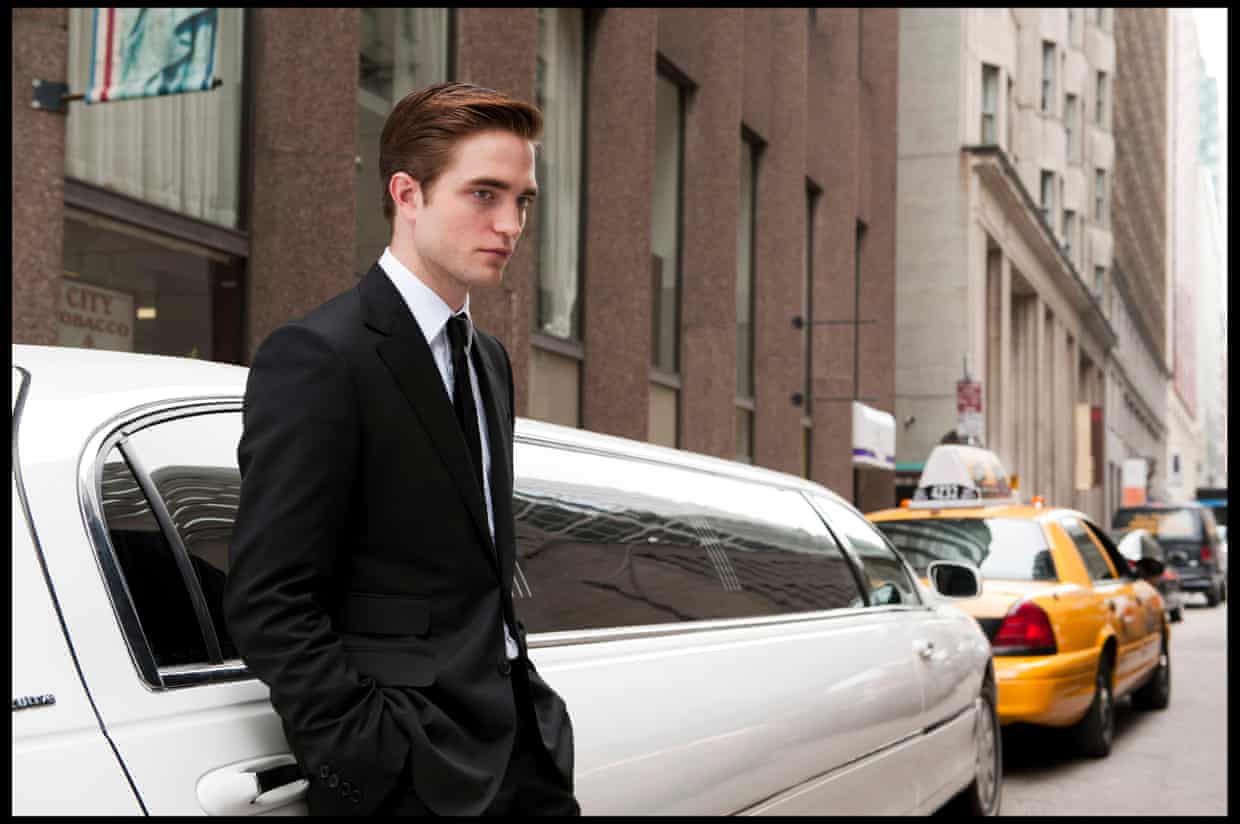
The only one Rivers rates is David Cronenberg’s Cosmopolis, based on DeLillo’s 2003 novella and set entirely in the stretch limousine of a billionaire finance bro (played by Robert Pattinson) as he cruises a restive Manhattan. Critics did not adore it, but for Rivers it’s all the better for sticking to DeLillo’s cold, deadpan tone and preserving his precise language.
That’s what Rivers sought with Mare’s Nest, and the scene in which the child actors recite DeLillo’s dialogue – in a dark cabin, around a fire, in grainy black and white, casts a singular spell. “They do it with such straight faces, all you’re paying attention to is the words,” he says. Getting his child actors to remember those words took some work (and an Autocue), admittedly, but he’s extremely proud of them. “They’re nine years old. I didn’t expect them to understand everything. But then again, I don’t understand everything either. I read it many times over and it still remains kind of abstract and sometimes absurd.”
And has DeLillo seen Mare’s Nest yet? He has, says Rivers. “He said he was impressed with what I did with it – that was a huge relief.”
-
A screening of Mare’s Nest with a Q&A with Ben Rivers will take place at Curzon Bloomsbury at 6pm on Tuesday 16 June