惯性聚合 高效追踪和阅读你感兴趣的博客、新闻、科技资讯
阅读原文 在惯性聚合中打开

推荐订阅源

奇客Solidot–传递最新科技情报
奇客Solidot–传递最新科技情报
J
Java Code Geeks
I
InfoQ
V
Visual Studio Blog
M
MIT News - Artificial intelligence
H
Help Net Security
博客园_首页
Blog — PlanetScale
Blog — PlanetScale
F
Fortinet All Blogs
Apple Machine Learning Research
人人都是产品经理
人人都是产品经理
G
Google Developers Blog
A
About on SuperTechFans
腾讯CDC
让小产品的独立变现更简单 - ezindie.com
Last Week in AI
Last Week in AI
小众软件
小众软件
aimingoo的专栏
aimingoo的专栏
罗磊的独立博客
大猫的无限游戏
大猫的无限游戏
Cyber Security Advisories - MS-ISAC
云风的 BLOG
云风的 BLOG
S
SegmentFault 最新的问题
WordPress大学
WordPress大学

The Guardian

Rory McIlroy surges into six-shot Masters lead with stunning second-round flourish ‘That’ll be the end’: actor Sam Neill joins fight to stop controversial goldmine near his New Zealand vineyard Roberto De Zerbi targets ‘Ange-ball’ revival to save Spurs from relegation Bath hit back to reach semi-final after stunning Northampton in 11-try epic Secret Garden to Outcome: the week in rave reviews Zebras, wealth and power: Hungary’s election tests Orbán’s grip on power ‘TikTok effect’ brings sellout crowds and younger fans to Grand National meeting The war over Omagh’s gold: the £21bn mine plan tearing a community apart Britain’s shadow workforce is paid as little as 65p an hour. Who cares for the carers? From You, Me & Tuscany to Euphoria: your complete entertainment guide to the week ahead Six great reads: the man who let snakes bite him, masked heavy metal and the brutal reality for foreign students in the UK American Classic review – I defy you not to fall in love with Kevin Kline and Laura Linney’s tender comedy Cuba’s doctors were a lifeline for the world. Now the Caribbean is shamefully complicit in the US drive to expel them An environmental disaster in Moldova has Russia’s fingerprints all over it RMIT drops misconduct case against student who accused university of being ‘complicit in Gaza genocide’ Ichiro Suzuki statue unveiling goes awry as bronze bat snaps during ceremony Survivors of Epstein’s abuse accuse Melania Trump of ‘shifting burden’ on to victims European football: Real Madrid held at home by Girona to extend winless run Arne Slot insists he is ‘aligned’ with Liverpool board and fans as squad is rebuilt Kamala Harris ‘thinking about’ running for president again in 2028 JD Vance warns Iran against trying to ‘play’ the US in peace talks West Ham double up twice to thrash Wolves and put Spurs in relegation zone Trump administration releases new renderings of so-called ‘Arc de Trump’ Crispin Odey drops £79m libel claim against FT over sexual misconduct allegations Bafta apologises for events surrounding John Davidson’s Tourette’s outburst Cocktail of the week: Bar Shrimp’s la rosita – recipe New drug may extend survival in aggressive ovarian cancer, trial shows One dead and 27 injured after bus with British passengers crashes in Canary Islands Pope adds to Smith’s mass of Surrey runs with England woes a world away OpenAI CEO Sam Altman’s home targeted with molotov cocktail
Welcome to Anxietyland: I used alcohol to hide my fear – ...
Gemma Correl · 2026-05-03 · via The Guardian

Gemma Correll has suffered from anxiety and depression disorders since childhood, and at 16 she discovered a magical elixir that promised to make her feel better. In this extract from her new book, she shows how that promise was broken

In 2018, I was in my 30s and living in Oakland, California, having moved there from the UK in 2015. I had always struggled with anxiety and panic attacks, but I was doing fairly well – until suddenly I wasn’t. I started having back-to-back panic attacks, wandering the streets of Oakland and nearby Berkeley in a desperate attempt to shake them, without success.
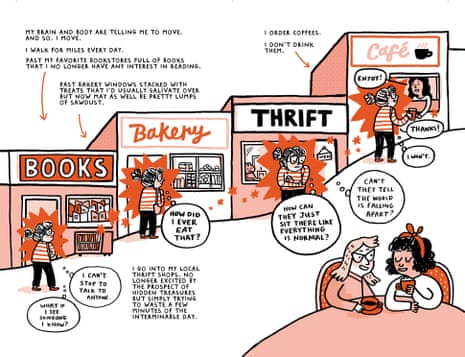
An illustration of a woman walking along a high street with speech bubbles of her thoughts
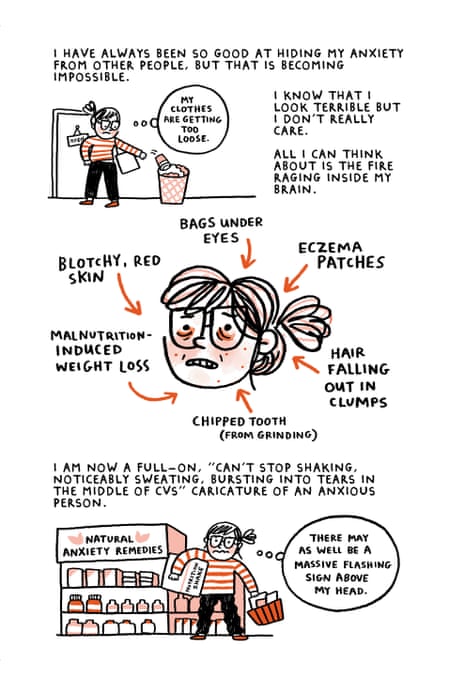
An illustration of a woman’s face with arrows pointing to different parts she is criticising, i.e., ‘bags under eyes’, ‘chipped tooth’. The picture is an illustration of acute anxiety
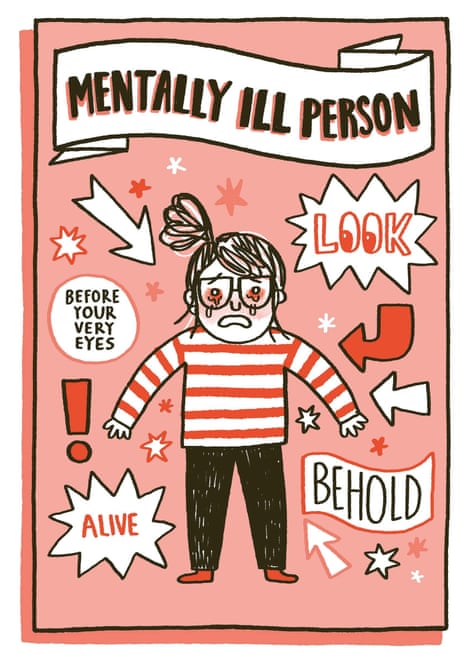
An illustration of a woman wearing a striped top with a tag saying: ‘mentally ill person’ and arrows pointing.

My life felt like an out-of-control fairground ride. Actually, it felt more like an entire theme park. I could see the rides in my head: attractions like the Emotional Rollercoaster, representing the rise and fall of a panic attack, the Depression Obstacle Course, a treacherous and challenging trail, and the House of No Fun, a confusing maze of dissociation and depersonalisation.

Eventually I saw the whole map: Anxietyland.
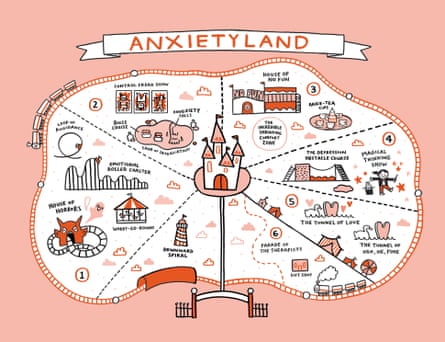
An illustration of a map of ‘anxietyland’ - a visual depiction of how the illustrator was feeling.

I knew Anxietyland well. I had ridden on the Anxie-Tea Cups, on which I realised that drinking a nice cup of tea – as one counsellor suggested – was not sufficient treatment for a clinical anxiety disorder.
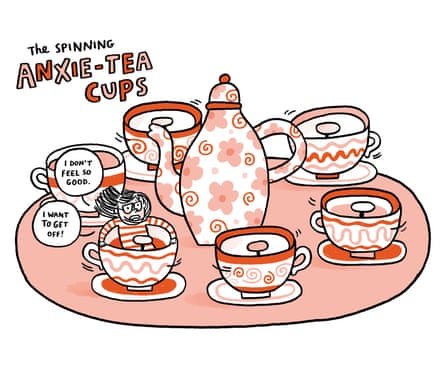
An illustration of spinning teacups called ‘anxie-tea cups’ with a figure of a woman in one.

I had sat through the Magical Thinking Show, a place where I learned that I could not, in fact, control the outcome of real-life events using the power of my own thoughts.
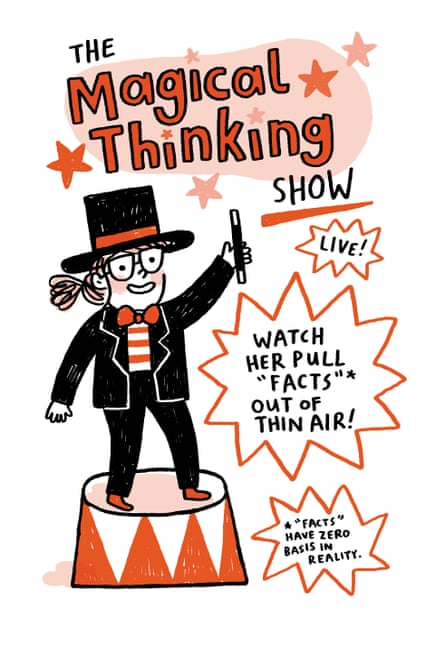
An illustration of a woman dressed as a circus ringleader under a sign that says ‘the Magical Thinking Show’

I had been on all the rides multiple times, having suffered from anxiety and depression disorders since childhood. I thought that I knew the whole park like the back of my hand, but what was happening to me in 2018 was new – and utterly terrifying. I found myself on a new ride: the Downward Spiral.
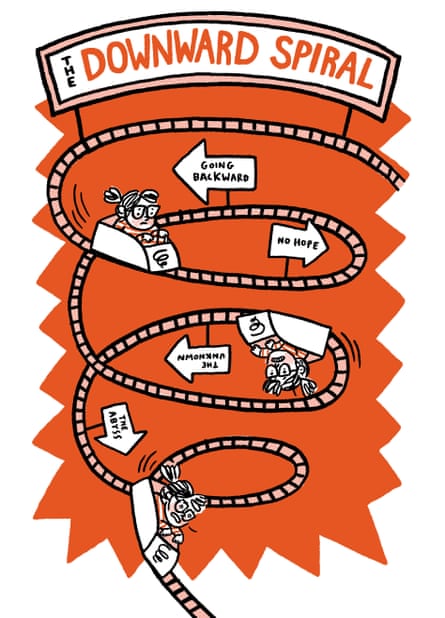
An illustration of a ride called The Downward Spiral: a visual depiction of how the writer was feeling

The Downward Spiral was a terrifying slide into the unknown. I’d experienced panic attacks before, beginning at 14, and I already struggled with phobias, including agoraphobia – the fear of becoming trapped in a situation where escape might be difficult or help unavailable. I had avoided riding in lifts for years. But this was new. There was no clear trigger for the panic that enveloped my every waking moment in Oakland – and that made me feel even more out of control. I didn’t know it then, but I was suffering from panic disorder – essentially, I was panicking about panic. At the time, it felt like there was no way off the Downward Spiral.

There was one friend I did turn to for help, though. Boozy.
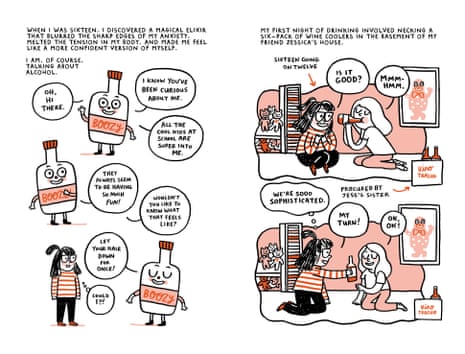
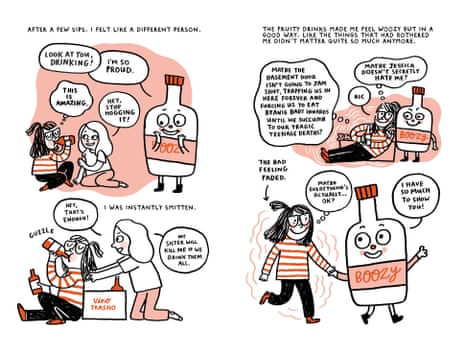
An illustration showing a talking bottle of ‘Boozy’ and another of two women drinking together
Illustrations showing women drinking and a bottle of ‘Boozy’ with speech bubbles
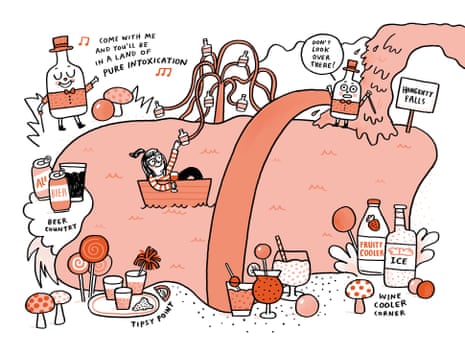
An illustration of a woman in a boat, surrounded by dancing/talking bottles
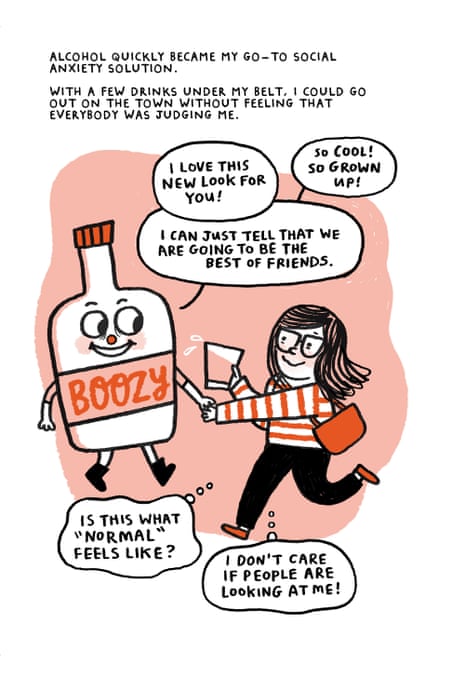
Illustration of a woman holding hands with a bottle labelled ‘Boozy’, showing her relationship with alcohol

In 2002, I had been accepted to study English literature at Cambridge, which I was very excited about. But upon my arrival at Homerton College, I began to feel an unexpected and intense anxiety around attending classes and meeting new people, a fear that quickly escalated into an inability to leave my room. I spent two weeks in this confusing state of panic, in a world that shrunk to the size of a tiny dorm room, which I named the Incredible Shrinking Comfort Zone, racking up huge phone bills by calling my parents in tears, desperate to go home, but deeply ashamed of my inability to cope. I moved back home in a cloud of embarrassment and guilt.

After this aborted attempt to go to university, I found myself on a different path: heading to art school after spending a year on an art foundation course in my home town of Ipswich, Suffolk. My decision to join the foundation course had been based, in part, on having nothing better to do – but I had found myself enjoying it. In particular, I liked the illustration classes, which had reawakened my interest in cartooning and animation, although I was unsure of my ability to turn those skills into a job. At the time, I was struggling with agoraphobia and found it difficult to leave the house (the college in Ipswich was within walking distance of my home), so I approached my second attempt at higher education with a certain amount of trepidation.

Once again, I found comfort in my friend Boozy.
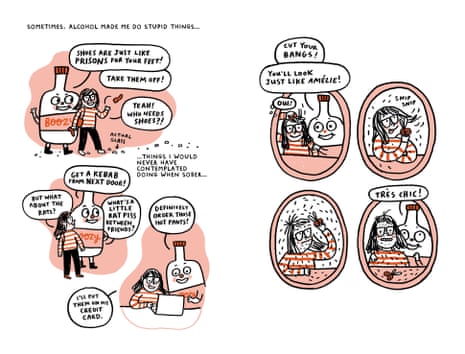
An illustration entitled ‘sometimes alcohol made me do stupid things’ - and pictures of her cutting her fringe
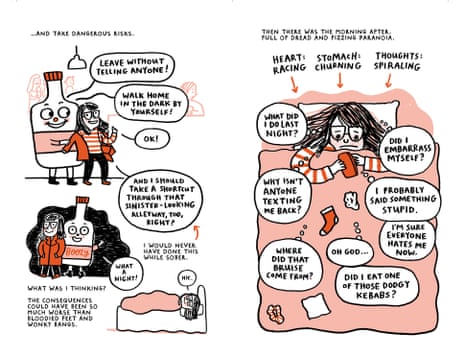
An illustration entitled ‘... and take dangerous risks’ - with another showing a woman in bed looking worried
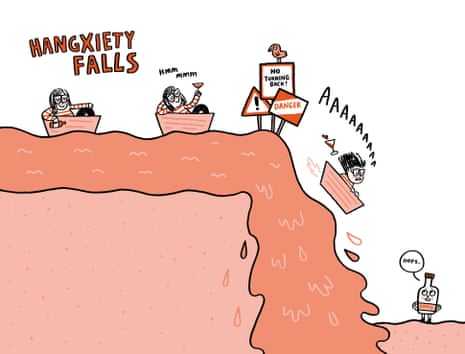
An illustration entitled ‘hangxiety falls’ showing people in boats falling over the edge to illustrate how a hangover feels
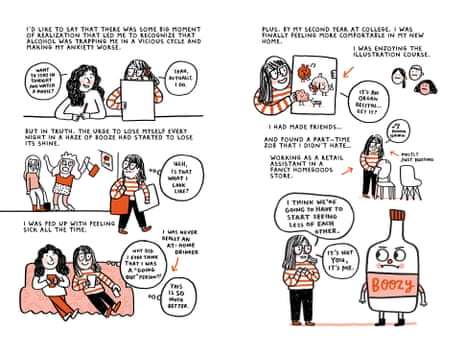
An illustration of a woman realising that she is more of an at-home person than someone who goes out and ending her relationship with ‘Boozy’.
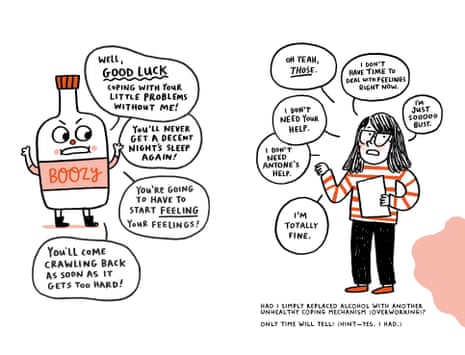
An illustration of a character called ‘Boozy’ with speech bubbles howing its hold over the woman, who is shown with speech bubbles saying ie ‘I’m totally fine’

Giving up alcohol didn’t solve all of my problems, of course - but it was a good start.

  • This is an extract from Anxietyland by Gemma Correll (Penguin, £25)

Anxietyland by Gemma Correll on Penguin