








Through the open windows behind Beeban Kidron drifts the unmistakable sound of children playing. Her north London office is sandwiched between a school and a nursery, and the occasional playground shriek functions as an aural reminder of what we’re here to discuss: the safety and happiness of young people, growing up in an age of screens.
Though our conversation takes some dark turns, only once does the film director turned crossbench peer and online safety campaigner for children lose her composure. “I have seen a lot of things I’d rather not see,” she says, slowly. “But the worst thing was not the most extreme. It was watching a child’s face as she realised that the person who she thought was her friend wasn’t her friend; that the sex acts she’d been doing weren’t for her friend; and that there may have been other people in the room.
“And I watched her face and I watched her crumble. It was her spirit, it was her trust, it was her sense of who she was, it was her judgment. It was all those things that you need to be a human being, smashed.
“I have seen some shit. But that moment is why I am …” She falters, briefly. “I am angry that we are willing to know this, and ignore this. And I find it very difficult to moderate that anger.”
The book Kidron has written about battling big tech, Users, isn’t simply furious. In parts it’s gossipy, even unexpectedly funny, as her old celebrity life as the director of movies such as Bridget Jones: The Edge of Reason collides with her new political mission. (One anecdote ends with her old friend Elton John calling the then technology secretary Peter Kyle – who comes out of the book noticeably badly – a moron, live on television).
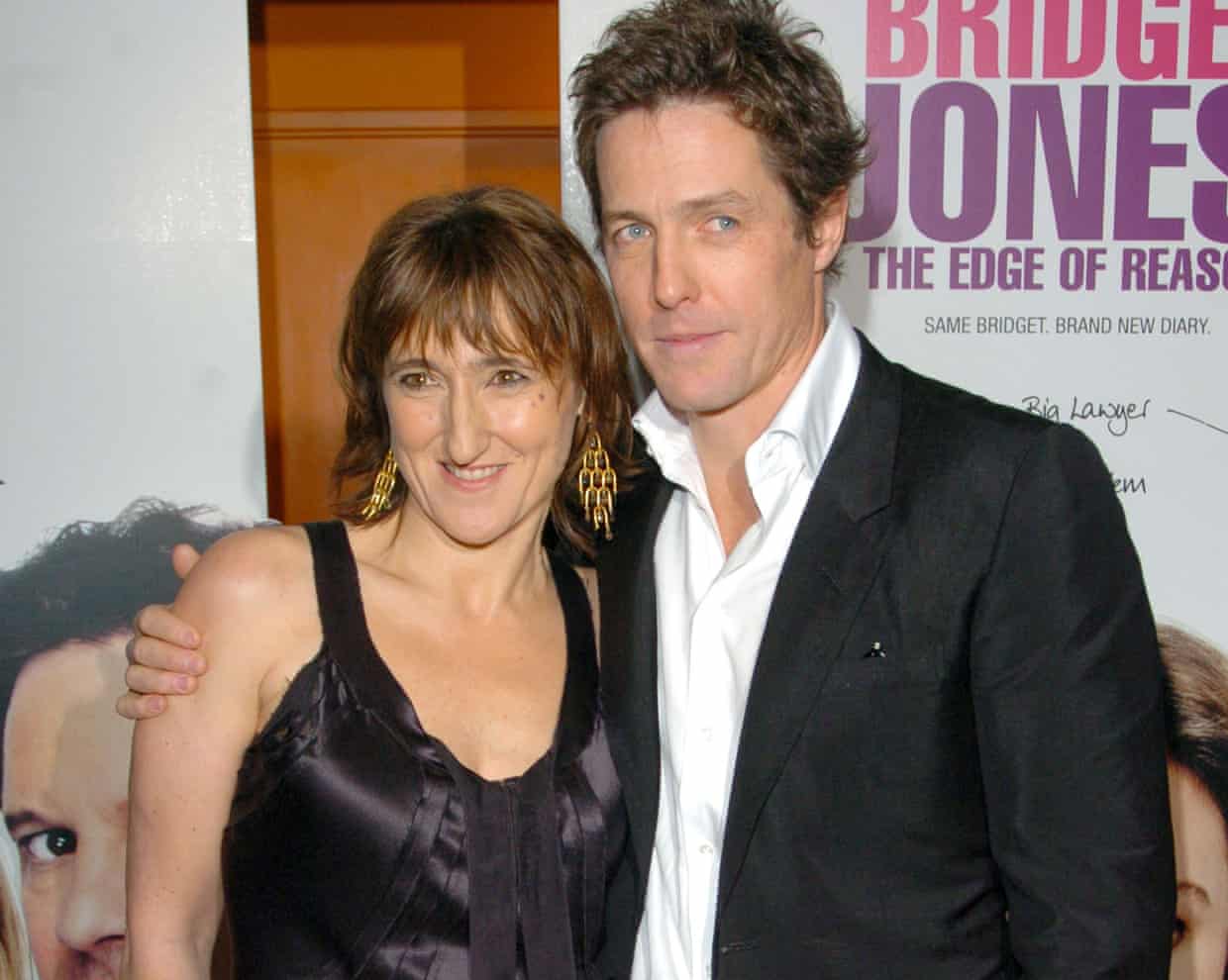
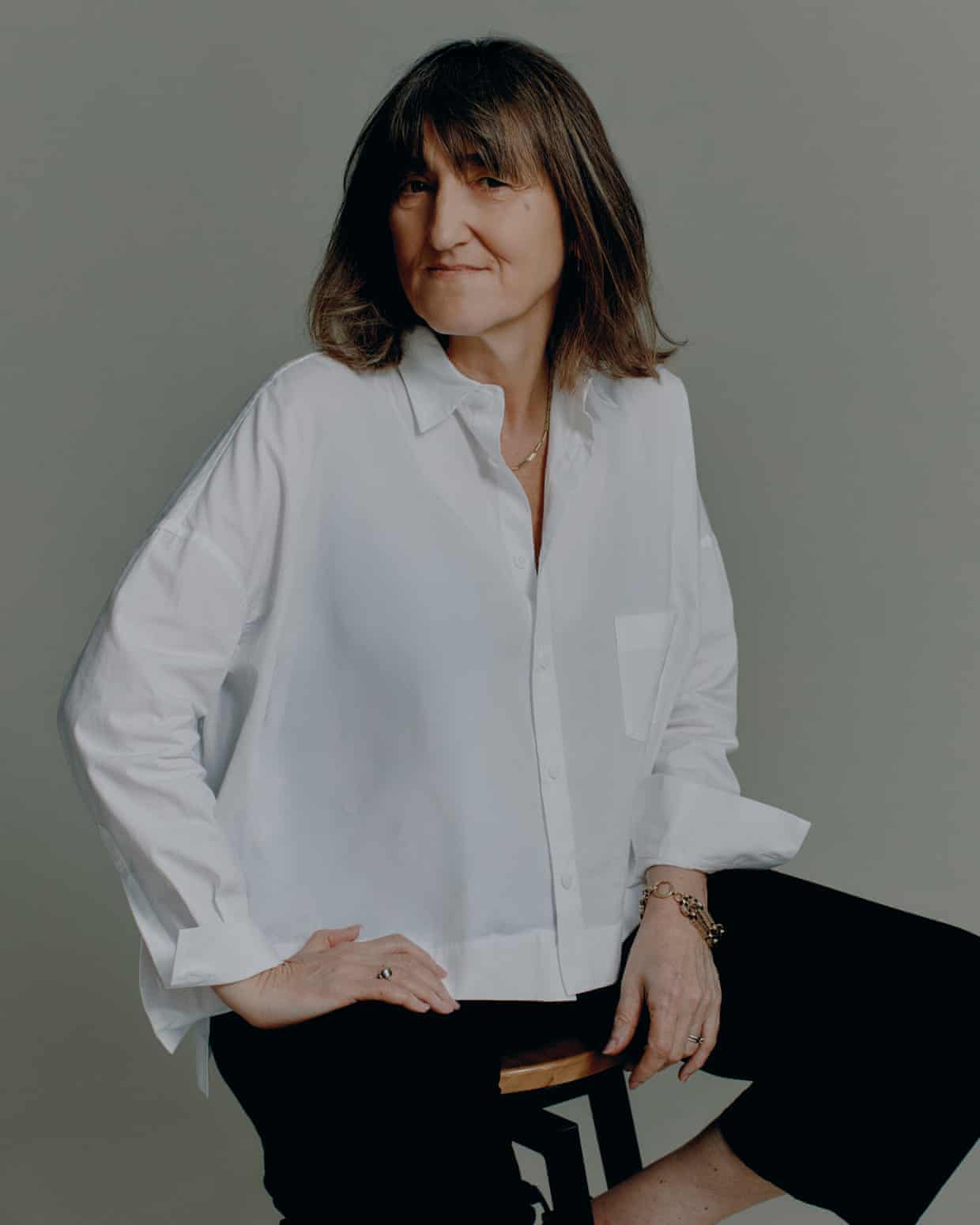
But the woman in front of me, makeup free and with her hair bundled up in a clip, is no Hollywood luvvie. Her expertise dates back to 2012, and a documentary she made when her own son and daughter were teenagers about how smartphones were changing childhood. That led to her founding the charity 5Rights Foundation, which campaigns for children’s rights online, and a search for solutions taking her from Silicon Valley boardrooms to the Vatican and many places in between.
The book is an impassioned cri de coeur against an industry she sees as out of control, though she says it was written partly to show that we’re not powerless to put it back in its box: that in an attention economy, individuals have the ultimate sanction of withholding our attention from the platforms desperate for it. But it’s also an “absolute cry of rage against the political class” for what she sees as successive governments’ failure to protect not just children but adults whose lives have also been reshaped by tech. “Come for the children, stay for humanity,” she says drily.
Can she really not name a single minister in 14 years that she thinks got it? “I think everybody who has been in a position of power is now on my side of the argument, and regrets they didn’t do more when they were actually in power,” she concedes. “Some people would say they really fought one particular thing. But that’s why I’ve written the book, to say we can’t be happy about one victory.” She asks readers to zoom out and see the bigger picture of big tech’s influence over governments – she seems particularly exercised about the tech money pouring into Tony Blair’s eponymous institute, a notable cheerleader for AI – and what she considers politicians’ willingness to accept that Silicon Valley is somehow special, above mere mortal rules and taxes. In the book, she describes a roundtable on cyberbullying convened by Prince William, where an outraged Facebook executive she declines to name shouts that the tech industry “will not be regulated from a small town in England” (apparently a reference to the information commissioner’s base in Wilmslow).
Still, her side of the argument seems finally to be winning. We are meeting in the aftermath of the safeguarding minister Jess Phillips’ exasperated resignation from government, in which she accused Keir Starmer of failing to confront big tech. Shortly after our conversation, the wannabe Labour leader Wes Streeting will back a social media ban for under-16s – narrowly pre-empting government measures that are still under wraps at the time of writing – and Starmer will meet with parents who blame social media for their children’s deaths. But Kidron isn’t satisfied.
“I am watching the bereaved parents, and it’s getting a bigger and bigger group. I used to have them all on WhatsApp, I knew everybody’s name, and now there are so many you can’t know their name, can’t fit them in a room,” she says. “That’s a preventable thing.” Though her greatest fury is reserved for politicians she regards as soft on tech, there’s plenty left for the platforms she portrays as endlessly insisting that safeguards she wants are too complicated or impractical, right up until they aren’t.
During the pandemic, she points out, companies who had long insisted they couldn’t possibly censor their users suddenly discovered that they could suppress Covid misinformation after all. “Why the hell is it OK to ask them to do this but not child sexual abuse, not abuse against women, racism?”
But ultimately, it turns out, her beef is with what she regards as excessive deference to the God of money. “We are allowing people to make vast profits from social care while old people sit in their houses unattended; we are allowing people to put shit in our rivers and take the money … and what you see is that everyone in the world would die for 15 minutes on the beanbag” – means an invitation to tech company HQs. “And I think that’s what our politicians have done. They’ve got so excited they’ve got their time in Silicon Valley they’ve forgotten their responsibility to us.” Only now do I remember that her father was the Marxist economist Michael Kidron, co-founder of a socialist grouping that would later become the Socialist Workers’ party.
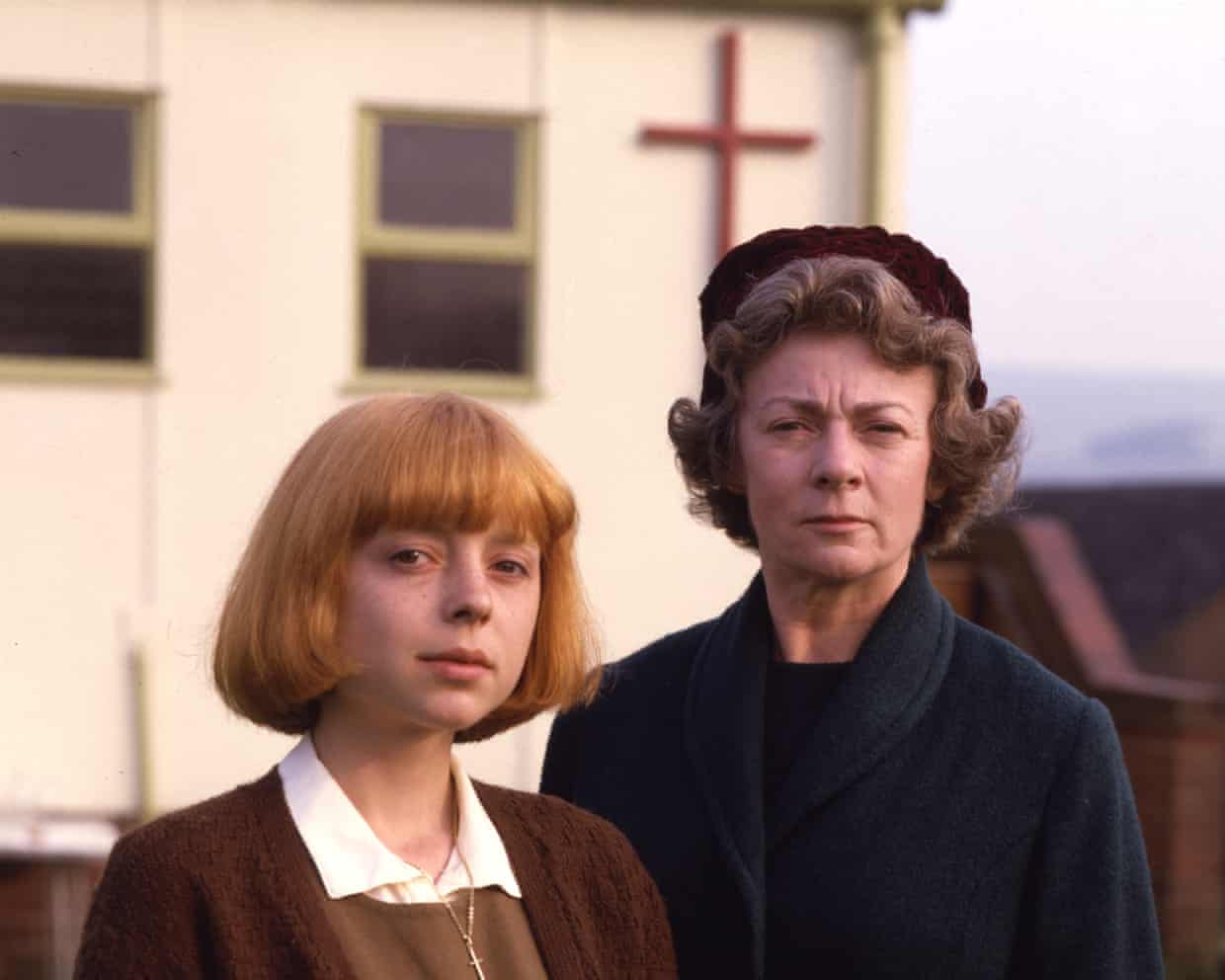
Beeban Kidron was just about to start secondary school when, following surgery for a cleft palate, she lost the ability to speak for several months. Her salvation was a camera, lent by a family friend to help her express herself during the months of silence, which sparked her passion for film. At 16, she started working for the photographer Eve Arnold, before going on to film school and directing a string of documentaries, BBC dramas – including Jeanette Winterson’s Oranges Are Not the Only Fruit – and films including the drag queen road movie To Wong Foo, Thanks For Everything! Julie Newmar.
Though at home “we didn’t sit around at the dinner table talking about extractive economies”, she acknowledges she may have inherited her father’s structural way of looking at the world. As a documentary-maker, Kidron was always drawn to gritty campaigning subjects, from the Greenham women’s peace camp to sex workers. But it was after being ennobled, while in the middle of making her film on teenage social media use, that she realised she wanted to campaign for change via parliament rather than via a camera. What she enjoys about politics is the feeling of “relevance and being sort of connected, and feeling – not our importance in a big sense, but our importance to other people … I don’t regret not being a film director any more.”
What both careers have required is fearlessness. In Hollywood, she recalls an unhappy brush with Harvey Weinstein – involving bullying, she hastily explains, not sexual assault – and another film on which she was patronisingly referred to as “the little lady”. Then there was the studio that flatly refused to delay the director’s screening of a film she had made, even after she went into labour with her second child the day before. “So I gave birth at 4am, and went to the screening at 10am, and went back to hospital.” She did what? “I think what’s good is that would be actually illegal now,” says Kidron drily, adding that by the time of her last film, there were “loads and loads of women” on set and the culture seemed transformed.
But the real transferable skill she draws on now in parliament is the ability to start from a blank screen, plus “the idea that no is not an answer”.
Back in 2023, she was struggling to get Rishi Sunak’s government to accept her legislative amendment outlawing the use of software to create or share AI-generated child sex abuse material (CSAM) – which is frequently made using pictures of real children. “One of the stories – and it was by far not the worst – that really made me furious was the person who took pictures of his neighbour’s child while they were playing in the garden, and turned it into child sexual abuse scenarios for someone else, for money,” she says. Having learned that AI CSAM can also involve pictures of adult women, digitally altered to render them children again, she got an image of herself as an eight-year-old generated and – after a minister refused even to look at it – threatened to give it to BBC News at Ten, alongside a story shaming the government for not acting. She got her way in the end, but if the answers are as obvious as she implies, why does she think there was such resistance?
In the book, Kidron describes a belief in parts of the Home Office at the time that artificially generated abuse images might keep “perverts off the streets”, or prevent real children suffering. It’s an understandable assumption, she argues, but a dangerous one. “The things people don’t realise is that first of all it might be their child, their grandchild, themselves. If they’re comfortable with their loved ones being in AI CSAM and doing things that are not even physically possible – from all orifices, at once – then they can hold that position. If they’re not, it’s over.” Kidron herself found seeing her eight-year-old self in this context unexpectedly traumatising, even though she had full control over the process: it was only later, when a cousin sent her some innocent old family snaps, that she realised she could no longer see pictures of herself as a child unsullied. “It’s absolutely not damage-free.”
But what really frightened her was hearing from specialist police officers she has worked with that the proliferation of AI abuse, often more extreme than anything feasible in real life, may be accelerating the leap from viewing images of child abuse to actively perpetrating it. “The police really do believe that it both spreads and sort of disinhibits for abuse in real life. You’ve had a few practice runs and then you think you need the next hit, which is a real child,” she says, citing recent research suggesting more than 800,000 men in the UK have a sexual interest in children.
Her advice to parents now is that “you should not put your children’s pictures out there” on platforms where someone could potentially copy and use them. Not even if your social media is set to private? It may be worth the risk in “very closed loops” of friends and family, she says, but casually plastering the internet with snapshots of your kids clearly alarms her.
Though her uncompromising stance hasn’t always won Kidron friends in parliament, the fiercest resistance has come – as it does for many female politicians – from the anonymous depths of the internet itself. In the book, she describes an unnamed female colleague being bombarded with 36,000 abusive messages in a single month, followed by a death threat sufficiently credible that police advised her to abandon an evening out immediately. Is this routine intimidation chilling public debate?
“I know women who’ve been very, very brave but once the threats move on to their family they just go ‘forget it’,” she responds. “I know women who have fallen out with their husbands because their husbands have been upset that they’ve chosen to take it on, they feel a level of anxiety. I know women who have just stood down and said, ‘I’ve done my bit’ – and possibly quite rightly.” For her own protection, Kidron chooses to stay off social media – but she’s not, she stresses, a tech refusenik.
She has used ChatGPT to draft policy documents, research the book, and fix “some grammatical things” that as a 16-year-old school leaver she wasn’t sure about. Though she swears she didn’t use AI to actually write it, she did feed ChatGPT a draft and ask what it thought, receiving the kind of sycophantic response for which chatbots are infamous. “Where it is amazing is the strength of its ability to do maths and identify patterns, to do diagnostics, to check what’s not there,” she acknowledges. But she remains unconvinced that generalist so-called large language models – rather than specialist ones for specific research purposes – are worth the risks, particularly to child users.
Kidron is scathing in the book about Nick Clegg, the former deputy prime minister and ex Meta executive, but I wonder if she agrees with him that the extraordinary wealth and power now being accumulated by the big AI players will lead to calls for their nationalisation if they’re not careful. “I absolutely hope so,” she snorts, though she finds it galling to hear that from someone she regards as “taking his $30m and fucking off” from his front row seat at Silicon Valley.
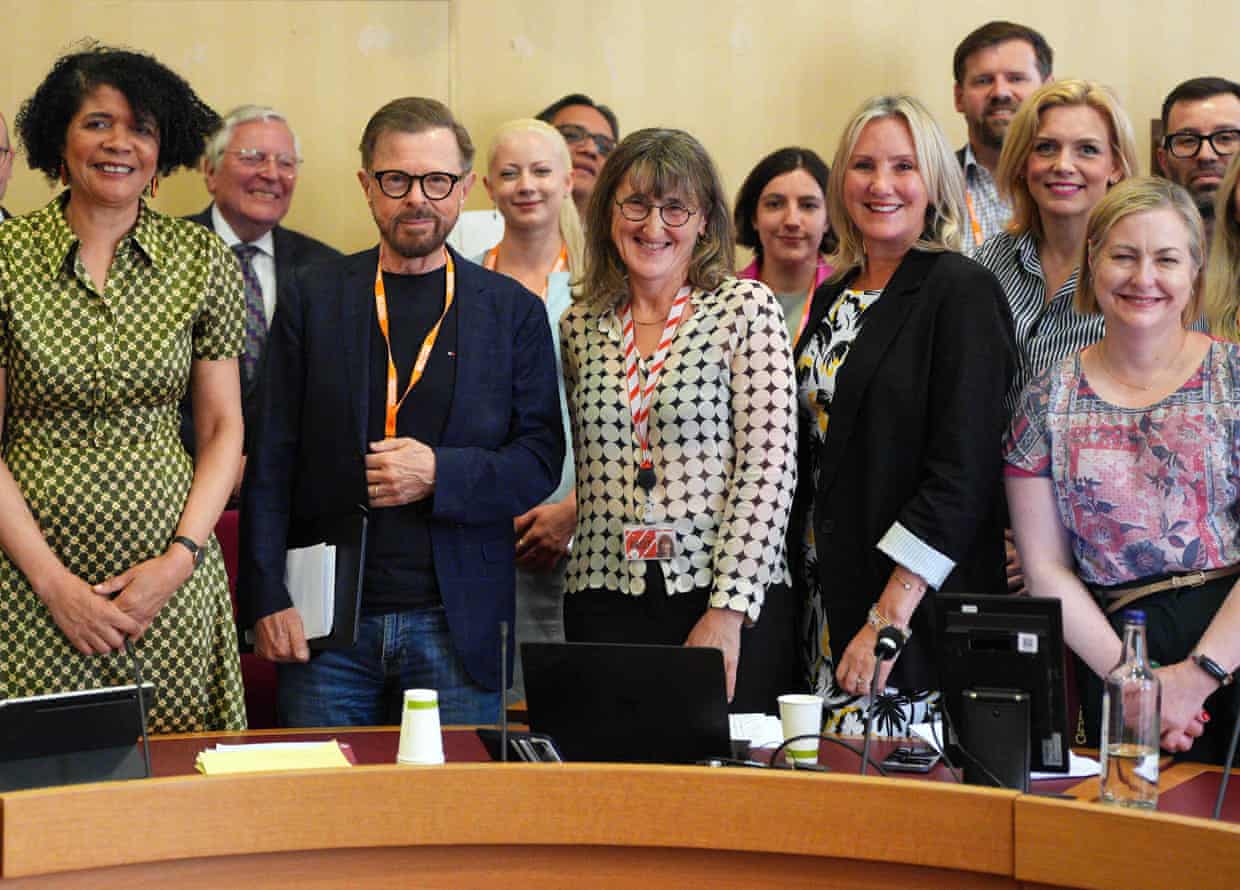
And though she concedes that the new technology secretary Liz Kendall – who has promised to bring AI chatbots under regulation, amid concerns about their alleged role in teenage suicides – may be “personally more sympathetic” to her agenda than Kyle, Labour still isn’t moving fast enough for her. “This government will be either out of office or in their next term by the time the things they’ve promised parents come into being.” It still isn’t clear, she says, where parents worried about children’s chatbot use can get help.
Some would say it’s easy for Kidron to take the moral high ground when, unlike governments, she won’t be held responsible for the economic consequences of strangling a potential AI boom at birth. What if tech is our best hope for growth, as successive governments back to the Cameron coalition have argued, funding the better public services and higher living standards that millions desperately need? “My challenge back is to say: and where did all that growth go?” she retorts, arguing that so far a decades-long Silicon Valley boom has created a few trillion-dollar companies but not mass prosperity. “I think it was Biden who said, ‘Shall we just admit that trickle down doesn’t trickle down?’ You’re absolutely right that the government think AI’s the only game in town, but they’re not even playing that game properly.”
Recently Kidron helped lead a revolt against government proposals to let AI companies train their models for free on a vast array of books, music, films and photographs usually protected by copyright, which is seen in the creative industries as stealing artists’ living. (Even some tech industry lobbyists seemed surprised ministers were making things so easy for them, she claims). She’s baffled, too, at Britain surrendering national assets like NHS data to American AI companies, instead of trying to devise sovereign uses of them. “We’ve got cards! So many cards! We don’t have to give in!”
In the book, she argues for this being tech’s “tobacco moment”, where evidence of public health risk becomes strong enough to justify state intervention. But does that hold when the link between social media use and mental health still isn’t anything like as clear as that between cigarettes and cancer, and while being online – unlike smoking – can have benefits for children as well as risks?
“I think there are three things that turn it around,” she says, noting a string of lawsuits against tech companies in the US that have forced disclosure of their internal safety data to the courts. “One is the phenomenal lengths that tech goes not to show us their evidence. The other is what we’ve seen in disclosure. And the third is the evidence and testimony of children, parents, teachers, of campaigners …” Children, she says, “want to know why the adult world is missing in action”.
Yet she is equivocal about a social media ban for under-16s, arguing it would leave older teens vulnerable while failing to tackle concerns about what nursery age children far too young to be on TikTok are doing online. “It drives me crazy that people are so obsessed with social media but not chatbots and what else is going on,” she says, arguing that while a ban could empower parents to stand firm, it’s no silver bullet. “I’ve voted for a ban three times, I’m totally comfortable with it – why would you put a toxic product into the hands of a young child? But this does not deal with what’s happening in nurseries, it does not deal with 17- and 18-year-olds, it does not deal with chatbots.”
She’s conscious, too, that some children’s campaigners would rather outlaw addictive features such as infinite scrolling than specific apps. “I’m literally at a crossroads between these two conversations because I’ve always believed in safety by design rather than banning, but I’m absolutely with the rage of the parents who want a ban.” Personally, she’d flip the argument: don’t deny children access to apps, but deny tech companies access to children until they can guarantee respect, privacy and safety.
Kidron’s own children are in their 20s now, but what rules would she impose, if she had younger ones? “No phones in the bedroom is possibly the biggest thing. I definitely would not give a phone until as late as humanly possible. Not at 11 years old to get them to school – I mean really late.” But parents could also, she suggests, try leading by example. Kidron keeps her own phone on silent with vibrations switched off, so that it can’t interrupt her, and checks messages only when she chooses. Isn’t she afraid of missing some emergency? “For the most part, the worst incidents in your life don’t involve a phone call, and can’t be stopped by a phone call. If there are vulnerable times, there’s no reason not to switch your phone on between 3 and 4pm, say, and then when your kids are home from school turn it off.” The point, she says, is to give other people back your attention.
Recently, a friend described watching a father on the tube, trying to entertain his young baby. Where once it might have been playing peekaboo with friendly strangers, all the baby saw was a row of heads lowered over phones, effectively snubbing it. “We do it to the baby on the tube, we do it when the kids come home from school, we do it to each other, and all the time we’re enriching those bastards,” she says, fiercely. “And when you think about it like that, I think ‘I will have agency in this relationship.’” For days afterwards, whenever I’m in the middle of something and my phone buzzes, I force myself not to look immediately. Like all small rebellions, it’s faintly unnerving. But I can’t deny it feels good.