






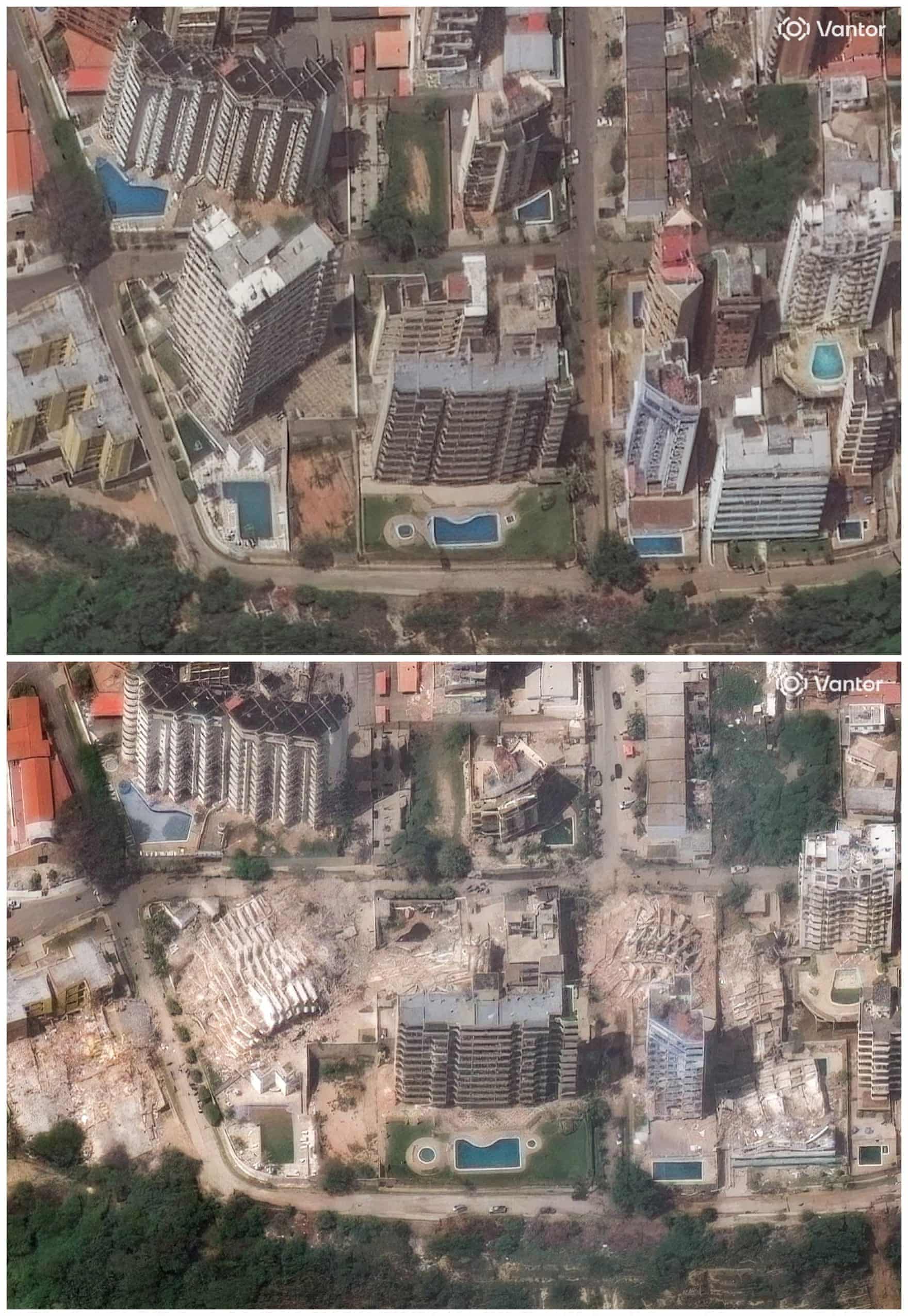
Nearly all of Ligia Level’s family lived in a trio of apartment blocks along Hotel Avenue, a seafront sweep of palm-specked resorts and high-rise condos along Venezuela’s Caribbean coast.
When a powerful “doublet” of earthquakes jolted the region on Wednesday afternoon, those buildings and the lives within them came crashing down.
Level, 67, leapt from her first floor window, breaking her foot as she scrambled to safety. Her relatives appear to have had less luck.
On Thursday, she sat outside one of the three buildings, Residencias Villamar, wondering if there was any chance her niece and nephew had made it out alive, perhaps by jumping from their fifth floor apartment on to a mattress outside.
Level believed her mother and sister, who had lived next door in a condominium called Residencias Anna Mar, were almost certainly dead. “We’ve lost them,” she wept as she waited by the wreckage of the buildings for news – and for government help to arrive.
“Please, we absolutely need international help here. Anything and anyone we can get,” she implored, as volunteers scoured the rubble for survivors in the absence of civil protection teams. “We were not prepared for something like this – we’re not used to this.”
Photograph: Vantor/Reuters
Hotel Avenue is in La Guaira, a rundown port city surrounding Venezuela’s main international airport that has been shattered by the devastating earthquake.
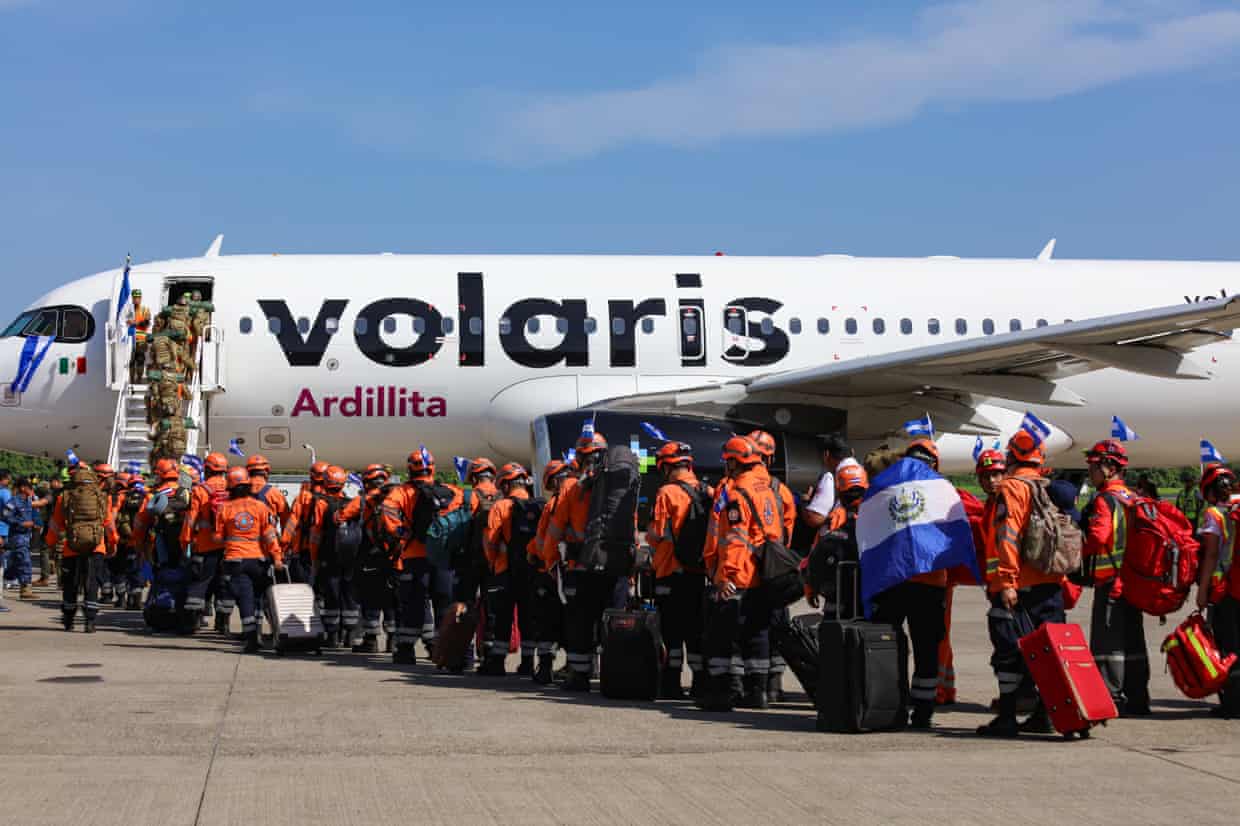
In a televised address, Venezuela’s interim leader, Delcy Rodríguez, declared La Guaira the area worst affected by what she called an “unprecedented seismic phenomenon” and lamented the “utter tragedy” that had befallen the region’s residents. “We hope to save as many lives as possible,” Rodríguez vowed while touring “ground zero” on Thursday, promising that international rescue teams were starting to arrive.
The acting president’s politician brother, Jorge Rodríguez, said 250 buildings had been destroyed, most of them in La Guaira.
As the Rodríguez siblings spoke, social media feeds filled with the names and faces of those who have not been seen since the disaster reduced large chunks of La Guaira – and nearby towns such as Catia La Mar and Caraballeda – to a tangle of metal, concrete and dust.
One missing man was named as Carlos Ravelo, an airline pilot who was also last seen in Residencias Villamar. “Any information could be crucial in helping us find him!” begged a message on an online flier circulated by friends.
Also missing from the same building was the Bencomo family, Lonardys, Marysville and Paola, who an online plea for help said had run a local creche.
Other posts suggested even larger families had disappeared during the catastrophe: entire families, with four, five or even six members, including young children, were feared lost as a result of Venezuela’s worst earthquake since October 1900.
Relatives of the missing flocked to medical centres in the capital, Caracas, hoping against hope they had been taken there.
Outside the public Domingo Luciani hospital, David Guevara scanned handwritten patient lists for the names of his aunts, Andrea Laya and Gabriela Fleritt.
They had lived in Residencias Las Palmas, another block of flats in La Guaira, but had not been heard from since the quake. “We’ve talked to neighbours but they can’t find those two,” said Guevara, whose seven-year-old nephew, Sebastián, was undergoing surgery for injuries to his arms and legs after being found alive.
The “earthquake patients” lists laid bare the multi-generational impact of a disaster that has injured thousands and left at least 589 people dead nationwide. The record of patients taken for surgery included two four-year-olds called Ana and Axiel, a six-year-old boy called José, and seven-year-old Jesús. The trauma centre, meanwhile, had taken in a 73-year-old called María, a 19-year-old called Antony, and a 55-year-old called Carmen.
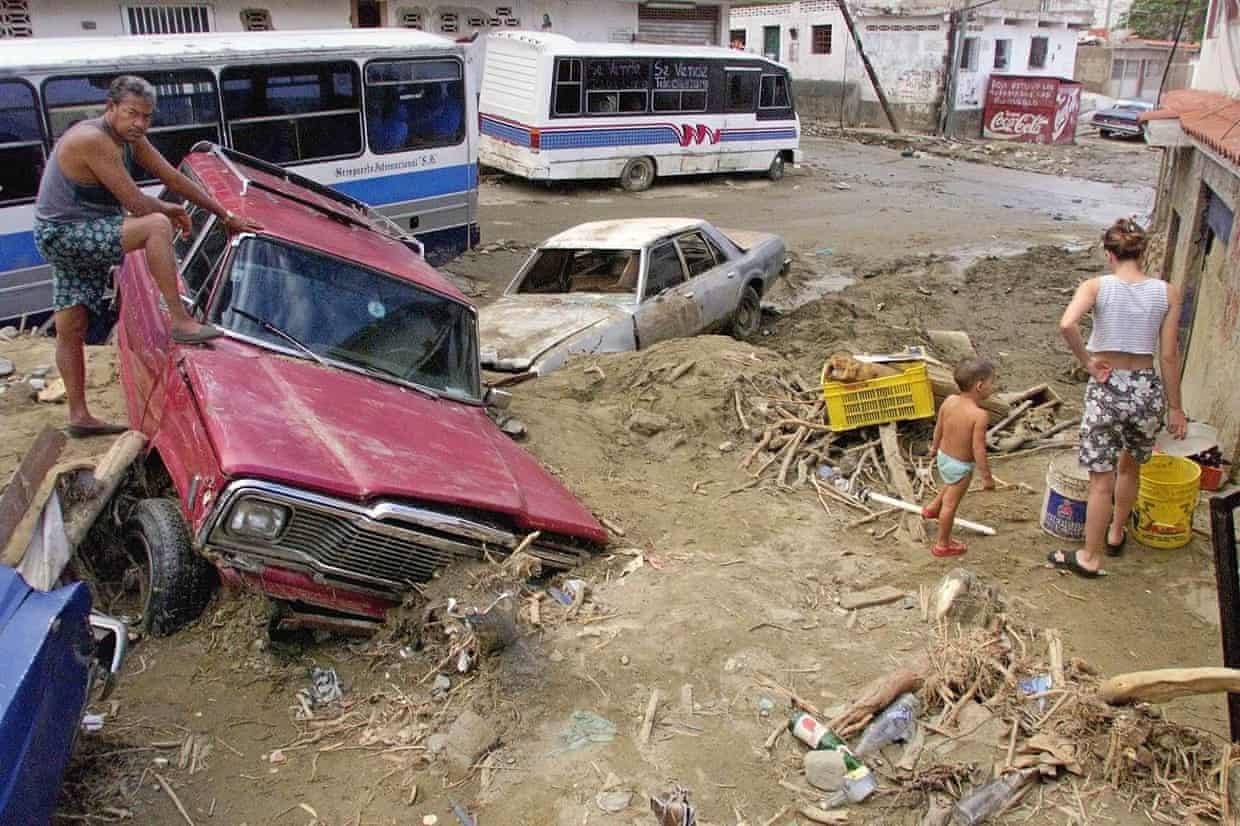
La Guaira has tasted tragedy before, most notoriously in 1999 when mudslides killed more than 15,000 people at the start of former president Hugo Chávez’s 14-year presidency. But even by those standards, the scenes described by survivors of this week’s calamity were spine-chilling.
The catastrophe was caught on camera by a pair of fishers who were out at sea as their city fell apart. “My God!” one of them can be heard gasping as huge dust clouds envelop the coastal areas of La Guaira, where their families live.
Héctor Morán Cirkovic was by the swimming pool at the Playa Grande Yachting Club, just a few hundred metres north of Residencias Anna Mar, when 40 seconds of intense shaking brought building after building to the ground.
“It was brutal and very fast. There weren’t even five seconds to leave. Everybody [around us] was shouting and in shock, thinking life is over. There was lots of fear, panic and hysteria,” said Cirkovic, a 61-year-old retired architect.
Cirkovic recalled watching as five buildings collapsed “vertically in front of my eyes”. In all, he saw around 30 nearby buildings that had come crashing down.
Speaking on the state-run TV channel, VTV, engineer Francisco Garcés compared the strength of the quakes to that of the energy released by an atomic bomb. “We have just witnessed … an extraordinary seismic event – extraordinary for the country and also an extraordinary event in terms of the planet,” Garcés said, noting how this week’s earthquake had released 32 times more energy than the 6.5 magnitude quake that ripped through the same region in 1967.
Photograph: Gaby Oráa/Reuters
Garcés warned of aftershocks as the Caribbean and South American tectonic plates responsible for the cataclysm continued to move and said that once the rescue effort was over, engineers would need to study why La Guaira had sustained such intense damage.
For now, nearly 48 hours after the disaster, the focus remains on finding survivors, even as hopes start to fade.
“So many people have died,” said Diego González, who rushed his cousin to the Domingo Luciani hospital for treatment after spending four hours digging her out of her collapsed home in Catia La Mar, a seaside town to the west of La Guaira. “Catia La Mar is destroyed. Very few buildings will have survived,” González added.
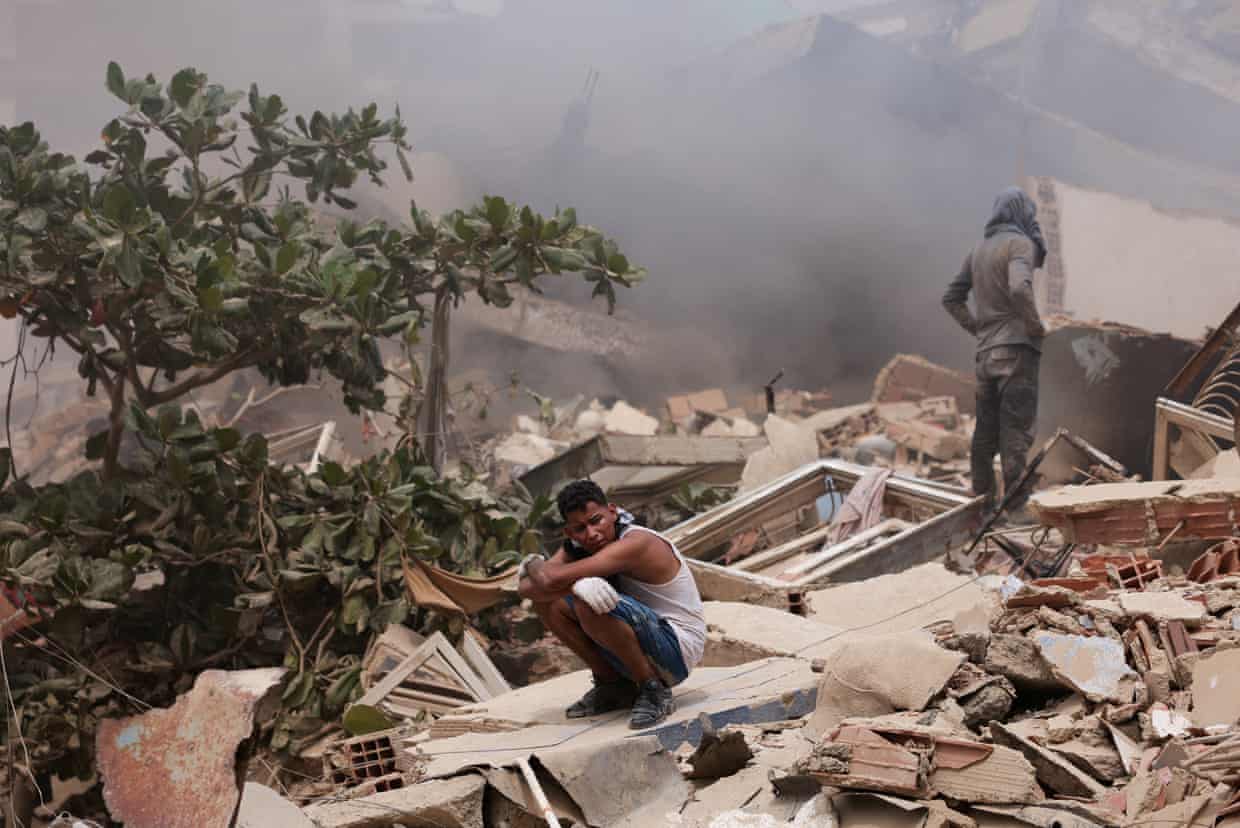
Rotny Bombart, a 33-year-old paramedic, had come to the same hospital to treat an arm wound he had sustained while spending five hours digging his mother, María Eugenia, out of a collapsed 15-floor apartment block in La Guaira. Bombart eventually found her after hearing her cry for help.
“Nothing prepares you for this,” he said, recalling how he had seen dismembered bodies, corpses, and children in the disaster zone – but scant sign of government help.