










As the last strip of pink on the horizon fades to indigo on the Maniototo Plain in Otago, every word I speak arrives in a puff of condensation. Six hundred metres above sea level, in winter the temperature here can drop to -15C. Spring isn’t much warmer. But the chill is worth it. Standing in the dark in what feels like the middle of nowhere, I’ve come to a paddock not far from the historic mining town of Naseby to stargaze.
Even in a country where there’s about 20km of space per person, the Maniototo Plain is sparsely populated. During the 1860s gold rush about 20,000 fortune seekers descended on Otago, but when they eventually moved on, towns like Naseby were left to a sleepy future. Now home to just 140 people, it’s not even a place you drive through. “We’re not on the way to anywhere,” says local Jill Wolff. “You’ve got to choose to go to Naseby.”
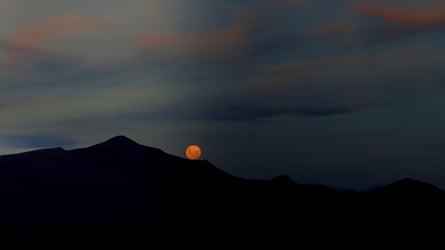
Despite its remote location and tiny size, many do. Naseby has long been popular with mountain bikers who make the detour off State Highway 85 to spend time in this rugged landscape, temporarily swelling the population during peak seasons. Dedicated stargazers and astronomers have always appreciated its spectacular night sky, something that’s now more widely known since Naseby became a certified dark sky community in 2025.
There are more than 200 dark sky places designated by DarkSky International around the world. Naseby is New Zealand’s 10th dark sky place and its first dark sky community – one of five certification categories, ranging from remote sanctuaries to urban sky places, awarded for “exceptional dedication to the preservation of the night sky”.
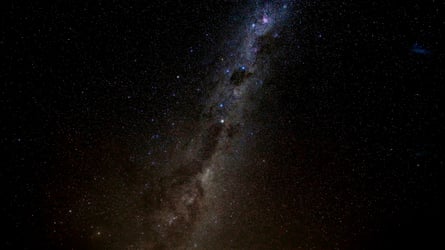
Wolff, a member of Naseby Vision, the not-for-profit volunteer community development group that ran the certification project, says the town decided to pursue the title after a visitfrom the US astronomer, conservationist and dark sky advocate John Barentine. “He said: ‘This place is amazing. You guys have the most beautiful dark skies. You know, you need to go for accreditation.’”
The timing was right. The Central Otago district council was about to update the lighting plan, so it was the perfect opportunity to change Naseby’s street lighting to a lower level of brightness. The council was on board, but the process of making it happen, from documentation to community engagement and education, took 10 years from start to finish. Private outdoor lighting also needed to be compliant, but a survey of residential outdoor lighting showed almost everyone already was, with only a few needing additional shielding. “We were very lucky that we were able to say to the residents, ‘Look, there is absolutely nothing out there that anybody has to change to make this happen.’ Once people understood that, they were on board,” says Wolff.
The application also required community support and education, so the group bought telescopes and night binoculars and began running education sessions at the local tennis courts.
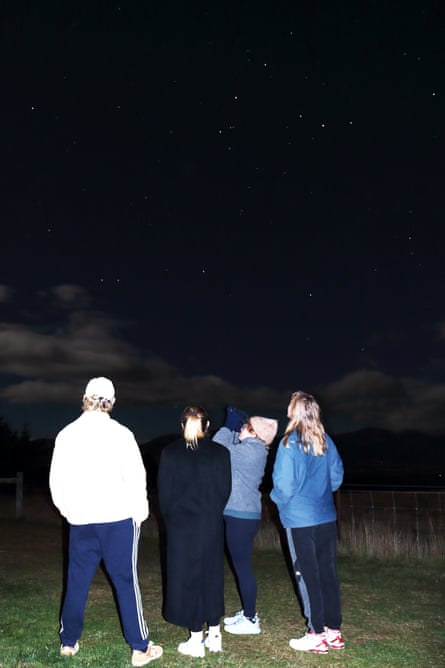
This process had already begun when Paul Bishop started Naseby Night Sky Tours in 2018, a year after moving to Naseby from Dunedin. Originally from the UK, Bishop studied astrophysics at Queen Mary university in London, and although he never pursued it as a career, his fascination did not waver.
After experiencing stargazing in Tekapo in the Aoraki Mackenzie International Dark Sky Reserve, where stargazing has become a major drawcard, Bishop saw the opportunity to do something locally. “I think people probably thought it rather strange that someone’s come up from Dunedin to start an astronomy tourism business from the corner of some farm, but I have had an awful lot of support,” he says.
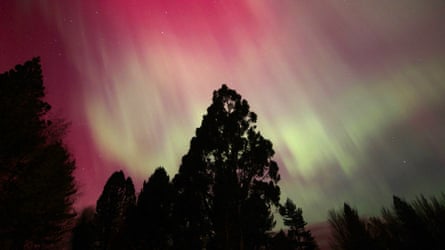
In Tekapo, you can stargaze from a hot pool or purpose-built crater or experience the stars through a virtual reality museum experience. In Naseby, stargazing is a little more rustic. After getting confirmation from Bishop that the conditions are good, I have dinner in the Naseby pub, then head out of the town to farming country, driving carefully over bumpy gravel roads until I see Bishop’s headlamp in the dark.
It’s off-peak and a Monday night, so it’s just the two of us. Bishop kicks off the tour by using his pointer to show me the easily recognisable stars and the broad sweep of the Milky Way. Then he positions his sleek Newtonian telescope to look at two of the stars in Alpha Centauri, our closest star system.
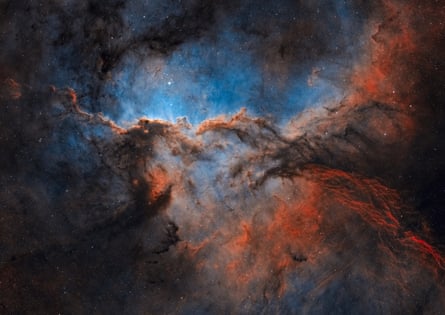
Over the next hour or so, we peek at the Jewel Box, an open star cluster that looks like a tipped-over box of diamonds, view the Orion Nebula, a swirl of interstellar dust and gas, the 47 Tucanae – a cluster of up to 1m stars – and finally Saturn and its giant moon Titan. It is, as Bishop says, a tour through the history of the universe. By the time we’re finished, my feet are frozen, and the sky is as dark as black velvet.
When I speak to Auckland-based DarkSky International committee member Gareth Davies, who championed Naseby’s application, he expresses the feeling perfectly: “Only when you look up at night do you see your true place in the universe … our ancestors did it, and we see exactly the same sky that they saw. There’s nothing like it.”
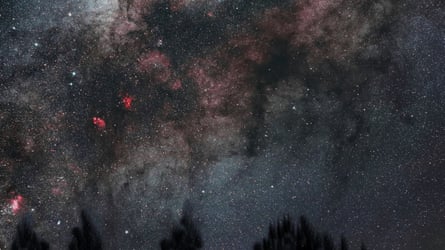
Davies wants his children and grandchildren to experience the same feeling, which is why he is involved in the dark sky program. Educating people about light pollution and its impact on animals and birds that rely on the stars for navigation is another pressing reason.
As I drive back to my accommodation with the car’s heater on full blast to defrost my toes, Naseby is asleep, its street lighting suitably dim.