


Martin Amis liked to observe that the unusual position he and Kingsley Amis held – father-and-son novelists – was a historical anomaly, a “literary curiosity”. But it was not unique: Alexandre Dumas père and fils, Fanny and Anthony Trollope, and Arthur and Evelyn Waugh had all come before them.
And if Amis’s assertion wasn’t true then, it’s even less true now. In recent years, increasing numbers of children of novelists have become writers themselves, and this year sees a particularly rich batch. Kazuo Ishiguro’s daughter, Naomi, publishes the first in her new fantasy series this month. Margaret Atwood’s daughter Jess Gibson published her fiction debut this spring, and earlier this year Patrick Charnley, son of the poet and novelist Helen Dunmore, published his first novel to wide acclaim.
What is behind this trend? Does having a novelist for a parent make it likely that a child will be inspired to follow? Or is it easier for children of writers to get published? I spoke to some novelists who have kept it in the family to find out.
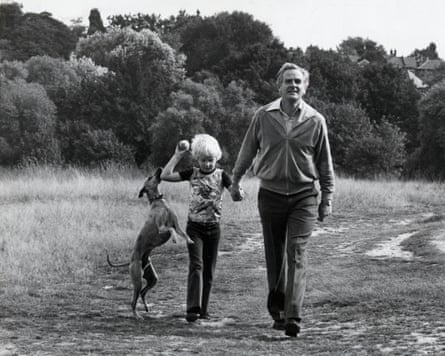
“I met Martin Amis briefly and tried to talk to him about it,” John le Carré’s son Nick Harkaway tells me. “I must have pissed him off as he was running around maintaining [he and Kingsley] were unique, and then I came along and said: ‘Oh, I am too.’” Harkaway has published eight novels, and recently has begun to extend his father’s output, with new novels following established le Carré characters.
Did he realise as a child that his father didn’t have a regular job? “I’m 53 now,” he says, “and it has belatedly occurred to me that my childhood was quite odd. We could be driving through Greece or America [on holiday] and if you stopped at a petrol station, there was a le Carré novel. He was ubiquitous.” Home life could be unusual, too, for a writer of his level of fame. Once, Harkaway recalls, “there was a hush in the house because Isaiah Berlin had dropped in”.
Yet, as Harkaway implies, growing up in a writer’s household didn’t seem unusual at the time; it was all he knew. Deborah Moggach, whose novels include Tulip Fever and These Foolish Things (which was filmed as The Best Exotic Marigold Hotel), had parents who were both authors. “I think if they’d been butchers, I’d have been a butcher.” What the experience taught her was “what a mysterious yet mundane thing [writing] is, because I thought everyone’s parents must be writers”.
And Deborah’s daughter, Lottie, has also become a novelist – her fourth book, Mrs Pearcey, was published in February. But her mother’s writing did not pervade the home; rather, Lottie says, it was hidden away. “Mum’s writing time was very fixed and sacrosanct.” Her writing wasn’t a part of family life, agrees Deborah. “I felt I was neglecting [my children] because I was a sort of husk, the inner life was with my characters in my books.”
Nor did le Carré share his work with his children, says Harkaway, though he did “read last night’s manuscript” to his wife, Valerie Eustace – who assisted him with his books – in bed in the mornings. “He wrote in a very isolated style. There was a rule that I didn’t go into his office.”
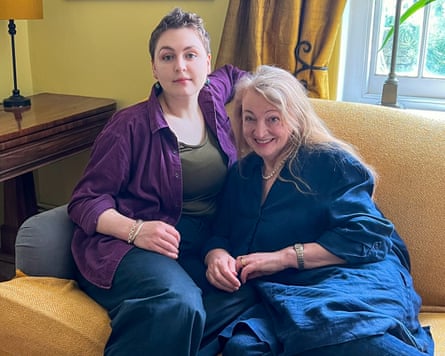
Nonetheless, even when a writing parent isn’t visible at their work, their very presence feeds into the child’s own expectations – whether or not the parent appears to enjoy it. For Amanda Craig, author of 11 novels including her newest, High and Low, writing is “absolute torture and I’m always in a very bad mood unless I’ve had an extremely good day”.
This didn’t dissuade her daughter, Leon Craig, from becoming a writer, publishing a collection of stories, Parallel Hells, and a novel, The Decadence. “Mum always said: ‘Don’t ask me how it’s going, I’ll be happy when it’s done.’ Which maybe doesn’t make it sound that attractive, but it’s very much a way of life.”
Harkaway agrees. His father had “a tempestuous relationship with his own creativity”, but “it’s more about the demonstration of possibility than an endorsement of the job”. He didn’t offer an opinion on whether his son should be a writer: “What he did was demonstrate that it was possible to finish a book and get paid for it.” There is a further persuasive element: for Deborah Moggach, “keeping my door closed for three hours every morning” meant that “it seemed easy. That was the problem for Lottie: she thought it was going to be easy to be a writer.”
One writer who doesn’t have a tempestuous relationship with his creativity is Frank Cottrell-Boyce, who has written for film and TV as well as many children’s books. When his children were young, “It felt like Avalon. I couldn’t believe I was making a living as a writer. I’ve always thought this was a wheeze.”
His son, Aidan Cottrell-Boyce, published his debut novel, The End of Nightwork, in 2023. “I do think you have a slight intolerance of people who make heavy weather out of creative tasks,” he tells his father. “It’s not slight,” laughs Frank. “But I think part of that has rubbed off on me,” Aidan adds.
But for Aidan, like all the children of writers I spoke to, it didn’t feel like a choice anyway: it’s harder not to write than to write. “I write every day,” Aidan says. Leon Craig concurs. She wrote “terrible poetry” in her youth (“Terrible!” Amanda agrees), then as an undergraduate felt dissuaded from writing in the face of “all the greats of the western canon”. But then “I was told off by the mother of a friend, who said: ‘Why aren’t you writing any more? I thought you wanted to be a writer.’ And I was really grumpy with her for six months and then I realised she was completely correct.” Amanda adds: “You kind of have no choice. The only thing worse than writing is not writing.”
Once a child of a writer decides to – or is unable not to – do it themselves, do they share this with their parent? “I was very furtive about it,” Leon says. And “my mother hasn’t been allowed to read any of my writing until it’s in printed form, because we’re both very opinionated, and when it’s the person who taught you how to read, those opinions carry a different weight.” “She was totally resistant to being helped,” Amanda adds. “I was such a helicopter parent, you could practically hear my blades whirring. But she pushes me away with great determination.”
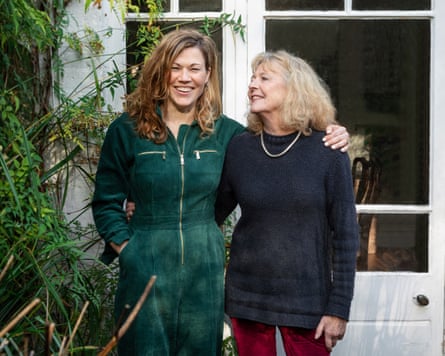
Even more furtive was Aidan Cottrell-Boyce – he didn’t tell his father that he was writing at all. Frank explains: “What happened was [the actor] Shaun Evans came round to the house with a copy of Granta, going: ‘I’ve just read Aidan’s story, it’s brilliant.’ I was like: ‘What are you talking about?’” “There was something alluring in my mind,” says Aidan, “about the gag of [not telling him and then] going: ‘Look what I’ve been doing.’ But it’s a gag that only works once.”
It is understandable for the child of a writer to want to create a distance, to make a mark on their own. It can be a sensitive topic. Some debut writers declined to speak to me for this piece, concerned about being seen primarily as the adjunct of an established parent. One second-generation writer, who has published several novels, told me that it was still a very difficult subject for them.
This may be why all the writers I spoke to had been determined to get published without help – at least, without explicit help. Charnley, who was concerned that people would recognise his name after he had accepted the posthumous Costa prize on behalf of Dunmore, even submitted his debut novel, This, My Second Life, under a pseudonym. His first offers came from foreign publishers; they didn’t know his mother, which “gave me a confidence boost”.
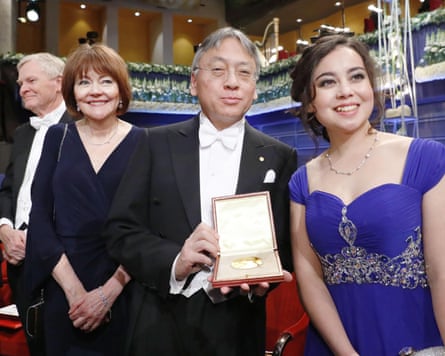
It’s not possible to be completely anonymous, though. “My agent was my mum’s agent,” says Charnley, and “the UK publisher who bought the book did know it was me. So I had an advantage there.” For Harkaway, even though both he and his father are published under pseudonyms, “I couldn’t keep it a secret because half the publishers in London had literally changed my nappies.” Harkaway – real name Nicholas Cornwell – used his pen name when submitting his debut novel to an agent, Patrick Walsh, although another agent who knew his identity “called Patrick and said: ‘I’m not going to tell you why you need to read this, but you need to read it.’”
Does this work, though, from a publisher’s viewpoint? Francis Bickmore, a publisher at Canongate, acknowledges that having a famous writer as a parent may help to get a submitted manuscript read. “I’d be more likely to read it, but a harsher judge.” That is, the connection would “make me more sceptical about how you establish a distance between that author and their famous forebear”.
Even when parents aren’t trying to help, there can be inbuilt bonuses to having a literary family. As Frank Cottrell-Boyce puts it: “If somebody in your family loves doing something, you’re going to pick it up. You’re going to have to find your voice, and your way of doing it, but you do know it’s there.”
“It [makes it] seem possible,” agrees Lottie Moggach. “Whereas for many people who want to write, it seems like a completely closed shop.” Deborah concurs. “I think that’s something you and I took for granted. When I teach and meet people who are not in a literary world, I realise how staggeringly difficult it is for them. You and I started with an advantage. Because my father was a writer, he knew the literary editor of the Daily Telegraph, and I reviewed a book for them, and saw my name in print. And that makes a huge difference, not only for one’s career but for one’s confidence.” In addition, when it came to submitting her debut novel, Kiss Me First (which Deborah suggested the title for), Lottie adds: “I was fully aware my name would be helpful in getting it read”. But she was satisfied that “the book was so different from Mum’s it would stand on its own”.
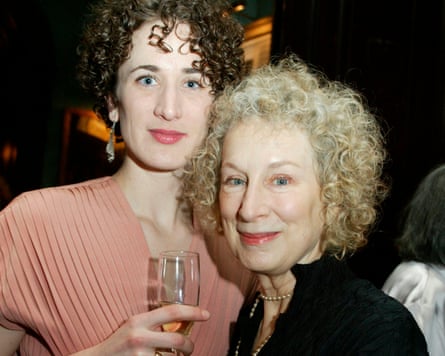
This point about difference may be important. Bickmore observes that in some commercial genres – such as the racing thrillers of Dick Francis – a child can “take over the brand” of their parent’s books, “but that’s not really in the arena of literary writing”, where “you don’t want your style to be reminiscent of your parent’s style”.
One reason why writers are shy of drawing explicitly on their parents is that, as Amanda Craig puts it, “[People] assume that it’s nepotism that got your child published at all. Showbiz is full of nepo babies, but that’s a different thing. What is writing if not an individual talent and vision of how the world is?” Leon adds, “I’m still sending out lots of short stories on submission and getting knocked back. None of these people care who my mother is, they just care about whether they want to put the story in their magazine.”
Once published, it is inevitable that connections will come out, either from the publisher with a nose for publicity or the media keen to tell the story behind the writer. For Charnley, this was not a concern. “I’m proud of the connection. When I read the headline of the Telegraph’s review of my book – something like ‘Helen Dunmore’s magic lives on’ – I was so pleased. I take it as a big compliment. It also gave me a feeling that I have not let her down.”
“For the first two or three books,” Harkaway says, “every article had to mention Dad.” Was that annoying? “I was always slightly aggravated. But this is part of the tax you pay for being here, and the advantages that come with it are so spectacular, you can’t argue the toss.” And anyway, he adds, “As you get older, the less you care. As your body of work expands, you can just point at it.”
This is a key factor. It’s certainly possible that having a famous writer parent could open the first door – Martin Amis acknowledged that any publisher would have taken on his first book out of sheer curiosity – but it can’t sustain a career, unless the books stand up. Bickmore agrees. “I still hope there’s a meritocracy where the best books get through. You want the judgments to be about the quality of the work and not other factors.” He acknowledges, however, that a famous literary parent might offer some marketing pull and media coverage, in terms of “brand recognition. If they’ve got an excellent book, they’re well positioned.”
Why do there seem to be more second-generation novelists today? “Maybe there’s a sense now that anyone can be a writer,” suggests Bickmore. The publishing world, he argues, “has opened up slightly – not radically, but slightly – and maybe more people feel they can [do it]”.
But could there be more to it? Is literary talent heritable? “I don’t really believe in talent,” says Frank Cottrell-Boyce – before quickly handing the baton to Aidan, who hesitantly agrees. “I don’t believe in any sort of mystical thing that’s in you. Probably more than anything else is that all through our childhood you read to us, and we were constantly surrounded by books and storytelling.” Harkaway has a similar view. “If you’re in a household where the currency is stories, it’s an environment which is conducive to learning those tricks.”
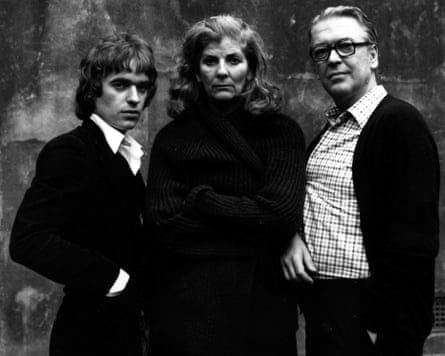
On inheritance, Lottie Moggach offers one unconsoling fact. “I thought I would inherit my mother’s work ethic. I didn’t. I’m more distracted, and more angsty.” Deborah responds: “I try to bolster her up by saying how wonderful she is, but I’m her mother! Mothers say that about their children.” “I appreciate it!” adds Lottie.
Deborah points out that “Kingsley [Amis] was jealous of Martin’s books.” (In 1979 he wrote to his friend Philip Larkin about his son: “Did I tell you Martin is spending a year abroad as a TAX EXILE? … Little shit. 29, he is.”) Deborah concludes: “That’s the last thing you should be, because a parent should want their children to do better than them.”
But Charnley’s view probably summarises the only thing we can say for sure on the cross-generational writing experience. “I don’t know whether it’s genetic, or just witnessing the process, seeing that it’s something that can be done,” he says. “All I know is that my mother was a writer, and now I’m a writer.”