








Once upon a time, every German village had its own Tante Emma laden (Aunt Emma shop), a family-run hub of community life where local people bought their groceries at affordable prices and shot the breeze with their neighbours.
But in recent years the loose network of small businesses throughout Europe’s biggest economy has come under huge pressure from staffing shortages, competition from supermarket chains and rising inflation, which the Iran war has again sent surging.
Concerned that the creeping death of the stores is also fuelling the rural disaffection that has driven many voters to political extremes, governments in several regions have stepped in with some 21st-century innovation.
In Rhineland-Palatinate, where the far-right Alternative für Deutschland came third with nearly 20% in a state election in March – a record in a west German region – officials are seeking to root out the wellsprings of the party’s appeal in rural areas.
Under a pilot programme known as hybrid village stores, existing businesses are being retrofitted so villagers over the age of 18 can shop out of hours autonomously: letting themselves in with an electronic fob or card, shopping and paying on their own. Because they are available to customers at all hours with lower labour costs, the shops make more money and are able to stay afloat.
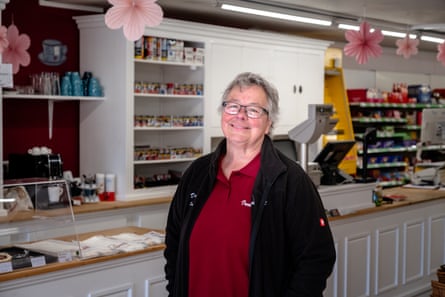
Irmtraut Ehtechame, 68, is the manager of the Dorfladen village shop that went hybrid in December in Seibersbach, a tidy community of 1,200 residents in the verdant Hunsrück hills. She said a range of factors beyond her control had previously threatened her business’s future.
“I had written a cry for help that our shop wasn’t going to make it because we kept slipping into the red, between energy price hikes from the Ukraine war and the minimum wage increase [which rose to €13.90 an hour this year],” she said.
“Last year and the year before it was really touch and go with the shop and so we decided to try something new.”
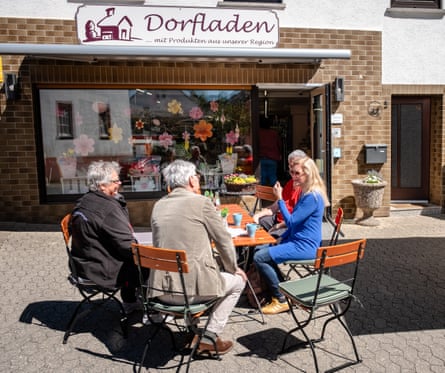
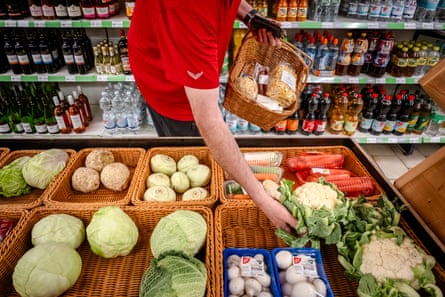
Ehtechame, with her husband and business partner, Hamid, offers a full selection of staples from a major supplier, paired with specialty items including locally produced sausages, mustards and cheeses and crisp white wines from the nearby Moselle region.
“We want customers to be able to buy everything on their list because if they go elsewhere for one or two products then they’ll buy the rest there,” she said. The nearest big supermarket is about 10km away. “Some say the food tastes better when they buy it here.”
Over kaffee und kuchen (coffee and cake) on the shop’s sunny terrace off the village square, Ehtechame admitted that even with six security cameras on the premises, the shift to allowing villagers to come and go as they please in her shop was initially a leap of faith. But it ended up paying off, with no thefts or vandalism reported during the unstaffed hours.
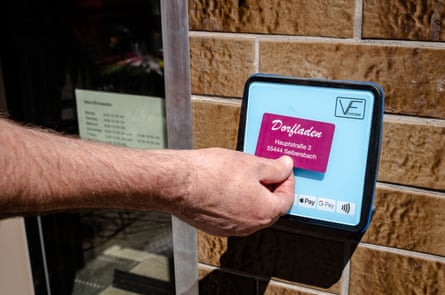
Frank Wilhelm, 66, a retired auto mechanic, said it did not take much for him and his fellow shoppers to get used to the new system.
“It’s quite easy,” he said as he demonstrated how his plastic customer card gains him entry to the store he has frequented for more than three decades.
“I love the freedom of being able to shop really early, before everyone is up, and if I’ve forgotten something at night or friends drop by, I can pop in to pick up some drinks and snacks.”
But the best part for him is knowing that an anchor of community life will endure. “I still prefer to shop here when it’s staffed and see the ladies,” he said, nodding to Ehtechame and her team of cashiers.
Wilhelm and a group of friends who call themselves the “robust retirees” regularly deliver supplies from the shop to their elderly neighbours, such as a case of bottled water or a sack of potting soil too heavy for them to carry.
“And we meet here at the shop once a week after planting flowers or cleaning up the village square flower beds, to keep the centre looking pretty. Then we drink a coffee and have a bite here on the terrace of the shop and watch people come and go.”
Volker Bulitta, 69, who received Ehtechame’s “cry for help”, leads an advisory programme sponsored by the Rhineland-Palatinate government aimed at shoring up rural businesses. It has spearheaded the hybrid village shops in the region.
He said stores like Seibersbach’s would not survive without state aid in areas too remote for online deliveries. But the dividends paid are well worth the one-off investment to revamp the shops, usually costing between €30,000 and €50,000.
Bulitta, whose background is in management consulting, said the idea was never to make the stores fully automated. “Then you wouldn’t have this character of the meeting place any more,” he said.
Rhineland-Palatinate has backed four hybrid village stores since early 2025 with Bulitta’s guidance, with 40 more to come pending approval from the new conservative-led state government, after initial reports found a rise in customer satisfaction and a boost in profits of up to 20%.
Several states including Bavaria, Baden-Württemberg and Lower Saxony have tried similar schemes, as big retail chains roll out various models of autonomous shopping in other regions.
“The good news is that the hybrid systems are getting cheaper – we assume that in two or three years they’ll cost maybe 20% less,” Bulitta said.
The state currently assumes 90% of the transformation costs, which he also sees as a step toward banishing the spectre of “dead villages” – a fear the AfD often stokes.
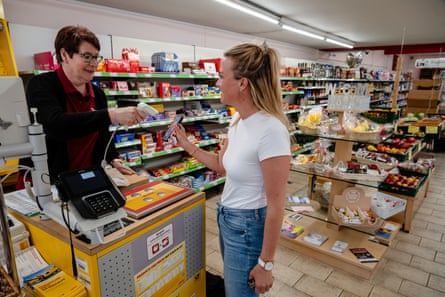
Cashier Tanja Behr, 55, said she had been “very sceptical” about the change at the store where she had worked for 16 years: “What sets us apart is actually talking to customers and listening to them. I had this feeling that we’d lose that personal touch with customers.”
By concentrating staffing during peak shopping hours, however, Behr said the new system allowed her to catch up with her regular patrons with a minimal – and she said, welcome – reduction in her working time.
“The customers are delighted about it every single day. And that’s just naturally a joy for me to hear,” she said. “And we cashiers wanted to cut back our hours a bit so it all worked out well.”
About 57% of German residents – 47 million people – live in rural areas, according to the publicly funded Thünen institute. The regions are often marked by a lack of access to high-speed internet and sufficient public transportation among other key services, compounding a sense of isolation and abandonment.
Daniel Posch, a researcher at Berlin’s Bertelsmann Foundation thinktank, has been looking at how effective regional policy can counter political polarisation and weaken support for the far right.
Saving village stores can help restore community stability shaken by rapid change, he said.
“I’m not sure if it immediately can win back voters, but it can make some space where everyday interactions recreate this kind of infrastructure for democracy. Denser local networks contribute to a more nuanced, less polarised and less radicalised electorate.”