


Albert Einstein throws a party at his lakeside house at which he presents to his guests his latest invention: a time machine.
So opens the opera Chronoplan, started in the late 1920s by the composer Julia Kerr, who took the score with her when she fled Nazi Germany with her family in early 1933, its planned premiere having been halted following Hitler’s takeover.
The wider family story was chronicled in When Hitler Stole Pink Rabbit, an autobiographical novel by Kerr’s late daughter, Judith, in which passing references are made to her mother playing the piano. But Kerr’s reputation as one of the most gifted musicians of her time was widely forgotten after the family’s dramatic escape, which brought her composing career to an end.

Until now. On a recent blustery afternoon, descendants who had travelled from London gathered in the garden of Einstein’s former summer house in Caputh, south-west of Berlin, in the location where Chronoplan was set, to celebrate the life and works of Julia Kerr. Compositions which had been found wrongly catalogued and gathering dust in archives were performed by the singer-actor Ruth Rosenfeld and pianist Norbert Biermann, who has spent much time reconstructing them.
Julia and her husband, Alfred, who was considered the leading theatre critic in Weimar-era Berlin, were occasional guests at Einstein’s house, along with other cultural figureheads of the day, such as the composer Richard Strauss and the authors George Bernard Shaw and Arthur Schnitzler, all of whom feature in the opera.
The wooden house, financed by the prize money from Einstein’s Nobel prize, was where friends enjoyed intimate intellectual soirees and boat trips on the nearby lake before Einstein, who like the Kerrs was Jewish, and many others in their circle were forced into exile.
Christian Leitmeir, a historical musicologist from the University of Oxford, first came up with the idea of looking into Julia Kerr’s musical life after reading When Hitler Stole Pink Rabbit to his son. “There were fleeting descriptions of her playing the piano and composing. I was intrigued, but I could find no reference to her in the encyclopedia of female composers,” he said.
After searching in the archives of the Academy of Arts in Berlin he discovered Kerr’s handwritten scores, which had been incorrectly catalogued under her husband’s name, in the literature and drama section.
Meanwhile, Sonja Westerbeck, dramatic adviser to the State theatre in Mainz, rediscovered Chronoplan, which was given its world stage premiere earlier this year, almost a century after it was written.
Westerbeck, who was at the Caputh gathering, said: “Julia Kerr has spent too long as the sub-clause in the story – it’s time to bring her back to the fore”.
The Kerr family was invited to Berlin by the curators of a new Exile Museum due to open in early 2028 which will bring together Julia, Alfred and Judith’s stories, alongside those of others forced to flee.
The rediscovery of Kerr’s work comes amid a surge in scholarly and public interest in forgotten female composers, many of whom have been unjustly expunged from the history of classical music.

George Kerr, a civil servant who is Julia’s great-grandson, said he had only recently become aware of Julia’s artistic life.
“I’m very inspired to learn of how immensely talented and creative she was,” he said. “Yet she was compelled by circumstances to put the composing aside in order to provide for her family. She’d have been delighted I’m sure that such a keen interest is now being shown in her work when she was so overlooked in life.”
As readers of her novel will know, Judith’s stuffed pink rabbit was left behind in Berlin, but Julia managed to take the score of her incomplete opera with her, across half of Europe. But on arriving in England, she had to put her ambitions aside to become the family’s breadwinner, working as a secretary and translator, as Alfred spoke no English.
After his death in 1948, she returned to Berlin and worked as an interpreter at the Nuremberg Trials and for the US president John F Kennedy when he visited Berlin in 1963.
In 1952, Chronoplan was recorded by Bavarian Broadcasting, becoming the first opera to have a radio premiere, in what Leitmeir said was a reflection of how visionary the work was. “Her music was very eclectic,” he said. “She was like a magpie absorbing all the influences around her from a range of different genres.”
Corresponding with her family, Julia called the six days spent recording it “the most wonderful of my life. Darlings, practically everything sounded exactly as I have heard it in my head for 20 years. Nobody can take that away from me ever and I know now that I can write music,” she wrote. Julia Kerr died in 1965.
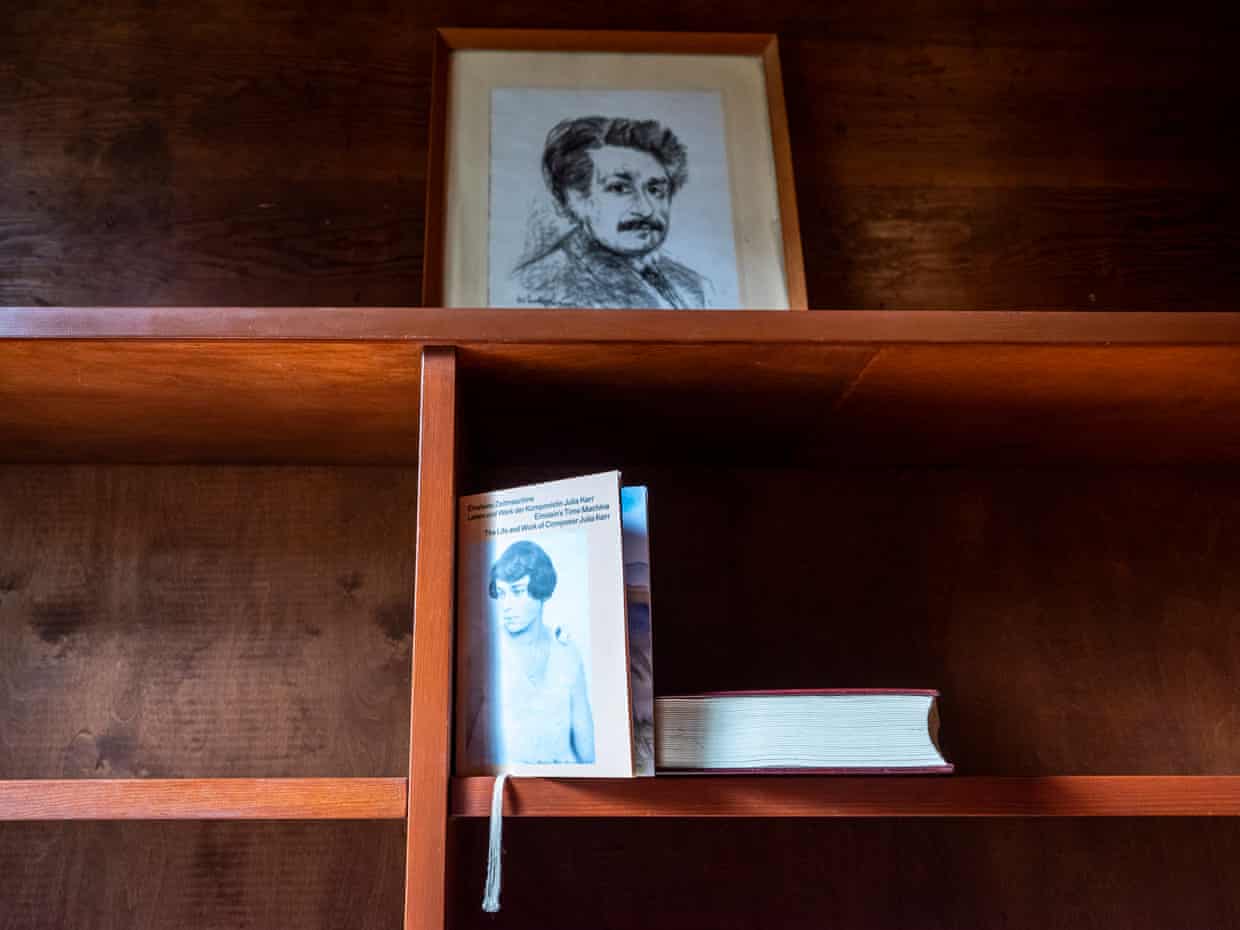
Her grandson Tim Kerr, a retired high court judge, remembered her as a “powerful figure, very single-minded”. He added: “She’d play lovely little tunes she had written on the piano and I’d play the same melodies on the recorder. But I really knew nothing about her music, or that she had been or would be taken seriously as a composer. As is often the case, her life has been filtered through that of her husband, and perhaps to an even larger extent overshadowed by that of her daughter, Aunt Judy, who was more famous than all of them put together.”
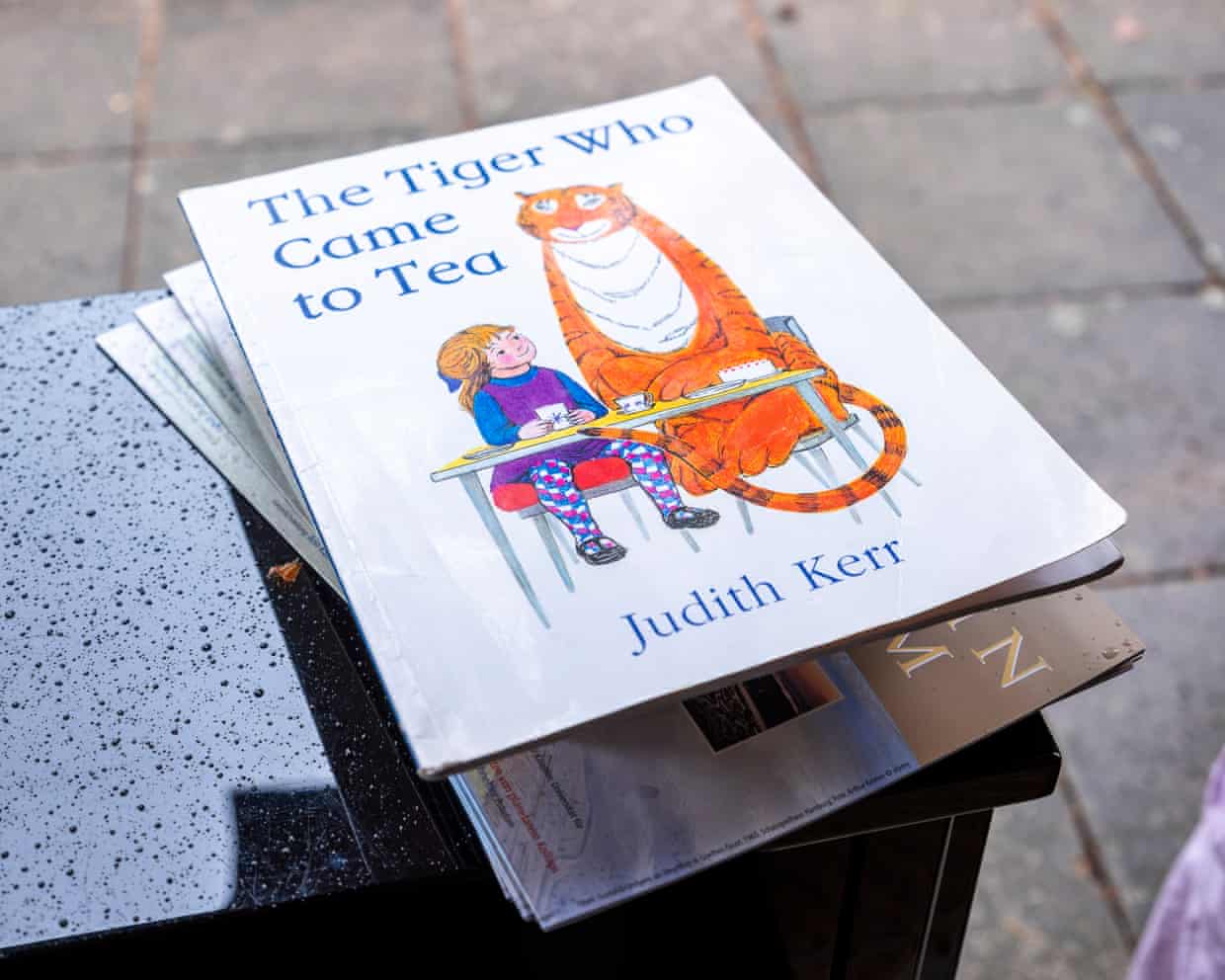
Best known in the UK for her picture book The Tiger Who Came to Tea, Judith Kerr, who died aged 95 in 2019, is most famous in Germany for When Hitler Stole Pink Rabbit, where it appears consistently in the school curriculum.
In a letter to her mother in 1952, Judith Kerr recalled how unhappy Julia had been at not being able to have her works performed.