


One of the most affecting of the many artist commissions that have found a home in the circulation spaces of the new V&A East museum is an exquisite indigo, cobalt blue and cyan stained-glass window, Towards a Civic Museum.
Part of our series of New Work commissions, it was created by the Cuban artist Tania Bruguera in extended consultation with a dozen young east Londoners from our V&A East Youth Collective. It is an unusual piece of stained glass, at once a map of the four boroughs that bound our site on the Olympic Park and a list of wishes, a contract between east London and V&A East. Created in the post-pandemic period, it advances aspirations, something I imagine that all reasonable museum professionals would wish for our sector: that we are open, accessible, useful, relevant and engaged. That we care for and reflect the needs of the communities we serve. That we are transparent, encourage advocacy, demonstrate generosity, equity, accountability, sustainability and – critically – a willingness to collaborate.
When I first saw the work, I came away thinking that these are the right institutional aims, in spirit timely, but simultaneously timeless. The idea of wanting to make a meaningful difference to young people’s lives was a core aspiration of Henry Cole, the 19th-century founder of the V&A. But as Bruguera and her cohort of young consultants agreed, the somewhat patrician Victorian vision of how to achieve that no longer sits comfortably with what many want from museums. We want public institutions that inspire and reflect us, all of us; institutions that are not just made for us, but that are created with and by us, too.
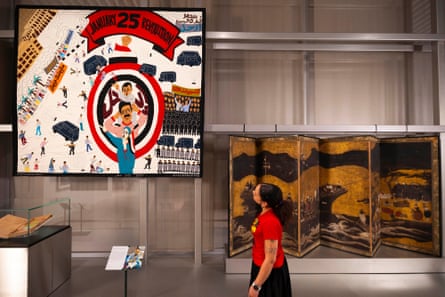
Many of my earliest memories are museum memories: the fossilised remains of dinosaurs at the Natural History Museum, the galleries dedicated to the Egyptian afterlife at the British Museum, the interactive exhibits at the Science Museum. I remember a childhood of being excited by museums: those big guns at the Imperial War Museum, Holbein’s drawings in the royal collection, Millais’s Ophelia at the Tate. As much as the memory of objects, it was the pleasure of spending time in close proximity to so many incredible things, all free at the point of access.
But something happens in adolescence. So many young people lose that awe and wonder. My heart often sinks when I visit museums to see whole classes of young people sitting on stairs focused on mobile devices metres away from glorious things. It breaks my heart that many simply will not visit free museums of their own volition. We all know it is not that they are incurious or unenthusiastic about culture – these are the years when we become infatuated with the world, when we fall in love, when we discover our passions. So we, in the cultural sector, must do all that we can to reignite that zeal in young people, and get them to view our institutions as a creative home for them.
At V&A East , we have created a new national museum that I hope everyone will want to visit, but that I particularly hope younger visitors will find compelling, as we have created it with and for them. I hope they will see their concerns and worldview reflected in our spaces. V&A East museum is an institution that has been created in consultation with a generation. We have spoken to more than 30,000 young people and consulted them on every area of presentation and operational delivery. I have personally engaged in the humbling but deeply affirming process of visiting 100 secondary schools; to speak to thousands of young east Londoners about V&A East, but more importantly to listen to their hopes and dreams – and to hear first-hand their frustrations and concerns.
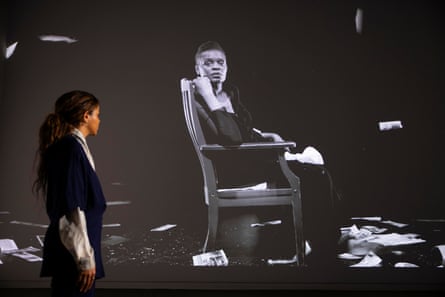
They have helped us to think about how we might reconsider a museum, how we might present our permanent collections through the lens of their priorities. During our many consultation sessions, our young audiences shared the things that mattered most to them – from representation, identity and health and wellbeing, to social justice and environmental action, and how we can create a better world for both people and planet.
They were also interested in the impulses that lead us to create; that affirming drive defines humanity. We shaped our institution around these concerns, from our New Work commissions – including work by Bruguera and the V&A East Youth Collective, Carrie Mae Weems and Rene Matić – to the design and content of our Why We Make galleries. These offer a new and topical way into the V&A’s historic and contemporary collection of art, design, fashion and performance.
When we chose the subject of our opening exhibition, The Music is Black: A British Story, we wanted to select a topic that would allow us to showcase compelling stories of making and creativity. The exhibition platforms hundreds of creatives from Samuel Coleridge-Taylor to Little Simz, telling their stories in compelling ways.
The exhibition has given us the opportunity to also collect new material: one of the most strangely affecting, a Super Nintendo console bought for Jamie Adenuga (JME, the multiple award-winning grime artist, younger brother of Skepta and co-founder of one of grime’s most successful labels, Boy Better Know). It was while using Mario Paint that young Jamie discovered a facility that allowed him to create simple tunes. Within weeks, he was creating ringtones for his friends’ phones. And that creative rush and the positive reaction from his classmates would change his life. He would go on to found and lead one of the most innovative music production companies in Britain.
Like David Bailey, Alexander McQueen, Molly Goddard and so many others who have grown up within a bus ride of the Olympic Park, beyond hard work and formidable talent, JME needed something else. He needed support, encouragement, inspiration – that catalyst, that someone, that something, to be there for that moment when they simply knew what they wanted to do with their lives but they did not know how.
It is a duty for all of us to provide that encouragement to young people – and at V&A East, we want to be there for all those who wish to create. And even for those who will never work in the creative industries, but who might fall in love with what we do, we want to be there to speak with, and to, and for them.
Gus Casely-Hayford is director of V&A East. V&A East museum opens on 18 April
此内容由惯性聚合(RSS阅读器)自动聚合整理,仅供阅读参考。 原文来自 — 版权归原作者所有。