




Verity Nevitt was just 21, a student living away from home for the first time, when she learned she and her twin sister, Lucy, were going to be sued in the high court. Someone knocked on the door of her London house share with a big bundle of papers and asked her to sign for them.
A year earlier, the sisters had reported a man to the police, accusing him of sexually assaulting Verity and then, after she had left the house, raping Lucy. When the case was dropped by police, they decided to name him on social media, in order to warn others. The man responded by suing them for misuse of private information, harassment and eventually defamation.
Their world was turned upside down: they had been the alleged victims but now they were the ones having to defend themselves.
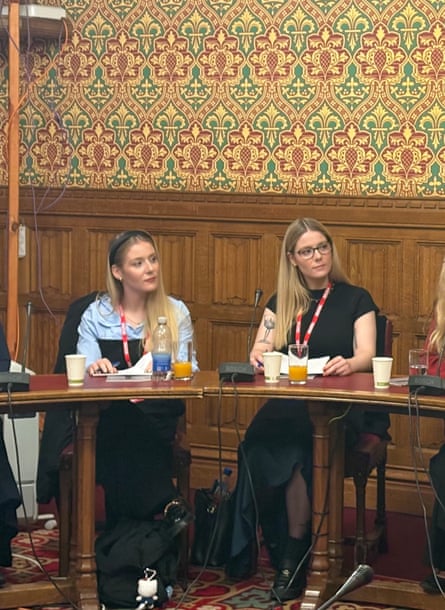
“I didn’t want to engage with it,” Verity says. “The biggest difficulty for me was knowing he was abusing this process, I didn’t want it to be entertained. It was so audacious.”
The sisters eventually reached an out-of-court agreement. Having waived their right to anonymity they could talk about the case in the media and share many of the details, but could not name the man. Since then they have campaigned on behalf of victims of sexual violence through their own nonprofit, the Gemini Project.
One of their main objectives is to end the use of legal threats and vexatious lawsuits against those who speak out. The practice is known as strategic litigation against public participation, or Slapp.
The government defines Slapps as “an abuse of the legal process, where the primary objective is to harass, intimidate and financially and psychologically exhaust one’s opponent via improper means”.
Industry watchdog the Solicitors Regulation Authority (SRA) says most cases often do not even reach court, because a letter from a solicitor can be enough to make the person receiving it fall silent. If a case reaches trial, the legal bill can be as much as £1m for each party. Damages are on top, and the loser can end up paying the other side’s costs. Only the wealthy can afford to hire lawyers to bring such cases, or defend them.
Months after being elected prime minister, Keir Starmer promised action. He described abuse of the courts by the rich and powerful as “intolerable”, saying his government would “tackle the use of Slapps”.
The justice minister, Sarah Sackman, has drafted measures to be enacted during the next parliament. But that plan is thought to have been shelved. It seems unlikely there will be anti-Slapp legislation announced in the king’s speech scheduled for 13 May.
Labour is focused on reducing the courts’ backlog by cutting the number of jury trials, a proposal that has set it on a collision course with many lawyers and its own MPs. Wary of fighting on separate fronts, Downing Street seems to have decided to prioritise jury overhauls over Slapps.
In a statement, a Ministry of Justice spokesperson said it would set out its programme “in the usual way” in the king’s speech, adding: “We are continuing to engage with stakeholders as we consider further action to clamp down on Slapps in other areas.”
It is understood ministers do not want to legislate in haste, and any decision will take time.
But the pressure for action is growing. Last month, 111 members of the House of Lords signed a letter calling for legislation. The group was cross party, and included eight former cabinet ministers, two former BBC chiefs and senior lawyers.
Resistance has come from a small but influential group of law firms that specialise in defamation and privacy cases. In 2023, they formed a lobby, the Society of Media Lawyers. The members’ page on its website lists solicitors from firms such as Carter-Ruck, Simkins, Harbottle & Lewis and Mishcon de Reya – and a number of barristers, including one who acted in the case against the Nevitts.
Setting out their position in a letter to the Law Society, the group claimed to have been unfairly singled out for criticism and underlined the importance of their role in “providing access to justice for victims of unlawful misreporting and press intrusion”.
However, this is not just a battle between the media and the legal profession. Many of those targeted by Slapps are not journalists but grassroots campaigners, academics, whistleblowers and, all too often, victims of sexual violence.
The pensioner
Jeff Thomson and his wife were getting ready to celebrate their wedding anniversary when the bombshell landed. A hand-delivered letter to their home in Penrith, from the owner of a factory on the outskirts of town, accusing him of defamation, harassment and malicious communications.
Thomson, 75, had been running a campaign to try to tackle what local people call the Penrith Pong. The problem goes back decades. Some days the smell – which Thomson describes as “nauseating” – is so bad residents have to shut their windows. They cannot sit in the garden, or hang washing outside. Drivers on the M6 have reported bad odours wafting across the motorway.
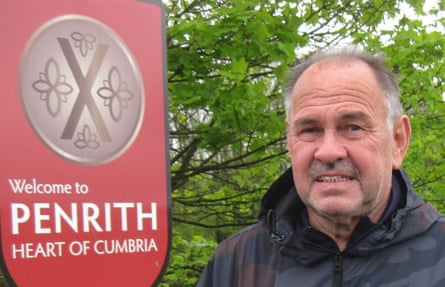
The letter delivered to Thomson was from solicitors acting for Leo Group, the owner of Omega Proteins, which operates a rendering plant less than a mile from Thomson’s home processing waste from abattoirs into oils for cosmetics and feed for animals.
The letter demanded the removal of posts on Thomson’s Fresh Air for Penrith Facebook page, along with an apology, and the company has asked him to pay legal costs and £20,000 in damages.
For Thomson, that first letter in February 2023 was a body blow. “It was devastating. I had no experience of anything of that scale. How could I defend myself against this? It’s a classic David and Goliath situation.”
He and his wife headed for the pub, where, instead of celebrating, they spent the evening working out how to respond. The next day, Thomson started ringing round looking for a solicitor to represent him. “I got absolutely nowhere. They wouldn’t even speak to me, and I couldn’t afford to pay anybody”.
A former press officer at the Central Office of Information, Thomson moved from Manchester to the edge of the Lake District seven years ago, and lives in a rented retirement apartment. He says he has no assets with which to pay the damages, should he lose the case. For now, his legal fees are taken care of.
He came across the anti-Slapp coalition, a group backed by charities including Amnesty International and Index on Censorship, and media groups including the Guardian. They put him in touch with a firm of solicitors, RPC, which waived its fee, taking on the case pro-bono. “I don’t know where I’d be if it wasn’t for them,” says Thomson.
Leo Group, a company whose founding family is estimated to be worth £300m, recently offered to drop the case and pay his legal costs if he agreed not to mention any settlement. He refused, because he did not want to be prevented from discussing the outcome. “I’ve just said no. They would have won.”
Nonetheless, the legal threats have already had a chilling effect. Thomson does not mention the company online any more, and he is careful in interviews and at public meetings. He says he only feels comfortable talking about the company in the context of the threatened lawsuit. “It was just an attempt to stop me from continuing my campaign. Which is to have the source of the odour identified, acknowledged and action taken to stop it.”

Leo Group claims to have spent £100m over a decade on odour control technology, and that the pong comes from “various sources”.
In a statement, the company says: “Over the years, Mr Thomson has made various baseless defamatory comments via his posts on Facebook and he has complained to various authorities in England and Wales against Leo Group. However, Leo Group has not in any way acted contrary to any anti-Slapp legislation.”
Thomson believes the air quality has improved since he began making a noise. With his training as a press officer, he had run an effective campaign, attracting BBC coverage, support from his local MPs and the attention of the Environment Agency.
After a peak in 2024, there have been fewer bad smell days of late. But he fears things could go backwards if he takes his foot off the pedal. “The pressure has to be kept up.”
The shopper
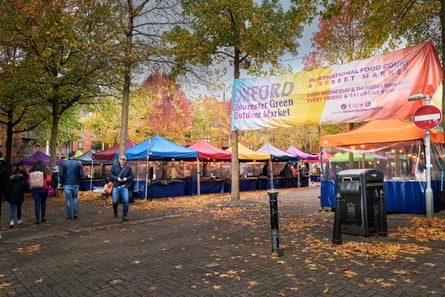
“It was written in such vicious, aggressive terms,” says Isabel Tucker, of the legal letter she received in March 2024. Tucker had written an article that January for her local news site, complaining about what she saw as the gradual decline in the number of stalls and variety of goods on sale at Gloucester Green outdoor market in central Oxford.
The 13-page letter was from solicitors acting for a company called LSD Promotions, which had operated the market under contract with the council since 2013. They accused her of “a false and malicious campaign of defamation”, which was causing serious harm to LSD’s reputation. Unless she agreed to take down her article, and retract “all defamatory statements made whether online, to third parties or anywhere else”, they said they would go to the high court with a claim of libel and harassment.
The letter also alleged she had posted criticism on Facebook under a false name. But Tucker, a freelance copy editor, says she is wary of social media in general and does not have an account on Facebook.
“It really is a clampdown on freedom of speech,” she says. “They claim it’s a campaign of malicious defamation. To my mind, it’s just a campaign. You’re allowed to criticise things!”
She began raising concerns with the council in 2022, after the pandemic, when traders told her about increases in pitch fees. She found out the contract was due to be renewed, and using a freedom of information request secured a copy of the old contract. She spoke at a council meeting, and the council took steps to supervise LSD’s work more closely under the new contract.
When the letter threatening legal action arrived in March, a friend put her in touch with a solicitor, who for no charge helped her draft a response. Since then, she has had to reply to a second letter, this time with help from RCP, after contacting the anti-Slapp coalition. In September, the coalition wrote to the council, warning it the threats made by LSD “bore the hallmarks of a Slapp”.
Nik Williams, the coalition’s co-chair, believes people like Tucker should be encouraged, not muzzled: “It’s the sort of active citizenship that you should be wanting to foster. Someone who uses a service and is taking steps to improve it.”
In a statement, LSD said it had made repeated attempts to meet Tucker to discuss her concerns and seek resolution, but that she had declined. It said the legal correspondence was a “last resort”, and that no legal proceedings were issued once the matter “de-escalated”.
“LSD Promotions rejects any suggestion that its actions were intended to suppress legitimate public scrutiny or freedom of expression. We believe our response was proportionate, lawful and consistent with the legitimate protection of our business interests.”
Tucker says people who criticise businesses are under no obligation to meet them, and this should not be a trigger for legal threats. She believes her work has made a difference. “The market is getting slightly better actually and I take some credit for that,” she says. But fear of being sued has made her less vocal. For example, she no longer sets out a stall at community fairs to publicise her campaign. “I’ve been very careful since then. I’ve felt quite cautious about what I say about the market”.
The sisters
Six years on from the legal attack against her, Verity Nevitt is back at university, determined to get the education she had to abandon. This time, she is studying law instead of politics. But she also has a day job, working for a national charity, and has to fit homework into evenings and weekends. “It’s a clear reminder that the case is still affecting me now.”
For most of the high court case, they had no lawyers. Lucy was going to the high court to file documents during her lunch breaks. She too was forced to pause her studies, although she returned to them eventually and completed a master’s in psychology and neuroscience.
The sisters eventually found solicitors willing to work for a reduced fee, and a barrister who took on their case on a no-win, no-fee basis.
In court, they waived their right to anonymity so they could talk about what had happened, and set up their campaign group.

Through their work at Gemini, the twins have supported other women. They noticed an increase in those coming to them about legal threats in the wake of Depp v Heard, a case that made headlines around the world when the actor Johnny Depp accused his former wife Amber Heard of defamation.
The London barrister Jennifer Robinson, who represented Heard during Depp’s UK libel case against the Sun, has written of how the courts became weaponised in the wake of the #MeToo movement by those determined “to silence women and maintain the status quo”. Depp won his US case against Heard but lost the British one against the Sun.
Nevitt, who is engaged to be married, plans to take her husband’s name so that she can recover some privacy. She turns 30 next year, and had been planning to wind down the campaigning, going out on the high of having secured more legal safeguards. Downing Street’s decision has forced a rethink.
“My hope has always been that my 30s will be for me. But I’m not sure I can stop until a piece of anti-Slapp legislation is passed because it might feel like everything was for nothing.”